Currently Browsing: Entrepreneurship
Posted by Managementguru in Business Management, Financial Management, How To, Startups
on Sep 25th, 2015 | 0 comments
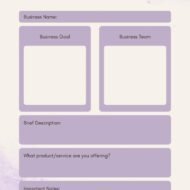
When you write your business plan, start with the basics, and write the things that you have already thought about. The name of your business, your goals, your team and the products/services you propose to offer. This gives a clean headstart to further evolve your business plan. A business plan should mainly focus on the future fund flow that will pique the interest of the bankers you are trying to pitch for a loan or investors whom you want to genuinely impress. Here are a few Business Plan Starter Questions 1. What is your mission statement? Your mission statement is what you want to do now, and your vision statement is what you want to do in the future. 2. What are your top keys to success? Don’t write a laundry list of keys, keep it simple, and focused. 3. What is your value proposition? Why should someone do business with you? 4. What are your core competencies or skills? 5. What is your start up budget? Write it like a grocery list, at first, and add up the numbers. 6. The executive summary is written last; after the entire business plan is, absolutely, finished. Think of the executive summary as your movie trailer, build to attract interest in your business. Writing a business plan is a huge undertaking, and if you have never done it before, it is down-right scary. Planning to start a small business? Think no more.. You’ve hit the right spot and we have compiled all that is necessary to win over the challenges of a new startup. This guide will serve as a jump start for your new venture and make it exciting. The web has loads of sample plans, but how do you, really, write your own business plan, your own way? How do you write the plan that accomplishes the goals that you want to accomplish in your business? This Business Planner will make your process simple and hassle free! How to Start a Small Business at Home – Read on to find out the Benefits and Advantages of a Home-Based Business Ask Yourself the Right Questions First things first, you have to start thinking about what you’re not thinking about. Ask yourself the right questions, about your business and put it into your plan notes. The best way to write a business plan is to write it in small segments or pieces. Forget trying to consume, writing the entire plan as a large, mammoth, assignment. It is, too, overwhelming, give yourself a break, and write small bursts, of information. It is easier, to write your top three to five business objectives, clearly and concisely when you are not looking down the barrel of a twenty-thirty page business plan....

Posted by Managementguru in Business Management, Entrepreneurship, Marketing, Quotes and Quotes Only, Social Media
on Sep 14th, 2015 | 0 comments

Awesome Social Media Quotes to Guide Your Marketing Strategy A strong Social Media Presence is inevitable to grow your business now-a-days. If you are not part of the mayhem, people are not going to remember you. Say, if you are a blogger and you post some 2 to 3 articles per week, it is not enough. The point is, are you smart enough to reach the right target audience which is never possible without the help of social media. Look at all these social media strategists and their insights – Full of experience and first hand information. Personally I love Twitter platform as it offers boundless possibilities to meet new faces and gather huge contacts in no time. The interface is simple but very effective and suitable for all kinds of businesses. You can cut across your message in a single powerful headline ofcourse with relevant hashtags. Quotes have always inspired me and now my focus is on social media marketing which is the rage of the century. I thought of picking up some really useful and interesting quotes on social media by some popular social media hooligans. These will definitely open your eyes on the subject and make you understand why it is difficult for businesses to thrive without establishing their online presence through social media networks. Sean Gardner @2morrowknight “Social media is not just an activity; it is an investment of valuable time and resources. Surround yourself with people who not just support you and stay with you, but inform your thinking about ways to WOW your online presence” 4 Ways Travel Enhances Your PersonalBrand and Informs Your Worldview http://t.co/aZFgbhAbnq ttot RT @Linkedin pic.twitter.com/ngSa9eS9Mr — Sean Gardner (@2morrowknight) April 3, 2015 Aaron Lee @AskAaronLee “These days, social media waits for no one. If you’re LATE for the party, you’ll probably be covered by all the noise and you might not be able to get your voice across. It could only mean that if you want to be heard by the crowd, you have to be fast; and on social media, that means you have to be REALLY fast.” 5 Battle-Tested Tactics for Getting ROI on Social Media (Show Your BOSS!) – http://t.co/92l8enSV5y pic.twitter.com/50kRy08Aw4 — #Aaron Lee (@AskAaronLee) September 9, 2015 Jeff Bullas @jeffbullas “Social media is a hungry beast. The social networks require constant feeding. They need to be thrown a diet of content that keeps readers and viewers coming back for more. This is one of the biggest challenges if you want to do social at scale.” 7 Step Content Creation Strategy for Epic ContentMarketing http://t.co/s4VhCaPtK2 marketingtips pic.twitter.com/bwYDBkR2yN — #Jeff Bullas (@jeffbullas) September 14, 2015 Neal Schaffer @NealSchaffer “If You’re Not Regularly Experimenting with Your Social Media Efforts, You’re Not Maximizing Your Social.” Do you think you’ve mastered the art of social media? via @FastCompany http://t.co/Tq7SDTdyeg RT @msocialbusiness pic.twitter.com/VtgvkGw3f4 — #Neal Schaffer (@NealSchaffer) September 13, 2015 Neil Patel @neilpatel “The foundation of your social media strategy is to understand who your target audience is andwhy they use social media. To do so, we need to utilize demographics and psychographics.” How to Become a @Twitter Influencer: Science and Practice http://t.co/IFdlCO85KI pic.twitter.com/BdJ5eAA5z0 — #Neil Patel (@neilpatel) September 5, 2015 Hope you would have enjoyed this post and please visit all the influencers’ twitter accounts and blogs to see how many followers they’ve got and just think how they must have achieved this. Let this be a starting point for blogger beginners and other small businesses to enhance their social media presence through these proven strategies. Planning to bring more of content related to social media tools and...
Posted by Managementguru in Entrepreneurship, Human Resource, Leadership
on Sep 8th, 2015 | 0 comments

What is Leadership The one who quickly diagnoses a problem, shoulders personal responsibility and makes the right decision can be called a true leader. He need not be rich, need not hold a big office, need not be numero uno – as simple as that. Understanding other people well is also a core leadership quality. If a person is late to work, a leader tries to unearth the cause of the problem; rather than looking for the worst in people they look for what’s best within them. Entrepreneurs have a set of leadership skills that make them a little different from every other worker bee. They choose to walk down the road less traveled by breaking away from corporate protocol and venturing out on their own, bucking trends and at times, even breaking the rules. “Success is actually a creative pursuit and a reflection of healthy self-esteem.” What will you do to be the leader that you are destined to be, today? Thinking outside the box and forging your own path requires agility. Being an agile leader refers to remaining flexible, growing from your own mistakes and rising above the wide array of challenges you face. “If you call a stumbling block a “problem” or a “big mess” you will create a different emotional state within you than if you call the issue “an opportunity” or a “challenge that will make me better.” “The most successful human beings are wildly focused. They have a very clear picture of what it is they want to create by the time they reach the end of their lives and then they have the discipline (and courage) to stick to their mission – saying “no” to everything that is not mission critical. Who made Success a Bad Word? “Too many people believe that playing their best game as a human being requires them to revolutionize their lives. And for most of us, that’s a scary thought.” We humans love to play within our comfort zones. Making changes to the way we think, feel and behave is next to impossible for us. What people fail to realize is that changes are to be welcomed because they are chances to improve our life quality. If you don’t adapt or go with the flow, you will definitely feel the heat when priorities start pushing you to the brink. “The best way to get to your greatness is through small, continuous steps-what I call the “1% Wins”. Agile leaders have a set of shared characteristics: being extroverted, taking charge and challenging the status quo. Basically, it’s people who have been described as “difficult to manage.” Being difficult doesn’t have to be a bad thing. It just means that certain people have their own way of doing things and are able to generate new ideas because they possess the ability to view issues from multiple angles. Simplify Then Focus Simplifying life and stripping away all that is unimportant can help you to achieve your dreams. Once you do your clean up, focus, focus, focus. You’ll be surprised how good you will then get at being great. “The best way to create spectacular results in the most important areas of your life is through daily practice.” “People who have achieved great success are not necessarily more skillful or intelligent than others. What separates them is their burning desire and thirst for knowledge. The more one knows, the more one achieves.” ~ Robin Sharma A List of 10 Best Selling Books on Leadership Good to GreatJim CollinsExplores principles & practices that differentiate great companies from good ones.Start With WhySimon SinekFocuses on the importance of understanding the “why” behind actions to inspire and lead effectively.Dare to LeadBrené BrownEncourages leaders to embrace vulnerability and courage to build a daring leadership culture.The Five Dysfunctions of a TeamPatrick LencioniIdentifies common pitfalls in team dynamics and offers strategies to build cohesive, high-performing teams.Leaders Eat LastSimon SinekEmphasizes the importance of putting people first to create a supportive and loyal team environment.Lean In: Women, Work, and the Will to LeadSheryl SandbergEncourages women to pursue leadership roles and advocate for themselves in the workplace.The 21 Irrefutable Laws of LeadershipJohn C. MaxwellOutlines fundamental principles for effective leadership and influence.Atomic HabitsJames ClearProvides practical strategies for building good habits and breaking bad ones to improve leadership skills.The Ideal Team PlayerPatrick LencioniDescribes the characteristics of an ideal team player and how to cultivate these traits in a team.Radical CandorKim ScottAdvocates for open and honest feedback to foster a culture of trust and high performance....
Posted by Managementguru in Accounting, Entrepreneurship, Human Resource, Marketing
on Aug 8th, 2015 | 0 comments

Starting a business with minimal investment is all about smart planning and leveraging available resources. Here are five business ideas for 2025 that require low startup costs, along with estimated expenses: 1. Online Consulting or Freelancing Ideal for professionals with expertise in fields like marketing, finance, health, or writing. Estimated Expenses: Website & domain registration: $50 Marketing (ads, networking): $100 Software subscriptions (Zoom, Canva, etc.): $50 Miscellaneous costs (branding, tools): $50 Total Investment: $250 If you have expertise in a field—whether it’s marketing, graphic design, or career coaching—you can offer services remotely. Platforms like Upwork or LinkedIn help you find clients, and as you build your reputation, you can scale into higher-ticket offerings. 2. Dropshipping E-commerce Store Selling products online without handling inventory or warehousing. Estimated Expenses: Website & hosting: $100 Marketing & ads: $200 Supplier registration & sample orders: $150 Automation tools (Shopify, plugins, etc.): $50 Total Investment: $500 You can sell trending products without stocking inventory. By partnering with suppliers who handle fulfillment, you focus on marketing and customer service. Niches like eco-friendly goods or personalized accessories can help differentiate your store. 3. Social Media Management Agency Helping businesses grow online through strategic content and engagement. Estimated Expenses: Website & domain: $50 Graphic design tools (Canva, Adobe): $50 Marketing & ads: $100 Social media automation software: $50 Total Investment: $250 Many businesses need help with online presence but lack the time or expertise. If you’re skilled at content creation, analytics, or engagement strategies, you can manage social profiles and campaigns for brands, charging monthly retainers. 4. Subscription-Based Digital Content Creating exclusive courses, guides, or newsletters on platforms like Patreon or Gumroad. Estimated Expenses: Website & domain: $100 Video editing tools (if needed): $150 Marketing & ads: $200 Subscription platform setup: $50 Total Investment: $500 If you love writing, making videos, or teaching, you can offer exclusive content through subscription platforms. Topics like personal finance, productivity hacks, or industry-specific insights attract subscribers willing to pay for premium guidance. 5. Handmade or Custom Print-On-Demand Products Selling custom designs on apparel, mugs, or accessories. Estimated Expenses: Website & hosting: $100 Print-on-demand supplier setup: $200 Marketing & branding: $150 Design software & stock resources: $50 Total Investment: $500 Selling unique designs on apparel, mugs, or stationery requires creativity but little upfront investment. Platforms like Printful or Redbubble allow you to upload designs, and they handle printing and shipping—you just focus on marketing. These businesses prioritize online operations and automation, keeping overhead costs low while maximizing reach. Ready to take the leap into entrepreneurship? The best time to start is now! Whether you’re launching a consulting service, an online store, or a content-driven business, minimal investment doesn’t mean minimal impact. Start small, scale smart, and watch your ideas thrive in 2025. Take action today! Define your niche, set up your platform, and connect with your first customers. The future of business belongs to those who start—let’s make it...
Posted by Managementguru in Change management, Decision Making, Entrepreneurship, How To, Human Resource
on Jul 23rd, 2015 | 0 comments

I was going through this quote by Vince Lombardi the other day and couldn’t control my amusement and laughter for some time. “If you aren’t fired with enthusiasm, you will be fired with enthusiasm.” But the truth behind this statement looms large in front of all HR professionals when they start working for an organization in whatever capacity. Results, Targets, Closing the sale, Clinching the deal are the inevitable management mantras that drive the executives crazy. Isn’t it funny that it is very important to keep the morale high of the survivors during a layoff strategy! How on earth one can expect such a thing to happen when you know the sword is dangling above your head too! Please remember, “Resources are hired to give results, not reasons.” You need to be a star performer the first time and every time. Why Downsizing Happens? When the management of an organization finds out that their organization is not operating at peak efficiency, they naturally look for ways to make the organization more productive. This is seldom accomplished via organizational downsizing, which is a reduction in organizational size and operating costs implemented by management in order to improve organizational efficiency, productivity and/or the competitiveness of the organization. Courtesy: Cartoonstock.com Organizational downsizing affects the work processes of an organization since the end result of the downsizing is typically fewer people performing the same workload that existed before the downsizing took place. Download this Team Meeting Planner and Let us Know if You Found it Useful Team-Meeting-Agenda-PlannerDownload The act of downsizing results in two categories of people: victims, the people who involuntarily lose their jobs due to organizational downsizing, and survivors, the employees who remain after organizational downsizing takes place. When is Downsizing the Answer and How to Do it Right? “When downsizing is a knee-jerk reaction, it has long-term costs.” In order for an organizational downsizing to be most effective, management must connect openly and honestly with their employees concerning the reason for the downsizing and the downsizing plan. Managers also need to listen to employees and provide comfort when necessary in order to keep the morale high among the survivors of the downsizing. It is also important that management take steps to prepare the workforce in advance of the downsizing. Proper planning includes outplacement strategies, which is the process of supporting former employees in finding new employment and training and re-skilling the remaining workers into their new jobs. By treating the victims of downsizing fairly and compassionately, the survivors of the downsizing are more likely to remain loyal to their organization. Best Practices for Managing the Downsizing Process Be transparent about the current conditions that the organization faces and the potential impact on the workforce.Treat laid-off employees with respect and sensitivity.On the day of discharge, give employees options on how they want their exit handled.Ensure that procedures used to make decisions are seen as just and fair.Carefully examine the impact of employment downsizing on all HR systems.Give survivors a reason to stay and new hires a reason to join. Kim Cameron’s 3 Types of Downsizing Strategies 1. Workforce Reductions – short-term strategy to cut the number of employees through attrition, early retirement or voluntary severance packages, and layoffs or termination. 2. Work Redesign – medium-term strategy in which organizations focus on work processes and assess whether specific functions, products and/or services should be eliminated. 3. Systematic Change – long-term strategy that changes the organization’s culture and attitudes, and employees’ values, with the goals of reducing costs and enhancing quality. Why Do Organizations Downsize? Declining profitBusiness downturn or increased pressure from competitorsMerging with another organization, resulting in duplication of effortsIntroduction of new technologyThe need to reduce operating costsThe desire to...