Currently Browsing: Entrepreneurship
Posted by Managementguru in Operations Management, Project Management
on Jun 17th, 2015 | 0 comments
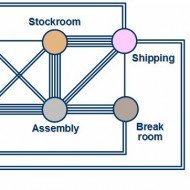
Info on Objectives and #Principles of Plant Layout: Plant layout refers to the physical arrangement of production facilities. It is the configuration of departments, work centres and equipment in the conversion process. It is a floor plan of the physical facilities, which are used in production. A plant layout study is an engineering study used to analyze different physical configurations for a manufacturing plant. It is also known as Facilities Planning and Layout. Some Precise Definitions for Plant Layout: According to Moore “Plant layout is a plan of an optimum arrangement of facilities including personnel, operating equipment, storage space, material handling equipment and all other supporting services along with the design of best structure to contain all these facilities”. “Plant layout is the #arrangement of machines, work areas and service areas within a factory”. —George R. Terry “Plant layout involves the development of physical relationship among building, equipment and production operations, which will enable the manufacturing process to be carried on efficiently”. —Morris E. Hurley “Plant layout can be defined as a technique of locating machines, processes and plant services within the factory so as to achieve the greatest possible output of high quality at the lowest possible total cost of manufacturing”. —Sprigal and Lansburg “Plant layout ideally involves the allocation of space and the arrangement of equipment in such a manner that overall operations cost can be minimised.” —J. Lundy From these definitions it is clear that plant layout is arrangement and optimum utilisation of available resources in such a manner so as to ensure maximum output with minimum input. Objectives of Plant Layout: The primary goal of the plant layout is to maximise the profit by arrangement of all the plant facilities to the best advantage of total manufacturing of the product. The objectives of plant layout are: Streamline the #flow of materials through the plant. Facilitate the manufacturing process. Maintain high turnover of in-process inventory. Minimise materials handling and cost. Effective utilisation of men, equipment and space. Make effective utilisation of cubic space. Flexibility of manufacturing operations and arrangements. Provide for employee convenience, #safety and comfort. Minimize investment in equipment. Minimize overall production time. Maintain flexibility of arrangement and operation. Facilitate the #organizational structure. Principles of Plant Layout: Principle of integration: A good layout is one that integrates men, materials, machines and supporting services and others in order to get the optimum utilisation of resources and maximum effectiveness. Principle of minimum distance: This principle is concerned with the minimum travel (or movement) of man and materials. The facilities should be arranged such that, the total distance travelled by the men and materials should be minimum and as far as possible straight line movement should be preferred. Principle of cubic space utilisation: The good layout is one that utilise both horizontal and vertical space. It is not only enough if only the floor space is utilised optimally but the third dimension, i.e., the height is also to be utilised effectively. Principle of flow: A good layout is one that makes the materials to move in forward direction towards the completion stage, i.e., there should not be any backtracking. Principle of maximum flexibility: The good layout is one that can be altered without much cost and time, i.e., future requirements should be taken into account while designing the present layout. Principle of safety, #security and satisfaction: A good layout is one that gives due consideration to workers safety and satisfaction and safeguards the plant and machinery against fire, theft, etc. Principle of minimum handling: A good layout is one that reduces the material handling to the...

Posted by Managementguru in Entrepreneurship, Human Resource
on May 14th, 2015 | 0 comments

An Insight on Traits of Successful People 1. They have a definite aim in life. “It is our choices that show what we truly are, far more than our abilities.” -J. K Rowling (from “Harry Potter and the Chamber of Secrets”) They want to accomplish something. They have #enthusiasm, commitment, and pride. They have self-discipline. They’re willing to work hard and to go the extra mile. They have a burning desire to succeed. They’re willing to do whatever it takes to get the job done. Dhirubhai Ambani was one such persona who went the extra mile to establish his empire called Reliance Industries. He believed in largest, biggest, fastest etc. Reliance textile at its introduction had production capacity greater than all of india’s need. Reliance refinery is still world’s largest refinery complex. 2. They are self-confident. “As long as the mind can envision the fact that you can do something, you can do it, as long as you really believe 100 percent.” -Arnold Schwarzenegger To be capable of setting ambitious goals, you need to believe you can follow the plans to achieve them. And when you believe in yourself, others tend to believe in you as well. In Gandhi’s words, a person can make progress and achieve success only with self-confidence. This applies to a person as well as to a nation, Gandhi said. 3. They show #initiative. “Find out who you are and be that person. That’s what your soul was put on this Earth to be. Find that truth, live that truth and everything else will come.” -Ellen DeGeneres The only way to rise up the corporate hierarchy or to develop your own business is to to look for other things to accomplish once you’ve fulfilled your regular duties. You need to outperform the already set standards and create new benchmarks for others to follow. 4. They are imaginative. “What the mind of man can conceive and believe, it can achieve.” -Napoleon Hill A lack of the driving force of initiative and the creative power of imagination is “the main reason why 95% of the adult people of the world have no definite aim in life, which, in turn, is also the reason why this same 95% constitute the followers in life”. What is lost in imagining about great things – it might only lead you to constructive creativity. 5. They are active. “Do one thing every day that scares you.” -Eleanor Roosevelt You may have earned multiple degrees from elite universities and have read history’s most important books, but none of it means anything if you don’t turn knowledge into action. This is what they call in Tamil, ஏட்டு சுரைக்காய் கறிக்குதவாது meaning Simple theoretical knowledge alone will not help in real life practical situations. 6. They are enthusiastic. “Nothing great was ever achieved without enthusiasm.” -Ralph Waldo Emerson They’re excited by what they’re doing, and that excitement is contagious. They draw people to them because these people want to work with them, do business with them, and be with them. Enthusiasm is probably one of the most attractive qualities a person can have. It’s a quality that makes you attractive in all kinds of relationship – personal or professional – and it’s a wonderful quality to find in other people. 7. They go beyond what’s required of them. “It takes 20 years to build a reputation and five minutes to ruin it. If you think about that, you’ll do things differently.” -Warren Buffett The most successful people outperform their competition, and when they make it to the top, they compete with themselves. ‘I want more’ will be their mantra. 8. They know how to separate truth from bias. “I’ve learned that people...
Posted by Managementguru in Business Management, Entrepreneurship, How To, Organisational behaviour
on May 2nd, 2015 | 0 comments
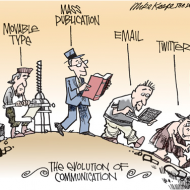
How to effect “Effective Business Communication?” Communication is an entity much talked and debated about in corporate management circles. The question is, have you really understood what the term ‘Communication’ means, how it has evolved over all these years and the impact it creates in an organization? Well, communication is nothing but the transfer or exchange of information from one end to another end, from one user to another user or from sender to receiver to put it straight. Is that it- No! If the process could be as simple as it sounds, there should be no conflicts, no difference of opinions and no mis-understandings in this world. Are we witnessing such a peaceful scenario; In particular, office atmosphere sometimes becomes unbearable thanks to ‘clash of the so called intellectual titans’ fighting over a simple issue which could be solved by discussing it over a cup of good coffee. Now, coming back to the point, the process of communication involves the following steps, Sender- Message- Receiver I’m not quite convinced with this explanation, are you? Let us rewrite it like this, Sender- Message- Medium- Receiver- Interpretation- Feedback This somewhat makes sense because only when the message intended is interpreted rightly so by the receiver or the target, the process of communication gets completed. In olden days when only sign language was the norm of the day, people still communicated precisely through pictograms, cave paintings, ideograms and sign language. This was a form of restricted communication as people had to go to that particular place to see the message. The process of evolution has led us to what we call verbal communication, the highest form of exchanging information. More sophistication has been innovated in the technological sphere and now I’m able to write to you and publish this article from an Apple IPad, of course with references made from the web in a jiffy. Types of communication Three types of communication are present VerbalNon-verbal andWritten. Interpersonal communication is contextual: In other words, communication does not happen in isolation. There is: Psychological, which is your persona and what you bring to the interaction. Your needs, desires, values, personality, etc., all form the psychological context. (“You” here refers to both participants in the interaction.)Relational context, which refers to your reactions to the other person–the “mix.”Situational context deals with the psycho-social “where” you are communicating. An interaction that takes place in a classroom is entirely different from one that takes place in a bar.Environmental context deals with the physical “where” you are communicating. Furniture, location, noise level, temperature, season, time of day, all are examples of factors in the environmental context.Cultural context includes all the learned behaviors and rules that affect the interaction. If you come from a culture (foreign or within your own country) where it is considered rude to make long, direct eye contact, you will out of politeness avoid eye contact. If the other person comes from a culture where long, direct eye contact signals trustworthiness, then we have in the cultural context a basis for misunderstanding. Three Approaches in Communication: Linear approach: Correct communication in this perspective causes the desired effect.Production of exchange and meanings: Communicating through signs and the process of extracting meanings from these messages is called “Signification”. The interpretation can lead to very different but equally valid outcomes.How communication is used to construct our social reality: We constantly share ideas with people around, thereby constructing, re-inforcing or de-constructing our identities. This perspective sees communication as the binding force of any culture, group or society. Source- coursera.com The Semantic Noise: Another important concept in communication is the semantic theory. It is nothing but the noise created in the...
Posted by Managementguru in Entrepreneurship, Quotes and Quotes Only
on Apr 27th, 2015 | 0 comments

Women today are disrupting industries, creating innovative products and ultimately, transforming the world. By laying their own rules when it comes to starting up and pursuing the entrepreneurship route, these new generation women entrepreneurs across the world are increasingly proving themselves in almost every walks of life. Here are some quotes from womenpreneurs to inspire the upcoming young generation to succeed as business owners. You better be your own boss and discover the thrills and challenges that come along… “The only thing stopping you from achieving what you want is you. Women have the capacity to do whatever they want, and they should fight for it. – Roshini Sharma, bike rider extraordinaire … “I don’t know how to give up. That is an integral part of who I am. – #Arpita Ganesh, ButterCups … “Rule number one of being stylish – be an inventor of your own style. – Masoom Minawala, Style Fiesta … “I attribute my business acumen to my gut feel. – Anita Dongre, ADIL … “Getting out of your comfort zone will take you through the best of learning experiences. – Pramad Jandhyala, Latentview … “We hear a lot about ‘aam aadmi‘ (common man). Why not ‘aam ladki‘ or ‘aam aurat’? – Karnika Kahen, Gesture Graphics … “The gender equation in the workplace flips when you see women come up to the fore confidently. – Tina Garg, Pink Lemonade … “Fitness is far more than just how you look. It includes strength, flexibility, stamina, endurance, high energy levels and much more. – Namrata Purohit, Pilates coach … “Entrepreneurship can be very, very demanding and challenging. Unless you are totally, madly and completely in love with challenges please don’t get into it. – Srijata Bhatnagar, EthnicShack … “You never lose in business, either you win or you learn.” — Melinda Emerson, the “SmallBizLady”… “I am not satisfied in making money for myself. I endeavor to provide employment for hundreds of the women of my race.” — Madam C.J. Walker… “My husband always tell me that I’m the most unrelenting person he’s ever met, and it’s true. If I make a commitment to something I will stick to it no matter what.” — Jenny Craig… “It is within everyone’s grasp to be a CEO.” — #Martha Stewart… “It was a risk. I had my husband and I was pregnant with my oldest son. But I don’t look at risk the way other people do. When you’re an entrepreneur, you have to go in feeling like you’re going to be successful.” — Lillian Vernon… “I have never worked a day in my life without selling. If I believe in something, I sell it, and I sell it hard.” — Estée Lauder… “I don’t believe in failure. It’s not failure if you enjoyed the process.” — Oprah Winfrey… “If you push through that feeling of being scared, that feeling of taking risk, really amazing things can happen.” — Marissa Mayer… “Define success in your own terms, achieve it by your own rules, and build a life you’re proud to live.” — Anne Sweeney… “We need to accept that we won’t always make the right decisions, that we’ll screw up royally sometimes—understanding that failure is not the opposite of success, it’s part of success.” — #Arianna Huffington… “The question isn’t who is going to let me; it’s who is going to stop me?” — Ayn Rand… “I learned to always take on things I’d never done before. Growth and comfort do not coexist.” — Virginia Rometty… “What I learn from talking to so many women around the world: If you can empower them with the right things, the right tools, they can lift up their...
Posted by Managementguru in Decision Making, Entrepreneurship, Human Resource, Leadership
on Apr 21st, 2015 | 0 comments
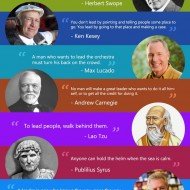
Top Ten Tips for First Time Managers Everybody wants to become a leader. You may vie for it, I might die for it; but in reality not everybody can make a good leader. Leadership does seek persons who are unique in their own way. One unique element which I’ve noticed in managers or leaders is that when they enter the work place, they bring along with them a kind of aura that has the power to make others submissive and polite. Not to say they are over-powering but definitely the sub-ordinates would love to greet their heads with such vigor so as to be in their good books combined with a sense of loyalty laced with respect. This session talks about “First Time Managers” who have reached the position by chance or choice and the etiquettes needed to be bestowed upon that position. 1. Learning is Eternal: “கற்றது கைமண் அளவு, கல்லாதது உலகளவு –This quote by the famous Tamil lady poet Avvaiyar who lived in 13th century reminds you “What you have learned is a mere handful; what you haven’t learned is the size of the world” and exhibited at NASA. It can also be written as “Known is a drop, unknown is an Ocean.” See how appropriate she is in indicating the finer points in our lives- just because you are a team leader or a manager does not mean that you are near perfect. You may be lacking the self-confidence to lead a team or you might be falling short in communicating clearly with the team down the line. It is always better to play along with the team, understand their psychology and at the same time exercise your rights at the right spots. You will stand to gain so much by being flexible and empathetic. 2. Communication is the Key: Here I want to take the help of the ManagementGuru Peter Drucker who prescribed the medicine for better management which is “Management by Objectives.” Keep your team fully informed of project goals, priorities, and all-important deadlines and also involve them to set short term goals. A periodical review of the goals and results would put them in place and make your work easy. Effective communication makes you trust worthy in the eyes of your team, also provides clear direction and a sense of belongingness. 3. Inspire your Team: Passion is one element that is infectious and the other being smile. If you are passionate and sincere in your work, the enthusiasm flows like honey on ice-cream all over the workplace. A good manager creates that “Feel-Good-Factor’ whenever he is around. It is his confidence, emotional stability, communication and determination that gets carried on facilitating effective accomplishment of the enterprise goals. An infographic from AN ETHICAL ISLAND– A great guide for leaders and managers… 4. Be a Friend: Efficient managers understand the pulse of work-force just from their body language and communicating styles. It becomes difficult sometimes to read between the lines when employees are hard nuts to crack and would not explicitly convey or talk about important issues that are bothering them. This may be due to fear, anxiety or peer pressure. These are the times when a manager has to behave like a friend in listening to them patiently to understand the crux of the problem so as to find a suitable solution. 5. Spontaneous appreciation and Mild Criticism: Think about the happiness you derive when somebody appreciates you for a good effort or achievement. The same applies to your team also, right! Appreciation for the sake of appreciating will fetch you only negative results, it has to be spontaneous. Even a mild nod of approval, a...