Posted by Managementguru in Business Management, CSR, Entrepreneurship, Human Resource, Leadership, Strategy
on Dec 4th, 2014 | 0 comments
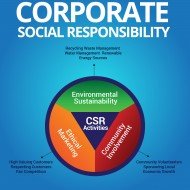
Does Your Company Have What It Takes to be A Leader? Corporations that are considered leaders in terms of business performance take a common approach to CSR. The blueprint for how corporations can maximize their investments in CSR contain five essential ingredients- Business-based social purposeClear theory of changeQuality and depth of informationConcentrated effort, andPartnering with experts. 1. Business-based social purpose: There have been too many examples of CSR programs that ignore business fundamentals. Leadership-level CSR programs always directly reflect what the business is and what it does. An “innovative CSR initiative” can emphasize the company’s business purpose and flawlessly leverage its operational competencies. The social purpose of a business is aligned with and supports social issues in a way that is consistent with the unique culture and character of the business. Srinivasan Services Trust is a social arm of Sundaram Clayton Limited and TVS Motor company established in 1996 for charitable purposes. The company focuses on improving health, education, women’s empowerment, infrastructure and environment that would bring about changes in the lives of people in a community. 2. Clear theory of change: CSR is becoming indispensable. On the one hand, that’s good news because it proves its business value. On the other hand, it’s getting harder to discriminate one company’s efforts from another’s. CSR leaders develop branded approaches to drive measurable social change. Starbucks Coffee has 8,000 stores, in 34 countries that sell to 30 million customers each week has adopted an unique CSR approach. Their mission is to provide the highest quality coffee in an environment that is consistent worldwide and support the sustainability of their farmers. Starbucks could be considered compliant and even proactive in their responsibilities to stakeholders. They purchase coffee in 20-30 countries per year, as their buying agents spend 240/365 days per year on the road searching for the best coffee farms and developing relationships with customers. It involves mutually agreed upon fair pricing, economic transparency, socially responsible buying, and environmentally friendly expectations. These standards protect the farmer’s business and ensure that Starbucks can support their ethical branding with practices that respect the environment. 3. Quality and Depth of Information: Merely pin-pointing social priorities for community investment is not adequate. Leadership comes from providing employees, customers and external stakeholders with a significant depth of information about the social issue through authentic research, white papers, videos, stories, social media, and so on. Bill & Melinda Gates Foundation or the Gates Foundation is one of the largest private foundations in the world, founded by Bill and Melinda Gates. It was launched in 2000 and is said to be the largest transparently operated private foundation in the world. Guided by the belief that ‘all lives have equal value’, Bill Gates and his wife Melinda Gates the co-chairs explain about their work and their commitment in supporting the government in reaching India’s most vulnerable communities with the services they need to live healthy and productive lives. The Department of Biotechnology (DBT) under the Ministry of Science and Technology of the Government of India and the Bill & Melinda Gates Foundation in collaboration with India’s Biotechnology Industry Research Assistance Council (BIRAC) launched a call for proposals as part of Grand Challenges India to reinvent the toilet. The Department of Biotechnology and the Gates Foundation will each invest US$1 million to support Indian investigators to drive research, development, and production of the “next generation toilet.” 4. Concentrated effort: Leadership is shown by corporations that direct their efforts on one social issue and align all their internal and external resources with this issue. 5. Partnering With Experts: Leadership entails showing a high degree of credibility. This is best done through relationships with social issue experts and not-for-profit organizations. Starbucks hosted...

Posted by Managementguru in Business Management, CSR, Entrepreneurship, Human Resource, Leadership, Strategy
on Dec 4th, 2014 | 0 comments
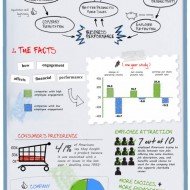
What it takes to be a Leader What is #Corporate Social Responsibility? High performance is generally measured against key business imperatives including #competitive advantage, #sales, #talent management, #operational efficiency, #return on investment and profitability. It is no longer adequate for a corporation to revel in economic prosperity in isolation from those agents impacted by its actions. Today, a new element of leadership is making an intense difference in weighing business performance: Corporate Social Responsibility. The late 1990s and the early 2000s saw an uptake in businesses giving proceeds or providing volunteers to causes related to their brands. Some called it “corporate social responsibility”; others called it “corporate #philanthropy” or “#corporate citizenship.” Regardless of its title, it was a way for business to increase visibility while raising funds for good. The spotlight is on both increasing the firm’s bottom line and being a good corporate citizen. Keeping abreast of global trends and remaining committed to financial obligations to deliver both private and public benefits have compelled organizations to restructure their frameworks, rules, and business models. Where does the roots of CSR lie? Although the #roots of CSR lie in altruistic activities (such as donations, charity, relief work, etc.) of corporations, globally, the concept of CSR has evolved and now embraces all allied concepts such as triple bottom line, corporate citizenship, philanthropy, #strategic philanthropy, #shared value, #corporate sustainability and business responsibility. You might be wondering what is “Triple bottom line?” (abbreviated as TBL or 3BL) – The term coined by John Elkington in 1994, incorporates the notion of sustainability into business decisions. The TBL is an #accounting framework with three dimensions: social, environmental (or ecological) and financial. “A plethora of research points to a majority of stakeholders agreeing that CSR is a ‘must do’,” and 67% of consumers say they are more likely to buy products and services from a company if they know it supported good causes. Smart Corporations: As a key component in business #strategy and execution, CSR is playing a crucial role in helping organizations to be seen as leaders. Smart corporations are allocating increasing internal resources to CSR investments that include clear objectives and furnish measurable social outcomes. India is a country of multitude contradictions. On the one hand, it has grown to be one of the major economies in the world, and an increasingly important player in the emerging global order, on the other hand, it is still home to the largest number of people living in absolute poverty (even if the proportion of poor people has decreased) and the largest number of malnourished children. This is the sad state of uneven distribution of the benefits of growth which many believe, is the root cause of social unrest. Companies too have been the target of those disconcerted by this lop-sided development and as a result, their contributions to society are under severe scrutiny. Many companies have been astute to sense this development, and have responded proactively while others have done so only when advocated. What it takes to be a Leader-2...
Posted by Managementguru in Economics, Financial Accounting, How To, Project Management
on Nov 21st, 2014 | 0 comments

These article-embeds focus on the real estate scenario both in the US and India and how relaxation in Foreign Direct Investment Policies has brought about a sea change in the minds of foreign investors on viewing India as one of the major sources of potential investment. And most importantly real estate in India is in a boom thanks to the constant urbanization and interest of NRI people who want to invest in properties in big Indian cities like Mumbai, Cochin, Pune, Bangalore and Chennai. Some light is also thrown on how to handle the capital gains when a property is sold. One has to be aware of the tax implications that arise while selling a property and the proceeds have to be properly accounted for. Real Estate looks enterprising in India and always has been so since people of our country treat land and gold as dependable assets. Owning a house or a property is a status symbol too and people save money to buy land and build their dream houses. This saving tendency has supported the growth of our economy very well and has rather saved it from tumbling down unlike what happened in the recent recession in the US. Some Interesting Real Estate Quotes to keep you in Good Humor: “It is a comfortable feeling to know that you stand on your own ground. Land is about the only thing that can’t fly away.” ~Anthony Trollope “The best investment on earth is earth.” ~Louis Glickman “He is not a full man who does not own a piece of land.” ~Hebrew Proverb “A man complained that on his way home to dinner he had every day to pass through that long field of his neighbor’s. I advised him to buy it, and it would never seem long again.” ~Ralph Waldo Emerson “As long as you have more cash flowing in than flowing out, your investment is a good investment.” Robert Kiyosaki Read and enjoy the following articles: What To Expect From The Real Estate Market In 2014 Focus of Overseas Investors on Indian Real Estate Market How to save capital gain taxes in real estate? UDEMY, the educational platform is offering real estate courses at a big discount and I reckon the following courses would help real estate brokers and agents to hone their skills in terms of online presence and marketing. Gain Leads and Colleagues with a Real Estate Website/Blog Creative Real Estate Investing & Flipping...
Posted by Managementguru in Business Management, How To, Project Management, Startups, Strategy
on Nov 17th, 2014 | 0 comments
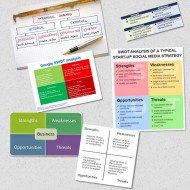
A startup thrives on innovation, resilience, and strategic execution. The secret lies in solving real problems with passion while adapting quickly to challenges. First-time entrepreneurs are often oblivious to their own weak spots. Getting to know your strengths and weaknesses is easier said than done. Self-assess yourself by making a simple list of every business skill you think you possess. Then, add other skills that you think make a good leader/business owner. Add any additional questions you think would be helpful. Take stock of the lacunae in your skillsets, and rank which positions you need to hire first. “Don’t be a lone wolf. Lean on the experience and smarts of your teammates, investors, and mentors to help solve the tough problems and take advantage of the opportunities – SETH BANNON, Amicus Factors for Startup Success If you want your business to be successful, challenge yourself, be honest with yourself, surround yourself with talent, and watch success find you. As you reflect back on the evolution of your business, it will be clear to you that you would not have gotten to this point had you not identified your strengths and weaknesses, looking to fill your weaknesses with external talent. “Know your core competencies and focus on being great at them. Pay up for people in your core competencies. Get the best. Outside the core competencies, hire people that fit your culture but aren’t as expensive to pay.” – Mark Cuban A start-up small consultancy business might carry out the following SWOT analysis Why Use SWOT Analysis? SWOT Analysis is a very effective way of identifying your Strengths and Weaknesses, and of examining the Opportunities and Threats you face. Carrying out an analysis using the SWOT framework helps you to focus your activities into areas where you are strong and where the greatest opportunities lie. Strengths Being able to respond very quickly due to lack of bureaucracy and red tape, no need for higher management approval, etc. Being able to provide hundred percent good customer care and satisfaction Strong reputation within the market Being able to adapt to the changing market quickly Little overhead, so can offer good value to customers Weaknesses The company has no market presence or reputation Has a small staff with a weak skill base in many areas Vulnerable to vital staff attrition Cash flow will be unreliable in the early stages Opportunities Business sector HAS SCOPE FOR EXPANSION , with many future opportunities for success Local community wants to encourage local businesses as it provides work opportunities to the people of that community Competitors may be slow to adopt new technologies Threats Will developments in technology change this market beyond our ability to adapt? A small change in focus of a large competitor might wipe out any market position we...
Posted by Managementguru in Business Management, Entrepreneurship, How To, Human Resource, Startups, Strategy
on Nov 7th, 2014 | 0 comments
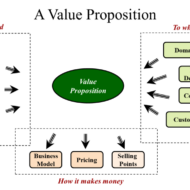
Startup Success – A Clear and Good Value Proposition “You don’t get a second chance to make a first impression” “The strategy is to first know what you don’t know, the tactic is to grind, and the value is to remember: there are plenty of places to innovate.” -David Friedberg, Founder @ Weatherbill A great value proposition is indispensable for any business hoping to clearly communicate to customers why they are different, better, and worth purchasing from. Why Your Value Proposition Matters? “A problem well stated is a problem half solved.”-Charles Kettering The problem is, many companies just can’t seem to nail down exactly what a value proposition is and what it should say. A value proposition is a clear statement of the tangible results a customer gets from using your products or services. Its outcome is focused and stresses the business value of your offering. Let the statement you make come from your heart, let it represent the very idea behind your business, let it highlight the benefits you plan to give your customers, let it awaken the entrepreneurial spirit and make you want to do something more for the end users, let it be straight but sharp. What makes a good value proposition? Clarity! It’s easy to understand. It communicates the concrete results a customer will get from purchasing and using your products and/or services. It says how it’s different or better than the competitor’s offer. It avoids hype (like ‘never seen before amazing miracle product’), superlatives (‘best’) and business jargon (‘value-added interactions’). It can be read and understood in about 5 seconds. I basically like what Pinterest has to offer- their unique and simple pin boards to organize our thoughts around a subject. I feel happy when I visit Pinterest and exploring various pins gives me immense satisfaction. The way they have developed their business around the mindset of people is something brilliant. It’s attractive to women. To designers. To photographers and artists. To mom’s who cook, decorate or plan events. That’s kinda niche-y. Some Interesting Value Proposition Quotes: A unique value proposition is a single, clear compelling message that states why you are different and worth buying – Steve Blank Price is what you pay, Value is what you get – Warren Buffet If people like you they will listen to you, but if they trust you, they’ll do business with you – Unknown Live authentically. Why would you continue to compromise something that’s beautiful to create something that is fake- Steve Maraboli You do not really understand something unless you can explain it to your grandmother – Albert Einstein <a HREF=”http://ws-in.amazon-adsystem.com/widgets/q?rt=tf_cw&ServiceVersion=20070822&MarketPlace=IN&ID=V20070822%2FIN%2Fmanagementgur-21%2F8010%2F62da8e52-21d7-4d09-9aff-da04d242f556&Operation=NoScript”>Amazon.in...