Currently Browsing: Entrepreneurship
Posted by Managementguru in Decision Making, Entrepreneurship, International Business, Organisational behaviour, Principles of Management
on Apr 29th, 2014 | 0 comments

Sole Proprietorship – Features and Advantages Sole Proprietorship is a business owned and controlled by only one person. The proprietor who sows, reaps and harvests the output of his labor owns all the assets in his firm. This form of business organization is one of the most popular forms in India and the reason being the advantages it offers. Here, business can be started simply after obtaining necessary manufacturing license and permit. Setting up Process: Setting up a sole proprietorship entity is trouble-free as compared to other form of companies. Unlike Limited Liability Partnership (LLP) or any other private or public companies; in sole proprietorship you do not need to file an application to ROC- Registrar of Companies. You need to choose a name for your business, open a bank account and take license for varied services including Service Tax, VAT, IEC, Shops & Establishment license, PAN, Importer Exporter Code, ESI, Professional Tax, Central Excise Duty, CST Registration, Employee Provident Fund Registration etc. After acquiring the respective licenses one can commence with his her sole proprietorship firm in India. Some important licenses you may need for starting a sole proprietorship firm in India: PAN CARD Permanent Account Number (PAN) is a ten-digit alphanumeric number, issued in the form of a laminated card, by the Income Tax Department. It is mandatory to quote PAN on return of income, all correspondence with any income tax authority. A typical PAN is AABPS1205E. A complete overview of pancard can be seen at – http://www.incometaxindia.gov.in/pan/overview.asp New PAN CARD application – https://tin.tin.nsdl.com/pan/ TAN CARD Tax Deduction Account Number (TAN) is an alphanumeric number issued to individuals who are required to deduct tax on payments made by them under the Indian Income Tax Act, 1961. The Tax Deducted at Source on payments made by assessees has to be deposited under the following number to enable the assessees who have received the payments to claim the tax deducted in their income tax return. So TAN is the abbreviation for Tax deduction and collection Account Number. Application for tan card – https://tin.tin.nsdl.com/tan/ SERVICE TAX REGISTRATION Service tax has to be paid to the Government of India by the service provider who collects the same form his customers. As on 1st May, 2006, 95 services are identified as taxable services in India. Section 64 of the Finance Act, 1994, extends the levy of service tax to the whole of India, except the State of Jammu & Kashmir. The current rate is 12.36 % on the gross value of the service. Service tax can be paid online – https://www.aces.gov.in/ VAT AND CST VAT (Value Added Tax) is a form of indirect tax imposed only on goods sold within a particular state, which essentially means that the buyer and the seller exist in the same state. Only when tangible goods and products are sold, VAT can be imposed. VAT (Value Added Tax) is governed by respective state Acts. Every state has a separate and distinct VAT act reserved for their state. CST (Central Sales Tax) is a form of indirect tax imposed only on goods sold from one state to another state, which particularly takes into account that the buyer and the seller exist in two different states. CST (Central Sales Tax) is governed by Central Sales Tax Act, 1956. This tax is governed by a single central act, though the chargeability is state specific. Registration for VAT AND CST IN Tamil Nadu – http://www.tnvat.gov.in/English/NewDealerRegist.aspx THE BUSINESS VIABILITY CHECKLIST FOR ENTREPRENEURS IMPORT EXPORT CODE: DGFT – Directorate General of Foreign Trade runs various schemes for trade promotion and facilitation. Using this facility you may file, prepare and track online application in...

Posted by Managementguru in Business Management, Change management, Entrepreneurship, Human Resource
on Apr 16th, 2014 | 0 comments

Entrepreneurs are the mechanism by which our economy turns demand into supply. They create new ventures that provide new, improved products and services. Here we list some of the principal qualities of entrepreneurs and how those qualities help in shaping up our economy. Productivity Accelerators: Entrepreneurship raises productivity through technical and other forms of innovation. Entrepreneurs as risk bearers find resources and fill market gaps that would be missed by larger, more bureaucratic organizations. They allow a country to extract every last bit of marginal capacity out of whatever resources exist within the society. Brilliant Tips on Productivity by some Popular Entrepreneurs: Focus on one thing at a time: It may seem like a no-brainer, but multitasking can actually cut back on your productivity. Instead of juggling multiple projects at once, schedule out blocks of time — or even entire days — during which you only focus on one task or one project. Steph Auteri, @stephauteri, Word Nerd Pro Outsource, outsource, outsource: Everything may be a priority, but you are not equally brilliant at everything. Eliminate the unnecessary tasks and outsource your weaknesses so your time and focus is directed to where you’ll make the biggest impact for the business. Kelly Azevedo, @krazevedo, She’s Got Systems Define roles and divide work: Make sure everyone on the team has distinct roles defined, and divide work accordingly. Everyone on a proactive team will want to do everything, and clearly defined roles make it clear who should do what. David Gardner, @david_gardner, ColorJar Job Creators: It is a powerful tool of job creation –Entrepreneurship as a whole contributes to social wealth by creating new markets, new industries, new technology, new institutional forms, new jobs and net increases in real productivity. The jobs constructed through their activities in turn lead to equitable distribution of income which leads to higher standards of living for the population. Entrepreneurship facilitates the transfer of technology. Entrepreneurs play a strategic role in commercializing new inventions and products. They play a critical role in the restructuring and transformation of economy. Their behavior breathes vitality into the life of large corporations and governmental enterprises. Market Competitiveness: They make the markets more competitive and thereby reduce both static and dynamic market inefficiencies. Micro-preneurs working in the informal sector circumvent established government authority when governments and their programmes inhibit economic development. They stimulate redistribution of wealth, income and political power within societies in ways that are economically positive and without being politically disruptive. Social Welfare: They improve social welfare of a country harnessing dormant, previously overlooked talent. They create new markets and help in expansion into international markets. The unique feature of entrepreneurship – that it is a low cost strategy of economic development, job creation and technical innovations. Technology Innovation: Technology entrepreneurship is also important for sustainable development as Nobel Prize Laureate prof. Dan Schechtman puts it: “Technological entrepreneurship is a key to the well-being of the world”. India has been the first among the few developing countries to have assigned a significant and categorical state role to small scale industries from the first Five Year Plan itself, and the small scale sector has emerged as a dynamic and vibrant sector of the economy during the eighties. If the country develops pucca infrastructure and removes the hurdles in the operative environment politically and legally, no doubt the Indian economy will be scaling to greater heights. Surplus manpower (educated and un-educated), which has been a great liability can become an asset once those with potential are selectively groomed for self-employment and enterprise formation, leading to further job...
Posted by Managementguru in Change management, Entrepreneurship, Human Resource, Training & Development
on Apr 11th, 2014 | 0 comments
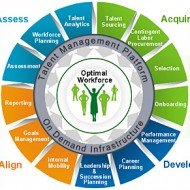
Basic Trends in HRD – #Human Resource Development The basic motive of HRD would be to develop an enduring and healthy #work culture. It should also take into its fold the #training and developmental aspects of the workforce that forms the significant segment of the organization. It is a means to improve the overall organizational effectiveness but not an end in itself. HRD Philosophy: The philosophy of an organization is understood through #policies and operations and not merely through its programmes. HRD policies, #plans and action must commence from business #strategy. The key to the success of HRD is undoubtedly good industrial relations enhanced by effective #employee participation and existence of good #collective bargaining machinery. A Source of Motivation: Though #man power planning, training and #appraisal seem to be the core activities of HRD, it must also be used as an instrument for changing the work culture and motivating the workforce. This considerably improves the network of communication resulting in a sea change or turn around in terms of employee participation and #commitment. Concept of HRD: The #business environment is dynamic and so are the demands of the market. It is but important to review the organization structure to meet these demands of the changed environment. To establish and endure a #productive work culture to bring about improvements in organizational as well as technological disciplines. To train and develop employees in new skills for new #technology advanced operations and effective #performance. To bring about progress in the motivational #climate of the organization To bring the systems and procedures in line to deliver the expected results To reinforce participative culture and safety systems To maintain peaceful industrial relations in the production environment To revamp man power planning in order to match the individuals with jobs to #optimize utilization of available skills. Changing Environment: The process of HRD is directly linked to OD to facilitate the development of an organization in totality. To restructure organization in terms of #physical resource, #monetary resource and technology, one has to first understand the changes happening and challenges existing in the immediate external environment. Some of them would be #Competitor Pressure #Globalization of markets Rising aspirations of people at large Governmental policies etc., How has HR used #social media? A relatively late-adaptor, HR has largely used social media in recruitment…and indeed how!!! – In 2010 in US, only 6% of companies were using social media for recruitment, now that has exploded to 89% – 82 of the Fortune 100 companies uses the corporate hiring solutions of #LinkedIn – About 21% of working professionals are looking for a job – social media helps companies tap into the other 79% as well. Bullhorn’s 2012 Social Recruiting Activity Report says:“A #Twitter follower is almost 3 times more likely to apply to a job posting than a LinkedIn connection and 8 times more likely to apply than a #Facebook friend.” Human Resources professionals understand that social media ishere to stay…That’s the easy answer!!!The challenge is integrating use of a cohesive, relevant andeffective social media strategy aligned to the overall HR & business strategy of the organization. Information Courtesy – by National HRD...
Posted by Managementguru in Accounting, Decision Making, Management Accounting, Project Management
on Apr 1st, 2014 | 0 comments
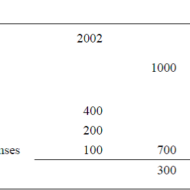
ACCOUNTING AND DECISION MAKING – IDENTIFYING THE PROBLEM SITUATION Learn accounting and finance basics so you can effectively analyze business data to make key management decisions. Business owners are faced with countless decisions every business day. Managerial accounting information provides data-driven input to these decisions, which can improve decision-making over the long term. Fig 1.1- ACCOUNTING INFORMATION FOR A SINGLE PRODUCT The above illustration clearly depicts that there has been a loss of Rs.100 in one year’s time for this particular product. The reason can be attributed to the increase in the “cost of goods” whereas other expenses have remained the same in both the years. For a single product manufactured, the problem is identifiable and solvable. But when the organization is producing a range of products, you need to apply some accounting technique by which the product losing money is identified and suitable measures are taken to cut down the escalating cost. Fig 1.2- Accouning Information for a Product Range The above illustration compares and contrasts the relationship of three products a company manufactures. It is seen that products P1 and P2 are doing well. Though the cost of sales has gone up for P1 and P2, the sales volume has also increased thus increasing the gross profit over the period of time. Here the product that has to be dealt with is P3 whose sales volume has drastically gone down, yet with the same cost of sales. When there is an increase in cost of sales, two things have to be considered. Identifying the problem-product Either cut down the production cost or increase the selling-price if the product has a real demand in the market. Uses of Accounting Data: Accounting information helps the management to arrive at make or buy decisions, to outsource production of certain components to cut down or control costs, to expand the production, to increase the sales volume or to downsize their project capacity. Techniques like Break-Even Analysis, Costing and Budgeting aid in going for the right production-mix, marketing-mix and sales target plans for the respective financial years. Aggregate Planning: As we all know planning is the key to the future and financial planning has to be given utmost importance for a production process. Aggregate planning involves translating long-term forecasted demand into specific production rates and the corresponding labor requirements for the intermediate term. It takes into consideration a period of 6 to 18 months, breaking it into work modules weekly or monthly and planning for the specific period in terms of men, material and...
Posted by Managementguru in Entrepreneurship, Human Resource, Organisational behaviour, Principles of Management, Training & Development
on Mar 31st, 2014 | 0 comments
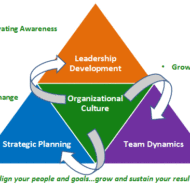
Defining Organizational Culture Business is an integral part of the society; and it influences other elements of the social system, which in turn affect business. The entire sphere of business activities are influenced by the social structure and culture of a society. The social system is influenced by the way the business functions, innovations, transmission and diffusion of information and new ideas etc. Business activities have greatly influenced social attitudes, values, outlooks, customs and traits. However, it is very difficult and, in some cases, almost impossible to change many elements of the social environment in the short run. Hence, a business may have to anticipate and adapt to these uncontrollable external environments. Socio-cultural environment refers to the influence exercised by certain social factors, which are “beyond the company’s gate“. This includes attitude of people towards: Work Wealth Knowledge Family Marriage Religion Education Ethics and social responsibility of business. Belief System Influencing the Action: Culture is something that is evolved in a society over a long period and it represents the unified belief system of a large group of people. An organization can be distinguished from another by way of its culture, since organizational culture is unique in its perspective and methodology. When people from different social backgrounds are made to work under the same roof, a corporate organization acquires a distinct culture. Culture conveys a sense of identity for the organization. It facilitates the generation of commitment to do something noble than one’s own self-interest. Cultural Differences: As business go international, the need for understanding and appreciating cultural differences across countries is essential. Any move from one country to another will create a certain amount of confusion, disorientation and emotional upheaval. Especially, people form Asian countries that migrate to the west are subjected to what is called a “culture shock”, in terms of attitude, working style, language, way of life, dress codes and negotiating styles. Freshers may adapt to these changes quickly, since they are natural and easy to be trained. The problem arises with individuals who had been working under a totally different cultural setup from that of the new cultural environment; they will have to undergo the process of ‘unlearning‘, which is more like swapping old ideas for new ideas. This change process is what both the employees and the management find challenging; but ultimately what needs to be done has to be done. Culture Shock: Multi national and Trans national companies, which have business establishments in different parts of the world, must be prepared to cope with the culture shock. Since huge investments go into their projects, they have to think and analyze about the cultural and social aspects that have a definite impact on the working of organisations. For example, the work attitude of employees in the west might lay emphasis on services and results, oriented towards self-improvement; while that of the Asian counterparts may be patience and sacrifice rooted in emotions and loyalty. Business can be considered as a large social network serving to satisfy economic and social interests; culture acts as the social glue that helps hold the organization together by providing appropriate standards for the behavior of organization members. Slogans of Some Reputed Organizations in the Industry: Nokia: Connecting people Jet Airways: The joy of flying Reliance Industries: Growth is life Citibank: Your citi never sleeps The above cited examples give you a fair idea about what a particular company stands for. The orientation of these companies, expressed in the form of SLOGANS contributed to the successful conduct of their...