Currently Browsing: Entrepreneurship
Posted by Managementguru in Decision Making, Entrepreneurship, Human Resource, Principles of Management
on Mar 20th, 2014 | 0 comments

An entrepreneur is one person who has the ability to think outside the box, to cash in on the opportunities, to think big and different, to go for innovative ideas, to take unwarranted risks and to make a difference amongst the ordinary lot. Women entrepreneurs are no exception as they have the ability to bring unique perspectives to problem-solving that truly sets them apart as trailblazers in every field they venture into. Modern business world and the society as a whole have understood the importance of women emerging as successful and powerful entrepreneurs which has proven good for the growth of a country’s economy. Challenges of Being a Woman The challenges start at the grass root level: being a woman is sufficient enough to create a gender bias and to be looked down. Physically the differences are obvious and the strength that a man is empowered with cannot be overruled, but the inner strength and the power to conquer that a woman is empowered with can never be equaled. Running a household is even more difficult than running a corporate business. All your management principles come under the household umbrella. No tactics or strategy is left unturned for the smooth running of the household. A woman needs no training in areas of strategic planning decision making (comes naturally) developing interpersonal relationship delegating authority decentralization managing leadership motivating others and self-motivation crisis management impression management quality of work Women CEO’s add Value to their Companies Nature has blessed her with all these and many more managerial qualities that are needed to manage an organization effectively and efficiently. Gone are the days when they were treated a step down, now most of the corporates have very efficient CEOs and their ability is reflected in terms of productivity and profitability. Moreover, a woman adds value to the company as responsibility is her second name and this works out in favor of the organization to gain the trust and confidence of its consumers, suppliers and stake holders. A woman can occupy any post of its highest kind including the presidential or prime ministerial positions. The enthusiasm that a woman entrepreneur exuberates is infectious and induces positive vibes in the organization. Be it negotiations, tackling the union leaders and workers, business travels or bargaining, nothing is a problem. She is more efficient in clinching deals and proves adventurous in concluding new business ventures. Work – Life Balance A woman has to have a balance between her family, relationships, children and work. That is the biggest ever challenge which she handles with ease. The financial pinch that the recent economy has created has served as an eye opener for men in realizing the fact that a house needs two financial paymasters for running the show. Success Ratio of Women Entrepreneurs Few women entrepreneurs emerge out as victors as most of them lack support from their counterparts and lack of financial support from banks, financial institutions may also slacken the pace and hinder their progress. The success ratio has considerably increased when compared to olden days but still many of them lack the nerve to start their own business. Ignorance and lack of self-reliance are the major factors hindering the development of female entrepreneurs. I have seen many women who are born in business families with natural business instinct and their added advantage would be the already available infrastructure, platform and guidance to grow and make it to the top. Even circumstances force certain women to go in for self owned business and once they taste the essence of success they never want to look back. The society has a bigger role to play in developing more women entrepreneurs by giving positive support. Women have a better...

Posted by Managementguru in Change management, Decision Making, Entrepreneurship, Human Resource, Leadership, Principles of Management
on Mar 19th, 2014 | 0 comments
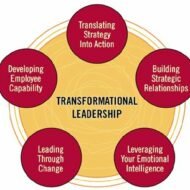
Transformational Leadership What is Transformational Leadership: a leadership approach that causes change in individuals and social systems. Humans generally prefer to have a serene life without much hitches or hurdles in the way. Even if they are to witness a problem situation, they tend to pull themselves away from the scene of action to avoid consequences that may lead to complications at a later date. Very few are bestowed with qualities that make them appear exceptional to the eyes of ordinary men and women. Such people bring wonderful transformations in the lives of people, who willingly follow the leader and support the cause. Need for Transformational Leaders: In business environment, there has always been this debate, whether transformational leaders show success! But it has to be kept in mind that each component of transformational leadership has relevance for improving the decision-making process. In comparison, individually considerate leaders make sure that all parties to the problem are heard. Intellectually stimulating leaders reformulate with followers, colleagues, or superiors into more familiar and concrete terms, what may have begun as fuzzy. Inspirational leaders increase confidence and raise aspiration levels, that the problem can be solved once its causes have been determined. Decision-Making Styles: Leaders with idealized influence show their concern about the problem and the need for its solution. The common thread that emerges from the discussion on decision-making is that decision making styles may be primarily viewed as being based on logic or feeling and instincts. The rational and intuitive decision-making styles are generally considered in conjunction since they represent two ends of a continuum as observed through most studies. While making decisions, transformational leaders are more likely to Be proactive to incipient problems, anticipating the emergence of problems more frequently and farther in advance. Incremental, taking small steps toward problem solving without waiting for a guarantee of complete success. Willing to look at a problem in a larger context and longer time frame. Encouraging of search and choice that take into account the wider context of the larger organization and outside environment rather than limiting the search to the immediate neighborhood of the problem. Quick to react to emergent problems. Seeking information informally for making their decisions rather than prescribed by organizational rules. Practicing walk-around management to promote the upward flow of communication and information. Making decisions involving higher payoffs at higher risks rather than decisions that favor exploitation and achieve lower payoffs at lower risks. Willing to take failure in their stride. Rationale in Making Decisions: The rational style of making decisions is deliberate, analytical, and logical assessing the long-term effects of decisions and having a strong fact-based orientation. The intuitive style is feeling-oriented and based on internal ordering of information. Such decisions are made quickly. The dependent style is characterized by use of support from others while delay and denial characterize the avoidance style. The spontaneous style displays a strong sense of immediacy and an interest in getting through the decision-making process as quickly as possible. A transformational leader would more likely to make decisions rationally after considering carefully all the facts and information and spending a considerable time over the decision-making process. Transformational leadership will be positively related to rational, spontaneous and dependent decision-making styles, and will be negatively related to intuitive and avoidance decision making. The interaction effect of rational and dependent decision making styles on transformational leadership will be...
Posted by Managementguru in Business Management, Human Resource, Organisational behaviour, Principles of Management, Project Management, Training & Development
on Mar 19th, 2014 | 0 comments
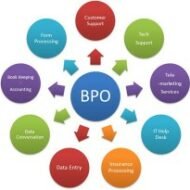
Call Centre Challenges The emergence of numerous “call centers” in developing countries like India and China, has posed some serious threats to the employees of these concerns. The concept of call center is a new find of the modern era, where they handle volumes of business process outsourcing for the developed countries. What are the various operations carried on in a call center? They handle inbound and outbound customer care services, telemarketing services, e-mail management services, pay roll accounting, help desk and many more back end activities. Benefits of Outsourcing: It proves to be a win-win situation for both the parties; the outsourcing company benefits from cheap labor, and the company that does the job earns good pay in the form of foreign exchange. But one has to understand the nuances of the call center operations; how it can be really worked out to one’s benefit? If you have a direct link with the outsourcing company, there is no need for you to share the profit. If the job is sublet to you, then your share gets reduced down the line. And also, the pay comes in a cycle of 45 days or so. So, it becomes mandatory that you should have the wherewithal to rotate your own funds for that 45 day period time, to fulfill establishment costs, power costs, salary and other miscellaneous expenses. What is the Pressure Situation? Let’s not get into the details of how to establish a call center and the necessary infrastructure to start one. The business has created a pressure situation, as it calls for erratic work hours and disturbed eating and sleep patterns. Definitely, it affects the youth, who form the major population of call centers, psychologically and socially as well. The erratic work schedules, (they work round the clock in shifts) the intense work pressure to achieve targets eventually leads to a pressure cooker like stress situation. Their altered sleep cycle is dangerous to both their physical and mental health. It is an evident fact that more number of persons working in this industry has started complaining about their physical and mental problems like Anxiety Depression Relationship-related problems Headaches Disturbed appetite Hearing loss Changes in thyroid and adrenaline levels Loss of weight Obesity and Smoking to reduce immense tension is also witnessed. The call center business has been a flourishing business in developing nations, though recently we tend to see a lull in the market, owing to the government regulations of the developed nations. Even the economy of developed countries, has taken a huge plunge owing to the recent economic recession. Naturally, when their financial markets have become unstable, they would not want to outsource to low-cost developing countries. The BPO’s or KPO’s (business process outsourcing and knowledge process outsourcing), as they are called should not become a fad, instead, developing nations can also concentrate on indigenous business clients, that are in need of their services. Note: India is the leading country for offshore outsourcing. The offshore outsourcing industry started in India and it has been able to grow the IT and BPO export sector to $47 billion and capture more than half the offshore outsourcing...
Posted by Managementguru in Decision Making, Human Resource, Principles of Management, Project Management, Training & Development
on Mar 19th, 2014 | 0 comments

Crafting a solid career plan is the cornerstone of professional success and personal fulfillment. Whether you’re just starting out or aiming to advance your career, a well-thought-out plan provides clarity, direction, and motivation. In this guide, we’ll explore practical steps to help you devise a career plan that aligns with your passions and goals. Have you ever thought about how to gain insight into yourself? Well, it is high time, if you really want to make it to the top of your career path and it is supposed to be the best personal strategy. Setting up of long-range plans helps you to formulate your career strategies accordingly. To reach the destination, you need to have clear travel plans. Likewise, devising your career plans is inevitable to reach the ultimatum in your work environment. Following is a Five step chart to help you create a solid career plan Self-Evaluation What do you enjoy? What are your priorities? Strengths and weaknesses? Name the things you want from a job? Skills Analysis What are your qualifications and experience? What are your key strengths and skills? What are your biggest achievements to date? What are your areas of development/ which area of interest excites you the most? Set your direction The broad industries that really appeal to you. The types of roles that would suit you best. How these options match your personal preferences? Key skills you’ll need to develop. Commit to a time frame Make milestones for the next six, twelve, eighteen months. How will you achieve your training and education goals? How will you gain additional skills and experience needed? How will you expand your network, and by when? Review your career plan Now you know your goals and how to achieve them, monitor your progress at least every six months to stay on track. The Following Tenets Will Infuse Some Confidence to Those Who Want to Achieve Set your goals high Never settle for less Never under estimate yourself You are born to achieve something You are different from others You possess that “in thing” that is going to take you places Career advancement is something that is not the sole proprietorship of the managerial cadre. It applies to anyone who has the “will” to learn and move forward. One’s attitude towards time, achievement, change, material things, work etc., determines the extent to which he is prepared to pursue his career with a long-range plan. Decision Making Another important aspect of career planning is the tough preposition of decision making. If a qualified and experienced manager is adept in all areas of management, naturally he gets confused as to “which way to go”, when presented with a chance to take up another job, in pursuit of better career prospects such as pay or promotions. People sometimes tend to resist career planning for the fear of making decisions and sometimes due to the fear of failure of achieving goals in the new set up, which might be a big blow to their ego. This dilemma of choosing a goal is commonly noticed in students who want to pursue higher education. Since it involves not only decision making but also determines their capability to be successful in the chosen field of activity. If an individual wants to become a doctor, he or she has to give up to pursue other opportunities, say, to become a lawyer or an engineer. Commitment Furthermore, career advancement means more involvement and commitment, which makes you a quick learner. And in the process to achieve your goals, you become well versed in the area of specialization, however complex the subject or situation may be. Psychology has its role to play in career planning...
Posted by Managementguru in Business Management, Entrepreneurship, Human Resource, Leadership, Principles of Management, Training & Development
on Mar 18th, 2014 | 0 comments
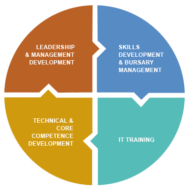
Executive Development – Options are Wide Open Who is an Executive: A person or group having administrative or managerial authority in an organization. While “executive” and “manager” and “leader” are often used interchangeably, “executive” is commonly used to signify the top 5% to 10% of the organization. Executive Development : aimed at developing the skills and competencies of those that (will) have executive positions in organisation. Capabilities of a Good Manager: A good manager can make an organization grow, survive and shine amidst tough competition, if he is bestowed with corporate competencies such as perseverance, capacity to put in hard work, sense of loyalty and responsibility, all of which may be inherited or acquired qualities. Loyalty stems from internalized morality that may be a result of his value system. Executive success is what the organizations should aim for, and firms should try to figure out the fundamental components that make up the success formula or equation. Road to Self-Development: In less developed countries, employees are more than satisfied if they are provided with a job that offers safety and security. Their thinking is restricted to mere physical and biological comforts and does not go beyond that point, where self development and self-actualization come into the picture. In developed countries, the situation is quite different, where the workers aim for empowerment and look for reasons that motivate them to do a job. Money also has its due role to play, and people whose wages are very meager cannot be expected to aim for empowerment, where their single motive is mere survival. Abraham Maslow’s Point of View: Abraham Maslow puts forward the hierarchical needs theory, arguing that, there are five levels of needs for people in general, right from physiological needs at the bottom of the pyramid and need for self actualization at the top, and safety, security and esteem needs coming in between. He points out that, once a need is satisfied, it ceases to be a motivator. This is so evident in our day to day lives, where wants and needs never cease to exist and once a want is satisfied, human mind wanders to catch hold of another. So, organizations should understand and analyze, what factors best motivate their employees, particularly their managers (who might serve as a source of inspiration to their subordinates).It should be remembered that non-availability of jobs leads to dissatisfaction whereas availability of jobs need not motivate employees. Some factors which have been proven to be real motivators are as following: Recognition Opportunities for self development Additional responsibilities(lateral expansion) Timely rewards(in terms of money and appreciation) Security Inculcating a sense of belongingness Conducive corporate atmosphere Corporate culture Good human relations Economic burden makes people less enthusiastic and anxious in developing countries and this hinders them from delivering to their fullest potential. Also the bureaucratic approach followed by conservative firms, autocratic leadership style and lack of supportive atmosphere make people work like automatons devoid of creativity. Such firms may show good results in terms of productivity initially, but in due course has to pay the price, in terms of absenteeism, high attrition rates and less efficiency. It has been proven that job satisfaction is directly proportional to efficiency. When people find a job tedious and monotonous, they tend to lose interest, which will be evident from their lack lustrous performance. Performance management has its bearing on executive success and by providing with ample scope for career advancement and autonomy; managers prove their mettle even within limited scope of resources. Acceleration of executive change implies the development of the executive mind for performing managerial activities in a better way. Note : A survey of CEOs in Fortune 500 enterprises indicated that executives spend little time with their...