Posted by Managementguru in Accounting, Financial Accounting, Financial Management, Management Accounting, Project Management, Training & Development
on Jan 21st, 2015 | 0 comments

What Does a Career in Accounting Demands for? Are you vying for a career in accounting field? Everybody envy accountants for there is a misconception that they are Demi-Gods. Though a good accounts manager can act like one who can save you from a dire situation by manipulating the accounts skilfully, the demands and challenges in this field are too high to be savored. Purchase Your Copy of “Careers with a Degree in Accountancy and Finance” at Gumroad So what does it take to become a reputed accounts man in your circle and also enjoy what you do! Self analysis is the best way to understand what you really want to be. There are certain traits characteristic to people belonging to this community. See if you are gifted with those attributes; if not, you can always train yourself to gain expertise. 1. Are you good at numbers– Mathematics, Yuck! If this is your reaction please quit reading this article as numbers play an integral role in accountancy. Figures, Figures and more Figures determine the profit and loss status of a company. If you are passionate about playing with numbers it goes without saying you are already a half accountant. The thrill of taking control and handling numbers make or break a company. Jackie Mansion jocularly puts it – “Did you ever hear of a kid playing accountant – even if they wanted to be one?” 2. Are you a good listener and can you read between the lines? A good auditor will allow the client to talk and listen to what he says. Then he tries to extract the exact kind of information he needs to make the ends meet. Empathy is an innate quality and if you are not going to be a good listener then please revise your consideration of becoming an accountant. Sometimes the client may not know what you wish to seek; it is your responsibility to frame simple questions in a language that he understands and pull out answers. 3. Can you avoid being temperamental? 90% of the time your clients are going to say “No” to whatever you suggest. Alas, it is not their fault; the corporate Bosses and CEO’s always aim big and most probably will not be aware of the consequences of their impulsive actions. They always think about clinching a deal and conveniently overlook the effects of their financial and corporate decisions on the account and subsequently on the accountant. For example cash has to be handled very carefully and every penny has to be accounted for properly. A bank cashier will know the importance of cash handling as it is very important for them to balance the inflow and outflow at the end of the day. For corporate firms, it becomes mandatory to reduce the cash dealings and account every transaction in the form of a check or electronic transfers like RTGS or NEFT or EFT. The point is, you should have the nerve to talk to a company’s head if he is planning for a bad move and suggest what could be done for the good of the company (Income tax and Sales purposes). 4. Are you wise when it comes to choosing clients? Whether you are a part time practitioner, Full time accountant, Accounts manager or Free lancer, do your homework before accepting the offer. Ultimately you need to see your payments coming through and nobody works here for a song. Big practitioners take a big cut half yearly or annually but if you are a part time accountant, it is always better to go for monthly payments or get paid after the completion of individual project s....

Posted by Managementguru in Business Management, Entrepreneurship, How To, Marketing, Project Management, Startups
on Jan 5th, 2015 | 0 comments

Startup Business Plan for a Restaurant The success of any business, start with a good and efficient plan and this is true in the case of food service trades like restaurants. Generally, Startup food business planning for a restaurant should begin with an executive summary, which will give a summary or overview of the entire business plan. This can act as a blueprint towards guiding entrepreneurs from the initial stages to the first 3-5 years of operation. This plan will document each and every detail about the operation of the restaurant. We find the following article comprehensive and resourceful on “Great ideas for your restaurant.” Source: ALSCO.COM … Read on… http://www.alsco.com.au/2017/02/restaurant-business-plan-strategies/ Executive summary: When a professional Food service franchise business consultant is asked, the professional will suggest that the executive summary will identify how much financing will be needed to begin with the operations. It will also specify the funding needed until the food business begins to show up profits. Experts are of the opinion that income projections for the first three to five years should also be present in this summary. This part should also encompass a description of the proposed restaurant that identifies the unique aspects of the operation. Another great post on “Starting a Coffee Shop“, by Anna Kucirkova brings you concrete ideas needed to open a comfy coffee shop to rake in profits. Starting A Coffee Shop? Here’s What You Need To Know Restaurant Marketing – The Basics Concept: Professional food service franchise business consultant will also suggest that the concept, theme and the type of cuisine to be served in the restaurant and the important components that should be documented in detail in the food service startup plan. Here, the location of the restaurant should be identified. Startup expenses: In the process of startup food business planning, it is important that appropriate plan must be documented for anticipated expenses. Generally, there will be startup costs associated with the establishment of the restaurant and it will of course include one-time expenses like purchase of furniture, commercial kitchen equipment, building alterations and initial construction. In addition, other startup expenses include glassware, table linens, theme-compatible table settings, etc… Apart from these expenses, there will be administrative costs like permission from health department, business licensing fee, etc… Budgets: When it comes to preparing budgets, the costs for initial setup should be identified. Here, both fixed and variable expenses should be identified. Fixed expenses include those that are the same each month like lease payments. Variable expenses include regular menu items, whose cost will vary as per season. There are professional consultants, who can help people planning to start any type of food-related trades like a food truck business. They can give the appropriate suggestion for framing a food truck business plan. They are of the opinion that the some of the above-mentioned items like budget and startup expenses should be included in the process of the food truck business plan. Related Posts: The Viability of Running a Restaurant What is a Startup Cost? Article Source: Startup Business Plan For A...
Posted by Managementguru in Economics, Financial Accounting, How To, Project Management
on Nov 21st, 2014 | 0 comments

These article-embeds focus on the real estate scenario both in the US and India and how relaxation in Foreign Direct Investment Policies has brought about a sea change in the minds of foreign investors on viewing India as one of the major sources of potential investment. And most importantly real estate in India is in a boom thanks to the constant urbanization and interest of NRI people who want to invest in properties in big Indian cities like Mumbai, Cochin, Pune, Bangalore and Chennai. Some light is also thrown on how to handle the capital gains when a property is sold. One has to be aware of the tax implications that arise while selling a property and the proceeds have to be properly accounted for. Real Estate looks enterprising in India and always has been so since people of our country treat land and gold as dependable assets. Owning a house or a property is a status symbol too and people save money to buy land and build their dream houses. This saving tendency has supported the growth of our economy very well and has rather saved it from tumbling down unlike what happened in the recent recession in the US. Some Interesting Real Estate Quotes to keep you in Good Humor: “It is a comfortable feeling to know that you stand on your own ground. Land is about the only thing that can’t fly away.” ~Anthony Trollope “The best investment on earth is earth.” ~Louis Glickman “He is not a full man who does not own a piece of land.” ~Hebrew Proverb “A man complained that on his way home to dinner he had every day to pass through that long field of his neighbor’s. I advised him to buy it, and it would never seem long again.” ~Ralph Waldo Emerson “As long as you have more cash flowing in than flowing out, your investment is a good investment.” Robert Kiyosaki Read and enjoy the following articles: What To Expect From The Real Estate Market In 2014 Focus of Overseas Investors on Indian Real Estate Market How to save capital gain taxes in real estate? UDEMY, the educational platform is offering real estate courses at a big discount and I reckon the following courses would help real estate brokers and agents to hone their skills in terms of online presence and marketing. Gain Leads and Colleagues with a Real Estate Website/Blog Creative Real Estate Investing & Flipping...
Posted by Managementguru in Business Management, How To, Project Management, Startups, Strategy
on Nov 17th, 2014 | 0 comments
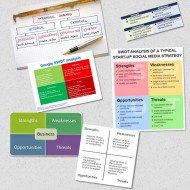
A startup thrives on innovation, resilience, and strategic execution. The secret lies in solving real problems with passion while adapting quickly to challenges. First-time entrepreneurs are often oblivious to their own weak spots. Getting to know your strengths and weaknesses is easier said than done. Self-assess yourself by making a simple list of every business skill you think you possess. Then, add other skills that you think make a good leader/business owner. Add any additional questions you think would be helpful. Take stock of the lacunae in your skillsets, and rank which positions you need to hire first. “Don’t be a lone wolf. Lean on the experience and smarts of your teammates, investors, and mentors to help solve the tough problems and take advantage of the opportunities – SETH BANNON, Amicus Factors for Startup Success If you want your business to be successful, challenge yourself, be honest with yourself, surround yourself with talent, and watch success find you. As you reflect back on the evolution of your business, it will be clear to you that you would not have gotten to this point had you not identified your strengths and weaknesses, looking to fill your weaknesses with external talent. “Know your core competencies and focus on being great at them. Pay up for people in your core competencies. Get the best. Outside the core competencies, hire people that fit your culture but aren’t as expensive to pay.” – Mark Cuban A start-up small consultancy business might carry out the following SWOT analysis Why Use SWOT Analysis? SWOT Analysis is a very effective way of identifying your Strengths and Weaknesses, and of examining the Opportunities and Threats you face. Carrying out an analysis using the SWOT framework helps you to focus your activities into areas where you are strong and where the greatest opportunities lie. Strengths Being able to respond very quickly due to lack of bureaucracy and red tape, no need for higher management approval, etc. Being able to provide hundred percent good customer care and satisfaction Strong reputation within the market Being able to adapt to the changing market quickly Little overhead, so can offer good value to customers Weaknesses The company has no market presence or reputation Has a small staff with a weak skill base in many areas Vulnerable to vital staff attrition Cash flow will be unreliable in the early stages Opportunities Business sector HAS SCOPE FOR EXPANSION , with many future opportunities for success Local community wants to encourage local businesses as it provides work opportunities to the people of that community Competitors may be slow to adopt new technologies Threats Will developments in technology change this market beyond our ability to adapt? A small change in focus of a large competitor might wipe out any market position we...
Posted by Managementguru in Business Management, Entrepreneurship, How To, Marketing, Project Management, Startups
on Oct 30th, 2014 | 0 comments
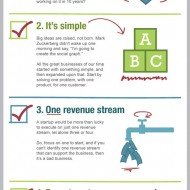
Successful Startup Secret – Choose an idea you think is important Entrepreneurs often ask, “How do you pick an idea for a business?” and the question is difficult to answer. It all depends on your expertise, experience, financial strength, industry knowledge and of course a great team to back you up. A good place to start is with the people you surround yourself with. A great idea is undoubtedly the catalyst to set things in motion, but at the end of the day, it’s the team you hire who ultimately determine the success, or failure, of the company. There’s no precise or familiar formula, but the following five open secrets will help you in discovering that perfect magic to achieve your goals (to be discussed in five sessions). The first secret being, Choose an idea you think is important – It is Your Brainchild “Ideas are considered generally bad for two very different reasons: (1) so uncommon no one gets it or (2) so common, seems redundant. -Zaid Farooqui An idea for a new startup is like naming your baby. Suggestions pour from all quarters and the fun part is you are not going to like any one of those. Ultimately an entrepreneur would like to give life to his very own idea which may come as a boom at the grocery store, in the shower, or even during sleep. There is no better form of motivation than having a sense that you are investing your mind, soul and energy into something vital, and that never ending passion to become successful in your endeavor. Once you’ve done that, ask your friends and family, too. Getting as much input as possible is the first step to making a good decision. 1. Does your customer exist? 2. Will your business idea still be relevant in a few years? 3. Do you really want to run this business? 4. Who is your competition (and does it matter)? Pic Courtesy: Inacademy.eu You need mammoth strength, I’m talking about your will power to start and run the show, for which you need to believe in yourself completely. This is the first step, “Believing in yourself”, the rest follows automatically. This self-belief comes when you possess the right business proposition for the right target segment with a clear business plan. Startup Business Plan For a Restaurant Here I have listed some of the enterprising startup ideas that have shown growth in 2014 and seem to be lucrative in the years to come: Online store – Requirements: A good product or service, a reliable and authentic payment gateway, a easily navigable website and a large market. Personal Training – Requirements: Expertise and Knowledge on nutrition and exercises, a facebook page, a skype account or Google hang-out to build followers, a subscription payment gateway through Paypal or other similar bank accounts. Photography– Requirements: A state of the art camera, a great portfolio of your pictures, a creative facebook page or pinterest board to promote yourself. Online Teaching– Requirements: Expertise in the concerned subject, member in a popular teaching platform or your own website, an LMS software, skype account. HR Recruitment– Requirements: Huge contacts in the industry, a reliable partner, a good website with testimonials, understanding client requirements and satisfying by supplying appropriate talent. These ideas suit people with minimum investment in mind, but if executed properly you can establish yourself nicely in a span of two years and then there is no looking...