Currently Browsing: Principles of Management
Posted by Managementguru in Decision Making, Human Resource, Motivation, Organisational behaviour, Principles of Management
on Mar 19th, 2014 | 0 comments
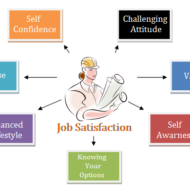
Are You Happy with Your Job What is your attitude towards Job? How many of us go to work with cheery attitude and positive framework of mind. Most of us treat work as a duty or accountability. Either way it does not solve the purpose. If you treat job as a duty, there can never be any enjoyment attached to it. In case of accountability, you work to reach some targets without any passion for the job or you spend most of your time dreading the thought of reporting to your superior. Without involvement and love, any job is not complete and people experience only “Job Satis-friction“and not satisfaction. Have you thought about it? Scenario in Developing Countries: In most of the developing countries the proportion of dissatisfied group dominates the satisfied set of employees. This is because preference and priority is to earn the daily bread rather than achieving anything big. Well, this attitude shall be attributed to the low income group where without work their lives cannot go on. But the bottom line remains the same, the work should be satisfying. So, what are the terms? Also See: Performance Appraisal High Income Group: In high income group and higher level jobs where the work is very challenging, we see that the employees are very much satisfied with their work. They need constant battles to win over and are provided with such an environment that puts their think tanks into full use. But is it enough to keep them satisfied; no, the reward system has to be equally compensatory. Rewards in terms of pay, perks, recognition, appreciation, social status, awards and what not. So, how do we correlate satisfaction factor with productivity? The organization has to maximize the positive relationship between performance and reward systems. Also See: How to Handle Attrition 30 Simple Ways to Make Your Employees Happier Repetitive and Monotonous Jobs: Repetitive and monotonous jobs make a person dull headed and a stereotype; his enthusiasm is absorbed to the extent that he fails to understand and rejuvenate his skills. The job content should provide at least some sort of cheer and interest to the performing individual. Say for instance, you manufacture plain paper cups, if you decide to incorporate some floral designs on the covers; you very well witness a fresh whiff of enthusiasm amongst your work force. Such is the power of variety and change that brings cheer into human lives and attitude. If you are a terrific boss everybody will like you but if you are a source of terror, chances are there that there is a high turnover ratio in your company. People after all expect certain level of consideration and warmth from their bosses. Organizations must make the individuals perceive their roles properly to affirm satisfaction and to avoid conflicts. Career Advancement: Courtesy – Roscostretch Career advancement is what most of the people aspire and when they don’t find any scope for advancement their interest in the job gradually decreases. Merit versus experience factor also has its say over deciding the next probable candidate for promotion. The top level management, especially the human resource department must ensure the employees with a supportive environment that paves the road for collaborative effort and in turn internal satisfaction. Job Satisfaction: Job satisfaction has to be considered from a broader perspective that encompasses all the independent and dependent variables that affect the nature of a particular job. This is very vital to an organization as job dissatisfaction leads to absenteeism, high turn over or attrition and decline in productivity. A dissatisfied employee is always a pain who can create problems by voicing his protest, gathering the union, neglecting his work or quitting. To avoid friction in the minds of...

Posted by Managementguru in Change management, Decision Making, Entrepreneurship, Human Resource, Leadership, Principles of Management
on Mar 19th, 2014 | 0 comments
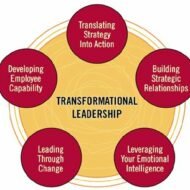
Transformational Leadership What is Transformational Leadership: a leadership approach that causes change in individuals and social systems. Humans generally prefer to have a serene life without much hitches or hurdles in the way. Even if they are to witness a problem situation, they tend to pull themselves away from the scene of action to avoid consequences that may lead to complications at a later date. Very few are bestowed with qualities that make them appear exceptional to the eyes of ordinary men and women. Such people bring wonderful transformations in the lives of people, who willingly follow the leader and support the cause. Need for Transformational Leaders: In business environment, there has always been this debate, whether transformational leaders show success! But it has to be kept in mind that each component of transformational leadership has relevance for improving the decision-making process. In comparison, individually considerate leaders make sure that all parties to the problem are heard. Intellectually stimulating leaders reformulate with followers, colleagues, or superiors into more familiar and concrete terms, what may have begun as fuzzy. Inspirational leaders increase confidence and raise aspiration levels, that the problem can be solved once its causes have been determined. Decision-Making Styles: Leaders with idealized influence show their concern about the problem and the need for its solution. The common thread that emerges from the discussion on decision-making is that decision making styles may be primarily viewed as being based on logic or feeling and instincts. The rational and intuitive decision-making styles are generally considered in conjunction since they represent two ends of a continuum as observed through most studies. While making decisions, transformational leaders are more likely to Be proactive to incipient problems, anticipating the emergence of problems more frequently and farther in advance. Incremental, taking small steps toward problem solving without waiting for a guarantee of complete success. Willing to look at a problem in a larger context and longer time frame. Encouraging of search and choice that take into account the wider context of the larger organization and outside environment rather than limiting the search to the immediate neighborhood of the problem. Quick to react to emergent problems. Seeking information informally for making their decisions rather than prescribed by organizational rules. Practicing walk-around management to promote the upward flow of communication and information. Making decisions involving higher payoffs at higher risks rather than decisions that favor exploitation and achieve lower payoffs at lower risks. Willing to take failure in their stride. Rationale in Making Decisions: The rational style of making decisions is deliberate, analytical, and logical assessing the long-term effects of decisions and having a strong fact-based orientation. The intuitive style is feeling-oriented and based on internal ordering of information. Such decisions are made quickly. The dependent style is characterized by use of support from others while delay and denial characterize the avoidance style. The spontaneous style displays a strong sense of immediacy and an interest in getting through the decision-making process as quickly as possible. A transformational leader would more likely to make decisions rationally after considering carefully all the facts and information and spending a considerable time over the decision-making process. Transformational leadership will be positively related to rational, spontaneous and dependent decision-making styles, and will be negatively related to intuitive and avoidance decision making. The interaction effect of rational and dependent decision making styles on transformational leadership will be...
Posted by Managementguru in Business Management, Human Resource, Organisational behaviour, Principles of Management, Project Management, Training & Development
on Mar 19th, 2014 | 0 comments
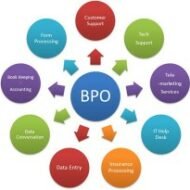
Call Centre Challenges The emergence of numerous “call centers” in developing countries like India and China, has posed some serious threats to the employees of these concerns. The concept of call center is a new find of the modern era, where they handle volumes of business process outsourcing for the developed countries. What are the various operations carried on in a call center? They handle inbound and outbound customer care services, telemarketing services, e-mail management services, pay roll accounting, help desk and many more back end activities. Benefits of Outsourcing: It proves to be a win-win situation for both the parties; the outsourcing company benefits from cheap labor, and the company that does the job earns good pay in the form of foreign exchange. But one has to understand the nuances of the call center operations; how it can be really worked out to one’s benefit? If you have a direct link with the outsourcing company, there is no need for you to share the profit. If the job is sublet to you, then your share gets reduced down the line. And also, the pay comes in a cycle of 45 days or so. So, it becomes mandatory that you should have the wherewithal to rotate your own funds for that 45 day period time, to fulfill establishment costs, power costs, salary and other miscellaneous expenses. What is the Pressure Situation? Let’s not get into the details of how to establish a call center and the necessary infrastructure to start one. The business has created a pressure situation, as it calls for erratic work hours and disturbed eating and sleep patterns. Definitely, it affects the youth, who form the major population of call centers, psychologically and socially as well. The erratic work schedules, (they work round the clock in shifts) the intense work pressure to achieve targets eventually leads to a pressure cooker like stress situation. Their altered sleep cycle is dangerous to both their physical and mental health. It is an evident fact that more number of persons working in this industry has started complaining about their physical and mental problems like Anxiety Depression Relationship-related problems Headaches Disturbed appetite Hearing loss Changes in thyroid and adrenaline levels Loss of weight Obesity and Smoking to reduce immense tension is also witnessed. The call center business has been a flourishing business in developing nations, though recently we tend to see a lull in the market, owing to the government regulations of the developed nations. Even the economy of developed countries, has taken a huge plunge owing to the recent economic recession. Naturally, when their financial markets have become unstable, they would not want to outsource to low-cost developing countries. The BPO’s or KPO’s (business process outsourcing and knowledge process outsourcing), as they are called should not become a fad, instead, developing nations can also concentrate on indigenous business clients, that are in need of their services. Note: India is the leading country for offshore outsourcing. The offshore outsourcing industry started in India and it has been able to grow the IT and BPO export sector to $47 billion and capture more than half the offshore outsourcing...
Posted by Managementguru in Decision Making, Human Resource, Organisational behaviour, Principles of Management, Training & Development
on Mar 19th, 2014 | 0 comments

Grading employees’ performance helps identify strengths and areas for improvement, fostering growth and productivity. It ensures fair evaluations and supports career development within the organization. Organizational Development Organizational Development denotes an overall and comprehensive development of an organization supported by the entire team of employees working for that organization. A useful technique in the management process that serves as a measure of performance and productivity is “performance evaluation” or performance appraisal. Performance refers to the degree of accomplishment of the task that makes up an individual’s job. Performance appraisal serves the following purpose To assess the present levels of employee performance. To understand the future needs in training and development based on the strengths and weaknesses of the employees. To provide feedback on their performance. Serves as a basis for reward allocation, such as, increase in pay scale, promotions and many other decisions like, confirmations, transfer, demotion etc., Establishes performance standards and offers scope for improvement. Acts as a motivational tool for workers to perform better. Checks and facilitates employees who exhibit poor performance. Also assesses behavioral pattern of the employees. People who work for big corporate companies identify themselves with the objectives of the company and expect feedback, either in the form of a compliment or criticism. Compliments act as morale boosters to perform better and criticism though initially might puncture the ego, induces the potential to perform, to prove oneself. Managers should never be reluctant on their part to appraise subordinates on the job expectations and demands. In an activity as important as managing, there must be no pitfalls to measure performance as accurately as possible. The Appraisal Process The next important aspect in the appraisal process would be deciding the content to be appraised. Individual task outcomes where performance is evaluated on the outcomes delivered by the individuals, evaluation of personal characteristics and traits or behavior are done to rate the employees as to where they stand in terms of performance. Appraisal Techniques The widely used managerial technique in the appraisal process is evaluating performance against verifiable objectives, which truly makes sense, because the employees would be blind folded if they don’t have the right direction to proceed. Evaluation can be done in a comprehensive, periodic or continuous fashion. It all depends on the nature of work done, company practice and other situational factors. Say, for instance, performance review can be done after the completion of a major project, that makes sense, doesn’t it? Periodical reviews Formal reviews can be supplemented and supported with frequent and short informal reviews, for the superior- subordinate relationship to prosper and to keep communication channels open. All said and done, performance review based on verifiable objectives, although gives better vision and clarity, doesn’t allow the manager or subordinate to grow individually. It does not help in personality development; the emphasis ever being focused on accomplishing the operating objectives. The 360 Degree Appraisal The latest approach of performance evaluation is the 360 degree appraisal that well suits the managerial cadre. It provides for performance feedback from the full circle of daily contact, that a manager might have, ranging from customers, peers, subordinates, boss etc. , This also fits into organizations that have introduced teams, employee participation and total quality management...
Posted by Managementguru in Business Management, Human Resource, Organisational behaviour, Principles of Management, Training & Development
on Mar 19th, 2014 | 0 comments
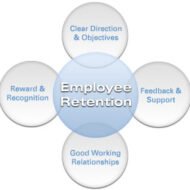
New Paradigms in Employee Retention What is Employee Retention: It refers to the various policies and practices which let the employees stick to an organization for a longer period of time . It refers to the ability of an organization to retain its employees. HRM Practices: A company to ground itself successfully in the chosen field of activity should adhere to sound human resource management practices, as it is firmly believed that human resource is an asset and investment in human capital paves way for comprehensive development. Many firms fail, in spite of being resourceful in terms of capital, infrastructure and technology. The reason shall be attributed to ineffective handling of human skills or misappropriation of human potential. Human resource management involves not only in recruiting and selecting the right people but also empowering them by suitable training to enhance their technical skills and expertise to perform tasks. The Purpose of Training: Training ultimately aims at converting theorists to performers and orients itself towards accomplishing the enterprise objectives. Big corporate companies concentrate on talent acquisition from the pool of fresh graduates and experienced hands in the IT industry as well. They create a lively corporate atmosphere with “an intelligence network” contributing to the success of the organization. Recruitment and Selection: If you have a feeling that, recruitment and selection are mere procedures to be followed for the sake of selection of human resource, kindly change that notion. These are the crucial steps which determine the fate of your organization. People from different disciplines form a team to achieve the goals and objectives of your organization. Leading a group with such diversity is a feat in itself. Selecting knowledge workers whom you believe will achieve your corporate mission and devising the human resource practices in accordance with their work-life balance will yield great results. Training Programmes: Training programs are developed for different spheres of activity by experienced trainers under the guidance of the top management. Proper training to the trainees ensures maximum work done in minimum time. Training not only makes individuals more informative and knowledgeable but also action buffs. Learning is a key process in training that brings about the desired change in behavior. Corporate companies are also concerned about the career prospects of employees working for them, as they are very well aware of the fact that providing lateral and vertical growth prospects for their workers is the only possible way to retain them. Another way for employee retention is to offer compensation on par or higher than industry standards and periodic review of their pay or compensation in accordance with the performance standards. This method of evaluation is suitable only for companies where workers are highly self motivated and have the capability to understand what it takes to reach the next level in their career ladder. Flexi-Timings: Flexibility is introduced in work life by some of the big corporates who try to visualize the practical problems faced by their employees, particularly women, who come to work. They offer “flexi-timings” in work and support by running “crèche” to nurture new borns. It has been proved that a small siesta after lunch improves the brain activity. The HR policies formulated by the management must encompass all the elements needed for a holistic vision, mission and business growth. This can be made possible by maximizing the efficiency of human capital that adds value to the organization. Note: Companies will also continue to remain generous with pay packages but the big change will be that they will invest a lot more in training and development. “Acquiring talent is much more expensive than grooming...