Posted by Managementguru in Human Resource, Organisational behaviour, Principles of Management, Training & Development
on Mar 19th, 2014 | 0 comments
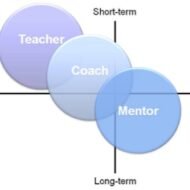
Coaching and Mentoring are the two strategic pillars of a business organisation without which the employees would be mere robots working without job satisfaction. The Definition. A coach is someone who provides guidance to a client on their goals and helps them reach their full potential. A mentor is someone who shares their knowledge, skills and/or experience, to help another to develop and grow. Objectives of Coaching The main purpose of coaching is to develop the employee as an effective perfomer. It involves the following: 1) Helping him to realise his potential as a manager. 2) Helping him to understand himself – his strengths and his weaknesses. 3) Providing him an opportunity to acquire more insight into his behaviour, and analyse the dynamics of such behaviour. 4) Helping him to have better understanding of the environment. 5) Increasing his personal and inter-personal effectiveness through effective feedback. 6) Encouraging him to set goals for further improvement. 7) Encouraging him to generate alternatives for dealing with his problems and prepare an action plan. 8) Helping him to review in a non-threatening way his progress in achieving various objectives. 9) Providing empathetic atmosphere for sharing and discussing his tensions, conflicts, concerns and problems. Download this Coaching Goals planner that will help you in measuring the outcome effctively. 👇 Coaching-Goals-PlannerDownload Objectives of Mentoring The main purpose of mentoring is to provide opportunity to young people to share their concerns and get both moral support and guidance for their development. It involves the following : 1) Establishing a relationship of trust 2) Modeling beahviorual norms for the young person 3) Listening to the person’s concerns and problems 4) Helping him to search alternative solutions for the problems 5) Sharing own relevant experiences 6) Responding to his emotional needs, without making him depend on the mentor 7) Developing long-lasting, personal, and informal relationship. Who is your most trusted advisor when it comes to important issues affecting your business? A small stats in percentage. Fellow business owner – 31Business coach – 24Family member – 18Accountant – 8Employee – 6Consultant – 4Friend – 3Lawyer – 2Other – 4 In which areas would a business coach have the most impact for your business? Strategic planning – 31PR / Marketing / Social media – 14Leadership – 11Succession planning – 9Managing change – 8Profitability – 8Productivity – 7Employee relations – 5Other – 7 Five Tips for Coaching Employees Define your role as a coach Create a safe environmentHelp them define and verbalize their answers, directions and actions. 2. Listen to what is said Be curious, Seek to understand“Tell me more….” “What’s happening….” 3. Observe what is heard and seen Focus on just the factsShare what you observe providing a judgement-less summary.“Here is what I heard you say….”“So it sounds like you are or want to….” 4. Validate what is felt -share the emotion and acknowledge it 5. Empower what is possible – Forward the thinking, explore, options showing faith and optimism. If you are like most of us, you are constantly striving for more engaged employees. Engagement not only leads to higher job satisfaction and lower turnover but also increases productivity and revenue. But how do we boost engagement among our teams? The answer is through coaching. 80% of those who have received coaching report positive impact in areas such as work performance, communication skills, well-being and business management strategies. Download this Achieving Goals Planner to form an idea about effective habits. 👇 Achieving-Goals-PlannerDownload 65% of employees in a strong coaching culture are highly engaged. Organisations with strong coaching cultures report revenues above those of their industry peer group and report higher employee engagement. While more and more organisations are using coaches as a key strategy...

Posted by Managementguru in Human Resource, Organisational behaviour, Principles of Management
on Mar 19th, 2014 | 0 comments
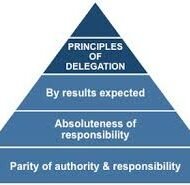
You Can Delegate Authority, but Not Responsibility Responsibility of a Manager: A corporate manager is accorded with the huge responsibility of leading his subordinates in the right direction, by giving proper insights on the tasks to be accomplished. The success rate depends on how well he delegates his authority down the line to get things done. The art of delegation results not only in down sizing his work pressure but also in the empowerment of subordinates, that elevates them to a higher plane of understanding and achievement. An Excerpt from The Art of Delegation: Developing This Essential Managerial Skill Delegation helps you handover the authority of certain tasks to capable team members so that you free up your time to work on more pressing issues. But you still remain responsible to get those completed in proper way. Hence it is essential to have a status check or communication with the team member on regular basis. Accountability of Subordinates: The subordinates, when entrusted with the responsibilities of performing a task by themselves and the necessary authority to make decisions within the area of their assigned duties, are obliged to perform. The necessary assistance and training for the new assignment has to be planned for, by the manager to make them perform as per the expected standards. The thing is right people should be chosen for the entrusted job. They should possess the zeal and enthusiasm to deliver the desired output. Some people perform beyond expectations and they should be rewarded with additional responsibilities. Whatever the case may be, it is a wise thing to delegate simple assignments at the initial stage, and proceed with more challenging jobs depending upon the caliber of the incumbent. THE ENTREPRENEUR’S GUIDE TO DELEGATION Clear and Clever Delegation: Clear and clever delegation facilitates to build a formal organization structure, where the subordinates are trained well and they look up to the manager for direction and guidance. Although the authority is delegated, the manager is held accountable and answerable to the management for the performance output or the end result. Some managers hesitate to delegate, just for the reason that their weaknesses might get exposed. Some don’t have confidence in their subordinates. Some even fear that they might lose their power if the subordinate is very shrewd and exceeds the expectations. Managers fail because of poor delegation; the reasons being personal attitude of managers in delegating authority. Let us understand some of the basic principles to be adhered to while delegating: The authority delegated to subordinates should be adequate enough to ensure their ability to accomplish the expected results. Authority can be delegated but responsibility can never be delegated. Responsibility of subordinates is “performance” and that of managers is “responsibility for the action of their subordinates”. One cannot be held responsible for a task if he has only limited authority. There need to be a balance between authority and responsibility. The presence of a single superior will invoke greater feeling of personal responsibility among the subordinates. Lack of receptiveness on the superior’s part will incur greater loss in terms of performance and efficiency. Instead, a manager should develop a trustful attitude towards his subordinates and should have the patience to explain the policies, objectives and guidelines and give sufficient authority to perform a duty. HOW WELL EMPLOYEES KNOW ABOUT YOUR ORGANIZATION? Although initially the efforts taken to train a subordinate is time consuming, the more empowered he becomes, less is your time taken to accomplish the enterprise objectives. The superior must be able to create a climate of mutual trust and goodwill, to make delegations effective in the light of expected...
Posted by Managementguru in Decision Making, Human Resource, Principles of Management, Project Management, Training & Development
on Mar 19th, 2014 | 0 comments

Crafting a solid career plan is the cornerstone of professional success and personal fulfillment. Whether you’re just starting out or aiming to advance your career, a well-thought-out plan provides clarity, direction, and motivation. In this guide, we’ll explore practical steps to help you devise a career plan that aligns with your passions and goals. Have you ever thought about how to gain insight into yourself? Well, it is high time, if you really want to make it to the top of your career path and it is supposed to be the best personal strategy. Setting up of long-range plans helps you to formulate your career strategies accordingly. To reach the destination, you need to have clear travel plans. Likewise, devising your career plans is inevitable to reach the ultimatum in your work environment. Following is a Five step chart to help you create a solid career plan Self-Evaluation What do you enjoy? What are your priorities? Strengths and weaknesses? Name the things you want from a job? Skills Analysis What are your qualifications and experience? What are your key strengths and skills? What are your biggest achievements to date? What are your areas of development/ which area of interest excites you the most? Set your direction The broad industries that really appeal to you. The types of roles that would suit you best. How these options match your personal preferences? Key skills you’ll need to develop. Commit to a time frame Make milestones for the next six, twelve, eighteen months. How will you achieve your training and education goals? How will you gain additional skills and experience needed? How will you expand your network, and by when? Review your career plan Now you know your goals and how to achieve them, monitor your progress at least every six months to stay on track. The Following Tenets Will Infuse Some Confidence to Those Who Want to Achieve Set your goals high Never settle for less Never under estimate yourself You are born to achieve something You are different from others You possess that “in thing” that is going to take you places Career advancement is something that is not the sole proprietorship of the managerial cadre. It applies to anyone who has the “will” to learn and move forward. One’s attitude towards time, achievement, change, material things, work etc., determines the extent to which he is prepared to pursue his career with a long-range plan. Decision Making Another important aspect of career planning is the tough preposition of decision making. If a qualified and experienced manager is adept in all areas of management, naturally he gets confused as to “which way to go”, when presented with a chance to take up another job, in pursuit of better career prospects such as pay or promotions. People sometimes tend to resist career planning for the fear of making decisions and sometimes due to the fear of failure of achieving goals in the new set up, which might be a big blow to their ego. This dilemma of choosing a goal is commonly noticed in students who want to pursue higher education. Since it involves not only decision making but also determines their capability to be successful in the chosen field of activity. If an individual wants to become a doctor, he or she has to give up to pursue other opportunities, say, to become a lawyer or an engineer. Commitment Furthermore, career advancement means more involvement and commitment, which makes you a quick learner. And in the process to achieve your goals, you become well versed in the area of specialization, however complex the subject or situation may be. Psychology has its role to play in career planning...
Posted by Managementguru in Human Resource, Motivation, Organisational behaviour, Principles of Management, Stress Management, Training & Development
on Mar 19th, 2014 | 0 comments
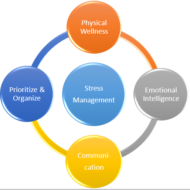
Did you know that without your knowledge, your health might be deteriorating due to pressure at work. Effective stress management is the only way out to become happier, healthier, and more productive. Whatever we do or say has a direct effect on our physiological processes as it affects our psyche-both positive and negative. While positive vibes act as a booster to our health, enhances the morale causing increased productivity which is “THE CONTRIBUTION FACTOR” in corporate organisations, negative vibes causes distress to the party affected and in-turn the organisation. Though in a small way, which is enough to cause great distress waves amonsgt the entire organisation through grapevine. Morale Surveys Therefore, it becomes necessary that every organisation takes some time to understand and analyse the mind-set of their employees to maintain the entire health of their firm. This can be done through surveys or questionnaires which serve as best platforms that shoulder employees’ opinion. On the side of the individual, he also should spare some time, from time-to-time to analyse his attitude towards the organisation and his/her colleagues and how it affects his/her performance. Management scholars say that “SELF-APPRAISAL” is the best tool for enhanced organisational performance and productivity. What is Stress? It is very important to understand what stress is, to combat it. Stress is nothing but a condition where people get excited emotionally or in other words ” a disturbed mental state” affecting the well-being. The causal agents may be physiological which can be medically treated or emotional which we are more worried about as emotionally unstable individuals cannot think properly which again leads to physical distress. It becomes therefore vital to know how we perceive and interpret things through our cognitive skills, again influenced by environmental factors to a considerable extent. People, particularly working in corporate environment and IT industry are subjected to much stress and they don’t know how to find a vent to their feelings or when there is no adequate support from the family side. What are the Ways Out? So, what is it we do at times like these? Not to bother. The mantra is “RELAX” to the maximum possible extent. First thing extract yourself away from the scene of action so that you could breathe some fresh air. Then think calmly and try to isolate the bug that is bothering you. Here the problem is the bug and analyse how far you have become vulnerable to the situation. Gauge the amount of damage done and rate the problem in terms of ” recoverable by myself- no help needed”, ” recoverable- but with external support”. Remember, for every problem there is a solution. It may not be tailor- made, but definitely passable with little bit of compromise from our end if necessary. 10 Yoga Poses You Should Do Everyday to Combat...
Posted by Managementguru in Human Resource, Motivation, Organisational behaviour, Principles of Management, Training & Development
on Mar 18th, 2014 | 0 comments
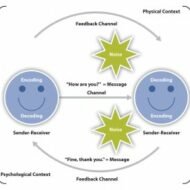
Promoting Effective Communication in the Work Place A purpose or an idea to be conveyed is needed for communication to happen. The question is how well or how successful you are in transmitting the message (mind you! without transforming it) to the receiver in the proposed meaning, whatever the channel might be! Communication must serve the following functions… Effective Control Motivational expression Information Fundamentally communication helps in controlling the behavior of the members of an organization in several ways. Either formal or informal, it controls the activities of the employees by prescribing certain procedures of communication to be followed when there is a grievance or a difficulty regarding his/her job, the work situation etc. Communication provides Vital Information: Communication also motivates people by clarifying what needs to be done, how to be done and how they are performing and what can be done to improve their performance. Most important function is that communication provides vital information that is crucial for members at all spans or levels to make effective decisions. The feelings of members are also articulated as grapevine in an organization, and in a way it serves as an outlet for their emotional expression. Grapevines: Grapevines are always not harmful, they might even give you information about the pulse of people working for you and if you are really sharp, “you can work it out to your advantage. Communication is always referred to as “oxygen”, we can feel only when it breaks down. Communication plays an important role in managerial and organizational effectiveness. Nevertheless, on the other side it can be the root cause of all the problems in your organization. This excellent infographic on Business Etiquette and Body Language Blunders clearly indicates how body language and gestures influence communication to a greater level. Source: www.thewebsitegroup.uk Effective Communication: In general, effective communication is the prerequisite for any healthy organization and the attainment of its standard objectives. Most of us are in fact aware of how our vocabulary has been modified to reflect political correctness. For instance we have replaced certain words like handicapped, blind and elderly by physically challenged, visually impaired and senior. One must be sensitive to others feelings. Words are the primary means by which people communicate; so due importance must be given for politically correct words both in the society at a larger level and in firms at the micro level. Increasingly, I find people like being addressed by their designation capacities. Even people might get offended if you call them by their first names as it is regarded to be disrespectful. But I think it is always better to address a person giving due respect to his position if you are reporting to him. That way there is no scope for conflicts and strained relationships. Western countries are more modern in their outlook and have a broader perspective on human interactions than the east. Gestures: Words mean different things to different people. In organizations, people of different background work together, so they have their own language of expressing their opinions and ideas. So it calls for a uniformity of language that is well understood and appreciated by all. Gestures also play their part in communicating ideas. So self controlled expressions, proper behavior are also necessary that completes a communication process. Ultimately proper communication leads to… Satisfied employees Effective feedback Organisational efficiency Freedom for suggesting ideas Enhanced interpersonal relationships Closely knit organisational network Encouraging trust and openness. Communication is an on-going process and the purpose is “not to dictate but to make the employees understand the big picture” as to how the process imparts success and viability to the...