Currently Browsing: Principles of Management
Posted by Managementguru in Business Management, Entrepreneurship, Human Resource, Leadership, Organisational behaviour, Principles of Management
on Mar 9th, 2014 | 0 comments
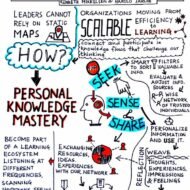
Profile of a successful leader Adaptive Capabilities: Leaders need to radically change their mindset so as to stand the test of time; but the core leadership attributes like vision or creativity, intelligence, commitment, and a healthy dose of luck still continue to define the pre-requisites of success. Integrity of Character is most important when talking about successful leadership. The philosophical undercurrent is that “Be Good, Do Good” and you will be good. The motive must be devoid of mistakes though there is room for mistakes in judgment. Leaders must have a clear vision and be able to communicate this vision to others so that it becomes a shared vision and everybody willingly contributes in fulfilling the vision. Six ‘C’s or six criteria that determine a leader’s credibility Conviction Character Care Courage Composure Competence Cross-Functional Expertise – Acquisition of knowledge should make a leader humble and flexible and gaining knowledge must be seen as a life long experience rather than collection of voluminous data or skills. A leader will try to apply his broad functional knowledge and expertise in the right places and the results will be definitely magnificent. A leader must look into the possible options rather than to plan, the possible rather than the perfect, involvement instead of obedience. Change is the only entity that remains unchanged and it is inevitable for the leaders to consider change as the core element of growth. With accelerated pace of change in the economic, political and socio-cultural environment, leaders not only need to acquire new knowledge and skills but they also need to unlearn many of the things that have out-grown their purposes. Leaders should follow the CODE OF PRIDE to motivate the workforce. P– PROVIDE FOR A POSITIVE WORKING ENVIRONMENT R– RECOGNISE EVERYONE’S EFFORTS I– INVOLVE EVERYONE D– DEVELOP SKILLS AND POTENTIAL E– EVALUATE AND MEASURE CONTINUOUSLY In large corporate organizations, the leader must be willing to share power and control so that leadership is encouraged at various levels. Successful leaders are those who are self-motivated by setting their own standards and compete with themselves. Innovation is the need of the hour What do you mean by innovation? Creating something new or modifying the old one. Here the term innovation implies the change in the “THOUGHT PROCESS” of leaders who are able to turn a crisis into an opportunity. Also called as “THINKING OUT OF THE BOX” where a leader finds new application for old ideas which cannot be discarded or dis-regarded. “You must learn from your past mistakes but not Lea(r)n on your past successes”. High achievers take moderate risks calculating the circumstances and they rely on their own abilities unlike low achievers who invariably like to minimize risks or take wild and irrational risks. Running a corporate business has become more like an experiment since we cannot control or predict the future. It is highly unstable and unpredictable. So leaders have to cope up with this non-linear force acting in the external environment building up pressure. Leaving things as they are can be just as predictable as changing everything, you lose or win both ways. Now let us look at some of the definitions of Leadership 1. “Leadership is generally defined as influencing people so that they will strive willingly towards the achievement of group goals.”- Koontz and O’Donnell 2. “Leadership is the lifting of man’s visions to higher heights, the raising of man’s performance to higher standards, the building of man’s personality beyond its normal limitations.”- Peter F.Drucker 3. “Leadership is the ability to secure desirable actions from a group of followers voluntarily without the use of correction.”- Alford and Beatty 4. “Leadership refers to the quality of the behavior of individuals where by they guide people on their activities in organized efforts.”- Chester I.Bernard Behavioral Commitments of a Leader: Challenging the process Challenging the status quo and act as radical change agents Inspiring others by being pioneers, instigators, navigators and learners Showing risk-taking ability,...

Posted by Managementguru in Human Resource, Interview Questions, Principles of Management, Training & Development
on Mar 8th, 2014 | 0 comments
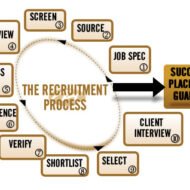
Recruitment Process Recruitment refers to that process carried on by the company to attract suitable candidates possessing the appropriate characteristics to help the organization reach its objectives. According to Byars and Rue, “recruitment involves a pool of people from which qualified candidates for job vacancies can be chosen.” The basic purpose is to develop a group of potentially qualified people. Recruitment Policy: The policies of recruitment are derived from the personnel policies of the organization where the company has to give due importance to government reservations, quotas, policies regarding sons of the soil, personnel policies of other organizations regarding merit, internal sources, social responsibility in absorbing minority sections, women etc. Sources of Recruitment: INTERNAL SOURCES: This include 1. Present permanent employees 2. Present temporary/ casual employees 3. Retrenched or retired employees 4. Dependents of deceased, disabled, retired and present employees. Why internal source is considered to be a better choice? To motivate the present employees To improve the morale aspect “Known devils are better than unknown angels”-The credibility of the present employees are well known and they can be judged easily Loyalty and sense of belongingness is there on the part of current employees The employees become highly committed when they are given a chance as they tend to shoulder more responsibility Employees’ psychological needs, economic needs for promotion and higher income can be satisfied Cost of selection can be minimized Similarly cost of training, induction, orientation, period of adaptability to the organization gets reduced Trade unions are happy Social responsibility towards the employees are discharged Good understanding and co-operation extended by co-workers Stability of employment is assured EXTERNAL SOURCES: 1. Educational and training institutes 2. Private employment agencies/exchanges 3. Public employment exchanges 4. Professional associations 5. Data banks 6. Casual applicants 7. Similar organizations 8. Trade Unions 9. Social media networking sites like Facebook and Linked in offer a huge platform for both recruiters and job seekers to find the best possible match. Why external source is considered to be a better choice? · The suitable candidates with skill set, knowledge and talent are generally available · Latest knowledge, skill, innovations or creative talent can be infused into the organization · Candidates can be selected without any pre- conceived notions or reservations · The cost shelled out for these external sources are minimum since they are placed in minimum pay scale · Expertise, excellence and experience in other organizations can be easily brought into the organization · Human resources mix can be balanced with different background, experience, skill etc. · Existing personnel will also broaden their personality · Quality of human resource will improve in the long run by development of unique culture RECRUITMENT TECHNIQUES: The management has to contact the prospective employees through various means and stimulate them for applying to the post prescribed. A. Promotions: This is a good technique to stimulate internal employees as they will be willing to shoulder more responsibilities if they are assured of promotions B. Transfer: If employees are transferred to the places of their choice, it will stimulate them C. Recommendations of the present employees: Management can contact, persuade the outsiders to apply for job in the organization through the recommendations to the candidates by the present employees, trade unions etc. D. Scouting: This is another way of recruiting where the representatives of a particular organization are sent to various sources of recruitment to motivate the prospective candidates to apply for the jobs. The representatives provide the necessary information about the company and clarify doubts of the candidates. E. Advertising: Though the popular and widely accepted way of recruitment, still it proves to be one-way communication. Newspapers, Magazines of all types, television and internet are the possible sources of advertising channels and internet marketing leads the rest. The technique of advertising should...
Posted by Managementguru in Business Management, Change management, International Business, Principles of Management
on Mar 7th, 2014 | 0 comments

GLOBALIZATION AND INTERNATIONAL MANAGEMENT Management as a concept has transcended all geographical boundaries and cultures to gain significance. International management has extended itself beyond traditional management practices reflecting different perspectives influenced by cultural diversity and conflicting social forces. The issue of cultural diversity is used to argue that it is divergence that is taking place and not convergence. The emphasis is on the national culture that acts as a key determinant in management behavior. National and regional differences may become one of the most crucial problems for management-in particular for the management of multinational, multicultural organizations, whether public or private. International Managers: Organizations are on the look out for international managers who could transcend themselves nationally to fit into any location for a specific job consideration. Managers are expected to live abroad and run the overseas division or company They are also sent to complete temporary assignments of limited duration, like plant installation and sales missions Companies aim at developing an international manager who can overcome a limited set of national and cultural boundaries, such as euro-manager, middle eats manager. Expatriates: Companies prefer to have their managers as expatriates, owing to the lack of availability of skills in the host country, to prevent dilution of control, to safeguard the overseas investment and to increase performance. But organizations also have to give a second thought about the cost involved in transferring the expatriates, recruitment and issues regarding legal restrictions. International managers have to possess the following skills to compete in the global environment. Technical expertise and experience Sound financial skills People skills, especially cultural empathy, team-building and motivation Intellectual skills, seeing the big picture, thinking macro not micro Emotional maturity, being adaptable,independent,sensitive to national culture,confident,having self awareness to overcome prejudice Having ambition, drive, persistence, stamina and energy. Focus of Global Organizations: Global organizations employ several techniques to develop international managers. They focus on in-house language, culture courses and tailored development programmes for host country managers, imparting education courses with an international base. International firms are also concerned about the power, politics, conflicting priorities, view points existing in the international scenario and they have to confront with coalition of vested interests. To cope, and more importantly to survive, in an organization, there is a growing view that managers have to become politically competent. De-Centralization: Decentralization is the key factor that is going to decide the developing trend of organizations in the years to come. A smaller, but more highly skilled, group of managers will assume an “expanded role” in clearly defined strategic business units. They will be given greater control over resources, technical, financial and human, and be expected to utilize those resources to achieve broad objectives and performance targets. A trend may develop where there is a shift by individuals away from the objective of managing a team of people towards a search for autonomy, creativity, growth and accountability for oneself, if the organizations fail to suitably reward the managers and present them with suitable career...
Posted by Managementguru in Decision Making, Principles of Management, Project Management
on Mar 7th, 2014 | 0 comments

Fundamental Aspect of a Project Planning is the fundamental aspect of any management system as it sets the direction or pathway, which the firm has to follow in order to accomplish the goals and objectives of an organization. In a project management or a process management, planning is the key function followed by preparation of a proposal or a report that analyses and defines the resources necessary to carry on the project. This project report can then be sent for evaluation by an expert consultant to determine the feasibility and viability of the project. Organising to Get the Desired Result A project undertaken has to be meticulously planned and organized to achieve the desired result in the given time frame. One has to understand that a project differs from a process in that, it involves fixed time fame and cost frame. Say,for instance, your firm is rewarded with a project to design ERP solutions for a big corporate company. What will be step one? You will try to gather all the details regarding organization structure and hierarchy, people involved and their designations, availability of physical resources, whether the corporate firm is technically equipped, product portfolio, strategic business units and their viability, distribution channels and so on., As one is aware, enterprise resource solution software integrates production, marketing and human resource departments to facilitate even flow of information and quick execution of orders without any time delay. Picture Courtesy: Project Management and Leadership Champions Data Collection Data collection is inevitable and has to be precise to attain your set goals. The next logical step will be deciding the time frame and allocating resources (human and other physical resources) to carry on the project. If you feel that the delivery deadline cannot be met with, you have to immediately inform your sponsors about the time delay and extend your time frame for the project to materialize. On -Time Delivery Projects that involve production and delivery of goods depend on the manufacturing cycle time and delivery lead time. Implementation becomes a cake walk if your business plan has incorporated, 1) well laid down step by step procedures, 2) leverage for uncertainty in the external environment and 3) focus on proper communication. Communicating the entire project plan as per the intentions to the people concerned is very vital for the success of a project, because people should understand, what needs to be done, what is one’s role, and the strategies evolved by the management. PERT and CPM Program evaluation and review techniques (PERT) and critical pathway method are some of the tools that help in ascertaining the progress rate of projects. These tools help in identifying specific milestones and activities that are to be carried out in a sequential manner and also to estimate the time required for each activity, with a help of a network diagram. A very interesting and simple video explaining how to determine project duration using critical path…. Success of a project management is determined by Decision making ability Communication skills Negotiation techniques and Time management skills, of the project manager and also depends on how well it protects the interests of the stakeholders involved. A project is a comprehensive team effort with the budget and time well within the scope of the...
Posted by Managementguru in Business Management, Organisational behaviour, Principles of Management
on Mar 7th, 2014 | 0 comments
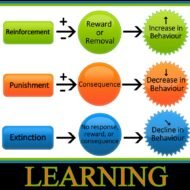
Reinforcers and Behaviour Changes Reinforcers induce and enhance the association between the cue and the expectancy. This leads to increased performance levels and positive attitude development. This is an effective and efficient strategy that has been proved to be successful. Reinforcement is inevitable for learning process and in a dynamic corporate business environment, unlearning the old things and learning and adapting oneself to satisfy the needs of the changing environmental and economic factors is the critical success factor that serves as the backbone of the success of the company. Significance of Learning: Learning is not the only attribute that gets enhanced by reinforcers; as a result there is a repetition of desirable behavior that helps in maintaining the consistency, cordiality and climate of the organization. Reinforces increase the strength of response leading to desirable or undesirable consequences depending upon the kind of reinforcer, which might be a reward or a punishment. Either way it elicits response that gets strengthened in course of time. Mindset of People: The management side that is the deciding authority has to come to clear terms with the kind of treatment applicable on specific situations; say for instance when there is a need to complete a project in the stipulated time or achieve quantifiable targets which may prove very challenging or increase the production capacity in order to retain a major market share. Whatever be the case, the morale of the workers down the line, executives who coordinate the process, the managers who manage and report has to be maintained in the highest order. The mind set of the people working for you is very important as it encompasses the quality of work done, commitment to duty and determination to reach the target on time. Rewards: Rewards always make people happy and are found to be positively reinforcing. If you feel that monetary rewards are always a better stimulus, you are wrong. Money is always considered to be a reward; to consider it as a reinforcer cannot be neglected but at the same time it definitely is not a positive reinforcer.Feedback on performance is rated high on the reinforcer scale which takes you to the next level as a performer. Modern organizations have understood the system’s anomaly that gives undue importance to the huge amount of data that speaks volumes about people and their merits and achievements. Is it really enough to know things about people? People expect feedback about their performance and people with some degree of achievement definitely have an intense desire to know how they are doing? The more specific your feedback is, better the impact and greater the delay between the performance and feedback, the less the effect. Work Environment: The work environment itself can serve as a very good positive reinforcer provided there is freedom of expression, liberty to participate and an open door policy adopted by the managers and superiors. The top level management must take utmost care to design the reward system in such a way that it warrants fairness and equity. Employees are motivated to go for self appraisals with goal setting that is the biggest reinforcer of all times. Recognition: Recognition, rewards and praise tend to boost the ego of individuals which you can work it up to your advantage. Punishment is one of the most used and convenient but least understood and badly administered aspect of learning and reinforcing. Punishment equally alters the behavior of your subordinates which becomes more complex in course of time. Positively dealing with your subordinates by giving them one more chance, of course with a warning might serve the purpose. If punishments modify the behavior...