Currently Browsing: Principles of Management
Posted by Managementguru in Accounting, Financial Accounting, Financial Management, Principles of Management
on Feb 28th, 2014 | 0 comments
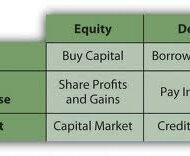
What is your Capital Structure Make up A company in course of charting out its financial schema has to take into account two things. 1) The amount of capital to be raised. 2) Make-up of the capital. Decisions regarding the composition or capitalization are reflected in capital structure. Capital structure of a firm is a combination of debt and equity, which supports long term financing of the firm. The pattern of capital structure has to be planned very carefully by the finance manager in such a way that it minimizes the cost of capital and maximizes value of stocks, thus protecting the interest of the share holders. What is the right capital mix? There needs to be a right mix of different securities in total cpaitalisation that facilitates control, flexibility and maneuverability. From a broad perspective, following are the three fundamental ways in which the schema of capital structure is finalized: Financing purely or exclusively by equity Financing by equity and preferred stock Financing by equity, preferred stocks and bonds. Which of the above most suits a firm depends on multifarious internal and external factors within which a firm operates. Equity: A firm can raise substantially large amount of fund by issuing different types of shares. The money thus raised is a permanent source of resource and without any obligation to refund to the respective owners. Small and growing companies go for equity fund raising as no banks or other financial institutions are prepared to fund these firms in lieu of poor credit worthiness. Even big corporate firms opt for issuing equities when there is a need to raise large sums. But smaller firms, whose major share of capital comprises of common stock, have to be careful, in that, some large concerns might become interested in controlling these stocks. Picture Courtesy : GrowthFunders The one big advantage of equity shareholders is that they are free to trade the shares in the market. They can sell the shares to anybody at any time and if the market warrants, at a higher price. One has really nothing to lose, if he is planning to invest in equities. On the other hand, if the company goes bankrupt, the share holders stand a chance to receive only the residual amount, after the creditors’ claims are cleared and satisfied. What’s in it for Investors? Debt: Debt has a maturity date upon which the stipulated sum of principal is repaid. It places the burden of obligation on the shoulders of the company in the form of periodical interest settlements and principal repayments. Creditors can go for legal action if the company defaults in payment of the assured sum on the specific date. That’s why companies think twice before they go for issuing debentures and other bonds. One good thing for the company is that, it can avail tax rebate on the securities of debt, but at the other end it has to satisfy the interest payments and factorise the cost of capital. Cost and Control Principles Cost principle supports induction of additional doses of debt, but it might prove risky, if the company is not able to service the additional debt. Control principle supports the issue of bonds in order to tighten the rein of ownership, but maneuverability principle discounts this and favors issue of common stock to reduce the interest burden. Four factors are important in the purview of the finance manager, cost, risk, control and timing. He should be able to evolve a pattern that satisfactorily brings a compromise among these conflicting factors, which are then assigned weights in the wake of economic and industrial...

Posted by Managementguru in Financial Management, Principles of Management
on Feb 28th, 2014 | 0 comments
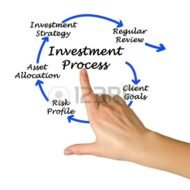
What forms the Basis for your Investment Decisions? Profit seeking is the ultimate aim of corporate management and the finance manager acts as the anchor point of the management structure. He has to provide specific inputs into the decision-making process, with respect to profitability. Corporate Investment Decisions Cost control What are the Cost Centres? It is the finance manager’s responsibility to have an eagle’s eye on rising costs by continuously monitoring the cost centers of his organization. Production department where there is always a need for additional resources or inflow of funds, should be his first target of contol. Costs are incurred by each and every department of an organization, namely, the production, marketing, personnel and of course finance and accounting. It is a difficult task to control the rising costs. That is the reason why, big corporate companies go for annual budget formulation at the start of the year and reformulates the finance plan by comparing actual with the projected figures. This kind of evaluation helps the firm to fix responsibilities for various centers of operation. Resource Allocation A finance manager is the first person to recognize rising costs for supplies or production, and he can make immediate recommendations to the management to bring back costs under control. While cost control talks about allocating resources to different responsibility centers in the desired proportion, cost reduction focuses on conserving the resources. Cost reduction can be achieved through modifying product and process designs, cutting down throughput time, doubling labor productivity, mass customization, standardistion etc., Pricing Price Fixation It is always a joint venture between marketing and finance departments when it comes to price fixation of products, product lines and services. Pricing decisions are important in that, they affect market demand and the company’s competitive stand in the market. Pricing strategies have to be evolved in the wake of existing competitor strategies and market preference. The demand forecast is the prerequisite factor of the production process and in-depth market analysis and understanding is inevitable on the part of the executives. Future Levels of Profit The finance manager is also responsible for charting out the future levels of profit, based on the relevant data available. He has to consider the current costs, likely increase in costs and likely changes in the ability of the firm to sell its products at the established selling prices. So, it becomes clear that, such market evaluation cannot be periodical, as the market is highly dynamic and has to be done in a day-to-day basis. Before a firm commences a project, its discounted future fund flow and expected profits must be ascertained which will serve as a basis for comparison. Risk versus Return: Investment decisions always are risky as the gestation period of invested funds is very long and not to return immediately. Further, the firm has to calculate the time period in which its initial investment can be recovered and the feasibility of the rate of return on its investment. Fund Management The finance manager is engaged in activities like, mobilization of funds, deployment of funds, and control over the use of funds and also he is to evaluate the risk return trade-off. Profit maximization is the fundamental objective of any organization and the finance manager plays a key role in restructuring the financial philosophy of a firm to take it to greater...
Posted by Managementguru in Human Resource, Organisational behaviour, Principles of Management
on Feb 28th, 2014 | 0 comments

In the dynamic world of teams and organizations, conflict is often seen as a roadblock. But not all conflict is bad. Functional conflict, when managed well, can fuel innovation, deepen understanding, and lead to stronger outcomes. However, when it lingers or spirals, even functional conflict can morph into an obstacle. This blog explores practical strategies to transform functional conflict into a catalyst for progress, ensuring it serves its intended purpose: to move the team forward. An Open Frame of Mind Line and staff authority should be open with each other and come out of their compartmentalized state of mind. Rationale thinking and logical action is what is required to understand and resolve conflicts. Be a Manager rather than a Technocrat Specialization has made people to stick to their line of action and they act merely like tech wizards and conveniently forget the human element of flexible mental purview and compromise. Development of each individual’s managerial qualities will minimize conflicts. A manager has to harmonize functions of diverse natures and bring about co-ordination. Think Like an Entrepreneur Thinking about the strength, weaknesses, opportunities and threats an organization faces makes each individual realize that he or she is part of the organization and whatever happens to the firm directly affects his/her stability and security. Make Others Feel a Sense of Achievement It is the job of a manager to appreciate and encourage the achievements of his sub ordinates that bring greater joy in the minds of individuals and motivate them to work for the cause. Interaction Among Functions Cross functional interactions on a continuous basis are found to be useful in preventing and resolving conflicts. Informal groups serve as the best example of a committee consisting of members from different functional groups but with a common interest. These groups can be best identified and utilized by the management to resolve conflicts by seeking the help of the key person in the group. Roles, Responsibilities and the Scope of other Functions The basic requirement is to first clearly define the objectives and sub objectives, the process, the roles of each function as a tool and their rights and responsibilities. One should know the roles and responsibilities of all functions having common interface: their position in the firm as well as their relevance and contribution towards the organizational goals. Communication and Information Sharing The informal communication system helps in achieving group dynamics and cohesion while the formal channels take care of organizational directives. A quick and effective means of communication can considerably reduce the conflict level that arises out of communication disorders. Adequate Planning and Co-ordinations At each operational level, hasty actions must be avoided to stop conflicts from arising. Planning and Co-ordination go hand in hand: Say, if a new product launch is aimed at without proper promotion, what would happen to the success of the project? Evaluation of Functional Performance A standard mechanism must be set to evaluate managerial performance in terms of their ability to achieve an integrated set of objectives in a balanced manner. Necessity of Transparency Transparency is needed at all functional levels or the initiator appears to be tainted with the accusation of having an ulterior motive. In case of big corporate firms all the policy decisions are taken by the board and not by a single person to avoid conflicts. Conflict need not necessarily be viewed as an evil but a disorder to be curbed. Sometimes a conflict might showcase the inherent inflexibility and malfunctions in the firm to be corrected paving way for innovations. Sometimes it causes frustration for the management by preventing synergy amongst the sub-systems. All said and done, conflict once identified have to be immediately dealt with and resolved by the management in...
Posted by Managementguru in Human Resource, Principles of Management
on Feb 28th, 2014 | 0 comments
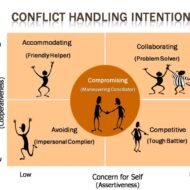
Conflict Management What is a conflict? An organization is a network consisting of human element as the major functional source and as such is prone to weaker vulnerable aspects of human psychology. Conflict is, of course, one such weak point. The diverse functional groups in the organization get into conflicts while setting up objectives and goals; in prioritizing and weighing the objectives, the methods of their achievement and their evaluation. Though there are numerous kinds of conflicts, this is the major one affecting the functioning of the firm. Certain examples of conflicts: The objective of a project manager to construct a building might go against the objective of minimizing the project cost. For work force, their personal goals come before the organizational goals. The objective of the production department to increase productivity may go against the objective of maintaining the product quality The objectives of the marketing department to increase the sales through promotions may not be welcome by the finance department whose objective will be to cut the cost’ Reasons for conflicts: 1. Lack of clarity as to the scope and relevance of functions in achieving the corporate objectives. 2. Clash between line and staff authorities. 3. Ignorance or lack of knowledge needed for decision making in the part of chief executives 4. Different sets of beliefs and views, along with one’s personal interest and ego. 5. Different kinds of attitudes of members of the organization 6. Absence of clarity in organizational policy, procedures, rules and guidelines. The Results of Conflict: The most affected element in a group conflict is “Employee Morale.” Conflicts undermine professionalism and lead to under utilization of organizational capacity. Loss of Importance: A particular group of employees feel that their importance is being undermined. When a manager is being inducted from an outside source, the prospective employees of the firm feel that they have been let down by the management. Frustration: There are certain rules and regulations to be stuck to when issues arise. If the finance department is not consulted regarding issues related to insurance claims, there are chances that the company might lose a good deal. In such cases frustration arises which is not good for the health of the firm. Feeling of Insecurity: This affects severely the morale of an employee. A clerical staff feels insecure if new technological system is introduced in the company where he is a novice. When one’s importance is persistently reduced, he may start feeling redundant. Blocked Personal Growth: Persons who experience reduced importance may apprehend a situation where they don’t expect much by way of personal growth through increments and...
Posted by Managementguru in Human Resource, Interview Questions, Principles of Management
on Feb 27th, 2014 | 0 comments
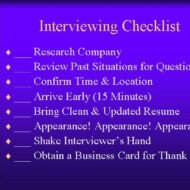
Interview Interesting Aspects An interview can be explained as a mutual conversation or a one to one meeting that gets stretched into a “recruitment process or promotion.” In French, from which it originates interview means ‘inter-sight’ and in Latin, it is interpreted as ‘seeing each other.’ Nowadays interview is a powerful tool in psychology, in the healthcare profession as well as in business. Too many approaches in the interviewing process may be successful as fact finding tools but without looking at the dynamics existing between an interviewer and interviewee; such meetings then become lifeless. The notion of an interview should not only aim at collecting scientific data but also look into the human aspect to capture the essence of a person. Only a trained interviewer must be allowed to evaluate the interviewee’s motivation, personality component and the influence of environmental/ emotional problems on him/her. The two common pitfalls in an interview are the ‘stereotyping’ of the individual and the unconscious exercise of personal bias. Is it wise to judge a person based on similarities to some other person/ trait? ‘Halo Effect’ is the tendency to judge a person based on one of a few specific characteristics- the traits liked or disliked by the interviewer need not be superimposed on the interviewee to decide if he is suitable for the job. All depends on the interviewer and his characteristics which help or hinder an interview from the interviewee’s view point. Care must be taken on the part of the interviewer not to conclude the interview in an abrupt manner and it is also necessary for him to create a favorable image for the company in the mind of the interviewee. The interview is not to be considered merely as a selection technique, but as a means of in- depth analysis that facilitates closer and enhanced communication. This approach is very much necessary for psychologists, teachers, managers, leaders and the like. Definition: The interview is a conversation with a purpose. There are three purposes. 1. Obtaining information– Collecting relevant data about the candidate’s background, training, education, experience and interests. 2. Giving information– Apprising the interviewee with the present position of the company, the future plans, specific job and the personnel. 3. Motivation– Instigating the candidate to join the company Advantages of Interview: Interviews prove as a better means to measure the ability and traits of a personality rather than through written tests or other techniques. It is easy to determine how a person reacts in a conversation and whether he is good looking (here it means if he/ she is presentable, looks are equally important). A skilled interviewer can easily determine the personality traits such as loyalty and responsibility that can be expected from the candidate during this personal meeting. Limitations of Interview: · Stereo typing · Halo Effect · Personal bias Interviewing Techniques: A. Patterned Interview: This was developed by Mc. Murry. Senior recruitment, promotion and appraisal interviews fall under this category. This patterned interview contains no questions related to ‘job skills’. Basically it is conducted to appraise personality, motivation and interests. Reference checks and academic records determine knowledge and job competencies. The following personality traits could be measured through patterned interview according to Mc. Murry: i. Stability ii. Ability to get along with others iii. Self-reliance iv. Willingness to accept responsibility v. Freedom from emotional immaturity vi. Motivation B. Directive Style: This type of interview is appropriate when the interviewer seeks factual information only where the interviewee is not given much freedom of expression and so becomes defensive. There are also chances that the relationship between the interviewer and the interviewee might be impaired. C. Non-Directive Style: This requires more time, and suitable for exploring sensitive matters, understanding feelings and...