Posted by Managementguru in Principles of Management, Training & Development
on Feb 22nd, 2014 | 0 comments
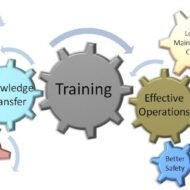
Benefits of Training to Employers The employers invest in training because they secure several benefits out of the exercise, which can be summed up as under: Faster learning of new skills Training aids the employers to lessen the learning time of their employees and accomplish higher standards of performance. The employees need not waste time in learning by observing others. If a formal training programme exists in the organization, the qualified instructors will help the new employees to acquire the skills and knowledge to do specific jobs quickly. Increased productivity Training increases the skill of the new employee in while performing a particular job. An increased skill level usually helps in increasing both quantity and quality of output. Training can be of great help even to the existing employees. It helps them to increase their level of performance on their present job assignments and prepares them for future assignments. Standardization of procedures Training can help the standardization of operating procedures, which can be learnt by the employees. Standardization of work procedures makes high levels of performance rule rather than exception. Employees work intelligently and make fewer mistakes when they possess the required know-how and skills. Lesser need for supervision. Trained employees need lesser supervision. Training does not eliminate the need for supervision, but it reduces the need for detailed and constant supervision. A well-trained employee can be self-reliant in his/her work because s/he knows what to do and how to do. Under such situations, close supervision might not be required. Economy of operations Trained personnel will be able to make better and economical use of the materials and the equipment and reduce wastage. Also, the trained employees reduce the rate of accidents and damage to machinery and equipment. Such reductions can contribute to increased cost savings and overall economy of operations. Higher morale The morale of employees is increased if they are given proper training. A good training programme shapes employees’ attitudes towards organizational activities and generates better cooperation and greater loyalty. With the help of training, dissatisfactions, complaints, absenteeism and turnover can also be reduced among the employees. Thus, training helps in building an efficient and co-operative work force. Managerial Development The top management can identify the talent, who can be groomed for handling positions of responsibility in the organizations. Newer talent increases the productivity of the organizations. By providing opportunity for self-development, employees put in their best effort to contribute to the growth of the...

Posted by Managementguru in Human Resource, Organisational behaviour, Principles of Management, Training & Development
on Feb 22nd, 2014 | 0 comments
Objectives of Training The objectives of training is different according to the employees belonging to different levels of organization. The objectives depend on the nature of the organization where training has to be provided, the skills desired and the current skill levels. 1. To increase the knowledge of employees or workers in doing specific jobs. 2. To scientifically and systematically impart new skills to the human resources so that they learn quickly. 3. To bring about change in the attitudes of the workers towards fellow workers, supervisor and the organization. 4. To improve the overall performance of the organization. 5. To make the employees handle materials, machines and equipment efficiently and thus to avoid wastage of time and resources. 6. To reduce the number of accidents by providing safety training to employees. 7. To prepare employees for higher jobs by developing advanced skills in them. 8. The basic objective of training however is to establish a match between man and his job. 9. The training is designed to improve knowledge, skills and attitude and thus equip the individual to be more effective in his present job or prepare him for future assignments. From the point of view of an organization individual growth is a means to organized effectiveness. The objectives of training can be summarized as follows: – 1. Induction : – Training constitutes a significant entry into the company’s way of life. Organizations have to provide induction training to all employees entering the organization to let them know, 1. What is company’s culture? 2. How does structure function? 3. What are policies & rules of organization? 4. What are designs of freedom or limits of behavior? 2.Updating :-A significant objectives of training is to prevent the Obsolescence of the employees by updating their skills & knowledge. 3.Preparing for future Assignments. 4.Improvement in Performance: Training will be an important aid to managers for developing themselves as well as their subordinates. It is not a substitute for development on the job, which comes from doing, experiencing, observing, giving and receiving feedback and coaching. Training can bring about an improvement in a person’s: Knowledge Skills Attitude, there by raising his potential to perform better on the job. 5. Growth Training is also focused towards developing people for higher levels of responsibility thereby reducing the need for recruiting people from outside. This would have the effect of improving the morale of the existing employees. 6.Organizational Effectiveness Training provides a means for bringing about organizational development. It can be used for strengthening values, building teams, improving inter-group relations and quality of work life. The ultimate objective of training in the long run is to improve the company’s performance through people performing...
Posted by Managementguru in Organisational behaviour, Principles of Management
on Feb 22nd, 2014 | 0 comments
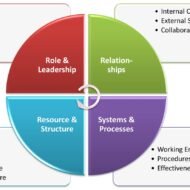
Organizational change is concerned with making things different and change agent is a person or group of persons who act as catalysts to bring about change. Say, managers and outside expert consultants can be called as change agents. What is Organizational Change? This is how you have to Strategise in order to Win Organizational development refers to the overall development of an organization in terms of improving the ability of that organization in tandem with the needs of the external environment and involves a system oriented approach to change. Recommended: Resourceful Guide on Organizational Development from Maryville University titled ” Organizational Development Guide: Definition, Process & Development Models “ Organizational change: All the elements of a social system like people, formal organization, informal organization, operational environment, communication, decision making and patterns of co-operation are bound to change when there is change in the external environment but this gives rise to a positive pressure which acts like a self-correcting mechanism to modify and set right the bottle-necks or loop-holes in the working system. Causes For Change Work force: The increasing awareness and educational qualification among the workforce is responsible for the attitude change. You can expect loyalty from workers above fifty but not workers who fall under the age category thirty. This is because their loyalty is oriented towards their career and not to the employer. Technology change: Internet, telecommunication systems, computers, robotics, flexible manufacturing operations have created a great impact on the working style of firms and necessitated the work force to be tech-savvy in order to survive in the job market. Economic, social, political, and physical environmental changes: Economic– Business cycles, inflation, recession, stock market crashSocial– Changing life styles and preferences of customers is the keyPhysical– Consumers, suppliers, employees, union, shareholders and the governmentPolitical– Political decisions affecting the market, pressure, legal hassles:- all these affect the working of a firm. Changes in competition: Global economy has brought big players from countries like USA, Japan, Germany and the like to compete in the same market and successful organizational are those who have adapted to competitive environment. When we talk about organizational change, we emphasize on “PLANNED CHANGE OR DELIBERATE CHANGE” in order to suit ourselves to the changing environment. Otherwise, according to Darwin’s theory of “Survival of the fittest” you will fade away in due course of evolution. This Infographic clearly reveals the fact that “It is not the strongest of the species that survive, nor the most intelligent, but the one most responsive to...
Posted by Managementguru in Business Management, Financial Management, Principles of Management
on Feb 21st, 2014 | 0 comments
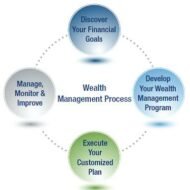
Every business organisation’s aim is to make profit and more profit. Does it end there? What should be the real motive behind running an organization? Profit maximization alone does not help the organization to firmly plant its feet in the business environment, as the success of an organization in the long run is decided by many critical factors like, market share, value of the company shares, market stand, image etc. So, shall we say, let wealth maximization be the goal of any organization, which focuses on increasing the “earnings per share” of the share holders. What is Profit Maximization? Profit maximization does not take into consideration, the interest of share holders or stake holders, who ought to be the ultimate beneficiaries. Concentrating on short term profits confines a firm and limits its scope and growth whereas; value creation is something that the management should aim for, as it helps to increase the “net worth” of a company. Mere price versus output calculations make firms to operate in a profitable manner, but it should never be the only objective of a firm, as it has the moral and social responsibility to patronize its shareholders by increasing the net worth of the company. Underlying Logic While maximizing profit, a firm either produces maximum output for a given amount of input, or uses minimum input for producing a given output. Thus the underlying logic for profit maximization is efficiency. Under perfect competitive market conditions, profit serves as a perfect measure for the performance of a firm. If profit is the motive of a firm, it fails to consider the time value of money which is an important criterion that decides the success of a firm, and also it values benefits received today and after a period as the same. Moreover the uncertainty factor is there to be considered too. Firms always prefer to have smaller but surer profits rather than larger benefits but less certain. Impact of Taxes When we talk about profits, the next indispensable factor will be the taxes that demand a portion of your profit. Maximizing profits after the payment of taxes facilitates the firm to increase the net profit ratio to serve the best interests of the owners. But, this also fails to maximize the economic welfare of the owners, as it does not take into account, the timing and uncertainty of the benefits. Wealth maximization is the ideal alternative that is consistent with the survival goal and also with the personal objectives of managers such as recognition, power, status and personal wealth. The Right Balance between Risk and Return Mangers while deciding on investment options, seek to achieve a right balance between risk and return. If the firm borrows heavily to finance its operations, care should be taken to ensure that, the rate of return on investment should be sufficient enough to support the payment of interests on borrowings and also to repay the principal. If the firm is not able to “service the debt” there is a danger of the firm becoming bankrupt or insolvent. The firm’s investment and financing decisions are unavoidable and continuous. In order to make rational decisions, the firm must have a goal, which is nothing but the “shareholder’s wealth maximization” which is theoretically logical and operationally...
Posted by Managementguru in Human Resource, Organisational behaviour, Principles of Management, Training & Development
on Feb 20th, 2014 | 0 comments
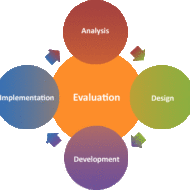
Role of Training Some Definitions of Training: According to Flippo, “Training is the act of increasing the knowledge and skills of an employee for doing a particular job”. Training can also be defined as as “any planned or structured activity or approach designed to help an individual or a group of people to learn as to do things differently or to do different things leading to more effective performance and results”. Role of Training: Training is the best way to reach the enterprise goals in minimum time period with maximum efficiency. 1. Training unlike experience can reduce the time required to reach maximum efficiency. 2. Cost of training in much less than the cost of adding experience . 3. The results of experience sometimes can be accidental. 4. The expected results are very much assured in a well conceived and well conducted training program. 5. Its purpose is to achieve a change in the behaviour of those trained and to enable them to do their jobs better. 6. Training makes newly appointed employees fully productive in lesser time. Identifying Training Needs: There are three elements of training – purpose, place and time. Training without a purpose is useless because nothing would be achieved out of it. The purpose must be identified carefully and now there are a large number of techniques available for establishing training needs. Having identified the purpose of a training programme, its place must be determined i.e. whether it has to be on the job or off the job. Place would decide the choice of training method and also affect its effectiveness. The next element is the time. Training must be provided at the right time. A late training would provide obsolete knowledge, which would be useless for the employees. 1. Organizational Analysis: – Comprehensive analysis of organizational structure, objectives, culture, processes of decision – making, future objectives and so on. Analysis begins with an understating of short term & long-term goals of the organization. Is there adequate manpower to fulfill organizational objectives? Whether the work-force possess required skill & knowledge? Are the employees willing to learn? 2. Task analysis: Thorough analysis of various components of jobs and how they are performed has to be done. Task analysis would indicate whether tasks have changed over period of time & whether employees have adequate skill in performs their tasks. 3. Man Analysis: The focus is on individual, his skill, abilities, knowledge & attitude. Key Indicators are Meeting Deadlines Quality of performance Work behavior...