Posted by Managementguru in Business Management, Marketing, Operations Management, Project Management, Sales
on Feb 3rd, 2015 | 0 comments
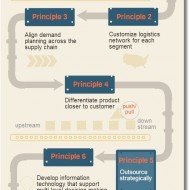
What is Supply Chain Management? Investopedia Supply chain management (SCM) is the streamlining of a business’ supply-side activities to maximize customer value and to gain a competitive advantage in the marketplace. SCM represents an effort by suppliers to develop and implement supply chains that are as efficient and economical as possible. Wikipedia Supply chain management (SCM) is “the systemic, strategic coordination of the traditional business functions and the tactics across these business functions within a particular company and across businesses within the supply chain, for the purposes of improving the long-term performance of the individual companies and the supply chain as a whole.” Business Dictionary 7 Principles of SCM Management of material and information flow in a supply chain to provide the highest degree of customer satisfaction at the lowest possible cost. SCM requires the commitment of supply chain partners to work closely to coordinate order generation, order taking, and order fulfillment. They thereby create an extended enterprise spreading far beyond the producer’s location. Supply Chain Management in Simpler Terms The EFFECTIVE movement and management of materials and information as they flow from their source to the end customer. Supply Chain encompasses purchasing, manufacturing, warehousing, transportation, customer service, demand planning and supply planning. SCM is a daunting task and calls for proper planning and execution. SCM is the control of the supply chain as a process from supplier to manufacturer to wholesaler to retailer to consumer. SCM does not only comprise the passage of a physical product through the chain but also any data that goes along with the product (such as order status information, payment schedules, and ownership titles) and the actual entities that handle the product from stage to stage of the supply chain. OBJECTIVES OF FORECASTING There are Essentially Three Goals of SCM To reduce inventory To increase the speed of transactions with real-time data exchange and To increase revenue by satisfying customer demands more efficiently. When you think of the world’s most efficient and successful performance and supply chains, what comes to mind? For me it is not Wal-mart or Pepsi but Mumbai Dabbawalas – Watch this Video. The Success of Supply Chain of Dabbawalas in Mumbai –Said to be Six Sigma Compliant No over-reliance on technology, all manual operations Create an integrated performance chain, the chief, team leaders and delivery men. Acute visibility Keep it simple. Real simple with a color coding to identify where the food has to be delivered and to whom. Timely Delivery as the shelf life of food is 4-5 hours. Why is it so important for companies to get products to their customers quickly? Faster product availability is significant to increasing sales and there’s a sizeable profit advantage for the extra time that you are in the market and your competitor is not. The earlier and faster you are in the market, the more orders and market share you enjoy. The ability to deliver a product faster also can make or break a sale. If two competitive products appear to be equal and one is immediately available and the other will be available in a week, which would you choose? Supply Chain Management is all about moving goods more quickly to their destination in a strategic and tactical manner. Supply Chain Management Tomorrow The future for Supply Chain Management looks very bright. Two major trends are benefiting Supply Chain Management operations- Customer service focus and Information technology. Successful organisations must excel in both of these areas, the fundamental objective being to “ADD...

Posted by Managementguru in Business Management, International Business, Leadership, Marketing, Operations Management, Principles of Management, Sales, Strategy
on Mar 26th, 2014 | 0 comments

Some business firms with a modest and humble beginning make it to the top in a very short span of time. How do you think this is possible? They have a clear strategic vision that guarantees success. Success does not come that easy. You have to have real focus backed up by solid strategies for such resounding success. A strategy is a comprehensive plan of action that sets critical direction and guides the allocation of resources to achieve long-term organizational objectives. Some people formulate strategies and follow suit, some flow along with the stream of situations and react accordingly, rather than merely plotting strategies. Mere strategizing is not enough, you have to look into the actual situation and how it would affect your operations. Learn Sales Hacking Essential sales skills, sales strategies and sales techniques to sell just about anything! Let us have a clear understanding on the reasons for formulating a strategy Business has gone global for many reasons, including reactive ones like, international competition, customer demands and trade barriers, and proactive ones like seeking economies of scale, new international markets, resource access and cost savings. After the liberalization, globalization and privatization processes activated in full swing, many firms have come to the limelight in the international market scenario, which has provided them with a solid head start. Companies have to respond to both changes in the external environment and emerging opportunities. An opportunity not well utilized is an opportunity lost. Rational planning is called for to meet international expansion through workable strategies. International corporate strategy is purely based on the intentions of your firm, the objectives that stem out from your vision and can be materialized by scanning the environment for threats and opportunities, assessing the internal strengths and weaknesses of the firm, considering alternative international entry strategies and firming up on the workable ones. List down the answers to the following questions and you may arrive at a reasonable conclusion on your company’s market standing. Strengths What are your advantages?What is the activity that you specialize in?What is your uniqueness that differentiates you from your competitors? Your own viewpoint and that of the people you deal with is necessary. It is important to be honest and realistic. This exercise helps you and your team to understand the mission and purpose. Weaknesses What is done badly?What could be done better?What should be avoided?What causes problems or complaints? To identify the unpleasant truths as quick as possible is the notion of this exercise. Ascertain Your Priorities After ascertaining the priorities, the strategic management process is carried out with well laid plans, executed by professional strategists followed by implementation of control and evaluation procedures. Any corporate firms go for strategic alliances, that may include, acquisitions, mergers, joint ventures, strategic partnerships, cartel agreements and so on to survive in the international market as well as to exploit the opportunities available in the global market with the available potential resources put to optimal...
Posted by Managementguru in Business Management, Entrepreneurship, How To, International Business, Marketing, Project Management, Sales, Startups
on Mar 11th, 2014 | 0 comments
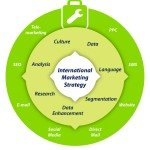
Export can be in the form of merchandise (goods) or services (invisibles). When an entrepreneur wants to spread out his scope of business activity beyond the territory of his nation it is called export, whence he has to prepare himself to confront the challenges prevailing in the global market. How to go about Export? Business by itself calls for discipline whether you talk about your credit policy, quality of your product or services, on time delivery, payments, fund rotation, human resources management and the like. The taste of success in the domestic market gives you the necessary confidence to spread your wings far and wide. To be a part of the global market, you are expected to imbibe not only more discipline and order but you should be very thorough about the procedures and policies of the country, to which you are planning to export and the various legal formalities pertaining to your business activity. How to Export From India Pic Courtesy: Procedure to Start Export Business from India What will be your plan of action if your merchandise is disapproved of its quality after reaching the destination or the shipment gets destroyed due to some eventuality? To combat contingencies we have to have a representative working for us in the chosen place of activity who would report and handle the proceedings. Pre-Requisites for Exporting Goods: How many people do you think who have acquired the desire to export their products have a clear idea about the steps involved in starting an export business? First you have to secure the IEC CODE (import export code) from the DGFT (Director General of Foreign Trade) that comes under THE MINISTRY OF COMMERCE AND INDUSTRY. What is IEC Code? Import Export Code (also known as IEC) is a 10 digit identification number that is issued by the DGFT (Director General of Foreign Trade), Department of Commerce, Government of India. Info Courtesy: Shiprocket.in It is also known as Importer Exporter Code. It is mandatory for companies and businesses to obtain this code to start a business that deals with import and export in the Indian Territory. It is not possible to deal with export or import business without this code. While exporting you get the following edge over others: Exposure to forex marketExposure to diversified cultureExposure to varied laws and legal formalitiesExposure to business risks which you must take up as a challenge Having businesses in various countries is better than having all businesses in one country. It saves you during periods of economic recession. You experience market growth by entering into different and new markets; Asian and European markets are flooded with traders from all around the world since these regions enjoy a locational advantage in the world map and well connected through the sea and land. RBI Policies: Exporters must be aware of the fact that RBI policies are very severe when it comes to foreign exchange. So you should have proper informational inputs from the correct source and your capital has to be invested accordingly. Slide Courtesy: Import and Export Policies and Procedures Exploring unfamiliar and exotic markets is very difficult as they are always dynamic. You should see to it that you keep yourself posted with updates on INTERNATIONAL FINANCE, LENDING RATES etc. Also Read: 10 key steps to export success You can make a small business big and beautiful by adding some flavor to it like, Right time to launch your product in the global scenario, People’s preference being given priority by doing some demographic survey, Attractive campaigns and of course Your unendurable passion for business will do the rest to make your venture a successful one. Read...
Posted by Managementguru in Economics, Financial Management, Sales
on Feb 14th, 2014 | 0 comments

Demand and Supply in Different Markets Demand Criteria Since the analysis of a business firm is central to managerial economics, we are primarily interested in the demand for a commodity faced by a firm. The demand for a commodity faced by a firm depends on the size of the market, industry demand for the commodity, the form in which the market is organized and the number of firms in the industry vying for the same set of resources and customers. Demand Curve The market demand curve for a commodity shows the various quantities of the commodity demanded in the market per time period at various alternative prices of the commodity, while holding everything else constant. The curve is negatively sloped, indicating that price and quantity are inversely related. The things held constant in drawing a market demand curve for a product are the number of customers in the market, consumer’s income, the prices of related commodities and tastes. Types of Markets Monopoly and Perfect Competition Coming back to the form of a business firm, at one end there exist the monopolist (the sole producer of a commodity for which there are no good substitutes), and at the other end, perfect competition, where there are a large number of firms producing a homogenous product and each firm is too small to affect the price of the commodity by its own actions. In such a case, each firm is a price taker unlike the monopolist who is a price maker thanks to the product exclusivity factor. Oligopoly In oligopoly there are only a few firms in the industry producing either a homogenous or differentiated product. Since there are only a few firms, the pricing, advertising and other promotional behavior of each firm greatly affect the other firms in the industry and evoke imitation or duplication. We witness many industrial giants fighting for their market share in the respective industrial domains. Monopolistic In monopolistic competition, there are many firms selling a differentiated product. As the name implies, monopolistic competition has elements of both competition and monopoly. The monopoly element arises because each firm’s product is somewhat different from other firm’s products that facilitate the firms to have some degree of control over the price. Although we try to establish an inverse relationship between price and demand, the other side of the coin shows a different picture in that, as the income levels of a consumer is on an increasing trend, his or her purchasing power increases. Consumers tend to purchase more of most commodities like automobiles, housing, travel and so on, when the income rises. There are some goods, however of which the consumer purchases decline as income rises- for example, maize and similar cheap foods as the consumer has the power to buy goods with better quality and there is no need for a compromise. Demand is one of the most important aspects of managerial economics, since a firm would not be established or survive if a sufficient demand for its product did not exist or could not be created. A firm could have the most efficient production techniques and the most effective management, but still without a demand for its product that is sufficient to cover all production and selling costs over the long run, it simply could not survive. Demand is thus essential for the creation, survival and profitability of a...