Currently Browsing: How To
Posted by Managementguru in Financial Accounting, Financial Management, How To, Human Resource
on Jun 24th, 2019 | 0 comments
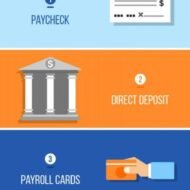
Starting a Small Business? Here Are 4 Ways to Pay Your Employees Hiring employees is a major milestone for any business owner who has previously done it alone. Even if the help is quite welcome, some important related decisions will almost always need to be made. This is true even of the most basic issues, such as how workers will be paid. Fortunately, business owners who are armed with a bit of knowledge will always be equipped to choose appropriately. Taking the Next Step Toward Long-Term Success Sole proprietors who have no workers to worry about, deal with what are generally among the simplest of all possible business arrangements. As soon as employees enter the picture, issues like employment taxes need to be accounted for, lest the government’s wrath descend upon a business owner. Many entrepreneurs find it worthwhile to make use of small business payroll services that virtually rule such problems out. Being able to rely on the expertise of specialists makes potentially costly mistakes a lot less likely and provides a firm foundation for future growth. Determining the Best Way to Pay Any Company’s Workers Even with payroll being handled by an expert, though, business owners still face an important choice. Pay can actually be issued in any of at least the following four common ways, each of which comes with certain benefits and drawbacks. Choosing the means most appropriate to a particular company and its workers will always make things easier, in general. The four options that are available to most business owners when it comes to paying workers are: Checks. Bank drafts authorized by means of check are traceable, accessible, and well-established. The paper trail that writing and depositing or cashing a check creates can prove useful if any issues arise later on. On the other hand, not everyone today has access to an account that can be used to convert a check into a balance. Workers who are forced to cash their checks by other means sometimes end up paying a fair amount for the privilege. Direct deposit. As the more modern relative of the old-fashioned check, direct deposit is an increasingly appealing option. In this case, things are even more restrictive, though, as only employees who have accounts in good standing will be able to make use of this approach. Unfortunately, about 1.7 billion adults worldwide still lack such resources entirely. Prepaid cards. Certain cards associated with networks like those operated by Visa and Mastercard can also be loaded with paychecks on demand. Particularly where some workers might not have checking accounts, this is an increasingly popular choice. Some payroll cards, however, impose maintenance fees and the like, so business owners will always do well to put in plenty of research. Cash. Although it might sometimes seem a bit crude, cash is still very much a valid way to pay wages. Relatively few business owners opt for this approach, though, because of the exposure and hassles it tends to create. The Right Choice is Usually Clear Business owners who wish to do the most they can for their employees will always put some thought into choosing a means of payment. In many cases, it will even make sense to offer at least a couple of choices, from which each worker can select the most personally appropriate. In practice, it tends to be fairly straight forward to figure out how best to pay any small business’s employees....

Posted by Managementguru in Business Management, How To, How to make money online, Marketing, Sales, Social Media, Strategy
on Jun 19th, 2019 | 0 comments

As digital shopping continues to dominate the retail world, investing in an e-commerce store is more lucrative than ever! With global reach, automated operations, and low overhead costs, this industry offers endless growth opportunities. Whether you’re launching a niche store or scaling an existing business, the future of e-commerce is bright—embrace it today! From Walmart and Target, the world has moved on to Amazon, eBay and Alibaba. As the Internet conquers the world, people are ditching brick and mortar and are moving towards shopping on a click. During 2018, people shopped worth $2.86 trillion on the web, and this figure is expected to reach $4.8 trillion by 2021, which is huge. Brick-and-mortar, on the other hand, is losing its charm. This can be seen from the fact that Circuit City, Kmart and Radio Shack have all filed for bankruptcy. Moreover, whatever is left of the brick-and-mortar is also digitally influenced, which is why they are going mobile. JD.com, the world’s second-largest e-commerce business has partnered with Walmart to create a new retail concept, 7Fresh. At 7Fresh, you need an app installed on your phone because you need it to scan the products and make the payment. Given that the entire world is shifting towards e-commerce, it only makes sense to jump on the e-commerce bandwagon if you are looking to invest in a business. If you are not yet convinced why e-commerce is a good investment opportunity, then here are some reasons that might help. 1. The world is shopping online The most convincing reason is perhaps that the world is now shifting towards online shopping. People now have a lot of options in terms of variety and pricing at the click of the button. Forecasts show that by 2021, around 2.14 billion people are expected to shop online, up from 1.66 billion in 2016. 2. Easier to build Prada, Gucci, Louis Vuitton and all our favorite brands have been there in the market for many years. They have invested a lot of time and money to be where they are today. With e-commerce, however, the process is quicker; with the minimal investment, you can grow by leaps and bounds. The online retail giants are the living proof that the online world is full of possibilities. Amazon started as a mere bookseller, and today it has more than 12 million products. Moreover, e-commerce tools today are a lot better and less costly. The selling platforms and marketing tools have made it easier for an inexperienced person to start a business online. The only hurdle that you may face is deciding the product that you have to sell and whether you have to sell a range of products like Amazon or focus on a single category. Selling everything and anything may seem appealing. However, it comes with its own set of problems. Amazon did not get there in a day. Hence, we recommend you focus on a narrower range of products. 3. Location doesn’t matter The biggest drawback of brick and mortar is that you need a good location to generate sales. Your store has to be located where your target market lives. If you are selling a premium product in a middle-class area, chances are your store will close down in a few days. Other than that, you have to keep several factors in mind, such as parking issues. With e-commerce, you do not need to worry about all of this. You can sell to anybody who wants your product. Moreover, it is easier to establish your sales internationally, as well. 4. Easy to keep a tab on customers With an e-commerce store, you can easily see what your customers like...
Posted by Managementguru in Accounting, Business Management, Financial Accounting, How To, Marketing, Project Management, Sales
on Jun 15th, 2019 | 0 comments
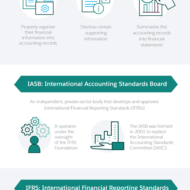
Do you remember the first sale that you ever booked or made on your own? It was probably pretty exciting — that feeling of elation and top-of-the-mountain. You suddenly realize that you might understand how this whole business thing works and you might be able to do this. But of course there are practicalities to consider when you make a sale. It can be tempting to recognize revenue right away, but there’s always a risk. What if the sale cancels, for example? What if it costs more to create the product or service than you’ve booked? It just can be a difficult process to learn the ins and outs of recognizing revenue. Standards to Recognize Revenue Fortunately there are standards to use that others have figured out. These standards are a great way for companies to make sure that people understand what they are doing is on the up and up. Non-accountants must be aware of the concept of recognizing revenue from contracts with customers. Because payments are often not a straightforward affair, accountants have to allocate revenue using specific standards set by national and international accounting boards. While this information doesn’t seem important for non-accountants to understand, it is. Knowing when revenue can be recognized in your company’s financials affects everyone, from the salesperson’s commission to the marketing budget next quarter. What are those standards and what are the takeaways from them? This graphic explains it. To understand and accomplish the new revenue recognition standards, businesses should complete the following five steps: 1. Identify the contract with your customers Clearly identify the goods or services provided and describe each party’s right to them 2. Identify your performance obligations Specify exactly what you owe your customers and explain what defines “good performance.” 3. Determine the price of your products or services When doing so, don’t forget to consider promotions and other discounts. 4. Allocate a transaction price to the obligations specified in the contract Align the price of your services with your compnay’s performance obligations 5. Recognize revenue as performance obligations are satisfied Sales people also must understand the difference between booking and revenue. A booking is when the customer makes a commitment via a contract to buy your services or product. Revenue is when the revenue “counts” on the books – When accounting can account for the revenue as being...
Posted by Managementguru in Business Management, Entrepreneurship, How To, Marketing, Project Management, Startups
on Apr 24th, 2019 | 0 comments

Here’s to New Beginnings: Your Essential Guide to Starting a Small Business When you have a great business idea and strive to achieve financial independence, you might be thinking about launching a small business. Every huge corporation started with a small business, so why not? While you can definitely achieve success in the business world, keeping your small business successful for at least 2 to 5 years is a huge work. This game is worth the candle, though. So, if you’re trying to start a small business, here’s your handy guide to help you out: Start your journey with research Perhaps, you’ve already come up with a unique – or any – business idea, but is it going to bring you success? Does your business idea have many competitors? Before you take any step, do your own research. Consider running your idea through a simple validation process that will help you to figure out the future of that idea. First of all, your business idea should offer something – be it a service or a product – that the modern market needs these days. There are many ways to find out if a business idea will be successful, such as focus groups, deep research, and in most cases, trial and error. But before you go through trial and error ask yourself: Does the market need your product/service? Who are the people who will want to use your product/service? What are the companies that offer similar or the same product/service? Will you be able to compete with them? It’s important to ask confidently without any fear or disappointment. Create a business plan Any business idea requires a powerful business plan, which will become your guide during the process of establishment and business growth. There are many types of business plans, so choose the one that will suit your idea. If you’re looking for financial support from a financial institution or an investor, creating a basic business plan is essential. This business plan is usually thorough and long, and contains a set of sections that banks and investors check out when they’re validating a business idea. In case, you’re not looking for any financial support and you’re going to invest in your startup yourself, it may be enough to create a simple and short business plan just to give you the initial steps you should take. You can also come up with a working business plan on a piece of paper and change it as you start working on it. Consider your finances Generally, a startup doesn’t need too many investments, yet you’ll need some money to cover a number of expenses during the first months or even a year before your business will earn a profit. Calculate the one-time startup expenses like property leases, permits and licenses, legal fees, equipment, branding, insurance, inventory, market research, opening events, trademarking, etc. Then, calculate how much money you will need to keep your startup running for a year (your own paycheck, employee paychecks, utilities, rent, advertising, marketing, travel expenses, supplies, etc.) As soon as you find out an approximate amount of money, think about the ways to find them. You can either save money or borrow from family or friends. Many new entrepreneurs also apply for an SBA loan. Filling out an SBA personal financial statement may be tricky, but here’s a guide to help you out. Select a business structure Whether it is a limited liability company (LLC), a partnership, a sole proprietorship, or even a corporation, your next step is to select a business structure. Your business structure will affect a lot of factors, including your liability, business name,...
Posted by Managementguru in How To, Marketing, Social Media, Strategy
on Mar 14th, 2019 | 0 comments

How To Measure Instagram Marketing ROI & Establish If It’s Worth Your Money Instagram can be a highly effective addition to your business. As a marketing tool, it’s great for driving engagement, increasing sales, boosting brand recognition, and much more. But looking beyond all the fuss, how do you know if it’s actually worth it for your business? Read on to discover how you can measure your Instagram marketing ROI and determine if it’s worth your money in 2019. Recommended readings: Which Digital Channels Deliver the Best ROI? “In this Shopify stores study Artem (from Linkshero) compares 100 Top-tier Shopify stores with 50 SME-type Shopify stores and puts them against 7 factors such as average load speed, list building efforts, average number of dofollow referring domains and more. Check it out!” https://linkshero.com/shopify-stores/ What is ROI on Instagram? It has historically been difficult to measure the ROI of social media in general, and Instagram is no exception. However, it is possible to get a good idea of how successful your Instagram marketing actually is by comparing the initial costs against your SMART objectives. The initial costs of Instagram marketing are relatively simple, in their most basic terms: Time: the working hours needed to administer your Instagram strategy. Cost-per-click: this will vary depending on how much you want to pay to get your sponsored posts ad seen (and even if you want to go for a paid ad campaign). While the costs of an Instagram marketing campaign are fairly easy to track, monitoring the outcomes are a little less straightforward. With most social platforms, results are viewed in terms of likes, shares, and comments — rarely as actual sales. And while Instagram’s Shoppable posts make it easy for you to track, it’s less easy to monitor sales from outside the platform but informed by your Instagram marketing. However, using SMART goals can help you evaluate your Instagram ROI with a firm footing. These goals are: Specific: what is your goal? do you want more mentions? Followers? Increased sales? It’s down to you, but be specific about the end result you want to achieve. Measurable: how will you measure your goal? Think about the metrics you will use to identify this. Achievable: what do you need to achieve your goal? What resources, tools, and skills are required? Relevant: is your goal aligned with the overall goals of your business? It should be relevant to your brand. Time: how long will your Instagram marketing campaign take? Set a clear deadline so you know when you should begin measuring your success. Setting SMART objectives as outlined above gives you a strong idea of how successful your Instagram marketing actually is overall. SMART objectives Let’s break down your SMART objectives in terms of Instagram and establish how you can measure your Instagram marketing ROI. Specific Before you do anything else, you should establish exactly what goal it is you want to achieve. Without this, you won’t know the steps you need to take to achieve it. The goals you might be working towards include: Followers Mentions Sales Email subscriptions Of course, these are just a few potential goals you might choose to work towards. There is no right or wrong goal — just choose the one that best serves your business needs. Measurable Once you’ve established your goal, how will you measure this? This is largely tied to your specific goal, and it might be easier for some goals than others. For example, if you want to get more followers, there’s really only one way to measure that. If your follower count increases, then you’ve nailed it. But let’s say you want to see...