Currently Browsing: How To
Posted by Managementguru in Economics, Financial Management, How To, Human Resource, Operations Management, Training & Development
on Mar 15th, 2015 | 0 comments

Productivity Analysis: Productivity is defined in terms of utilization of resources, like material and labor or it is the ratio of output to input. For example, productivity of labor can be measured as units produced per labor hour worked. It is closely associated with quality, technology and profitability. Now you will be able to understand why there is a strong emphasis on productivity improvement in a competitive business environment. It can be calculated at firm level, at industry level, at national level and at international level. That is what we call as GDP, NDP, and PPP. Gross Domestic Product – ‘GDP’: The monetary value of all the finished goods and services produced within a country’s borders in a specific time period, though GDP is usually calculated on an annual basis. Net Domestic Product – ‘NDP’: An annual measure of the economic output of a nation that is adjusted to account for depreciation, calculated by subtracting depreciation from the gross domestic product (GDP). Purchasing Power Parity – ‘PPP’: An economic theory that estimates the amount of adjustment needed on the exchange rate between countries in order for the exchange to be equivalent to each currency’s purchasing power. Efficiency can be improved by (a) Controlling inputs, (b) Improving process so that the same input yields higher output, and (c) By improvement of technology. Factor Productivity: When it is measured individually for each input resource to the production process it is called factor or partial productivity. Total Productivity: When it is measured for all the factors of production together, it is called total factor productivity. What are the types of Productivity Analysis? 1. Trend analysis: Studying productivity changes for the firm over a period of time. 2. Horizontal analysis: Studying efficiency in comparison with other firms of same size and involved in similar business. 3. Vertical analysis: Studying output in comparison with other industries and other firms of different sizes in the same industry. 4. Budgetary analysis: Setting up a norm for productivity for a future period as budget and planning strategies to achieve it. FACTORS AFFECTING PRODUCTIVITY 1. Capital/labor ratio: It is a measure of whether enough investment is being made in plant, machinery, and tools to make effective use of labor hours. 2. Scarcity of some resources: Resources such as energy, water and number of metals will create problems. 3. Work-force changes: Change in work-force affect productivity to a larger extent, because of the labor turnover. 4. Innovations and technology: This is the major cause of increasing productivity problems. 5. Regulatory effects: These impose substantial limitations on some firms. 6. Bargaining power: Bargaining power of organized labor to command wage has a detrimental effect. 7. Managerial factors: The planning and strategic skills of a manager play a big role in boosting the productivity of an organization. 8. Quality of work life: It is a term that describes the organizational culture, and the extent to which it motivates and satisfies employees. Here are the top 10 productivity killers in the workplace you’ll want to watch out for: 1. Cell phone/texting 2. Gossip 3. The internet 4. Social media 5. Snack breaks or smoke breaks 6. Noisy coworkers 7. Meetings 8. Email 9. Coworkers dropping by 10. Coworkers putting calls on...

Posted by Managementguru in Business Management, Entrepreneurship, How To, Marketing, Project Management, Startups
on Jan 5th, 2015 | 0 comments
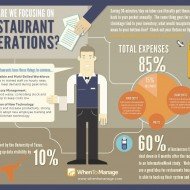
Startup Business Plan for a Restaurant The success of any business, start with a good and efficient plan and this is true in the case of food service trades like restaurants. Generally, Startup food business planning for a restaurant should begin with an executive summary, which will give a summary or overview of the entire business plan. This can act as a blueprint towards guiding entrepreneurs from the initial stages to the first 3-5 years of operation. This plan will document each and every detail about the operation of the restaurant. We find the following article comprehensive and resourceful on “Great ideas for your restaurant.” Source: ALSCO.COM … Read on… http://www.alsco.com.au/2017/02/restaurant-business-plan-strategies/ Executive summary: When a professional Food service franchise business consultant is asked, the professional will suggest that the executive summary will identify how much financing will be needed to begin with the operations. It will also specify the funding needed until the food business begins to show up profits. Experts are of the opinion that income projections for the first three to five years should also be present in this summary. This part should also encompass a description of the proposed restaurant that identifies the unique aspects of the operation. Another great post on “Starting a Coffee Shop“, by Anna Kucirkova brings you concrete ideas needed to open a comfy coffee shop to rake in profits. Starting A Coffee Shop? Here’s What You Need To Know Restaurant Marketing – The Basics Concept: Professional food service franchise business consultant will also suggest that the concept, theme and the type of cuisine to be served in the restaurant and the important components that should be documented in detail in the food service startup plan. Here, the location of the restaurant should be identified. Startup expenses: In the process of startup food business planning, it is important that appropriate plan must be documented for anticipated expenses. Generally, there will be startup costs associated with the establishment of the restaurant and it will of course include one-time expenses like purchase of furniture, commercial kitchen equipment, building alterations and initial construction. In addition, other startup expenses include glassware, table linens, theme-compatible table settings, etc… Apart from these expenses, there will be administrative costs like permission from health department, business licensing fee, etc… Budgets: When it comes to preparing budgets, the costs for initial setup should be identified. Here, both fixed and variable expenses should be identified. Fixed expenses include those that are the same each month like lease payments. Variable expenses include regular menu items, whose cost will vary as per season. There are professional consultants, who can help people planning to start any type of food-related trades like a food truck business. They can give the appropriate suggestion for framing a food truck business plan. They are of the opinion that the some of the above-mentioned items like budget and startup expenses should be included in the process of the food truck business plan. Related Posts: The Viability of Running a Restaurant What is a Startup Cost? Article Source: Startup Business Plan For A...
Posted by Managementguru in Economics, Financial Accounting, How To, Project Management
on Nov 21st, 2014 | 0 comments

These article-embeds focus on the real estate scenario both in the US and India and how relaxation in Foreign Direct Investment Policies has brought about a sea change in the minds of foreign investors on viewing India as one of the major sources of potential investment. And most importantly real estate in India is in a boom thanks to the constant urbanization and interest of NRI people who want to invest in properties in big Indian cities like Mumbai, Cochin, Pune, Bangalore and Chennai. Some light is also thrown on how to handle the capital gains when a property is sold. One has to be aware of the tax implications that arise while selling a property and the proceeds have to be properly accounted for. Real Estate looks enterprising in India and always has been so since people of our country treat land and gold as dependable assets. Owning a house or a property is a status symbol too and people save money to buy land and build their dream houses. This saving tendency has supported the growth of our economy very well and has rather saved it from tumbling down unlike what happened in the recent recession in the US. Some Interesting Real Estate Quotes to keep you in Good Humor: “It is a comfortable feeling to know that you stand on your own ground. Land is about the only thing that can’t fly away.” ~Anthony Trollope “The best investment on earth is earth.” ~Louis Glickman “He is not a full man who does not own a piece of land.” ~Hebrew Proverb “A man complained that on his way home to dinner he had every day to pass through that long field of his neighbor’s. I advised him to buy it, and it would never seem long again.” ~Ralph Waldo Emerson “As long as you have more cash flowing in than flowing out, your investment is a good investment.” Robert Kiyosaki Read and enjoy the following articles: What To Expect From The Real Estate Market In 2014 Focus of Overseas Investors on Indian Real Estate Market How to save capital gain taxes in real estate? UDEMY, the educational platform is offering real estate courses at a big discount and I reckon the following courses would help real estate brokers and agents to hone their skills in terms of online presence and marketing. Gain Leads and Colleagues with a Real Estate Website/Blog Creative Real Estate Investing & Flipping...
Posted by Managementguru in Business Management, How To, Project Management, Startups, Strategy
on Nov 17th, 2014 | 0 comments
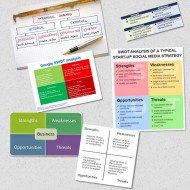
A startup thrives on innovation, resilience, and strategic execution. The secret lies in solving real problems with passion while adapting quickly to challenges. First-time entrepreneurs are often oblivious to their own weak spots. Getting to know your strengths and weaknesses is easier said than done. Self-assess yourself by making a simple list of every business skill you think you possess. Then, add other skills that you think make a good leader/business owner. Add any additional questions you think would be helpful. Take stock of the lacunae in your skillsets, and rank which positions you need to hire first. “Don’t be a lone wolf. Lean on the experience and smarts of your teammates, investors, and mentors to help solve the tough problems and take advantage of the opportunities – SETH BANNON, Amicus Factors for Startup Success If you want your business to be successful, challenge yourself, be honest with yourself, surround yourself with talent, and watch success find you. As you reflect back on the evolution of your business, it will be clear to you that you would not have gotten to this point had you not identified your strengths and weaknesses, looking to fill your weaknesses with external talent. “Know your core competencies and focus on being great at them. Pay up for people in your core competencies. Get the best. Outside the core competencies, hire people that fit your culture but aren’t as expensive to pay.” – Mark Cuban A start-up small consultancy business might carry out the following SWOT analysis Why Use SWOT Analysis? SWOT Analysis is a very effective way of identifying your Strengths and Weaknesses, and of examining the Opportunities and Threats you face. Carrying out an analysis using the SWOT framework helps you to focus your activities into areas where you are strong and where the greatest opportunities lie. Strengths Being able to respond very quickly due to lack of bureaucracy and red tape, no need for higher management approval, etc. Being able to provide hundred percent good customer care and satisfaction Strong reputation within the market Being able to adapt to the changing market quickly Little overhead, so can offer good value to customers Weaknesses The company has no market presence or reputation Has a small staff with a weak skill base in many areas Vulnerable to vital staff attrition Cash flow will be unreliable in the early stages Opportunities Business sector HAS SCOPE FOR EXPANSION , with many future opportunities for success Local community wants to encourage local businesses as it provides work opportunities to the people of that community Competitors may be slow to adopt new technologies Threats Will developments in technology change this market beyond our ability to adapt? A small change in focus of a large competitor might wipe out any market position we...
Posted by Managementguru in Business Management, Entrepreneurship, How To, Human Resource, Startups, Strategy
on Nov 7th, 2014 | 0 comments
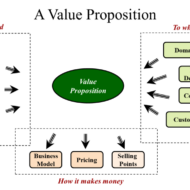
Startup Success – A Clear and Good Value Proposition “You don’t get a second chance to make a first impression” “The strategy is to first know what you don’t know, the tactic is to grind, and the value is to remember: there are plenty of places to innovate.” -David Friedberg, Founder @ Weatherbill A great value proposition is indispensable for any business hoping to clearly communicate to customers why they are different, better, and worth purchasing from. Why Your Value Proposition Matters? “A problem well stated is a problem half solved.”-Charles Kettering The problem is, many companies just can’t seem to nail down exactly what a value proposition is and what it should say. A value proposition is a clear statement of the tangible results a customer gets from using your products or services. Its outcome is focused and stresses the business value of your offering. Let the statement you make come from your heart, let it represent the very idea behind your business, let it highlight the benefits you plan to give your customers, let it awaken the entrepreneurial spirit and make you want to do something more for the end users, let it be straight but sharp. What makes a good value proposition? Clarity! It’s easy to understand. It communicates the concrete results a customer will get from purchasing and using your products and/or services. It says how it’s different or better than the competitor’s offer. It avoids hype (like ‘never seen before amazing miracle product’), superlatives (‘best’) and business jargon (‘value-added interactions’). It can be read and understood in about 5 seconds. I basically like what Pinterest has to offer- their unique and simple pin boards to organize our thoughts around a subject. I feel happy when I visit Pinterest and exploring various pins gives me immense satisfaction. The way they have developed their business around the mindset of people is something brilliant. It’s attractive to women. To designers. To photographers and artists. To mom’s who cook, decorate or plan events. That’s kinda niche-y. Some Interesting Value Proposition Quotes: A unique value proposition is a single, clear compelling message that states why you are different and worth buying – Steve Blank Price is what you pay, Value is what you get – Warren Buffet If people like you they will listen to you, but if they trust you, they’ll do business with you – Unknown Live authentically. Why would you continue to compromise something that’s beautiful to create something that is fake- Steve Maraboli You do not really understand something unless you can explain it to your grandmother – Albert Einstein <a HREF=”http://ws-in.amazon-adsystem.com/widgets/q?rt=tf_cw&ServiceVersion=20070822&MarketPlace=IN&ID=V20070822%2FIN%2Fmanagementgur-21%2F8010%2F62da8e52-21d7-4d09-9aff-da04d242f556&Operation=NoScript”>Amazon.in...