Posted by Managementguru in Business Management, Human Resource, Labor Management, Organisational behaviour, Principles of Management, Strategy
on Mar 18th, 2014 | 0 comments
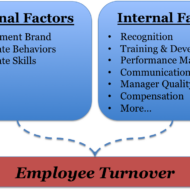
Smart Retention Strategies: Before going into the details of how to handle attrition, the first thing you must understand and realize is this. Each person working for you will have different expectations, perspectives and demands about his job, work environment and compensation respectively. Right at the time of recruiting and selecting the employee, his ideas must be taken into consideration and then it becomes the prerogative of the management whether to hire the person for that particular job. So the first step will be the right person for the right job, giving due importance to the anticipation of the employee who is going to become a member of your business family. Udemy Best Sellers:New Manager Training in Essential SkillsLeadership: Practical Leadership Skills Need for Open Conversation: In case of a small firm or company, it is easy for the manager to have a one on one conversation with each employee to settle his score of grievances then and there. Managers must have an open conversation without room for any ambiguity in the minds of his workers. The manager should try to protect the interest of the employees by representing their demands to the management at the right time. Many employees quit their positions because they have a nagging feeling at the back of their minds that their immediate boss is not the right kind of person to whom they can look up to and ask for support. In big corporates it is not easy to go for a one on one approach. A unique corporate culture that Trains the employees to have an uniform approach to all the systems of routineLed by an effective leader who controls and monitors the behavior and attitude of the workersPossesses sound management practices that make the employees come out with their suggestions freely and induce them to participateProvides satisfactory compensationIncorporates an open door policy catering to the different needs of people and also to the different levels of management, will help the managers to have a healthy relationship with the employees. Human Wants and Needs: Human wants are unlimited and when one want is satisfied, we want more of the same or yet another of a higher order. Approach your workforce to satisfy their craving either in terms of compensation or recognition which will also help to retain your workforce to a greater extent. There should be room for growth, especially for entrepreneurial minds and minds that have parallel thinking. Pic Courtesy: CuteHR Self-Motivation is the Key: Although motivation brings cheer amongst your workforce, self-motivated employees produce better results. Job satisfaction is a relative term; it differs with individuals, some like challenges and some are easily satisfied with an increase in salary quotient. A comprehensive appraisal on the personality of your workforce will give you a clear picture of the IQ (Intelligence Quotient) and EI (Emotional Intelligence) range of your employees which helps in designating employees in the appropriate slots. Such human rationing saves you a lot of time, energy and money as the employees are guaranteed satisfaction in their jobs. Contracts and Agreements: Contracts and agreements bind the employees to the firm only legally. How is that going to help you in terms of productivity? If one of your employees is going to work with discontent, he becomes a problem source spreading the same kind of feeling to others working with him. So it is also necessary for the management to spot out these problem persons either to bring them back into the groove or fire them without any further delay. Rising costs of living and unemployment ratios are really of economic concern, but still we find employees just like that quitting...

Posted by Managementguru in Business Management, Marketing, Principles of Management, Strategy
on Mar 16th, 2014 | 0 comments
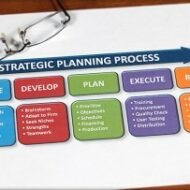
Strategies to Tide Over Competition Distinctive Competence: is nothing but a set of unique capabilities that certain firms possess allowing them to make inroads into preferred markets and to gain advantage over the competition. Human brain is the greatest think tank and it evolves new methodologies of business management from time to time in order to sustain as well as win the race. Planning is the key factor that decides the rise or downfall of a business empire. “Where we are?” and “Where we want to be in the next few years?” is how every business leader’s basic thought process must be, without which he cannot proceed further in the competitive corporate environment. If we call planning as the basement of a building, then it should be very precise, clear cut and robust so that the business empire built on this basement will never collapse and it will also serve as a role-model for everyone who aspires to set his foot in the corporate business world. At the corporate level, strategic planning helps to establish the Purpose Mission and Objective for the firm as a whole and “outlines the overall plan to attain them.” Strategy is nothing but a unique set of action plan that will distinguish you from your competitors and make you have an edge over them. Likewise strategic planning is nothing but thinking out of the box to” CREATE YOUR OWN NICHE MARKET” in the business environment. STRATEGIC COMPETENCE takes you to the top of the ladder; but to withhold your position you need to formulate innovative ideas to tide over the challenges in the market. Strategic planning facilitates this process by giving you time frame to complete your short term objectives and long term goals. Infographic Courtesy: The 4 key sources to seek insights for marketing planning Planning for SBU’s: Business level planning is done for the enterprise’s STRATEGIC BUSINESS UNITS or SBU’S. These are individual” cash cows” that makes your business noteworthy and also brings in constant revenue to run your other units successfully even in periods of recession or if a particular product is not that successful as you might have expected it to be. I shall compare a business plan to a travel plan. Both involve planning, resources, capital, marketing and so on. . . Both have starting points but a business plan and its objectives never end and you can never come back to the starting point in a business as that of a travel, because you only expand and grow to greater heights in a business provided your plan is pucca. And also the strategy seeks the integration and control of marketing, finance, production and human resources at the functional level. Strategic Plans at different functional levels: Strategic plans at different levels must be integrated to ensure that they work in tandem and reinforce each other, thereby contributing to the corporate level strategy adopted for the entire corporate group. I would call strategic planning as” INTELLIGENCE DESIGN CHOICE ACTIVITY “adopted by a corporate and it has become an inevitable feature in the directory of the business world....
Posted by Managementguru in Business Ethics, Business Management, Decision Making, Principles of Management, Strategy
on Mar 11th, 2014 | 0 comments
Spirituality and Management The purpose of correlating spirituality and management might present a weird picture to some. Research of the old Hindu scriptures, epics and Vedas disclose the secrets of management etiquettes coated with spiritual sugar which serves as a road map for us to cherish and follow. As an ardent follower of the BHAGAVAT GITA, THE UNIVERSAL BOOK OF SPIRITUAL SCIENCE, it was really amazing for me to know that the core principles of management have already been defined and dealt with that were formulated at a later date by MANAGEMENT GURUS like PETER DRUCKER, HENRY FAYOL, C. K. PRAHALAD and the like. I would like to present four qualities that struck me while I was comparing and contemplating. PERCEPTION AND UNDERSTANDING THE INNER SELF SELF MOTIVATION AND SELF TRANSCENDENCE DUTIES AND RESPONSIBILITIES LEADERSHIP The Leader and the Manager: The LEADER IS BEING FOLLOWED willingly, but a manager has to command individuals in order to adhere to his instructions. So, being a good leader starts from soul searching or understanding the nature of one’s inner self. SELF CONCEPTION gives a different dimension to approach problems. Spiritual experiences induce clarity in thinking that leads to ethical decision making. The spiritual experiences of Arjuna, one of the PANCHA PANDAVAS with LORD KRISHNA made him stronger (at will) and sharper (right perception). Decision Making: “I am the strength of those who are devoid of personal desire and attachment. O Arjuna, I am the legitimate desire in those, who are not opposed to righteousness, “says Lord Sri Krishna. At the war front, Arjuna the GREAT WARRIOR is not sure whether to fight against his own kith and kin. The inspiring words of Krishna motivated him to come out from the state of INERTIA and enter RIGHTEOUS ACTION. It is a testimony of what philosophers call the transcendence from alienation to self confidence to reach ethical decision making. One can never forego his duty or responsibility, be it his personal life or in the management arena. EFFECTIVENESS IS DOING THE RIGHT THINGS EFFICIENCY IS DOING THINGS RIGHT https://www.slideshare.net/parthacharya/management-lessons-from-mahabharata-9806655 Forming a VISION, planning the right Strategies, pooling the resources, hiring right people for the right job, setting goals and objectives, reviewing by MANAGEMENT BY OBJECTIVES, MANAGEMENT BY EXCEPTION, rewards and recognition, all have been dealt with a masterly excellence in MAHABARATHA which talks about the GURUKSHETRA WAR between the PANDAVAS and KAURAVAS or to simply put it, between THE GOOD AND THE EVIL. “The Supreme Lord is situated in everyone’s heart, O Arjuna, and is directing the wanderings of all living entities, who are seated as on a machine, made of the material energy.”Mind can make you LIBERATED OR BONDED that depends upon your WILL to master it or be a slave. Controlling your mind in turn controls your actions and thought process that leads to well augured efforts that proves fruitful to the human race. Leaders are born and not made goes the saying. But if you are able to be THE MASTER OF YOUR MIND, you are a leader made. Management Lessons from THE BHAGAVAT GITA Applicable to both western and Indian school of management, THE BHAGAVAT GITA deals with problems at the GRASS ROOT LEVEL relating to THE HUMAN PSYCHE. https://www.slideshare.net/singhm91/management-lessons-from-bhagvad-gita It enlightens us on all managerial techniques, goading us towards a serene atmosphere and state of affairs in place of the conflicts, stress, and lack of co-ordination, common in most of the enterprises world wide. “Do your duty perfectly, and the results will follow suit”, is the crux of GITA. How many of us can transform ourselves into such personalities? Can we ever overcome the desires...
Posted by Managementguru in Economics, Financial Management, International Business, Marketing, Project Management
on Mar 11th, 2014 | 0 comments
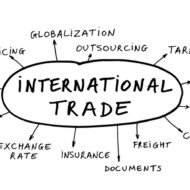
What is Trade? Trade is the exchange of commodity and services. International trade represents business transactions taking place at the global level, and it is fundamentally different from domestic trade. Trade at international level demands huge investments, network of franchisees and proficient people to run the show. Many corporate giants are trying to capture Asian markets, especially Indian market, which has become the industrial hub for such economic activities. Economic liberalization has been the focus of many developing countries for the past two decades and this has allowed multinational companies with huge investment potential to enrich the weaker economies. What is International Trade? International trade tries to generate more foreign exchange, which is always good for the economy. Say, if a country has rich resources of petroleum, naturally it will try to sell the surplus to countries not endowed with such natural resources. That is why Middle East nations are prosperous and economically independent. The diversity in productive possibilities in different countries is due to the presence of limited natural resources. When a country gets a head start in a particular product, it can become the high volume, low cost producer. The economies of scale give it a significant advantage over other countries, which find it cheaper to buy from the leading producers than to manufacture the product themselves. Barriers for Effective Trade Every nation must try to specialize in the production and export of those commodities, which are available in plenty and must import such products in the production of which they have a resource deficiency. It should be remembered that there are severe man made barriers in international trade such as, export duties, quotas, exchange restrictions etc.,that hinder the free movement of products. International Trade and Finance Nevertheless, it is not also possible for a country to produce domestically every kind of product. In spite of all these restraining factors, global trade is thriving, thanks to the advanced technological aspects introduced in communication and faster means of transportation. Distance is no more a constraint and the world has become one small global village. Foreign Exchange Issues All domestic transactions, say in a country like India take place in rupees, which is the legal tender in the country. However, in its trade with other countries like USA, Germany, Japan, France and Britain, the payments have to be made in terms of dollars, marks, yens, francs and pound sterling respectively. The mechanism through which payments are effected between two countries having different currency systems is called foreign exchange. It may be also defined as the exchange of money or credit in one country for money or credit in another. Foreign exchange rates can affect relative prices and net exports. A rise in the a nation’s foreign exchange will depress that nation’s net exports and output, while a fall in the foreign exchange rate will increase net exports and output. Because of the significant impact of exchange rates on national economies, countries have entered into agreements on international monetary...
Posted by Managementguru in Business Management, Entrepreneurship, How To, International Business, Marketing, Project Management, Sales, Startups
on Mar 11th, 2014 | 0 comments
Export can be in the form of merchandise (goods) or services (invisibles). When an entrepreneur wants to spread out his scope of business activity beyond the territory of his nation it is called export, whence he has to prepare himself to confront the challenges prevailing in the global market. How to go about Export? Business by itself calls for discipline whether you talk about your credit policy, quality of your product or services, on time delivery, payments, fund rotation, human resources management and the like. The taste of success in the domestic market gives you the necessary confidence to spread your wings far and wide. To be a part of the global market, you are expected to imbibe not only more discipline and order but you should be very thorough about the procedures and policies of the country, to which you are planning to export and the various legal formalities pertaining to your business activity. How to Export From India Pic Courtesy: Procedure to Start Export Business from India What will be your plan of action if your merchandise is disapproved of its quality after reaching the destination or the shipment gets destroyed due to some eventuality? To combat contingencies we have to have a representative working for us in the chosen place of activity who would report and handle the proceedings. Pre-Requisites for Exporting Goods: How many people do you think who have acquired the desire to export their products have a clear idea about the steps involved in starting an export business? First you have to secure the IEC CODE (import export code) from the DGFT (Director General of Foreign Trade) that comes under THE MINISTRY OF COMMERCE AND INDUSTRY. What is IEC Code? Import Export Code (also known as IEC) is a 10 digit identification number that is issued by the DGFT (Director General of Foreign Trade), Department of Commerce, Government of India. Info Courtesy: Shiprocket.in It is also known as Importer Exporter Code. It is mandatory for companies and businesses to obtain this code to start a business that deals with import and export in the Indian Territory. It is not possible to deal with export or import business without this code. While exporting you get the following edge over others: Exposure to forex marketExposure to diversified cultureExposure to varied laws and legal formalitiesExposure to business risks which you must take up as a challenge Having businesses in various countries is better than having all businesses in one country. It saves you during periods of economic recession. You experience market growth by entering into different and new markets; Asian and European markets are flooded with traders from all around the world since these regions enjoy a locational advantage in the world map and well connected through the sea and land. RBI Policies: Exporters must be aware of the fact that RBI policies are very severe when it comes to foreign exchange. So you should have proper informational inputs from the correct source and your capital has to be invested accordingly. Slide Courtesy: Import and Export Policies and Procedures Exploring unfamiliar and exotic markets is very difficult as they are always dynamic. You should see to it that you keep yourself posted with updates on INTERNATIONAL FINANCE, LENDING RATES etc. Also Read: 10 key steps to export success You can make a small business big and beautiful by adding some flavor to it like, Right time to launch your product in the global scenario, People’s preference being given priority by doing some demographic survey, Attractive campaigns and of course Your unendurable passion for business will do the rest to make your venture a successful one. Read...