Posted by Managementguru in Human Resource, Principles of Management, Project Management, Training & Development
on Mar 22nd, 2014 | 0 comments
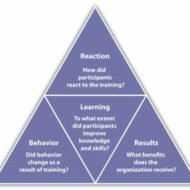
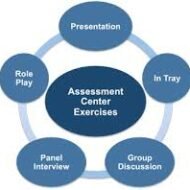
Assessment centers Some companies run a series of prolonged selection procedures (assessment centers) each lasting one or two days, and sometimes longer. Usually these are after the first round of interviews and before making the final selection, but they can be used as an initial selection process. They are usually held either on company premises or in a nearby hotel, and are measured by many employers to be the fairest and most accurate method of selecting staff. This is because they give a number of different selectors a chance to see you over a longer period of time than is possible with a single interview, and the chance to see what you can do, rather than what you say you can do, in a variety of situations. Assessment Centers typically include a number of elements. Social/informal events, where you get a chance to meet variety of people, including other candidates, the selectors, recent graduates and senior management. This is an excellent opportunity for you to find out more about the organization and to ask questions in a more informal or social setting. Information sessions, which provide more details about the organization and the roles available. Listen carefully, as it is likely to be more up-to date than your previous research. If you are unclear about anything, ask. It is often good to have a question prepared for these sessions, but make sure it is a sensible question and not one that has already been covered. Asking inappropriate questions just to get noticed does not impress the selectors. Tests and exercises designed to exhibit your potential. Selectors at assessment centers measure you against a set of competencies, and each exercise is carefully designed to assess one or more of these areas. Do not worry if you think that you have performed badly at any stage; it is more than likely that you will have the chance to compensate later on. It is also worth remembering that you are being assessed against these competencies and not against the other candidates, so rather than trying to compete against them, make sure that you demonstrate the qualities the organization is looking for. Remember that assessment centers are extremely expensive to run and that you have already come a long way to be invited – you may have as much as a one in six chance of being selected. Vestibule Training Vestibule training creates a miniature of the department for which the training program is carried on. It utilizes machinery similar to that in operation on the production floor. Qualified instructors, usually highly skilled operators or supervisors, are provided to conduct the program in this special section. Here the new employees are given a course of training in the particular machines they will be required to use and on the exact work they will do when they become a part of the regular production force. {In the early 1800s, factory schools were created, due to the industrial revolution, in which workers were trained in classrooms within the factory walls. The apprentice system was inadequate due to the number of learners that had to be trained as the machines of the Industrial Revolution increased the ability of the factory to produce goods. The factory owners needed trained workers quickly because there was a large demand for the produced goods. Towards the end of the 1800s, a method that combined the benefits of the classroom with the benefits of on-the-job training, called vestibule training, became a popular form of training. The classroom was located as close as conditions allowed to the department for which the workers were being trained. It was furnished with the same machines...

Posted by Managementguru in Human Resource, Principles of Management, Project Management, Training & Development
on Mar 22nd, 2014 | 0 comments
Off-The-Job Training In basket Exercise Recently, the in-basket has become a focus of interest because of its handiness in selection across a wide variety of jobs. A range of techniques have been used to develop in-baskets. In a traditional in-basket exercise, candidates are given time to review the material and initiate in writing whatever actions they believe to be most appropriate in relation to each in-basket item. When time is called for the exercise, the inbasket materials and any notes, letters, memos, or other correspondence written by the candidate are collected for review by one or more evaluators. Often the candidates are then interviewed to ensure that the evaluators understand actions taken by the candidate and the rationale for the actions. If an interview is not possible, it is also quite common to have the candidate complete a summary sheet (i.e., a questionnaire). Lecture A lecture is the method learners often most commonly associate with college and secondary education. Yet, it is also considered one of the least effective methods to use for adult learners. In this method, one person (the trainer) does all of the talking. He or she may use handouts, visual aids, question/answer, or posters to support the lecture. Communication is primarily one-way: from the instructor to the learner. Movies/videos/computer-based training Content for the training experience comes primarily from a videotape or computer-based program. Simulations Trainees participate in a reality-based, interactive activity where they imitate actions required on the job. It is a useful technique for skills development. Simulations are widely used now-a-days in medical field where surgeons find it very useful to train their hands on a virtual human body for complicated surgeries. Self-discovery Trainees discover the competencies on their own using such techniques as guided exercises, books, and research. Role Playing During a role-play, the trainees assume roles and act out situations connected to the learning concepts. It is good for customer service and sales training. Case Studies A case study is a description of a real or imagined situation which contains information that trainees can use to analyze what has occurred and why. The trainees recommend solutions based on the content provided. Seminar Seminars often combine several group methods: lectures, discussions, conferences, and demonstrations. Conference The conference training method is a good problem-solving approach. A group considers a specific problem or issue and they work to reach consensus on statements or solutions. When choosing from among these methods, the trainer must decide which one best suits the trainees, the environment, and the investments available. Many trainers will choose to combine methods or vary them. Others will select a single method that works best for them and never vary. With so many options, a trainer is limited only by his or her...
Posted by Managementguru in Business Management, Change management, Human Resource, Organisational behaviour, Principles of Management
on Mar 20th, 2014 | 0 comments
Organizational Discipline – A Way of Life Organizational Discipline: Discipline is the force that prompts individuals or groups to observe rules, regulations, standards and procedures deemed necessary for an organization. Discipline is one word that instills fear in the minds of individuals. The very word sounds autocratic when uttered by your boss and creates a feeling that you are being forcibly controlled. If you do not live up to the expectations of the management, definitely you are going to get listed for disciplinary action. Why is that discipline always gets enforced to gain obedience?Why people get intimidated when subjected to disciplinary action?Why streamlining your behavior becomes so difficult some times? Have you ever given a thought on how we always try to put the blame on management for being a father figure? We have to see things from a broader perspective. When you work for somebody, it is their prerogative to develop some rules and standardize some norms which they think is suitable for the mode of operations. Policies and procedures are formulated for the effective functioning of the organization. It is your responsibility to make them satisfied with your conduct to gain trust and confidence. Organizations are real time schools where you can learn a lot about proper social behavior and develop high standards of discipline. Learning Induces Change in Behavior Learning, an ongoing process is a wonderful experience and individuals must use the opportunity to fit themselves well in the human network when they work for big corporates. The objective of discipline is “orderly behavior”. How many of you maintain a cordial relationship with your peers in the organization?Are you sure they are not talking behind your back for some unpleasant quality of yours?Are you alienating yourself from the rest of the group? Self appraisal is the best way to rank yourself against various critical factors of interpersonal relationship with your team members. Things which we have to consider that might be the causes for indiscipline and misconduct stems from psychological, social and personality oriented factors. Absenteeism Pic Source: Dominion Systems Absenteeism is one thing that no superior can withstand as it directly affects the productivity and vitality of the company. The reasons if presented are weird, he becomes more agitated. Dishonesty is not a thing to be tolerated by the management. Insubordination also causes clashes between the executives and the employees as their “egos are battered.” Carrot and Stick Policy Considering from the employees’ point of view, the carrot and stick policy of the management alone do not make them committed to the firm. Challenging tasks, sense of participation, favorable work climate etc. makes them more responsible and faithful. Immediate rewards and recognitions are more appealing than deferred benefits like pension or gratuity. The emotional aspects of the employees must not be handled in a conservative but in a flexible manner by the management. This will create a feeling of trust and openness between the two. Democracy Hard and fast rules may not solve the purpose when there is no room for any humanism or democracy. This might even be the cause for employees to work against the interests of the company. This leads to disciplinary actions which prove hectic to both the parties. The management on its part has to definitely shed its autocratic attitude and adapt to more participative style of leadership. Personnel department has to play their administrative role in acting as a link factor between the employees and their superiors. Although managers exercise the authority of punishment, it is the HR department’s duty to develop proper procedures of administration of discipline and assist the management in conducting enquiries and solicit the cooperation...
Posted by Managementguru in Decision Making, Entrepreneurship, Human Resource, Organisational behaviour, Principles of Management, Training & Development
on Mar 20th, 2014 | 0 comments

Self Motivation-Key to Managerial Success What is Self Motivation : Ability to do what needs to be done without external influence. How does your company become successful? Just because you have cutting edge technology! Surplus capital! Excellent Infrastructure! Reliable Workforce! Definitely not. A COMPETENT VALUE-DRIVEN CORPORATE MANAGER would make all the difference. Even his very presence would make the atmosphere ELECTRIC. Only some are gifted or bestowed with top managerial qualities. How! Is it an innate quality or imbibed! It is a topic worth the discussion, because it proves to be the liveliest element in the management process. Well, when top management decides to recruit a good manger, what are the qualities they would be in favor of? Think about it, we even expect a house maid to be sincere, on time and loyal to us. When it comes to corporate dealings, the first and foremost quality desired will be “BEARING HUGE RESPONSIBILITY“. Accountability, transparency and control towards the day to day affairs of the company follow suit. Read this resourceful article from Inlpcenter – Change Your Thinking: The Alternate Futures Self-Motivation Exercise , a unique self motivating strategy to make believe in yourself and become better problem solvers. These managers who are also leaders serve as a ROLE MODEL for all the other employees SET STANDARDS FOR PERFORMANCE Motivate their employees Set a Brand Image for the company Be a GOOD LIAISON Problem solver Counselor and make the company special. Strategic Direction: When we talk about value, we talk about the influence that the value has on the STRATEGIC DIRECTION OF THE FIRM, which involves shaping up the character and image of the firm. A good manager EVOLVES OVER A PERIOD OF TIME. While considering the HEAVY TURN OVER TREND that has set in lately in the corporate environment, it becomes important for the top management to pick their HR lot carefully. How do you empower your trusted persons is a question that every Boss has to ask himself to retain the best talent. Good Managers stick to the firm and they contribute to the GROWTH OF THE FIRM. Training plays, of course a major part in the DEVELOPMENT OF MANAGERS but I feel that ONLY THE PERSON WHO MAKES THE BEST USE OF HIS SUBCONSCIOUS INNER DRIVE, REACHES THE TOP. Loyalty is an outdated term in this modern world and the minimum you could expect is SINCERITY. Self motivated managers easily regulate the environment and makes the climate cordial. He has to don many roles, A BRIDGE BETWEEN TOP MANAGEMENT AND EMPLOYEES MANAGE THE INTEREST(OF BOTH THE FINANCIAL INSTITUTIONS AND EMPLOYEES) FORMULATING MARKET STRATEGIES SHOULD BE A TECH-SAVVY A MAN OF EMPATHY A MAN OF BRILLIANT INTUITIONS(ESPECIALLY WHEN IT CONCERNS STOCK MARKET) EVER LEARNING VERSATILE and much more. Practice makes a man perfect is the saying. It suits the corporate business world too, provided the man is intelligent, capable and smart in taking decisions. Always a thinking person, an efficient manager would be on the look out for opportunities and resources that could benefit the firm. Every one of you who aspires to catch up with top positions in the business world must do a “THOROUGH SELF ANALYSIS” as to how agreeable you are in the likert scale of the...
Posted by Managementguru in Business Management, Human Resource, Organisational behaviour, Principles of Management
on Mar 20th, 2014 | 0 comments
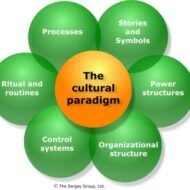
The Ideology of Corporate Culture What is Corporate Culture: the collective beliefs, value systems, and processes that provide a company with its own unique flavor and attitude. Management Attitude: Globalization has necessitated organizations existing in the corporate business world to respond in a unique way in an attempt to enjoy a competitive edge in the market. Corporate culture is a value that keeps an organization intact and helps in building team spirit amongst the members. It is not possible to specifically describe or delineate the concept of culture, yet, people are aware of its fine and striking presence. Let us say that each corporate firm has a dissimilar but unique culture which embraces the values, norms, beliefs and assumptions of the members of the organization and their behavior. It is also greatly induced by the leadership style and management attitude. Role of Culture: Why do organizations need culture as a milieu? Has culture any role in improving the output? Management uses culture as a means to reach out to the employees in an informal manner, to signify what is expected of them plus what is to be expected from the management. Culture cuts through all the levels of an organization and unites the members or employees, to work towards enterprise objectives in a remarkable manner. It is a sort of identity label on the organization and its interest to promote or espouse the value systems through out the organization. Corporate culture encompasses the following qualities enlisted: Quality driven Presence of an informal atmosphere Open communication Customer centric business model Proper and likable dress code Trust and confidence amid employees Value based management CEOs’ as strategic drivers in setting a candid corporate culture CEO’s naturalness and spontaneity with the employees Gratifying employee welfare and security measures Value systems indicated by the vision and mission statements Codified employee behavior Well devised operating strategies Greater autonomy tomanagers at different levels Rewards and recognitions and so on… https://blog.enplug.com/corporate-culture Corporate culture is considered to be a dogma, which many organizations utilize as a means to develop and amalgamate prospective employee groups. An employee learns all about the firm, its activities, the role he is supposed to play, information regarding his superiors, training, career advancements or promotions, pay, employee leave procedures and the long range goals of the organization during the time of induction. The firms should capitalize on this incubation period to spruce up the minds of the employees to act in accordance with the desired values expected by the management. Value Systems: It is inevitable for each and every organization to develop a value system over a period of time based on the founder’s outlook towards business and people working for him. This creates a strong or a weak culture which has an effect on the output or performance of the employees. This also serves as a clear indication whether the organization is proceeding in the right direction. We should never forget that a sound culture eventually aims at achieving the end goals of an organization. The cultural framework of an organization facilitates this process to materialize in a smooth manner. Though intangible in nature, it wields its negative power, when not nurtured appropriately. Flourishing organizations always have pride in their robust cultural back ground, which is a mark of distinction. It definitely shapes up an organization to deliver performance that matches and often surpasses the industry standards. The head of an organization has an important role as a leader as well as a change agent in taking his organization to the next level. The mutual faith and trust between the superior and his subordinates is the anchor point of an organization. Culture – An Intervention Technique: The culture of an...