Posted by Managementguru in Business Management, Human Resource, Organisational behaviour, Principles of Management
on Mar 17th, 2014 | 0 comments
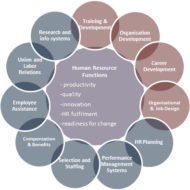
Personnel or Human Resource Management: is the strategic approach to the management of an organization’s most valued assets – the people. Human resource is always in great demand as competent or skilled labor is in short supply. It is important to remember that no one is born with the value of excellence, as the acquisition is gradual in nature and only possible through proper training and one’s own cognitive perception. It is not that people have to belong to the elite group to make their mark in the respective fields. The best leaders and managers often are ordinary people creating amazing results and astounding success. Try some of these golden etiquettes for achieving excellence in the management of human resource: Clear objectives have to be set with the consensus of the employees Recognize the progress Confront problems Manage with flexibility Understand the value of quality Manage time for better results Enhance decision-making skills by delegating authority Master stress Motivate people Think like a winner Pursue a participative style of leadership To achieve the goals of the organization, the HR department will have to reorient itself on the following lines. It is very important that ‘Right people are chosen for the Right job’. During the induction stage, employee attitudes must be shaped in harmony with the culture of the organization. Dynamic training system should be introduced which is supposed to be a continuous process rather than a sporadic exercise. Quality of Work Life: Organization should ensure satisfactory quality of work life in order to minimize the sense of alienation, found in the workplace. It should contribute to an atmosphere to improve self-discipline, self-motivation and self realization for the purpose of production optimization in terms of both quantity and quality. The presence of a fair performance appraisal system will facilitate the growth prospects of employees in terms of career advancement and development. Fair Compensation: Institutions must work out a fair compensation package for all categories of workmen so that they may be able to receive the living wages instead of subsistence-level wages. The accent should be on production and productivity, without any compromise. Opportunities are aplenty, particularly for experienced personnel as the industries offer wide job prospects for the prospective candidates. Now-a-days job hopping is rampant which is a serious issue to be managed. A number of organizations offer bonus in the form of stock that interjects a feeling of oneness, which ensures alignment of interest between employees and the management. Favored position in terms of enhanced performance from the work force is possible only if the management comes down to embrace and lend their ears to certain rational demands form the other end. Security of Employment Increased wages Employee ownership Participation and employment Internal promotions Information sharing Incentives etc., The personnel function can 1) Attract attention to indicate the importance attached to management’s process and the various policies, practices and systems that support the process. 2) Provide necessary information and expertise on best practices in rival companies to benchmark the process and provide with analytical support for diagnosing and recounting solutions to problems arising in the employee management relation. 3) Engage in business decisions and accelerate change that is consistent with the underlying values of the company. Note: The laws and matters relating to wages and bonus come under the purview of the Ministry of Labor and Employment. The Minimum Wages Bill was passed by the Indian Dominion Legislature and came into force on 15th March,...

Posted by Managementguru in Business Management, Marketing, Operations Management, Principles of Management, Strategy
on Mar 16th, 2014 | 0 comments
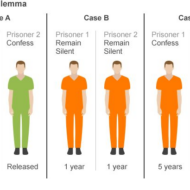
Game theory and strategy What is Game Theory: Set of concepts designed for decision making in situations of competition and conflict under specified rules. The prisoner’s dilemma: The prisoner’s dilemma is a canonical example of a game, analyzed in game theory that explains why two individuals might not cooperate, even if it appears that it is in their best interest to do so; Albert W. Tucker formalized the game with prison sentence payoffs and gave it the “prisoner’s dilemma” name. To solve many practical problems that are encountered in economic, military or other disciplines, one has to deal with situations in which there are two or more conflicting parties striving for the same objective and the outcome of each action of one party depends solely on the opposite parties choice of a course of action. As we all know only one horse can win the race ultimately and the other parties only can prolong the race or see to that they make every possible move to delay the opponent’s success. So, what’s this game theory all about? This is a special mathematical method that was evolved mainly to analyze conflict situations where the number of competitors is finite, each participant has a definite set of actions to choose and there is a conflict of interest between the competitors. So it helped the participants to reach a decision that would put them in the winning post. This theory has spilled its implications on business situations where success is the motto and conflict and competition the order of the day. Only the best among the best survive. Darwin’s theory, “Survival of the fittest” applies not only to biological organisms but also to business organizations which are also abuzz with activity. Chance Moves: Games like chess, checkers are played according to a definite set of rules laid down and these game patterns has inspired business persons to introduce strategies in business, where the concentration is mainly focused on the chance moves that defeats the opponent. Big business corporates mainly concentrate on the strengths and weaknesses of their competitors to have an edge over them. A real game is controlled and regulated by the statutory rules to be followed but a business game involves lot of killer instincts and intuitions combined with rational thinking and logic. Optimal Strategy: The first party always puts himself in the shoes of the other party and tries to perceive how the other party would react in a particular situation. Although the aim is to win, choosing the optimal strategy is what matters. It will at least keep you in bay. Precise solutions can be arrived at if you plan your game fittingly. The anticipation and thrill that is involved in a strategic game is matchless. We witness a lot of firms imitating what the leader of the market does. The risk is borne solely by the firm introducing the change and the firm takes the major share of profit as it is the pioneer and if it loses the next strategic move is planned for. For a company with sound financial position, the chance move is worth giving a try, head or tail doesn’t matter. The stalkers are benefited by the waiting period during which they come to know of the pros and cons of the strategy employed by the leader. Games are played in the true spirit of sportsmanship, but a business faces cut throat competition. There is no space for any courtesy or liberal approach. If you are quick enough to pick the pulse of the people by gauging their preferences, analyzing the market conditions and employing timely strategies you will at...
Posted by Managementguru in Business Management, Entrepreneurship, Human Resource, Leadership, Principles of Management
on Mar 13th, 2014 | 0 comments
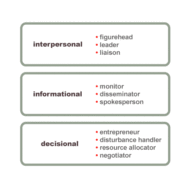
Research on Managerial Roles by Henry Mintzberg and Peter Drucker Henry Mintzberg, the canadian academic observed a few managers and analysed their behaviors and arrived at some conclusions which are listed in the table below. He also identified and attributed ten managerial roles of significance in correlation with the managerial functions. S.NoManagement Functions% of time spent1.Relating to external environment1.82.Planning and setting Objectives19.53.Decision-making6.04.Organising15.05.Leadership and inter-personal role28.46.Communication12.67.Control12.78.Staffing4.1 This table very clearly explains the role of a manager as a leader and the extent of influence he exerts on his sub-ordinates. Proper planning and goal-setting are the key contributors for the successful functioning of a firm. LEADER VS. MANAGER Coming to the managerial roles they can be classified as, 1. Interpersonal roles 2. Informational roles 3. Decisional roles Inter-Personal Roles: Figurehead role– The function is more of a ceremonial nature, like attending the family functions of employees, greeting visitors and a manager performs the symbolic duties of a head of the organization.Leader– He has to plan the HR requirements and motivates the staff to perform well. “Managers are people who do things right; leaders are people who do the right thing.” Remember a manager has to be a leader whereas it is not so in the case of a leader.Liaison– The manager acts as a link between the organization and the external environment to build image and rapport. Informational Roles: Monitor– The manager has to update himself with the current scenario in order to utilize the information for organizing and prompt decision-making.Disseminator– The manager has to communicate and distribute information to his subordinates to effectively accomplish the enterprise objectives.Spokesperson– Efficiently has to communicate the company’s policies to prospective clients and others. Decisional Roles: Entrepreneur– He has to be innovative by adapting to the changes in the environment. He has to be adventurous, persistent and strategic during tough times.Disturbance handler– He has to find appropriate solutions to problemsResource allocator– He has to apportion and allocate resources properly besides delegating authority to the work forceNegotiator– He has to negotiate resources outside and conflicts inside the organization. MANAGERIAL DIMENSIONS Managing: Science or Art? One perspective is Managing, like all other disciplines- whether medicine, music composing or even cricket is an art. It is “know-how.” Still managers can use the organized knowledge about management to perform better. So let us put it this way, Managing as practice is an art; the organized knowledge underlying the practice may be referred to as a science. Let them be complementary to each other and be present in peaceful co-existence. Drucker “ON MANAGERIAL FUNCTIONS ” – A manager has to look after The specific purpose and mission of a firmIncrease productivity by making the employees more productiveConsiderate about social impacts and social responsibilities In his view, the areas a manager has to focus and concentrate are 1. Market standing 2. Innovation 3. Productivity 4. Financial and Physical resources 5. Profitability 6. Manager performance and development 7. Worker performance and attitude 8. Public responsibility He says that business has only two functions- marketing and innovation. While others were concentrating on products and commodities, he concentrated on people and their performance. His “management by objectives- MBO ” became a very popular concept though it faced criticism. MBO according to Drucker is a philosophy that rests on a concept of human action, behaviour and motivation. It sets personal goals (both shortterm and longterm) to be achieved by each individual working for the organization and coverts them into challenges to be accomplished, thus motivating the individuals. The Effective Manager The effective manager is a situational manager who evaluates each approach in the light of circumstances and selects the one that most effectively and efficiently achieve individual...
Posted by Managementguru in Business Ethics, Business Management, Decision Making, Principles of Management, Strategy
on Mar 11th, 2014 | 0 comments
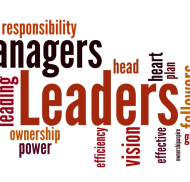
Spirituality and Management The purpose of correlating spirituality and management might present a weird picture to some. Research of the old Hindu scriptures, epics and Vedas disclose the secrets of management etiquettes coated with spiritual sugar which serves as a road map for us to cherish and follow. As an ardent follower of the BHAGAVAT GITA, THE UNIVERSAL BOOK OF SPIRITUAL SCIENCE, it was really amazing for me to know that the core principles of management have already been defined and dealt with that were formulated at a later date by MANAGEMENT GURUS like PETER DRUCKER, HENRY FAYOL, C. K. PRAHALAD and the like. I would like to present four qualities that struck me while I was comparing and contemplating. PERCEPTION AND UNDERSTANDING THE INNER SELF SELF MOTIVATION AND SELF TRANSCENDENCE DUTIES AND RESPONSIBILITIES LEADERSHIP The Leader and the Manager: The LEADER IS BEING FOLLOWED willingly, but a manager has to command individuals in order to adhere to his instructions. So, being a good leader starts from soul searching or understanding the nature of one’s inner self. SELF CONCEPTION gives a different dimension to approach problems. Spiritual experiences induce clarity in thinking that leads to ethical decision making. The spiritual experiences of Arjuna, one of the PANCHA PANDAVAS with LORD KRISHNA made him stronger (at will) and sharper (right perception). Decision Making: “I am the strength of those who are devoid of personal desire and attachment. O Arjuna, I am the legitimate desire in those, who are not opposed to righteousness, “says Lord Sri Krishna. At the war front, Arjuna the GREAT WARRIOR is not sure whether to fight against his own kith and kin. The inspiring words of Krishna motivated him to come out from the state of INERTIA and enter RIGHTEOUS ACTION. It is a testimony of what philosophers call the transcendence from alienation to self confidence to reach ethical decision making. One can never forego his duty or responsibility, be it his personal life or in the management arena. EFFECTIVENESS IS DOING THE RIGHT THINGS EFFICIENCY IS DOING THINGS RIGHT https://www.slideshare.net/parthacharya/management-lessons-from-mahabharata-9806655 Forming a VISION, planning the right Strategies, pooling the resources, hiring right people for the right job, setting goals and objectives, reviewing by MANAGEMENT BY OBJECTIVES, MANAGEMENT BY EXCEPTION, rewards and recognition, all have been dealt with a masterly excellence in MAHABARATHA which talks about the GURUKSHETRA WAR between the PANDAVAS and KAURAVAS or to simply put it, between THE GOOD AND THE EVIL. “The Supreme Lord is situated in everyone’s heart, O Arjuna, and is directing the wanderings of all living entities, who are seated as on a machine, made of the material energy.”Mind can make you LIBERATED OR BONDED that depends upon your WILL to master it or be a slave. Controlling your mind in turn controls your actions and thought process that leads to well augured efforts that proves fruitful to the human race. Leaders are born and not made goes the saying. But if you are able to be THE MASTER OF YOUR MIND, you are a leader made. Management Lessons from THE BHAGAVAT GITA Applicable to both western and Indian school of management, THE BHAGAVAT GITA deals with problems at the GRASS ROOT LEVEL relating to THE HUMAN PSYCHE. https://www.slideshare.net/singhm91/management-lessons-from-bhagvad-gita It enlightens us on all managerial techniques, goading us towards a serene atmosphere and state of affairs in place of the conflicts, stress, and lack of co-ordination, common in most of the enterprises world wide. “Do your duty perfectly, and the results will follow suit”, is the crux of GITA. How many of us can transform ourselves into such personalities? Can we ever overcome the desires...
Posted by Managementguru in Business Ethics, Business Management, Decision Making, Principles of Management, Strategy
on Mar 11th, 2014 | 0 comments
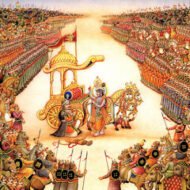
VEDIC MANAGEMENT AND LEADERSHIP INDIAN MANAGEMENT AND VEDIC LEADERSHIP From time immemorial, vedic scriptures and Upanishads have inspired people to acquire knowledge and wisdom about management principles and practices. Great spiritual leaders like Adisankara believed to be the reincarnation of Lord Shiva, Shri Krishna, the reincarnation of Lord Mahavishnu ,Lord Buddha, Shri Ramakrishna Paramahamsa have spoken of the infinite realities of life . The Philosophy of Unlearning: It is really amazing to know that these teachings though popular for their philosophical perspective also are a source of inspiration for management philosophy. These scriptures are excellent guides for attaining focus and help us to unlearn old school of thought and rejuvenate us with proper perspective and approach. Inspiration from Bhagavat Gita: Most of us would have heard about this quote from the Bhagavat Gita- “Do your duty without expectations”- “The fruits of which will be reaped automatically.” I used to wonder if this is possible, but all business men and entrepreneurs will definitely go by this since it proves to be the highest business philosophy too. Businesses thrive when done with a perfect vision , backed up by strong policies and ethical procedures. Adisankara: Adhi sankara has already paved the way for “Equality among the masses” when he realized and reiterated that people cannot be and should not be discriminated based on their caste and creed. His life span was very short-he was hardly 32 years when he left this world, but his preachings are there to stay forever. He was definitely a natural leader in presenting his views with clarity that serve as an eternal guide for mankind. Lord Krishna – A Magnificient Leader: Leaders ought to be natural and inspire people to follow them willingly. Lord Krishna was such a magnificient leader of Dwabara yuga who was a mentor for the Pancha pandavas and Gauravas too. The sad part of the story was Gauravas were not willing or not wise enough to utilise the services of Lord Krishna. We miss many viable business opportunities by oversight like Duryodana, the leader of Gauravas- he was a great warrior but not a good listener. “To be heard, you have to first listen,” I think this is the first step in the process of management Progress is impossible without change and those who are not willing to change cannot change anything. How true these words of George Bernardshaw are! Leaders of next century need to have better adaptive capabilities, cross-functional expertise, a positive attitude towards unlearning and re learning and also develop leadership of various levels of organization. What do Vedic Scriptures say? Coming back to vedic scriptures, they direct the mankind towards purifying the mind so that it becomes the hot seat of infinite energy leading to higher levels of strategic thinking and performance. The problem with us is that we always tend to correlate spirituality with renunciation of worldly life- It is not that; making the energy chakras inside our body live and active is the saarams ( essence) taking us to a heightened level in terms of thinking and action. To be a good leader your health should be fine in three key areas 1. Mental health Intelligence and creativity at its best Increased self-actualisation and self-confidence Greater ability to focus Higher levels of moral judgement Reduced anxiety and depression 2. Physical health Reduced need (or no need) for seeing the doctor for treatment Decreased risk factor for disease Reduction of high blood pressure Decreased alcohol consumption and drug abuse Stress reduction Prevention of ageing and increased longevity Note: It has been scientifically proved that by reciting GAYATHRI MANTRA and performing Sandhya vandanam, which is a natural yoga or pranayama method, your life...