Posted by Managementguru in Economics, Financial Management, International Business, Marketing, Project Management
on Mar 11th, 2014 | 0 comments
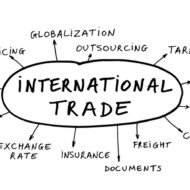
What is Trade? Trade is the exchange of commodity and services. International trade represents business transactions taking place at the global level, and it is fundamentally different from domestic trade. Trade at international level demands huge investments, network of franchisees and proficient people to run the show. Many corporate giants are trying to capture Asian markets, especially Indian market, which has become the industrial hub for such economic activities. Economic liberalization has been the focus of many developing countries for the past two decades and this has allowed multinational companies with huge investment potential to enrich the weaker economies. What is International Trade? International trade tries to generate more foreign exchange, which is always good for the economy. Say, if a country has rich resources of petroleum, naturally it will try to sell the surplus to countries not endowed with such natural resources. That is why Middle East nations are prosperous and economically independent. The diversity in productive possibilities in different countries is due to the presence of limited natural resources. When a country gets a head start in a particular product, it can become the high volume, low cost producer. The economies of scale give it a significant advantage over other countries, which find it cheaper to buy from the leading producers than to manufacture the product themselves. Barriers for Effective Trade Every nation must try to specialize in the production and export of those commodities, which are available in plenty and must import such products in the production of which they have a resource deficiency. It should be remembered that there are severe man made barriers in international trade such as, export duties, quotas, exchange restrictions etc.,that hinder the free movement of products. International Trade and Finance Nevertheless, it is not also possible for a country to produce domestically every kind of product. In spite of all these restraining factors, global trade is thriving, thanks to the advanced technological aspects introduced in communication and faster means of transportation. Distance is no more a constraint and the world has become one small global village. Foreign Exchange Issues All domestic transactions, say in a country like India take place in rupees, which is the legal tender in the country. However, in its trade with other countries like USA, Germany, Japan, France and Britain, the payments have to be made in terms of dollars, marks, yens, francs and pound sterling respectively. The mechanism through which payments are effected between two countries having different currency systems is called foreign exchange. It may be also defined as the exchange of money or credit in one country for money or credit in another. Foreign exchange rates can affect relative prices and net exports. A rise in the a nation’s foreign exchange will depress that nation’s net exports and output, while a fall in the foreign exchange rate will increase net exports and output. Because of the significant impact of exchange rates on national economies, countries have entered into agreements on international monetary...

Posted by Managementguru in Business Management, Entrepreneurship, How To, International Business, Marketing, Project Management, Sales, Startups
on Mar 11th, 2014 | 0 comments
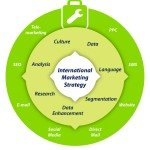
Export can be in the form of merchandise (goods) or services (invisibles). When an entrepreneur wants to spread out his scope of business activity beyond the territory of his nation it is called export, whence he has to prepare himself to confront the challenges prevailing in the global market. How to go about Export? Business by itself calls for discipline whether you talk about your credit policy, quality of your product or services, on time delivery, payments, fund rotation, human resources management and the like. The taste of success in the domestic market gives you the necessary confidence to spread your wings far and wide. To be a part of the global market, you are expected to imbibe not only more discipline and order but you should be very thorough about the procedures and policies of the country, to which you are planning to export and the various legal formalities pertaining to your business activity. How to Export From India Pic Courtesy: Procedure to Start Export Business from India What will be your plan of action if your merchandise is disapproved of its quality after reaching the destination or the shipment gets destroyed due to some eventuality? To combat contingencies we have to have a representative working for us in the chosen place of activity who would report and handle the proceedings. Pre-Requisites for Exporting Goods: How many people do you think who have acquired the desire to export their products have a clear idea about the steps involved in starting an export business? First you have to secure the IEC CODE (import export code) from the DGFT (Director General of Foreign Trade) that comes under THE MINISTRY OF COMMERCE AND INDUSTRY. What is IEC Code? Import Export Code (also known as IEC) is a 10 digit identification number that is issued by the DGFT (Director General of Foreign Trade), Department of Commerce, Government of India. Info Courtesy: Shiprocket.in It is also known as Importer Exporter Code. It is mandatory for companies and businesses to obtain this code to start a business that deals with import and export in the Indian Territory. It is not possible to deal with export or import business without this code. While exporting you get the following edge over others: Exposure to forex marketExposure to diversified cultureExposure to varied laws and legal formalitiesExposure to business risks which you must take up as a challenge Having businesses in various countries is better than having all businesses in one country. It saves you during periods of economic recession. You experience market growth by entering into different and new markets; Asian and European markets are flooded with traders from all around the world since these regions enjoy a locational advantage in the world map and well connected through the sea and land. RBI Policies: Exporters must be aware of the fact that RBI policies are very severe when it comes to foreign exchange. So you should have proper informational inputs from the correct source and your capital has to be invested accordingly. Slide Courtesy: Import and Export Policies and Procedures Exploring unfamiliar and exotic markets is very difficult as they are always dynamic. You should see to it that you keep yourself posted with updates on INTERNATIONAL FINANCE, LENDING RATES etc. Also Read: 10 key steps to export success You can make a small business big and beautiful by adding some flavor to it like, Right time to launch your product in the global scenario, People’s preference being given priority by doing some demographic survey, Attractive campaigns and of course Your unendurable passion for business will do the rest to make your venture a successful one. Read...
Posted by Managementguru in Powerpoint Slides
on Mar 10th, 2014 | 0 comments
Capital Structure – Debt vs Equity Financial Markets – Instruments and Securities
Posted by Managementguru in Business Management, Human Resource, Organisational behaviour, Principles of Management
on Mar 10th, 2014 | 0 comments

A Purview on Line and Staff Relationship How To Make Line And Staff Work Effectively: Line people “TELL” but staff people “SELL”: The functions of line and staff often overlap and it is the responsibility of line authorities to make decisions and act upon them while staff must assist and counsel them. If the role playing is perfect all the other elements fall into place. Making Line listen to Staff: The line men must be made to understand that the company employs staff experts to assist and advice and it is not fair to undermine them. Keep the Staff informed: It is a must to keep the staff members abreast of the vital matters in order to make correct decisions. Requiring Completed Staff work: 1. Presentation of a clear recommendation based upon full consideration of a problem 2. Clearance with persons affected 3. Suggestion about avoiding difficulties involved 4. Preparation of paper work-letters, directions, job descriptions and specifications are the functions that should be carried out by the staff members on time in order to facilitate the line managers to accept or reject a proposal. Making Staff work as a Way of Life: The duty of staff is not to take credit but downgrade their own contributions. This results in EGO SATISFACTION and also a drive to improve the performance levels. Careless Application of the Staff Device: The staff should not take authority in their own hands though they may be anxious to know about the implementation of their suggestions. How to Influence Without Authority Advantages Of Staff: a) The staff specialists save much time by gathering, analyzing and interpreting the data while line managers are busy at work. b) Complex problems of line men require advice of staff men. c) Staff advice is necessary for technical, political, legal and social decisions. Limitations Of Staff: a) Thinking in Vacuum: Sometimes highly impractical solutions are suggested by the staff men due to lack of experience in implementation. b) Lack of Staff Responsibility: They can easily blame the line manager for the failure of a project since they are not accountable for the end results c) Danger of Undermining the Line Authority: When the top management attaches too much importance to the staff fraternity, there is a danger of staff managers looking down on the line managers d) Problem of Unity of Command: Sometimes the lower level employees will be getting instructions from both the line and staff authorities. Have you ever experienced such conflicts with your managers or colleagues? If so, feel free to discuss about the situation and how you tackled it in the comment section...
Posted by Managementguru in Business Management, Human Resource, Labor Management, Principles of Management
on Mar 10th, 2014 | 0 comments
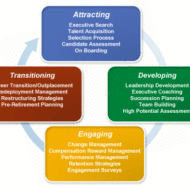
Dimensions of Human Resource Management I would like to brief you on some of the key aspects that mark the paradigm shift in the HR environment towards better management prospects. 1. The Human Resource function has shifted its focus to a much wider canvas that includes Empowerment of EmployeesRestructuring the Organisation and so on. 2. A range of HR sub-systems are involved in Planning The NumbersTypes And Skills Of HrEnsuring Their AvailabilityPlacing In The Right JobPromoting And Nurturing Their Mental HealthHelping Them Develop Special Talent And Skills 3. Human Resource is considered as an “investment” and no more an “expenditure”. Investment in TrainingRe-Training AndContinuous Learning On The Job develops the skills and competences of managers and employees and prove to be an useful investment. 4. The concepts of Learning Organisations AndTeam-Building serves a basis for “Competitive advantage” and “Motivating the employees.” 5. Values that are stressed upon are Co-OperationHarmonisationSynergyTrustBeing Pro-ActiveCollaboration 6. Strategy: VisionMissionObjectivesGoals– How these can be achieved? The techniques that are basically holistic in nature can solve the purpose. Such techniques involve SEWA– Self mastery, Empathy for workers, Worker-directedness and Achievement in performanceABO-Action by Objective Nine Dimensions of an Effective HR Department: What is the reputation of the HR department?What are the criteria (deliverables) that shape HR work?What is the mission or strategy of the capabilities – focused HR department?How is the HR department organised? How does HR facilitate the definition and creation of organisation capabilities?How do we make better HR investment and choices?How do we create HR practices?How does HR go about doing its work? What do HR professionals need to be, know, and do to be effective? Let us make a sincere comparison between the past and the present in terms of HR perspective These techniques produce performers who find their way through any set of given problems, manage themselves and lead the team to a stae of self- realisation. Old model vs New model 1. Job was the basic unit/ Team is the basic unit 2. Relations with environment there handled by the individuals/ Densely networked with environment 3. Information flow was vertical/ now it is vertical, horizontal and holistic 4. Many layers of management / Organisations have become flat 5. Emphasis on structures/ Emphasis on process and literally virtual organisations have evolved 6. Career path upward and linear/ career path lateral and flexible 7. Standardised evaluation and reward system/ Customised evaluation and reward system 8. Ethnocentric/ International 9. Single strong culture/ Multicultural and diversity of viewpoints and...