Posted by Managementguru in Business Management, Economics, International Business, Principles of Management, Technology
on Mar 26th, 2014 | 0 comments
Transfer of Technology- Commercialisation Vs.Benefit The total influx of technology in underdeveloped countries is from the advanced capitalist countries for obvious reasons, which will be the highlight of this discussion. Multinational corporations play a vital part in technology transfer, the motive being profit maximization for the parent company through their subsidiaries. These corporations act as the principal instrument of technology transfer, either through their subsidiaries or through contractual agreements made with developing countries. The idea is to bring mechanized processes and equipments that are not locally available. Dominance of Technology Supplier: The technology supplier usually takes the upper hand owing to his monopolistic strength that arises from the patent protection for differentiated products and processes. Very often, the terms and conditions of transfer are arbitrarily settled under highly imperfect market conditions by the technology supplying multinationals. Advanced nations have the advantages of reduced population density, even distribution of national wealth, high standard of living, more infusion of capital into research and development, availability of skilled personnel inclined towards research etc. Dependency of Developing Nations: Developing nations on the other hand are subject to the pressures of high population density, uneven distribution of economic wealth (poor people become more poor and the rich even richer), moderate or low living standards etc. Capital drain occurs due to heavy borrowings from the World Bank which leads to increase in the social overheads. In such a situation, it is next to impossible for a developing nation to pump capital into activities concerning research. Bargaining Power of Developing Nations: The bargaining power of developing nations is weak, as they have no access to information about alternate technologies and their sources nor the necessary infrastructure to evaluate the appropriateness of equipments, intermediates and processes. Moreover, the large part of the influx of technology in developing countries is in response to the policy of industrialization through import substitution. Transfer of technology from the developed to the underdeveloped countries is made in a number of ways. They are classified into two broad categories, viz., direct mechanism and indirect mechanism. The direct mechanism includes transfer of technology through banks, journals, industrial fairs, technical co-operation, movement of skilled people etc. Here there is a choice for the developing nation to select the appropriate technology that best suits their requirement. However, this is not the principal form of technology transfer that advanced nations would prefer. Price of Technology: The indirect mechanism implies technology transfer in a “package” or a “bundle” containing technology-embodying equipments, industrial properties like patents and trademark, skill, equity capital, etc. In this system, a local enterprise negotiates with multinational corporations for transport of the required elements of technology, and the terms and conditions are settled through a process of commercial transaction. Since the trading partners are unequal, the terms of contract are invariably restrictive and the price extended for the technology unreasonably high. All the underdeveloped countries, which have opted for growth along the classical path of capitalist development, are in a position to invite multinational corporations, if for no other reason than at least for the diffusion of...

Posted by Managementguru in Business Management, Change management, Principles of Management, Project Management, Technology
on Mar 25th, 2014 | 0 comments

Perhaps the most striking influence of technology is found on society. Practically every area of social life and the life of every individual have been, in some sense or the other, changed by the development in technology. AI in Marketing Artificial intelligence (AI) is reshaping how businesses engage with marketing. By analyzing data, personalizing content, and automating tasks, AI is truly revolutionizing the marketing landscape. Personalization One of the key benefits of AI in marketing is its capability to tailor content for each individual customer. Leveraging AI-driven algorithms, companies can craft personalized experiences that truly connect with their audience. Predictive Analytics AI can assist businesses in making more precise predictions regarding consumer behavior. By examining data from previous interactions and purchases, AI can uncover patterns and trends, enabling companies to make better-informed decisions. Visual Search AI-powered visual search is changing the way consumers search for products online. By analyzing an image, AI can identify the product and show similar items for purchase. This makes the online shopping experience more intuitive and seamless. Technology reaches people through business Preferences of people are constantly changing, and this has pushed the business firms to the point, where innovation has become the need of the hour. The new discoveries would remain idle as mere ideas if there were no laboratories to transform the ideas into creations. Technology reaching people through business is one part of the theory. The economic prosperity of a nation depends on technology. High expectations of consumers People are used to technological innovations and breakthroughs and they want variety in every kind of purchase they make. New varieties of products, safer and more comfortable, free from pollution, are to be produced and supplied to affluent sections. This calls for a massive investment in research and development. In countries like Japan, much importance is attached to product design, quality, sophistication, delivery schedules and prices. High expectations need not be considered as problems by business persons but treated as an opportunity to satisfy their customer group. System complexity Technology has resulted in complexity. Modern machines work faster and better, no doubt. However, if there is a technical problem, the presence of an expert is needed to repair the machinery. Again, investment in machinery adds to the cost of capital and hence the merchandise has to be purchased form reliable sources. Social change The change in the technological process undoubtedly has its effect on the society. First, there is a change in the social life, with mobile populations drifting about in search of new centers of employment. If it happens to be an agricultural economy, the result of such a drift would prove disastrous, with society being socially uprooted. Sometimes such a drift may result in new geographical distribution of population. Technological change also brings considerable changes in the family, lifestyle and attitude. The way we cook, communicate, use media and work are all affected by technology. Technological Phases and the Social Systems they Create There are five stages of technological development. Each stage leaves a distinct influence on work and on social system. Sequential progress is made from the lowest level to the highest level, in such a way that these five stages roughly represent the progress of civilization throughout history. Although one phase of technology tends to dominate a nation’s activities at a particular time, other phases will be often practiced at the same time. Technology means change and more change. It forces changes on people whether they are prepared for it or not. In modern history, it has created what is called future shock, which means that change comes so fast and furious that it approaches the limits of human...
Posted by Managementguru in Business Management, Decision Making, Organisational behaviour, Principles of Management, Strategy
on Mar 24th, 2014 | 0 comments
STRATEGIC PLANNING Strategic planning is the primary step in the process of strategic management [Strategic management is a comprehensive topic that covers almost all the functional aspects of the organization] which can be outlined from at least two perspectives: First, strategy is the “broad programme for defining and achieving the objectives of an organization and implementing its mission”. Secondly, “It is the pattern of the organization’s response to the external environment over a period of time”. A strategy that takes a broad and typically long range focus is called strategic planning. MBA Application Strategies for Top Business Schools Strategic planning is the process that classifies the long range goals of the organization and opts for the precise means (strategies and polices) for achieving these goals, allocates resources, and develops long range plans to reach the destination. Watch this Video to Understand the Overview of Strategic Planning Process Time-Horizon: Strategic planning takes into account the extended time horizon. There may not be any immediate impact out of strategic planning, but the consequences in the long-run prove to be gradual and significant as well. It provides with the necessary action plans to make a difference in vital areas concerning development. You can always associate innovativeness with strategy since it explores new paradigms and tries to enhance the impact. When the size of organizations expands, they are broken down into strategic business units (SBU’S) for the purpose of functional excellence. These units are expected to operate as if they were relatively independent businesses. WHY STRATEGIC LEADERSHIP IS IMPORTANT A Tailor Made Approach: A tailor made approach is essential when it comes to strategy development the systematic analysis of the factors associated with customers and competitors (the external environment) helps the organization to meet the challenges of modern society. More and more organizations are focusing on formal approaches and concepts for planning their long range process. Specifically these challenges are a result of increasing rate of change, the complexity of manager’s jobs, the increasing importance of fitting the organization into external environment, and the increasing lag between the preparation of plans and their implementation in future. Resource Allocation: Strategic planning is an organization’s process of defining its strategy or course, and making decisions on resource allocations to pursue this strategy. Managers must be adequately geared up for strategic planning. The goals of the organization must be made plain and not unclear. Each business unit should be categorized based on its performance level to decide on the resource share to be allocated. You need to infuse cash flow into ineffectual units and divest funds from dying units into other profitable ones. The ultimate aim is to build up star performers that will be the perennial source of income or revenue generation. There should be a strong linkage between planning and control. The assessment of strategic plans of the business units must be made periodically and effectively. TOP FIVE REASONS WHY STRATEGIC PLANS FAIL SWOT Analysis: SWOT analysis is a strategic planning technique used to evaluate the Strengths, Weaknesses/Limitations, Opportunities, and Threats. Planning is the primary step for control as it provides several standards and benchmarks of control. Planning extracts commitment. Some times planning highlights the objectives only and the planning premises may not be fully reliable. Threats are to be considered as challenges and must be converted into opportunities. Two heads are better than one is the philosophy of brain storming where a group of people with knowledge and expertise assemble to lay out clear plans that will steer the organization smoothly even in times of rough...
Posted by Managementguru in Business Ethics, Business Management, Organisational behaviour, Principles of Management, Strategy
on Mar 23rd, 2014 | 0 comments
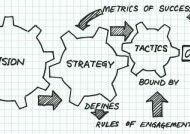
Tactics or Strategy – Ethical Considerations Give a man a fish everyday, his appetite is sated. Teach him how to fish; you have fulfilled his appetite for an entire life time. This is strategy. To make it work, to make the impossible, possible. There is no drawn out template for success or for that matter strategy. But both of them go together when the right strategy is used at the right time and you can bang on your target. Neither the same strategy fits the bill for everybody. Your smart approach to that particular situation backed up by your knowledge and experience does the magic. It cannot be taught, it comes from within when the situation warrants for action. It is more like “Survival of the fittest”, if you want to retain your niche in this business world you act fast and think wise. Tactics: How many of you are bold enough to think differently to make a difference, to make others feel your presence. Never implement tactics which is short lived and don’t make your presence felt either by imitation or by unethical competitor criticism. That will paint a greasy picture on your firm. That is of course strategy but cheap strategy. But always be on the run to know your competitors’ weaknesses and shortcomings which will make you improve your product or service. That is acceptable business practice where competitor spying gives us an edge in terms of identifying unexploited niches of the market. Resort to Constructive Strategies: Strategies must always be constructive and it assures success in the long run. Tactics or gimmicks will prove to be fruitful only for a short while and that is not your aim also. Will you be satisfied if you are able to sell your product or service as hot cakes only for a season! Is that going to cover your profit margin for the entire accounting year? True, strategies are always associated with making profits, boosting up the sales, for retaining the market share and maximizing the share value. But it should also make your business perennial and viable. Strategic Framework: Many of us forget that strategies are applicable in every activity of a firm that forms a compact framework which gives your business a solid foundation upon which you can build your empire of success without looking back. Right from framing your vision, mission, policies, procedures and programmes including recruitment, selection, training, evaluation and empowering your employees, strategies play their role in giving clarity and direction to the firm. Long-Term Planning: Although strategies are meant for long term planning, a periodic review and appraisal of the company’s strategies to all the employees concerned is a must to keep them informed. Strategies are secrets but not to the employees of your organization. Strategies are born out of compulsion, a compulsion to survive in the market and have an edge over others. So they must be meticulously planned after brain storming sessions and expert consultations. Sometimes even a small idea suggested by one of your employees might become the basis for a turnkey operation. So keep your eyes and ears open and also be open minded to accept ideas even from the lowest level as they are your pillars of strength and they know the pulse of the market and people better. Strategic Action Plans: Success is not a cake walk, it has to be achieved with great hardships and the taste of success will be sweeter. Strategies are formulated in every step of your business plan, remember it is an ongoing process; you have to revitalize your strategies every now and then to be in the scene, to make...
Posted by Managementguru in Business Management, Decision Making, Marketing, Organisational behaviour, Principles of Management, Project Management, Strategy
on Mar 22nd, 2014 | 0 comments
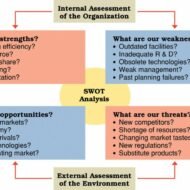
What is Swot Analysis and how to do a Swot Analysis Perfectly? Strategy formulation is an integral part of management decision making as strategies come to our risk whilst there are fluctuations in the external environment. A management expert will tell you rightly that strategies are not templates constructed for a specific purpose as they are formulated based on broad policies of a particular organization and have to be in tandem with the enterprise objectives. Nevertheless a CEO will find himself in situations where he might be forced to make instantaneous strategic decisions irrespective of the nature of the problem, only considering the magnitude of the situation. SWOT AND SYNERGY EQUATIONS Significance of SWOT Analysis: The analysis subjectively evaluates the impact of internal and external factors for a business objective. Internal processes and resources are considered strengths and weaknesses (S and W, respectively). External factors affecting the business and industry are considered opportunities and threats (O and T, respectively). An evaluation of these factors develops a strategic perspective that includes the competitive landscape and current market conditions. Need for Alternate Strategic Decisions: Lately we are witnessing a number of multinational giants going in for Joint Ventures and Collaboration. What is the root cause for such alternate strategic decisions? What happened to the value of the “Brand Image” of the organization or the “Profit Margins” which kept the company going? Well, this is where we have to look into the structure of their operations and most importantly the modality formulated to reach their ultimate objectives. Definitely, there would have been a big dent somewhere in the top management notch, failing to see through the obvious. Market Research is Inevitable for Decision Making: Situations change and we even experience this in our day to day lives, where decision making becomes very difficult at times; further we push the situation to extreme limits and make it worse. Planning is the very basis of our life that facilitates smooth functioning and change for the better. In big corporates, decision making is by and large the responsibility of the top management and they pass on the instructions down the line. It is but natural that the chairman and board of directors should make all the important decisions as they are the potential capital investors. Market research is another area that deserves mention at this juncture without which business persons cannot think of kicking off trade as it will be a sheer waste of money and time. Understanding the pulse of the market and your target customers always help in shaping up the right strategies concerning New product launch Consumer Preference Price determination Product modification etc., Test marketing is one of the strategies followed by many multi national companies while they launch their new products or wish to introduce variations in their product range. THE IMPORTANCE OF DECISION-MAKING Strategies are based on organizational policies and policies have to confer to the objectives and goals of the organization. The top management team should be a set of professional experts who should be able to gauge the existing as well as future trends of the market based on political, legal, environmental and economic changes and sketch their action plans accordingly. Decentralising decision making and delegating the authority as and when needed are also fine strategies to gain co-operation from your employees and to bring co-ordination in the entire business...