Posted by Managementguru in Change management, Decision Making, Entrepreneurship, Human Resource, Leadership, Principles of Management
on Mar 19th, 2014 | 0 comments
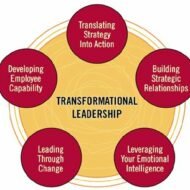
Transformational Leadership What is Transformational Leadership: a leadership approach that causes change in individuals and social systems. Humans generally prefer to have a serene life without much hitches or hurdles in the way. Even if they are to witness a problem situation, they tend to pull themselves away from the scene of action to avoid consequences that may lead to complications at a later date. Very few are bestowed with qualities that make them appear exceptional to the eyes of ordinary men and women. Such people bring wonderful transformations in the lives of people, who willingly follow the leader and support the cause. Need for Transformational Leaders: In business environment, there has always been this debate, whether transformational leaders show success! But it has to be kept in mind that each component of transformational leadership has relevance for improving the decision-making process. In comparison, individually considerate leaders make sure that all parties to the problem are heard. Intellectually stimulating leaders reformulate with followers, colleagues, or superiors into more familiar and concrete terms, what may have begun as fuzzy. Inspirational leaders increase confidence and raise aspiration levels, that the problem can be solved once its causes have been determined. Decision-Making Styles: Leaders with idealized influence show their concern about the problem and the need for its solution. The common thread that emerges from the discussion on decision-making is that decision making styles may be primarily viewed as being based on logic or feeling and instincts. The rational and intuitive decision-making styles are generally considered in conjunction since they represent two ends of a continuum as observed through most studies. While making decisions, transformational leaders are more likely to Be proactive to incipient problems, anticipating the emergence of problems more frequently and farther in advance. Incremental, taking small steps toward problem solving without waiting for a guarantee of complete success. Willing to look at a problem in a larger context and longer time frame. Encouraging of search and choice that take into account the wider context of the larger organization and outside environment rather than limiting the search to the immediate neighborhood of the problem. Quick to react to emergent problems. Seeking information informally for making their decisions rather than prescribed by organizational rules. Practicing walk-around management to promote the upward flow of communication and information. Making decisions involving higher payoffs at higher risks rather than decisions that favor exploitation and achieve lower payoffs at lower risks. Willing to take failure in their stride. Rationale in Making Decisions: The rational style of making decisions is deliberate, analytical, and logical assessing the long-term effects of decisions and having a strong fact-based orientation. The intuitive style is feeling-oriented and based on internal ordering of information. Such decisions are made quickly. The dependent style is characterized by use of support from others while delay and denial characterize the avoidance style. The spontaneous style displays a strong sense of immediacy and an interest in getting through the decision-making process as quickly as possible. A transformational leader would more likely to make decisions rationally after considering carefully all the facts and information and spending a considerable time over the decision-making process. Transformational leadership will be positively related to rational, spontaneous and dependent decision-making styles, and will be negatively related to intuitive and avoidance decision making. The interaction effect of rational and dependent decision making styles on transformational leadership will be...

Posted by Managementguru in Decision Making, Human Resource, Organisational behaviour, Principles of Management, Training & Development
on Mar 19th, 2014 | 0 comments

Grading employees’ performance helps identify strengths and areas for improvement, fostering growth and productivity. It ensures fair evaluations and supports career development within the organization. Organizational Development Organizational Development denotes an overall and comprehensive development of an organization supported by the entire team of employees working for that organization. A useful technique in the management process that serves as a measure of performance and productivity is “performance evaluation” or performance appraisal. Performance refers to the degree of accomplishment of the task that makes up an individual’s job. Performance appraisal serves the following purpose To assess the present levels of employee performance. To understand the future needs in training and development based on the strengths and weaknesses of the employees. To provide feedback on their performance. Serves as a basis for reward allocation, such as, increase in pay scale, promotions and many other decisions like, confirmations, transfer, demotion etc., Establishes performance standards and offers scope for improvement. Acts as a motivational tool for workers to perform better. Checks and facilitates employees who exhibit poor performance. Also assesses behavioral pattern of the employees. People who work for big corporate companies identify themselves with the objectives of the company and expect feedback, either in the form of a compliment or criticism. Compliments act as morale boosters to perform better and criticism though initially might puncture the ego, induces the potential to perform, to prove oneself. Managers should never be reluctant on their part to appraise subordinates on the job expectations and demands. In an activity as important as managing, there must be no pitfalls to measure performance as accurately as possible. The Appraisal Process The next important aspect in the appraisal process would be deciding the content to be appraised. Individual task outcomes where performance is evaluated on the outcomes delivered by the individuals, evaluation of personal characteristics and traits or behavior are done to rate the employees as to where they stand in terms of performance. Appraisal Techniques The widely used managerial technique in the appraisal process is evaluating performance against verifiable objectives, which truly makes sense, because the employees would be blind folded if they don’t have the right direction to proceed. Evaluation can be done in a comprehensive, periodic or continuous fashion. It all depends on the nature of work done, company practice and other situational factors. Say, for instance, performance review can be done after the completion of a major project, that makes sense, doesn’t it? Periodical reviews Formal reviews can be supplemented and supported with frequent and short informal reviews, for the superior- subordinate relationship to prosper and to keep communication channels open. All said and done, performance review based on verifiable objectives, although gives better vision and clarity, doesn’t allow the manager or subordinate to grow individually. It does not help in personality development; the emphasis ever being focused on accomplishing the operating objectives. The 360 Degree Appraisal The latest approach of performance evaluation is the 360 degree appraisal that well suits the managerial cadre. It provides for performance feedback from the full circle of daily contact, that a manager might have, ranging from customers, peers, subordinates, boss etc. , This also fits into organizations that have introduced teams, employee participation and total quality management...
Posted by Managementguru in Human Resource, Organisational behaviour, Principles of Management
on Mar 19th, 2014 | 0 comments
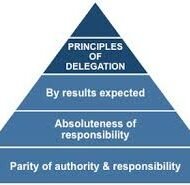
You Can Delegate Authority, but Not Responsibility Responsibility of a Manager: A corporate manager is accorded with the huge responsibility of leading his subordinates in the right direction, by giving proper insights on the tasks to be accomplished. The success rate depends on how well he delegates his authority down the line to get things done. The art of delegation results not only in down sizing his work pressure but also in the empowerment of subordinates, that elevates them to a higher plane of understanding and achievement. An Excerpt from The Art of Delegation: Developing This Essential Managerial Skill Delegation helps you handover the authority of certain tasks to capable team members so that you free up your time to work on more pressing issues. But you still remain responsible to get those completed in proper way. Hence it is essential to have a status check or communication with the team member on regular basis. Accountability of Subordinates: The subordinates, when entrusted with the responsibilities of performing a task by themselves and the necessary authority to make decisions within the area of their assigned duties, are obliged to perform. The necessary assistance and training for the new assignment has to be planned for, by the manager to make them perform as per the expected standards. The thing is right people should be chosen for the entrusted job. They should possess the zeal and enthusiasm to deliver the desired output. Some people perform beyond expectations and they should be rewarded with additional responsibilities. Whatever the case may be, it is a wise thing to delegate simple assignments at the initial stage, and proceed with more challenging jobs depending upon the caliber of the incumbent. THE ENTREPRENEUR’S GUIDE TO DELEGATION Clear and Clever Delegation: Clear and clever delegation facilitates to build a formal organization structure, where the subordinates are trained well and they look up to the manager for direction and guidance. Although the authority is delegated, the manager is held accountable and answerable to the management for the performance output or the end result. Some managers hesitate to delegate, just for the reason that their weaknesses might get exposed. Some don’t have confidence in their subordinates. Some even fear that they might lose their power if the subordinate is very shrewd and exceeds the expectations. Managers fail because of poor delegation; the reasons being personal attitude of managers in delegating authority. Let us understand some of the basic principles to be adhered to while delegating: The authority delegated to subordinates should be adequate enough to ensure their ability to accomplish the expected results. Authority can be delegated but responsibility can never be delegated. Responsibility of subordinates is “performance” and that of managers is “responsibility for the action of their subordinates”. One cannot be held responsible for a task if he has only limited authority. There need to be a balance between authority and responsibility. The presence of a single superior will invoke greater feeling of personal responsibility among the subordinates. Lack of receptiveness on the superior’s part will incur greater loss in terms of performance and efficiency. Instead, a manager should develop a trustful attitude towards his subordinates and should have the patience to explain the policies, objectives and guidelines and give sufficient authority to perform a duty. HOW WELL EMPLOYEES KNOW ABOUT YOUR ORGANIZATION? Although initially the efforts taken to train a subordinate is time consuming, the more empowered he becomes, less is your time taken to accomplish the enterprise objectives. The superior must be able to create a climate of mutual trust and goodwill, to make delegations effective in the light of expected...
Posted by Managementguru in Decision Making, Human Resource, Principles of Management, Project Management, Training & Development
on Mar 19th, 2014 | 0 comments

Crafting a solid career plan is the cornerstone of professional success and personal fulfillment. Whether you’re just starting out or aiming to advance your career, a well-thought-out plan provides clarity, direction, and motivation. In this guide, we’ll explore practical steps to help you devise a career plan that aligns with your passions and goals. Have you ever thought about how to gain insight into yourself? Well, it is high time, if you really want to make it to the top of your career path and it is supposed to be the best personal strategy. Setting up of long-range plans helps you to formulate your career strategies accordingly. To reach the destination, you need to have clear travel plans. Likewise, devising your career plans is inevitable to reach the ultimatum in your work environment. Following is a Five step chart to help you create a solid career plan Self-Evaluation What do you enjoy? What are your priorities? Strengths and weaknesses? Name the things you want from a job? Skills Analysis What are your qualifications and experience? What are your key strengths and skills? What are your biggest achievements to date? What are your areas of development/ which area of interest excites you the most? Set your direction The broad industries that really appeal to you. The types of roles that would suit you best. How these options match your personal preferences? Key skills you’ll need to develop. Commit to a time frame Make milestones for the next six, twelve, eighteen months. How will you achieve your training and education goals? How will you gain additional skills and experience needed? How will you expand your network, and by when? Review your career plan Now you know your goals and how to achieve them, monitor your progress at least every six months to stay on track. The Following Tenets Will Infuse Some Confidence to Those Who Want to Achieve Set your goals high Never settle for less Never under estimate yourself You are born to achieve something You are different from others You possess that “in thing” that is going to take you places Career advancement is something that is not the sole proprietorship of the managerial cadre. It applies to anyone who has the “will” to learn and move forward. One’s attitude towards time, achievement, change, material things, work etc., determines the extent to which he is prepared to pursue his career with a long-range plan. Decision Making Another important aspect of career planning is the tough preposition of decision making. If a qualified and experienced manager is adept in all areas of management, naturally he gets confused as to “which way to go”, when presented with a chance to take up another job, in pursuit of better career prospects such as pay or promotions. People sometimes tend to resist career planning for the fear of making decisions and sometimes due to the fear of failure of achieving goals in the new set up, which might be a big blow to their ego. This dilemma of choosing a goal is commonly noticed in students who want to pursue higher education. Since it involves not only decision making but also determines their capability to be successful in the chosen field of activity. If an individual wants to become a doctor, he or she has to give up to pursue other opportunities, say, to become a lawyer or an engineer. Commitment Furthermore, career advancement means more involvement and commitment, which makes you a quick learner. And in the process to achieve your goals, you become well versed in the area of specialization, however complex the subject or situation may be. Psychology has its role to play in career planning...
Posted by Managementguru in Human Resource, Motivation, Organisational behaviour, Principles of Management, Stress Management, Training & Development
on Mar 19th, 2014 | 0 comments
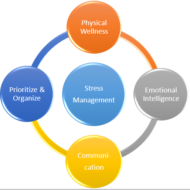
Did you know that without your knowledge, your health might be deteriorating due to pressure at work. Effective stress management is the only way out to become happier, healthier, and more productive. Whatever we do or say has a direct effect on our physiological processes as it affects our psyche-both positive and negative. While positive vibes act as a booster to our health, enhances the morale causing increased productivity which is “THE CONTRIBUTION FACTOR” in corporate organisations, negative vibes causes distress to the party affected and in-turn the organisation. Though in a small way, which is enough to cause great distress waves amonsgt the entire organisation through grapevine. Morale Surveys Therefore, it becomes necessary that every organisation takes some time to understand and analyse the mind-set of their employees to maintain the entire health of their firm. This can be done through surveys or questionnaires which serve as best platforms that shoulder employees’ opinion. On the side of the individual, he also should spare some time, from time-to-time to analyse his attitude towards the organisation and his/her colleagues and how it affects his/her performance. Management scholars say that “SELF-APPRAISAL” is the best tool for enhanced organisational performance and productivity. What is Stress? It is very important to understand what stress is, to combat it. Stress is nothing but a condition where people get excited emotionally or in other words ” a disturbed mental state” affecting the well-being. The causal agents may be physiological which can be medically treated or emotional which we are more worried about as emotionally unstable individuals cannot think properly which again leads to physical distress. It becomes therefore vital to know how we perceive and interpret things through our cognitive skills, again influenced by environmental factors to a considerable extent. People, particularly working in corporate environment and IT industry are subjected to much stress and they don’t know how to find a vent to their feelings or when there is no adequate support from the family side. What are the Ways Out? So, what is it we do at times like these? Not to bother. The mantra is “RELAX” to the maximum possible extent. First thing extract yourself away from the scene of action so that you could breathe some fresh air. Then think calmly and try to isolate the bug that is bothering you. Here the problem is the bug and analyse how far you have become vulnerable to the situation. Gauge the amount of damage done and rate the problem in terms of ” recoverable by myself- no help needed”, ” recoverable- but with external support”. Remember, for every problem there is a solution. It may not be tailor- made, but definitely passable with little bit of compromise from our end if necessary. 10 Yoga Poses You Should Do Everyday to Combat...