Posted by Managementguru in Human Resource, Organisational behaviour, Principles of Management
on Mar 19th, 2014 | 0 comments
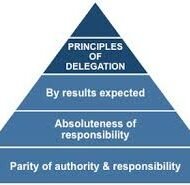
You Can Delegate Authority, but Not Responsibility Responsibility of a Manager: A corporate manager is accorded with the huge responsibility of leading his subordinates in the right direction, by giving proper insights on the tasks to be accomplished. The success rate depends on how well he delegates his authority down the line to get things done. The art of delegation results not only in down sizing his work pressure but also in the empowerment of subordinates, that elevates them to a higher plane of understanding and achievement. An Excerpt from The Art of Delegation: Developing This Essential Managerial Skill Delegation helps you handover the authority of certain tasks to capable team members so that you free up your time to work on more pressing issues. But you still remain responsible to get those completed in proper way. Hence it is essential to have a status check or communication with the team member on regular basis. Accountability of Subordinates: The subordinates, when entrusted with the responsibilities of performing a task by themselves and the necessary authority to make decisions within the area of their assigned duties, are obliged to perform. The necessary assistance and training for the new assignment has to be planned for, by the manager to make them perform as per the expected standards. The thing is right people should be chosen for the entrusted job. They should possess the zeal and enthusiasm to deliver the desired output. Some people perform beyond expectations and they should be rewarded with additional responsibilities. Whatever the case may be, it is a wise thing to delegate simple assignments at the initial stage, and proceed with more challenging jobs depending upon the caliber of the incumbent. THE ENTREPRENEUR’S GUIDE TO DELEGATION Clear and Clever Delegation: Clear and clever delegation facilitates to build a formal organization structure, where the subordinates are trained well and they look up to the manager for direction and guidance. Although the authority is delegated, the manager is held accountable and answerable to the management for the performance output or the end result. Some managers hesitate to delegate, just for the reason that their weaknesses might get exposed. Some don’t have confidence in their subordinates. Some even fear that they might lose their power if the subordinate is very shrewd and exceeds the expectations. Managers fail because of poor delegation; the reasons being personal attitude of managers in delegating authority. Let us understand some of the basic principles to be adhered to while delegating: The authority delegated to subordinates should be adequate enough to ensure their ability to accomplish the expected results. Authority can be delegated but responsibility can never be delegated. Responsibility of subordinates is “performance” and that of managers is “responsibility for the action of their subordinates”. One cannot be held responsible for a task if he has only limited authority. There need to be a balance between authority and responsibility. The presence of a single superior will invoke greater feeling of personal responsibility among the subordinates. Lack of receptiveness on the superior’s part will incur greater loss in terms of performance and efficiency. Instead, a manager should develop a trustful attitude towards his subordinates and should have the patience to explain the policies, objectives and guidelines and give sufficient authority to perform a duty. HOW WELL EMPLOYEES KNOW ABOUT YOUR ORGANIZATION? Although initially the efforts taken to train a subordinate is time consuming, the more empowered he becomes, less is your time taken to accomplish the enterprise objectives. The superior must be able to create a climate of mutual trust and goodwill, to make delegations effective in the light of expected...

Posted by Managementguru in Decision Making, Human Resource, Principles of Management, Project Management, Training & Development
on Mar 19th, 2014 | 0 comments

Crafting a solid career plan is the cornerstone of professional success and personal fulfillment. Whether you’re just starting out or aiming to advance your career, a well-thought-out plan provides clarity, direction, and motivation. In this guide, we’ll explore practical steps to help you devise a career plan that aligns with your passions and goals. Have you ever thought about how to gain insight into yourself? Well, it is high time, if you really want to make it to the top of your career path and it is supposed to be the best personal strategy. Setting up of long-range plans helps you to formulate your career strategies accordingly. To reach the destination, you need to have clear travel plans. Likewise, devising your career plans is inevitable to reach the ultimatum in your work environment. Following is a Five step chart to help you create a solid career plan Self-Evaluation What do you enjoy? What are your priorities? Strengths and weaknesses? Name the things you want from a job? Skills Analysis What are your qualifications and experience? What are your key strengths and skills? What are your biggest achievements to date? What are your areas of development/ which area of interest excites you the most? Set your direction The broad industries that really appeal to you. The types of roles that would suit you best. How these options match your personal preferences? Key skills you’ll need to develop. Commit to a time frame Make milestones for the next six, twelve, eighteen months. How will you achieve your training and education goals? How will you gain additional skills and experience needed? How will you expand your network, and by when? Review your career plan Now you know your goals and how to achieve them, monitor your progress at least every six months to stay on track. The Following Tenets Will Infuse Some Confidence to Those Who Want to Achieve Set your goals high Never settle for less Never under estimate yourself You are born to achieve something You are different from others You possess that “in thing” that is going to take you places Career advancement is something that is not the sole proprietorship of the managerial cadre. It applies to anyone who has the “will” to learn and move forward. One’s attitude towards time, achievement, change, material things, work etc., determines the extent to which he is prepared to pursue his career with a long-range plan. Decision Making Another important aspect of career planning is the tough preposition of decision making. If a qualified and experienced manager is adept in all areas of management, naturally he gets confused as to “which way to go”, when presented with a chance to take up another job, in pursuit of better career prospects such as pay or promotions. People sometimes tend to resist career planning for the fear of making decisions and sometimes due to the fear of failure of achieving goals in the new set up, which might be a big blow to their ego. This dilemma of choosing a goal is commonly noticed in students who want to pursue higher education. Since it involves not only decision making but also determines their capability to be successful in the chosen field of activity. If an individual wants to become a doctor, he or she has to give up to pursue other opportunities, say, to become a lawyer or an engineer. Commitment Furthermore, career advancement means more involvement and commitment, which makes you a quick learner. And in the process to achieve your goals, you become well versed in the area of specialization, however complex the subject or situation may be. Psychology has its role to play in career planning...
Posted by Managementguru in Human Resource, Motivation, Organisational behaviour, Principles of Management, Stress Management, Training & Development
on Mar 19th, 2014 | 0 comments
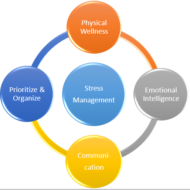
Did you know that without your knowledge, your health might be deteriorating due to pressure at work. Effective stress management is the only way out to become happier, healthier, and more productive. Whatever we do or say has a direct effect on our physiological processes as it affects our psyche-both positive and negative. While positive vibes act as a booster to our health, enhances the morale causing increased productivity which is “THE CONTRIBUTION FACTOR” in corporate organisations, negative vibes causes distress to the party affected and in-turn the organisation. Though in a small way, which is enough to cause great distress waves amonsgt the entire organisation through grapevine. Morale Surveys Therefore, it becomes necessary that every organisation takes some time to understand and analyse the mind-set of their employees to maintain the entire health of their firm. This can be done through surveys or questionnaires which serve as best platforms that shoulder employees’ opinion. On the side of the individual, he also should spare some time, from time-to-time to analyse his attitude towards the organisation and his/her colleagues and how it affects his/her performance. Management scholars say that “SELF-APPRAISAL” is the best tool for enhanced organisational performance and productivity. What is Stress? It is very important to understand what stress is, to combat it. Stress is nothing but a condition where people get excited emotionally or in other words ” a disturbed mental state” affecting the well-being. The causal agents may be physiological which can be medically treated or emotional which we are more worried about as emotionally unstable individuals cannot think properly which again leads to physical distress. It becomes therefore vital to know how we perceive and interpret things through our cognitive skills, again influenced by environmental factors to a considerable extent. People, particularly working in corporate environment and IT industry are subjected to much stress and they don’t know how to find a vent to their feelings or when there is no adequate support from the family side. What are the Ways Out? So, what is it we do at times like these? Not to bother. The mantra is “RELAX” to the maximum possible extent. First thing extract yourself away from the scene of action so that you could breathe some fresh air. Then think calmly and try to isolate the bug that is bothering you. Here the problem is the bug and analyse how far you have become vulnerable to the situation. Gauge the amount of damage done and rate the problem in terms of ” recoverable by myself- no help needed”, ” recoverable- but with external support”. Remember, for every problem there is a solution. It may not be tailor- made, but definitely passable with little bit of compromise from our end if necessary. 10 Yoga Poses You Should Do Everyday to Combat...
Posted by Managementguru in Human Resource, Principles of Management, Training & Development
on Mar 18th, 2014 | 0 comments
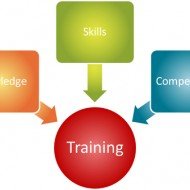
Employee Training – Train Your #Employees to Tone up their Spirit What is Training & Development: process to obtain or transfer #knowledge, #skills and abilities needed to carry out a specific activity or task. Human Resource training is not at all a complex process; with the right kind of supervisors, who impart training and their subordinates being enthusiastic about learning, it seems to be quite an easy job. But, some firms fail to achieve the desired productivity, in spite of good training programmes and availability of efficient workers. The biggest problem being, the failure to impart relevant training, by identifying and analyzing the training needs which too often is not the case. To be successful, firms have to adopt a systematic approach to training process. Training fills the gap between what someone can do and what he should be able to do. The first aim of training is to ensure that, as quickly as possible people can reach an acceptance level in their jobs. Training then builds on this foundation by enhancing skills and knowledge as required to improve performance in the present job or to develop potential for the future. Steps involved in systematic approach of training: 1) Identifying and analyzing training needs: Training should always fall in line with the #objectives of the organization to be achieved and it should be relevant to the context. Running training programmes just for the sake of running it, without defining the purpose, or sending the trainees for a workshop that has nothing to do with what the trainees really need to learn -all these are inappropriate methods of training and it makes the trainees lose their focus and direction. Another problem you will meet in the off-the job training is that, transferring the knowledge to action in the work place. If the objectives are not specified and appraised properly to the trainees, they will not be able to satisfy your expectations. So, a thorough analysis of what people need to know as trainees at different functional levels proves useful in saving much time and labor of the firm. 2) Job analysis-a basis for identification of training needs: The basis for training starts from job analysis, where the organization has to be quite prudent about its specifications and expectations well defined. The indicated specifications may be about, Knowledge -what the worker needs to know in terms of professional, technical, technological, commercial aspects. Skills-Manual, intellectual, perceptual, analytical or social which depends on the nature of the job. A top level employee needs to possess more analytical skills backed up by rational thinking, whereas a lower level employee is only expected to deliver his technical skills properly. Attitudes: The disposition to behave or to perform in accordance with the requirement of the work. This is one of the most important aspects that is neglected by most of the organizations by sheer oversight. If a customer is not properly received in a boutique shop or a restaurant, think what will be the response and reaction of the customer? If a worker does not pay due respect to his superior or boss, what are the chances of his career advancement? Whether it is a production environment or a market environment, firms must teach the trainees to conform to the guidelines regarding #attitude. 3) Prepare your training plans based on the objectives: Decide on the content of the course, as established by job and task analysis and information from performance appraisals. Decide on the training techniques, which may be, Job instruction On-the -job training Coaching Lecturing Computer based training Action learning Interactive video etc., which are a combination of on- the job and off-the job training...
Posted by Managementguru in Business Management, Human Resource, Organisational behaviour, Principles of Management, Training & Development
on Mar 18th, 2014 | 0 comments
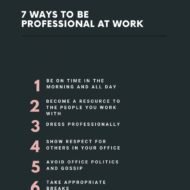
Self Appraisal-Amuse Yourself What is Self Appraisal: Self evaluation process involved in determining the level of self efficacy . By and large, corporate companies go for a one tier system of appraisal-where the supervisor generates a confidential report about his subordinates as and when required. This serves as a basis for the management to decide on increments or promotion for the respective candidate. But the question is, is this system fool proof? Definitely not. There are certain lapses that deserve mention and the management has to design suitable appraisal formats to improve or strengthen the weak areas. Purple Minimalist We Are Hiring Project Manager Poster by managementguru.net Some areas where the appraisal process can take a deviation: A biased report given by the appraiser due to various reasonsPerception of appraiser may be wrongThe appraiser sees the appraisee through his ideas and not from the management’s view point, which may lead to clash of ideas where the appraisee is made the victimFlaws in the design of the appraisal process where the top management may not come to know the real need of the appraiseeAppraisees sometimes don’t identify themselves with the organization and its objectivesAppraisees may not know what kind of behavior traits is expected of them by the management So it is imperative on the part of the management to introduce self appraisal process in its agenda, where the appraisee himself becomes the appraiser. This helps the organization to accomplish its overall objectives in a short time through a high performance system. This kind of appraisal by ‘oneself’ makes each and every employee to clearly understand where he stands against the expected scale of behavior. 7 ways to be professional at work Two-tier system as we may call it will help in the following manner: Participative approach infuses a sense of belongingness amongst the workforcePotential of the appraisee can be brought outThe real problem of the employees is knownHigher level of approach or interest to know or evaluate one’s own behavior is seen. Basically, organizations must examine their assumptions about human behavior and come to a common belief about people. If they believe people are basically “bad” management might go for hiring “watch-out-look-out” supervisors, rigid disciplinary regulations, and separate facilities such as parking, dining and rest rooms. All these clearly spell out the existence of distinction between the management and workforce. If the organization comes to a common agreement that people are basically “good”, entirely the approach will be different. Every worker becomes a manager and uniform treatment is given to both the employees and managers of higher cadre. Essentially in my opinion, no organization or work society will succeed without visionaries and uniform treatment that is consistent with basic principles and ethics. It has to be understood that work attitudes and values are ultimately a company’s best competitive advantage. Note: Larsen & Toubro – Engineering major Larsen & Toubro has developed a competency matrix which lists 73 competencies-that vary across managerial levels-to measure performance and gauge developmental needs of its employees. National Panasonic – The Japanese white-goods major has developed a performance-assessment system driven by Key Result Areas (KRAs). KRAs describe performance goals-business, functional, and behavioural ones-with defined time-frames and are decided jointly by the employee and his manager at the beginning of the...