Posted by Managementguru in Organisational behaviour, Principles of Management
on Mar 1st, 2014 | 0 comments
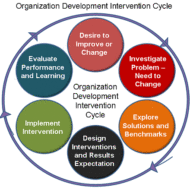
Organizational Development Training and development is an important aspect of human resource development. However the traditional methods and approach of T&D has its own limitations in that the focus is on individual development and behavior modification. This has seldom produced organizational development and hence in 1960’s an integrated approach called the ‘OD’ or organizational development was developed. Meaning and definition of organizational development (o.d.) “A process used to enhance both the effectiveness of an organization and the well being of its members through planned interventions.” OD is the systematic application of behavioral science knowledge for the purpose of improving productivity, efficiency, effectiveness and overall health of the total organization. The applied interventions attempt to modify the beliefs, assumptions, values, attitudes and standards of both the individuals and groups thereby transforming the organizational culture for the betterment of system as a whole. FEATURES OF ORGANIZATIONAL DEVELOPMENT: HUMANISM: The focus is on the employees, their attitude and inter-personal relationships. An organization is a network of people whose emotions, outlook and cohesiveness are more important than monetary and other physical aspects because it is they who take the organization to the next higher level. This is made possible by open communication, free and frank discussions of problems with employees by the managers, inter-personal trust and above all, sense of belongingness, comradeship and team spirit. PROBLEM-SOLVING NATURE: The purpose of an OD intervention is to solve a problem. The employees themselves are given the opportunity to identify the problem by Survey Feedback and find a suitable solution through analysis. This is a cyclic process and also called as “Action Research”. SYSTEMS APPROACH: OD is concerned with not the structure or persons per se, but with the interplay of structure and persons. LEARNING THROUGH PARTICIPATION: The participants of the learning process are none other than the employees. They unlearn old things and learn new things by identifying, analyzing and finding the right solution to the bottlenecks. TOP MANAGEMENT SUPPORT AND INVOLVEMENT: OD intervention is successful only when top management involvement is full-fledged and ensures participation from all levels of managers and all departments in such an exercise. MULTIPLE INTERVENTIONS: Intervention takes place at various levels, individual as well as group and the purpose is molding desirable work culture and leadership styles suitable for the organization. ROLE OF CONSULTANT: Employing an external consultant will be more appropriate as he is less susceptible to influences and more objective. He acts as the change agent facilitating co-ordination and stimulation. CONTINGENCY PLANS: Alternate plans are also devised if in case the original plan fails; the idea is one that of trial and error, hence the need for contingency plans and approach to OD problem. RENSIS LIKERT’S OD FRAMEWORK: Rensis Likert’s 4 system OD framework aims at moving towards truly participative system. Care and caution must be adhered to steer the system gradually from where the organization now works. He also introduced diagnostic analysis to find what causes the current problem. His three part diagnostic analysis includes: A. OUTPUT CAUSES: Low productivity, absenteeism, declining profit B. INTERVENING CAUSES: Organization structure, control, policy and leadership C. ROOT CAUSES: Attitude, motivation level, empowerment and organization culture Tips for Organization Development OD CULTURE: “The OD paradigm values human and organizational growth, collaborative and participative processes and a spirit of enquiry.” Brown and Covey have made some attempts to identify OD values from the following: Norms and Values: Respect for people: People are the most important of all resources. So giving due respect and importance to people induces the creativity and innovation in them. Trust and Support: Trust, openness and supportive climate improve organization culture and empowerment. Power Equalization: This emphasizes hierarchical authority, control and centralization. Confrontation: Do not...

Posted by Managementguru in Business Management, Human Resource, Principles of Management, Training & Development
on Feb 26th, 2014 | 0 comments

Following are some of the intrinsic motivational techniques employed by the organisations to boost the morale of the employees and thus the productivity. Intrinsic motivation 1. Job Design Arranging work elements to form tasks and a combination of such tasks to form a job is called as job design. Here the focus is on the job. 2. Job Redesign Here the work elements are rearranged into meaningful tasks and combining such tasks to form work modules is the principle behind job redesigning. Each work module is assigned to the respective worker who is capable of performing it efficiently and number of such modules can be combined to form a whole job which is assigned to a group to improve their intrinsic motivation. Here the focus is on the individual workers. 3. Work Modules Work module can be defined as one that is being completed approximately in two hours time. In an eight hours shift there will be four such work modules. Employees are motivated not merely by pay and perks; there should be something more to the job , more challenging and meaningful. The following are some of the methods of job redesign that provide the expected challenge and meaning. Types of Job Redesigning A. Job Rotation Monotonous work makes an employee dull and in order to motivate the employees, the management can think of what is called Job Rotation. To rotate the person or persons from job to job, from time to time. The job to which he is rotated should match his attributes, level of hierarchical position in the organization and compatible with his competence and experience. BENEFITS OF JOB ROTATION: Reduces boredomIncreases motivationIncreases Employment flexibilityAdds experience to a worker’s careerIncreases training motivation LIMITATIONS OF JOB ROTATION Lot of time is consumed as workers need to be trained to suit the new jobAs well increases training costIf the worker does not fit in the new job, he has to continue his routine work which can create a sense of inferiority and loss of moraleReduced productivity during transition periodDemotivates ambitious employees who seek steady employmentIt is generally believed that job rotation reduces turnover of employees in an organization. B. Job Enlargement When a job is expanded horizontally, job enlargement occurs. For example, when an accountant is entrusted with additional responsibilities of following up of orders, dispatch and payments, his job is said to be enlarged. He has to take up variety of tasks and job activities other than book keeping. BENEFITS OF JOB ENLARGEMENT Increases one’s area of responsibilityAids in growth and versatilityFlexibility in deployment LIMITATIONS OF JOB ENLARGEMENT The criticism is, whether there is improvement in the quality of work is a question mark; the workers line of thinking may be like this” Instead of one lousy job, now I have many”!Does not add challenging or meaningful work. C. Job Enrichment When the job expands vertically, it is called job enrichment. If a person is made to involve in quality work, in other words management functions like planning, co-ordinating, controlling and decision-making, it is said to enrich him in terms of experience and expertise. Guidelines for Job Enrichment: Combine tasks When certain tasks are combined to form work modules, it increases skill variety and task identity. ERP or ENTERPRISE RESOURCE PLANNING is a job entity that combines production, marketing, finance, human resource and logistics departments in one go. The software connects all the departments in such a fashion that when an order is placed by a customer, the stock existence, current price of the product, credibility of the customer, delivery schedule are available for the executives of the concerned department in their systems simultaneously so that decisions could be quickly made. Time is saved as the order need not be passed on from department to department thanks to the availability of common information to all the departments at...
Posted by Managementguru in Business Management, Decision Making, Principles of Management
on Feb 26th, 2014 | 0 comments
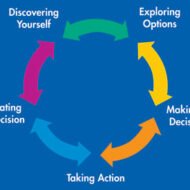
METHODS OF DECISION MAKING A. Marginal income or Cost analysis: This method is used to compare additional revenues arising from additional costs. Break even point is that point in which the cost equals revenue and it can be defined as a no loss, no gain situation. Profit can be enjoyed by a firm only when the revenue exceeds cost that is after crossing the break even point. A manager must have all the necessary data pertaining to total cost and its various components in order to arrive at a decision. B. Cost-effective analysis: This tries to find out the cheapest way in reaching the objective or shall we say the greatest value for expenditure. Mass production facilitates in factorizing the economies of scale where the objective is oriented towards output and sustained availability of the product year round. C. Experience: The mistakes committed become great lessons in due course of time generally and this holds good for managers involved in making crucial decisions. It ensures right decisions to be taken in similar situations. But one has to remember that decisions are inclined to make an impact on future events. So, it is up to the manager to take the right kind of decisions using his intuitions as well as experience. The late chairman of SIMPSONS GROUP, Anantharamakrishnan was very intuitive and under his leadership the organization touched new heights and diversified its activities like never before. Note: Anantharamakrishnan is remembered for his successful business practices, efficient management of the labour unions and for triggering the growth of the automobile industry of Chennai which has earned the city the epithet “Detroit of India”. As a result he himself came to be remembered as the “Henry Ford of South India.” Courtesy: Wikipedia D. Experimentation: Why people go for test-marketing? Because when the factors are intangible, you have to try out every alternative only through experiments or trail and error. Market surveys and questionnaires are useful tools when it comes to launching of a new product in the target market. E. Research and analysis: This involves the application of tools and techniques of operations research to the process of decision making based on mathematical functions. Risk-analysis and Decision-trees are the other methods used that illustrate decision points, chance events, and probability of each course of action. TYPES OF DECISIONS: · Routine and Strategic: Routine- regular decisions involving day to day affairs of the firm- leave procedures, work atmosphere. Strategic decisions are central to the firm’s operations- price fixing, product elimination etc. · Individual and Group decisions: Managers at the top level are inclined to take individual decisions and some important inter-departmental decisions may be taken up by members of the respective groups. · Programmed and Non-programmed decisions: Decision taken by the low-level personnel which are regular and repetitive in nature are programmed-late attendance, medical compensation etc., Non-repetitive and unusual decisions like mergers and acquisitions, collaboration agreements belong to the non-programmed category. · Simple and Complex decisions: Where the problem is simple but the outcome has a high degree of certainty are called mechanistic or routine decisions. Where the problem is simple but the outcome has a low degree of certainty are judgmental in nature. Where the problem is complex and the outcome has a high degree of certainty are analytical and where the problem is complex but the outcome has low degree of certainty are adaptive decisions. MAKING EFFECTIVE DECISIONS: · Timing of decisions: A new product only if introduced into the market at the right time will be a success for which the manager should select the appropriate time for taking the decisions. · Effective communication: The decisions taken should be communicated down the line for effective implementation. · Top management support: The support of top management is indispensable for effective decision-making since it...
Posted by Managementguru in Business Management, CSR, Principles of Management
on Feb 26th, 2014 | 0 comments
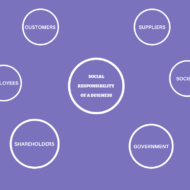
According to Raymond Bauer, “Social responsibility is seriously considering the impact of the company’s actions on the society. It may also refer to the person’s obligation to evaluate in the decision making process, the effects of both his personal and institutional decisions and actions on the whole system, according to Keith Davis and Cobert Blomstorm. A) SOCIAL OBJECTIVES OF BUSINESS: 1. The focus should be on quality, safety, service and security which lead to customer satisfaction. Quality– Product superiority and durability Safety– Products should not cause any harm to the consumers Service– After sales service is the link that builds a long standing relationship between the company and customers Security– Sense of satisfaction and belief on the company’s brand 2. The business has social responsibility of giving adequate opportunities to the members of the society. If everybody aims at white collar job, how does a nation grow economically? Developing economies should promote and encourage entrepreneurs to create more “Job Opportunities.” This especially suits countries like India and China where the pressure of population is very high. 3. Mass production facilitates in factorizing the economy of scale and at the same time aids in providing with quality goods at reasonable prices to the consumers. We see big chain of retail shops like Cosco and Wal-Mart in the US have made this possible where consumers can avail discount for bulk purchase. In India, Big Bazaar is a forerunner in this kind of retail marketing which enhances the material well being of a community and raises the average standard of living of the people. 4. Another main objective of business would be to control the percentage of pollution in air, water and land. Discharge of effluent in a lake or a river by the industrial enterprise may result in water pollution and also affects the plant, animal life and fish and birds to a considerable extent. Stringent laws must be in place to avoid such incidences and protect the society. B) RESPONSIBILITY TO CONSUMERS There is only one valid definition of business purpose: “to create a customer”, the customer is the foundation of a business and keeps it in existence. The responsibilities of a business towards its customers would be: Increased productivity in order to make goods available for the consumers at the right time at right prices; this solely depends upon the increased efficiency of functioning of the businessConstantly strive to improve the quality of goodsR & D to improve product quality and to come out with better and new productsProper distribution structure to reach even the remotest of locationsRemove hoarding, black marketing, profiteering by middlemen or anti-social elementsProvide them with the required after sales serviceEnsure that the product supplied has no adverse effectSufficient information about the product has to be given to the consumers regarding the adverse effects and precautions to be taken while using the productNo misleading product information through improper advertisements or otherwiseTo provide an opportunity for being heard and to redress consumer grievances Consumer courts are becoming popular in India for handling consumer grievances swiftly and efficiently. It is but a sad thing that many people do not know that they can address issues relating to quality, quantity or service. The businesses should understand the consumer needs and take necessary measures to satisfy those needs. C) REPONSIBILITY TO THE COMMUNITY To prevent environmental pollution and to preserve the ecobalanceAssisting in the overall development of a localityUse alternate energy resourcesContributing to research and developmentRehabilitate the population displaced by the operation of the businessDevelopment of economically backward areasPromotion of small scale industriesContributing to the national effort It is gratifying to see that many leading corporate icons of...
Posted by Managementguru in Human Resource, Organisational behaviour, Principles of Management, Training & Development
on Feb 22nd, 2014 | 0 comments
Objectives of Training The objectives of training is different according to the employees belonging to different levels of organization. The objectives depend on the nature of the organization where training has to be provided, the skills desired and the current skill levels. 1. To increase the knowledge of employees or workers in doing specific jobs. 2. To scientifically and systematically impart new skills to the human resources so that they learn quickly. 3. To bring about change in the attitudes of the workers towards fellow workers, supervisor and the organization. 4. To improve the overall performance of the organization. 5. To make the employees handle materials, machines and equipment efficiently and thus to avoid wastage of time and resources. 6. To reduce the number of accidents by providing safety training to employees. 7. To prepare employees for higher jobs by developing advanced skills in them. 8. The basic objective of training however is to establish a match between man and his job. 9. The training is designed to improve knowledge, skills and attitude and thus equip the individual to be more effective in his present job or prepare him for future assignments. From the point of view of an organization individual growth is a means to organized effectiveness. The objectives of training can be summarized as follows: – 1. Induction : – Training constitutes a significant entry into the company’s way of life. Organizations have to provide induction training to all employees entering the organization to let them know, 1. What is company’s culture? 2. How does structure function? 3. What are policies & rules of organization? 4. What are designs of freedom or limits of behavior? 2.Updating :-A significant objectives of training is to prevent the Obsolescence of the employees by updating their skills & knowledge. 3.Preparing for future Assignments. 4.Improvement in Performance: Training will be an important aid to managers for developing themselves as well as their subordinates. It is not a substitute for development on the job, which comes from doing, experiencing, observing, giving and receiving feedback and coaching. Training can bring about an improvement in a person’s: Knowledge Skills Attitude, there by raising his potential to perform better on the job. 5. Growth Training is also focused towards developing people for higher levels of responsibility thereby reducing the need for recruiting people from outside. This would have the effect of improving the morale of the existing employees. 6.Organizational Effectiveness Training provides a means for bringing about organizational development. It can be used for strengthening values, building teams, improving inter-group relations and quality of work life. The ultimate objective of training in the long run is to improve the company’s performance through people performing...