Posted by Managementguru in Business Management, Entrepreneurship, Human Resource, Organisational behaviour, Principles of Management, Startups
on Mar 22nd, 2014 | 0 comments
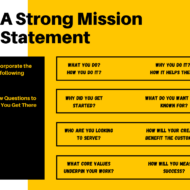
Why mission statements are important? Before going into that, let me first briefly tell you what a mission statement is. Contact Us for Promotions & Partnerships Firms in corporate business arena perform different business activities to earn profit as well as to retain their market share and stand. How does the general public know what they are up to? Is it really necessary for the firms to expose the nature of their activities to outsiders! Well, by explicitly defining the mission of your company, you stand a chance to gain identity, character and image and there is nothing to lose. A mission statement defines the basic reason for the existence of the organization and it clearly reflects your corporate philosophy. The management’s actions also might reflect their mission, in which case the mission statement is not explicitly defined and sometimes it could be deduced from the press statements released by the CEO. Whether defined or not defined, each and every organization has a definite mission that is clearly communicated to all the employees for action. When defined, it also serves as a means to highlight the firm’s social responsibility. Following are the Distinct Characteristics that a Mission Statement Should Possess It should be precise: The mission should neither be narrow as to restrict the activities of an organization nor too broad to make the situation pointless. It should be crystal clear: It should be clear enough to lead to action and not high-sounding and adhere to cheap publicity. It should be feasible: The actions mentioned must be well within the reach of the company and should not be impossible. It should be realistic and achievable. As, credibility is involved, firms must exercise caution when they release their mission statements. Feasibility mainly depends on the resources available that facilitate the firm to work towards the mission. It should be motivating: Motivating both for the employees and the society. Employees must identify themselves with the organization and feel proud that it is worth working for the firm and customers should take pride in associating themselves with that firm. It should be distinctive: It should project your distinctive competence to sustain competitive advantage. Say, if you own a garment shop, you should talk about the range of clothes that you can offer for different sections of the society and you can name yours a “Family Shoppe”, so that people will understand the nature of your business. It should indicate major components of strategy: If the aim of your company is stability, growth, diversification or concentration, all those can be included in your mission statement. It should also indicate how objectives are to be accomplished: The time period, production target, product specialization, product or process differentiation, everything can find their place in mission statements for the benefit of the society and self. Strategic management involves intelligent and timely decision making and mission statements are nothing but components of strategic planning that help the managers to lead the firm with some distinct “ideology” in the form of mission statements. Some Interesting Mission Statements Google’s mission is to organize the world’s information and make it universally accessible and useful. Nike-“Crush Reebok.” Wal-Mart-“To give ordinary folk the chance to buy the same thing as rich people.” Walt Disney-“To make people...

Posted by Managementguru in Change management, Human Resource, Principles of Management, Project Management, TQM, Training & Development
on Mar 22nd, 2014 | 0 comments
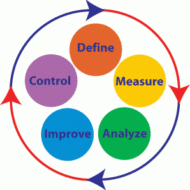
Zero defect achievement – Striving towards perfection! What is TQM: Quality management is all about being proactive and concepts like total quality management and six sigma of recent origin reiterate the fact that hundred percent error free performance is possible the first time and every time. This is what is called as zero defect achievement which most of the companies at corporate level are headed for. The intention is to strive for perfection in work, the way an archer aims for the bull’s eye on a target. It is time for people to cast off their conservative and archaic business practices and think out of the box to enjoy a sustainable competitive advantage driven by quality. Zero defects seek top performance standards the first time and every time. Management scholars offer several suggestions to improve the zero defects programme: The idea of zero defects programme has to be communicated through out the organization right from the top to the bottom level including managers, supervisors and workers. This would harmonize the functions of line and staff. Prerequisites needed for the programme have to be determined and made available. The culture and climate of the firm should be conducive to accomplish the programme. Explain in simple terms about the functions to be accomplished. Design some solid system of recognition. Set up a time schedule as time lines are very important when it comes to product delivery. Spot all the bottlenecks and remove them. Training is absolutely essential– the skill set and mind set of the employees have to be attuned to the goals of the venture. Mock training and rehearsals are helpful. Standardization is the key to the success of this programme. Bench Marking: Total quality management is a process contributing towards quality and bench marking is a means to achieve high quality performance by setting some top notch industry performers as reference points or standards. It is a continuous systematic process employed by a business enterprise to develop business and working processes that integrate the best practices available in the industry. Bench marking is a crucial element in the process of quality management. Quality is one field of production, which reflects the ethical viewpoint and approach of business firms towards the society and other investors or stakeholders. Bench marking is a modus operandi used to: Identify and define customer requirements Plan and establish effective goals and objectives Develop time measures of productivity Become more competitive Determine industry’s best practice The initial step is to decide what is to be bench marked-the product, services, customers or business processes in various departments. The second phase of action is to identify and select your competitors who will set the necessary precedence. With that as reference, decide on your company’s strategies by making meaningful and valid comparisons. Judge the competitor strengths and weaknesses and compare them with that of your own to get a clear picture of your current performance levels and capabilities. This will give you a clear indication on the action plans to be developed and implemented in a phased manner by your organization. Quality management is likely to happen only when all the employees of the organization work as a team with unified principles. Quality demands deep commitment and responsibility from the members of organizations. It calls for intense training to imprint the perception of quality in the minds of...
Posted by Managementguru in Business Management, Human Resource, Organisational behaviour, Principles of Management, Training & Development
on Mar 22nd, 2014 | 0 comments
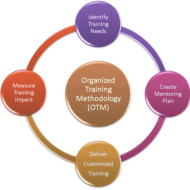
Crucial Aspects of a Successful Training Plan Training should be aimed at improving the individual’s skill set as well mind set to gain knowledge about the work environment he will be exposed to, as well as to exhibit the right kind of attitude and behavior towards his peers and superiors. What is the need to train people? It is like molding raw clay into the desired shape and structure to suit our needs. An untrained individual, how well qualified he may be cannot fill the bill. Pros and Cons of Training: Corporate training methods include cognitive as well as behavioral type of training. But the crux of the whole thing is that the trainer must keep in mind the trainee’s present skill set or background and to train him in areas where he lacks verve. Also the pros and cons of each and every method should be analysed before training is imparted. Cognitive training is to theoretically teach trainees the concept of work and how to go about it. This is equally important as learning induces changes in behavior of individuals. Virtual Reality Training: Virtual reality training method is gaining momentum in areas of medicine, engineering and aeronautics where the trainee is exposed to situations artificially recreated for the purpose of simulation. Introduction to QuickBooks 2017 The trainee is benefited by the near perfect exposure he gets through these types of training methods. Simulations in the field of medicine are a real boon to students doing their internship and also to the surgeons performing complicated surgeries. On the job training: On the job training makes the trainees incorporate conceptual learning to be put into effective use. The experience adds value to their career and it is a good way to grow. The trainee also has to understand the significance of being trained that gives him an edge over others. Business games are popular in corporate setup where the members of a team are asked to don different roles or positions of the firm and solve a particular problem situation. This develops sound reasoning skills and instills confidence to handle crisis situations. Concept of training: The very concept of training is to make the individual tailor made for the job he is about to perform; not only the physical aspects but also psychological and social aspects have to be included in the package that will etch a comprehensive pattern in the process of management development techniques. Training improves the effectiveness and efficiency of performance, oriented towards goal setting, develops inter personal relationship and helps in the exercise of knowledge building providing room for improvement. Soft skill training: Soft skill training is a must as communication is the most important aspect that binds any organization for the purpose of delegation, clarification and development. Trainers have to be suitably trained and the common objective for both trainers and trainees would be to satisfy the objectives of the organization and work towards it. Evaluation of training gives you an idea whether your training design has been successful and the implementation satisfactory. Employee Feedback: Feedback from the employees and the ratio of performance standard achieved against the established standards sets the benchmark for the next mile of achievement to be covered. Blogging and Podcasting for Beginners Workshops, seminars, lectures, discussions aid not only the trainees but also the employers of the company to periodically refresh themselves with the ongoing changes and developments in the industry. The bottom line is, training has to bring in not only transitions but also transformations in individuals in terms of improved personality, attitude, behavior and adaptability to better their future...
Posted by Managementguru in Human Resource, Principles of Management, Project Management, Training & Development
on Mar 22nd, 2014 | 0 comments
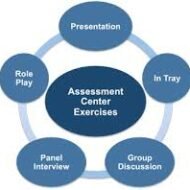
Off-The-Job Training In basket Exercise Recently, the in-basket has become a focus of interest because of its handiness in selection across a wide variety of jobs. A range of techniques have been used to develop in-baskets. In a traditional in-basket exercise, candidates are given time to review the material and initiate in writing whatever actions they believe to be most appropriate in relation to each in-basket item. When time is called for the exercise, the inbasket materials and any notes, letters, memos, or other correspondence written by the candidate are collected for review by one or more evaluators. Often the candidates are then interviewed to ensure that the evaluators understand actions taken by the candidate and the rationale for the actions. If an interview is not possible, it is also quite common to have the candidate complete a summary sheet (i.e., a questionnaire). Lecture A lecture is the method learners often most commonly associate with college and secondary education. Yet, it is also considered one of the least effective methods to use for adult learners. In this method, one person (the trainer) does all of the talking. He or she may use handouts, visual aids, question/answer, or posters to support the lecture. Communication is primarily one-way: from the instructor to the learner. Movies/videos/computer-based training Content for the training experience comes primarily from a videotape or computer-based program. Simulations Trainees participate in a reality-based, interactive activity where they imitate actions required on the job. It is a useful technique for skills development. Simulations are widely used now-a-days in medical field where surgeons find it very useful to train their hands on a virtual human body for complicated surgeries. Self-discovery Trainees discover the competencies on their own using such techniques as guided exercises, books, and research. Role Playing During a role-play, the trainees assume roles and act out situations connected to the learning concepts. It is good for customer service and sales training. Case Studies A case study is a description of a real or imagined situation which contains information that trainees can use to analyze what has occurred and why. The trainees recommend solutions based on the content provided. Seminar Seminars often combine several group methods: lectures, discussions, conferences, and demonstrations. Conference The conference training method is a good problem-solving approach. A group considers a specific problem or issue and they work to reach consensus on statements or solutions. When choosing from among these methods, the trainer must decide which one best suits the trainees, the environment, and the investments available. Many trainers will choose to combine methods or vary them. Others will select a single method that works best for them and never vary. With so many options, a trainer is limited only by his or her...
Posted by Managementguru in Human Resource, Principles of Management, Project Management, Training & Development
on Mar 22nd, 2014 | 0 comments
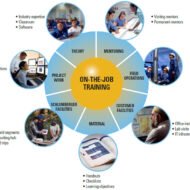
On The Job Training Methods For Effective Employee Development The method by which training is delivered often varies based on the needs of the company, the trainee, and on the task being performed. The method should suit the audience, the content, the business environment, and the learning objective. Ideally, the method chosen will motivate employees to learn, help employees prepare themselves for learning, enable the trainees to apply and practice what they’ve been taught, help trainees retain and transfer what they have learned, and integrate performance with other skills and knowledge. The basic objective of training is learning which brings about a radical change in the perspective of an individual preparing him for the task. On the Job Training: This is the most common method of training. The trainee is placed on the job and the manager or mentor demonstrates the trainee how to do the job. To be successful, the training should be done according to a structured programme that uses task lists, job breakdowns, and performance standards as a lesson plan. Common on the Job training methods include:- Demonstration: Demonstration is very effective for basic skills training. The trainer shows trainees how to do something. The trainer may provide an opportunity for trainees to perform the task being demonstrated. Panel: A panel provides several points of view on a topic to look for alternatives to a situation. Panel members may have differing views but they must also have objective concerns for the purpose of the training. This is an excellent method for using outside experts. Projects: Projects require the trainees to do something on the job, which improves the business as well as helps them learn about the topic of training. It might involve participation on a team, the creation of a database, or the forming of a new process. Employees can voluntarily under-take some small projects that would better the performance of a system. This would help the employee to become noticed and others ease of doing a particular thing and a source of inspiration. Say, Simplifying a database application by introducing a new software. Mentoring: A mentor can tutor others in their learning. Mentors help employees solve problems both through training them in skills and through modeling effective attitudes and behaviors. This system is sometimes known as a buddy system. Visit our GUMROAD Ebook Store for all your MBA guide...