Posted by Managementguru in Business Management, Human Resource, Organisational behaviour, Principles of Management
on Mar 17th, 2014 | 0 comments
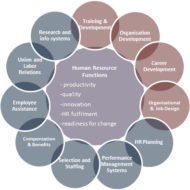
Personnel or Human Resource Management: is the strategic approach to the management of an organization’s most valued assets – the people. Human resource is always in great demand as competent or skilled labor is in short supply. It is important to remember that no one is born with the value of excellence, as the acquisition is gradual in nature and only possible through proper training and one’s own cognitive perception. It is not that people have to belong to the elite group to make their mark in the respective fields. The best leaders and managers often are ordinary people creating amazing results and astounding success. Try some of these golden etiquettes for achieving excellence in the management of human resource: Clear objectives have to be set with the consensus of the employees Recognize the progress Confront problems Manage with flexibility Understand the value of quality Manage time for better results Enhance decision-making skills by delegating authority Master stress Motivate people Think like a winner Pursue a participative style of leadership To achieve the goals of the organization, the HR department will have to reorient itself on the following lines. It is very important that ‘Right people are chosen for the Right job’. During the induction stage, employee attitudes must be shaped in harmony with the culture of the organization. Dynamic training system should be introduced which is supposed to be a continuous process rather than a sporadic exercise. Quality of Work Life: Organization should ensure satisfactory quality of work life in order to minimize the sense of alienation, found in the workplace. It should contribute to an atmosphere to improve self-discipline, self-motivation and self realization for the purpose of production optimization in terms of both quantity and quality. The presence of a fair performance appraisal system will facilitate the growth prospects of employees in terms of career advancement and development. Fair Compensation: Institutions must work out a fair compensation package for all categories of workmen so that they may be able to receive the living wages instead of subsistence-level wages. The accent should be on production and productivity, without any compromise. Opportunities are aplenty, particularly for experienced personnel as the industries offer wide job prospects for the prospective candidates. Now-a-days job hopping is rampant which is a serious issue to be managed. A number of organizations offer bonus in the form of stock that interjects a feeling of oneness, which ensures alignment of interest between employees and the management. Favored position in terms of enhanced performance from the work force is possible only if the management comes down to embrace and lend their ears to certain rational demands form the other end. Security of Employment Increased wages Employee ownership Participation and employment Internal promotions Information sharing Incentives etc., The personnel function can 1) Attract attention to indicate the importance attached to management’s process and the various policies, practices and systems that support the process. 2) Provide necessary information and expertise on best practices in rival companies to benchmark the process and provide with analytical support for diagnosing and recounting solutions to problems arising in the employee management relation. 3) Engage in business decisions and accelerate change that is consistent with the underlying values of the company. Note: The laws and matters relating to wages and bonus come under the purview of the Ministry of Labor and Employment. The Minimum Wages Bill was passed by the Indian Dominion Legislature and came into force on 15th March,...

Posted by Managementguru in Business Management, Human Resource, Organisational behaviour, Principles of Management
on Mar 13th, 2014 | 0 comments

Scope and Characteristics of HRM 1. Personnel aspect: concerned with manpower planning, recruitment, selection, placement, transfer, promotion, training and development, lay off and retrenchment, remuneration, incentives, productivity, etc.; 2. Welfare aspect; dealing with working conditions and provision of amenities such as canteens, crèches, rest and lunch rooms, housing, transport, medical assistance, education, health, safety, recreation facilities, etc.; and 3. Industrial Relations aspect: the legal part which covers union-management relations, joint consultation, collective bargaining, grievance redress and disciplinary procedures, settlement of disputes, etc. Small Business Management and Marketing Essentials CHARACTERISTICS OF HUMAN RESOURCE MANAGEMENT: 1. It is an art and a science: The art and science of HRM is indeed very complex. HRM is both the art of managing people by recourse to creative and innovative approaches; it is a science as well because of the precision and demanding application of theory that is required. 2. It is pervasive: Development of HRM covers all levels and all categories of people, and management and operational staff. No discrimination is made between any levels or categories. All those who are managers have to perform HRM. It is pervasive also because it is required in every department of the organisation. All kinds of organisations, profit or non-profit making, have to follow HRM. 3. It is a continuous process: First, it is a process as there are number of functions to be performed in a series, beginning with human resource planning to recruitment to selection, to training to performance appraisal. To be specific, the HRM process includes acquisition (HR planning, recruitment, selection, placement, socialisation), development (training and development, and career development), utilisation (job design, motivation, performance appraisal and reward management), and maintenance (labour relations, employee discipline, grievance handling, welfare, and termination). Second, it is continuous, because HRM is a never-ending process. 4. HRM is a service function: HRM is not a profit centre. It serves all other functional departments. But the basic responsibility always lies with the line managers. HRM is a staff function – a facilitator. The HR Manager has line authority only within his own department, but has staff authority as far as other departments are concerned. 5. HRM must be regulation-friendly: The HRM function has to be discharged in a manner that legal dictates are not violated. Equal opportunity and equal pay for all, inclusion of communities in employment, inclusion of tribal’s and farmers in the benefits and non-violation of human rights must be taken care of by the HRM. 6. Interdisciplinary and fast changing: It is encompassing welfare, manpower, personnel management, and keeps close association with employee and industrial relations. It is multi- disciplinary activity utilising knowledge and inputs from psychology, sociology, economics, etc. It is changing itself in accordance with the changing environment. It has travelled from exploitation of workers to treating them as equal partners in the task. 7. Focus on results: HRM is performance oriented. It has its focus on results, rather than on rules. It encourages people to give their 100%. It tries to secure the best from people by winning the whole hearted cooperation. It is a process of bringing people and organization together so that the goals of each are met. It is commitment oriented. 8. People-centred: HRM is about people at work both as individuals and a group. It tries to help employees to develop their potential fully. It comprises people-related functions like hiring, training and development, performance appraisal, working environment, etc. HRM has the responsibility of building human capital. People are vital for achieving organizational goals. Organizational performance depends on the quality of people and employees. 9. Human relations philosophy: HRM is a philosophy and the basic assumption is that employees are human beings and not a factor of production like...
Posted by Managementguru in Business Ethics, Business Management, Decision Making, Principles of Management, Strategy
on Mar 11th, 2014 | 0 comments
Spirituality and Management The purpose of correlating spirituality and management might present a weird picture to some. Research of the old Hindu scriptures, epics and Vedas disclose the secrets of management etiquettes coated with spiritual sugar which serves as a road map for us to cherish and follow. As an ardent follower of the BHAGAVAT GITA, THE UNIVERSAL BOOK OF SPIRITUAL SCIENCE, it was really amazing for me to know that the core principles of management have already been defined and dealt with that were formulated at a later date by MANAGEMENT GURUS like PETER DRUCKER, HENRY FAYOL, C. K. PRAHALAD and the like. I would like to present four qualities that struck me while I was comparing and contemplating. PERCEPTION AND UNDERSTANDING THE INNER SELF SELF MOTIVATION AND SELF TRANSCENDENCE DUTIES AND RESPONSIBILITIES LEADERSHIP The Leader and the Manager: The LEADER IS BEING FOLLOWED willingly, but a manager has to command individuals in order to adhere to his instructions. So, being a good leader starts from soul searching or understanding the nature of one’s inner self. SELF CONCEPTION gives a different dimension to approach problems. Spiritual experiences induce clarity in thinking that leads to ethical decision making. The spiritual experiences of Arjuna, one of the PANCHA PANDAVAS with LORD KRISHNA made him stronger (at will) and sharper (right perception). Decision Making: “I am the strength of those who are devoid of personal desire and attachment. O Arjuna, I am the legitimate desire in those, who are not opposed to righteousness, “says Lord Sri Krishna. At the war front, Arjuna the GREAT WARRIOR is not sure whether to fight against his own kith and kin. The inspiring words of Krishna motivated him to come out from the state of INERTIA and enter RIGHTEOUS ACTION. It is a testimony of what philosophers call the transcendence from alienation to self confidence to reach ethical decision making. One can never forego his duty or responsibility, be it his personal life or in the management arena. EFFECTIVENESS IS DOING THE RIGHT THINGS EFFICIENCY IS DOING THINGS RIGHT https://www.slideshare.net/parthacharya/management-lessons-from-mahabharata-9806655 Forming a VISION, planning the right Strategies, pooling the resources, hiring right people for the right job, setting goals and objectives, reviewing by MANAGEMENT BY OBJECTIVES, MANAGEMENT BY EXCEPTION, rewards and recognition, all have been dealt with a masterly excellence in MAHABARATHA which talks about the GURUKSHETRA WAR between the PANDAVAS and KAURAVAS or to simply put it, between THE GOOD AND THE EVIL. “The Supreme Lord is situated in everyone’s heart, O Arjuna, and is directing the wanderings of all living entities, who are seated as on a machine, made of the material energy.”Mind can make you LIBERATED OR BONDED that depends upon your WILL to master it or be a slave. Controlling your mind in turn controls your actions and thought process that leads to well augured efforts that proves fruitful to the human race. Leaders are born and not made goes the saying. But if you are able to be THE MASTER OF YOUR MIND, you are a leader made. Management Lessons from THE BHAGAVAT GITA Applicable to both western and Indian school of management, THE BHAGAVAT GITA deals with problems at the GRASS ROOT LEVEL relating to THE HUMAN PSYCHE. https://www.slideshare.net/singhm91/management-lessons-from-bhagvad-gita It enlightens us on all managerial techniques, goading us towards a serene atmosphere and state of affairs in place of the conflicts, stress, and lack of co-ordination, common in most of the enterprises world wide. “Do your duty perfectly, and the results will follow suit”, is the crux of GITA. How many of us can transform ourselves into such personalities? Can we ever overcome the desires...
Posted by Managementguru in Economics, Financial Management, International Business, Marketing, Project Management
on Mar 11th, 2014 | 0 comments
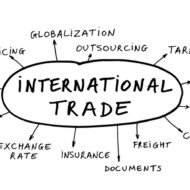
What is Trade? Trade is the exchange of commodity and services. International trade represents business transactions taking place at the global level, and it is fundamentally different from domestic trade. Trade at international level demands huge investments, network of franchisees and proficient people to run the show. Many corporate giants are trying to capture Asian markets, especially Indian market, which has become the industrial hub for such economic activities. Economic liberalization has been the focus of many developing countries for the past two decades and this has allowed multinational companies with huge investment potential to enrich the weaker economies. What is International Trade? International trade tries to generate more foreign exchange, which is always good for the economy. Say, if a country has rich resources of petroleum, naturally it will try to sell the surplus to countries not endowed with such natural resources. That is why Middle East nations are prosperous and economically independent. The diversity in productive possibilities in different countries is due to the presence of limited natural resources. When a country gets a head start in a particular product, it can become the high volume, low cost producer. The economies of scale give it a significant advantage over other countries, which find it cheaper to buy from the leading producers than to manufacture the product themselves. Barriers for Effective Trade Every nation must try to specialize in the production and export of those commodities, which are available in plenty and must import such products in the production of which they have a resource deficiency. It should be remembered that there are severe man made barriers in international trade such as, export duties, quotas, exchange restrictions etc.,that hinder the free movement of products. International Trade and Finance Nevertheless, it is not also possible for a country to produce domestically every kind of product. In spite of all these restraining factors, global trade is thriving, thanks to the advanced technological aspects introduced in communication and faster means of transportation. Distance is no more a constraint and the world has become one small global village. Foreign Exchange Issues All domestic transactions, say in a country like India take place in rupees, which is the legal tender in the country. However, in its trade with other countries like USA, Germany, Japan, France and Britain, the payments have to be made in terms of dollars, marks, yens, francs and pound sterling respectively. The mechanism through which payments are effected between two countries having different currency systems is called foreign exchange. It may be also defined as the exchange of money or credit in one country for money or credit in another. Foreign exchange rates can affect relative prices and net exports. A rise in the a nation’s foreign exchange will depress that nation’s net exports and output, while a fall in the foreign exchange rate will increase net exports and output. Because of the significant impact of exchange rates on national economies, countries have entered into agreements on international monetary...
Posted by Managementguru in Powerpoint Slides
on Mar 10th, 2014 | 0 comments
Capital Structure – Debt vs Equity Financial Markets – Instruments and Securities