Posted by Managementguru in Business Management, Principles of Management, Training & Development
on Mar 2nd, 2014 | 0 comments

Manpower development today goes beyond simply filling positions – it’s about strategically planning, nurturing, and aligning human resources with the long‑term vision of the organization. It involves accurately determining both present and future workforce needs, while designing the right organizational structure to ensure the right mix of managers, specialists, and employees are in place to drive growth. Key Elements of Modern Manpower Planning 1. Present Workforce Analysis The first step in manpower planning is to assess the current workforce. HR teams collect data on employee demographics, qualifications, skills, training, and experience. Example: A tech company may analyze its developers’ coding skills, certifications, and project experience to identify gaps in AI or cloud expertise. Tools like HR analytics dashboards and talent management systems make this process faster and more accurate. 2. Manpower Inventory Chart A manpower inventory chart provides a clear picture of staffing levels and future talent pipelines. It helps HR leaders: Understand current staffing levels Identify employees ready for promotion Forecast internal talent supply Spot performance gaps for training Plan succession for retiring employees Resolve overdue promotions fairly Example: A retail chain may use this chart to plan for seasonal hiring, ensuring enough staff are available during holiday sales. 3. Job Evaluation and Job Analysis Job evaluation ranks roles within the organization, while job analysis defines the skills and responsibilities required. This ensures clarity and fairness in compensation and career progression. It highlights: Nature of work performed Methods and processes used Skills, education, and training required Interrelation of jobs across departments Work environment conditions Example: In a healthcare organization, job analysis ensures nurses, doctors, and administrative staff have clearly defined roles to avoid overlap and confusion. 4. Job Descriptions A modern job description is more than a list of duties—it’s a branding tool that attracts the right talent. It includes: Job title Core duties and responsibilities Authority and accountability Required qualifications and skills Example: A startup may highlight flexible work culture, innovation opportunities, and growth potential in its job descriptions to attract millennial and Gen Z talent. 5. Short‑Term and Long‑Term Goal Alignment Workforce planning must align with business goals. Short‑term goals may focus on immediate staffing needs for projects. Long‑term goals anticipate future skills required based on market trends and technology shifts. Example: An e‑commerce company may plan short‑term hiring for logistics staff during festive seasons, while long‑term planning focuses on AI engineers for predictive analytics. 6. Demand and Supply of Talent The demand for skilled talent is higher than ever. Organizations must balance internal talent supply with external recruitment. Inter‑departmental transfers may solve short‑term gaps. Long‑term solutions require strategic hiring, reskilling, and succession planning. Example: A manufacturing firm may reskill machine operators in automation technologies instead of hiring externally, ensuring loyalty and cost savings. Why Modern Manpower Planning Matters Ensures future‑ready workforce Builds employee engagement and retention Supports business scalability Aligns HR strategy with organizational...

Posted by Managementguru in Accounting, Financial Accounting
on Feb 21st, 2014 | 0 comments
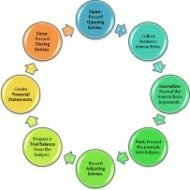
Characteristics and Objectives of Accounting What is Accounting: According to American Institute of Certified Public Accountants (AICPA), “Accounting is the art of recording, classifying and summarizing in a significant manner and in terms of money transactions and events which are, in part at least, of a financial character and interpreting the results thereof.” American Accounting Association (AAA) has defined accounting as “the process of identifying, measuring and communicating economic information to permit informed judgements and decisions by users of the information.” Characteristics of Accounting: i. Accounting is the art of recording and classifying different business transactions. ii. The business transactions may be completely or partially of financial nature. iii. Generally the business transactions are described in monetary terms. iv. In accounting process, the business transactions are summarized and analyzed so as to arrive at a meaningful interpretation. v. The analysis and interpretations thus obtained are communicated to those who are responsible to take certain decisions to determine the future course of business. The Small Biz Doers’ Guide to Small Biz Accounting Objectives of accounting: a. To record the business transactions in a systematic manner. b. To determine the gross profit and net profit earned by a firm during a specific period. c. To know the financial position of a firm at the close of the financial year by way of preparing the balance sheet d. To facilitate management control. e. To assess the taxable income and the sales tax liability. f. To provide requisite information to different parties, i.e., owners, creditors, employees, management, Government, investors, financial institutions, banks etc. ...
Posted by Managementguru in Business Management, Principles of Management
on Feb 15th, 2014 | 0 comments

Management is more than just overseeing tasks—it’s the art and science of turning vision into reality. Whether you’re running a small business, leading a team, or scaling a global enterprise, management touches every corner of an organization. From planning and decision-making to coordination and control, its scope is vast and dynamic. It spans across functions like finance, marketing, operations, and human resources, adapting to changing environments and evolving goals. Understanding the scope of management helps us grasp how organizations thrive, how leaders steer progress, and how systems stay aligned with purpose. Management determines the very survival of the organization Management concepts are applied in both business and non-business organizations In countries like USA the demand for management consultants is widespread and they have more clients from 1) Government 2) Hospitals 3) Universities 4) Schools 5) Professional associations 6) Community agencies etc. In India it is sad to see that only graduates coming out of reputed business schools being placed in the cream of positions by the corporates and others who pass out from the so called second grade institutes struggling to establish themselves. Many institutes offer management courses in the undergraduate and graduate levels for name’s sake, fail to implant the core purpose and perspective of the concepts of management in the minds of individuals. Also lack of expert faculty who have wide exposure and industry experience make the course dull and lifeless. Key Aspects of Scope of Management Management is said to be “Universal” and applied to all the organizations of the society, whether it is large or small, profit making or non-profit making, and a manufacturing or service enterprise Managing is the key social function and management is the effective, integrative,constitutive, determining, and differential organ of the society Management is the organ of leadership, direction and decision in a business enterprise and responsible for producing the results. Management has evolved as the most lucrative academic discipline by itself offering huge scope for the graduates to perform and excel as teachers. Management faculty are in great demand all over the world and are as well compensated for their services. New disciplines of management like Public Health, Health care, Information Technology, Labor management are gaining importance Effective management is aimed at improved productivity (efficient people produce effective results-so ‘RIGHT PEOPLE FOR THE RIGHT JOB’ becomes essential). The society has various facets like government, suppliers, local community, competitors, unions, stockholders, customers etc. The manager is the spokesperson in-charge of negotiating and spending much of his time to predict and influence the future environment and take pro-active measures. This is the managerial function relating to the environment....
Posted by Managementguru in Accounting, Financial Accounting, Financial Management
on Feb 13th, 2014 | 0 comments

The purpose of accounting is to provide the information that is needed for sound economic decision making. The main purpose of financial accounting is to prepare financial reports that provide information about a firm’s performance to external parties such as investors, creditors, and tax authorities.