Posted by Managementguru in Business Management, Decision Making, Financial Management, Marketing, Strategy
on Sep 29th, 2014 | 0 comments
What is meant by Mergers and Acquisitions? This is a general term used to refer to the #amalgamation of companies. A merger is a combination of two companies to form a new company, while an acquisition is the purchase of one company by another in which no new company is formed. Mergers and acquisitions refers to the buying, selling and combining of different companies to aid a company in a specific industry to grow quickly without having to create another business entity. Growth due to Internal and #External Expansion: A business might grow either by #internal expansion or by external expansion. In the case of internal expansion, a firm grows progressively through procurement of new #assets, substitution of the technologically out-dated equipments and the setting up of new product line. But in external expansion, a firm secures a running business and grows overnight through corporate combinations. These combinations are in the form of mergers, acquisitions, amalgamations and takeovers and have now become important features of #corporate restructuring. Why Mergers & Acquisitions: Mergers and acquisitions are strategic decisions taken for boosting up company’s growth by augmenting its production and marketing operations. One of the main reasons that companies opt for a merger or acquisition is that, by conjoining business undertakings, performance will increase and costs will decrease. Essentially, a business will attempt to merge with another business that has complementary #strengths and weaknesses. Many M&A deals allow the #bidder to thrash future competition and gain a larger market share in its product’s market. Mergers or amalgamations may take two forms:- #Merger through Absorption:- An absorption is a combination of two or more companies into an ‘existing company’. All companies except one lose their identity in such a merger. Example: 1999 merger of Glaxo Wellcome and SmithKline Beecham, both firms ceased to exist and a new firm GlaxoSmithKline was created. #Merger through Consolidation:– A consolidation is a combination of two or more companies into a ‘new company’. In this form of merger, all companies are legally dissolved and a new entity is created. Here, the acquired company transfers its assets, #liabilities and shares to the acquiring company for cash or exchange of shares. A fundamental characteristic of merger is that the acquiring company (existing or new) assumes the #ownership of other companies and combines their operations with its own operations. Reverse Merger Is a deal facilitating a private company to become a public company. The deal enables private company by listing in a short time period. Occurs when a private company has strong prospects and is eager to raise financing, buys a publicly listed shell company. Usually the public one is one with, no business and limited assets Acquisitions and Takeovers #Reverse Takeover Acquisition usually refers to purchase of smaller firm by larger firm Sometimes, smaller firm acquire #management control of a larger / longer established company Keep its name for combined entity Friendly Acquisition Companies accomodate in negotiations Identical to merger of equals Cognizant to Acquire TriZetto, creating a fully-integrated healthcare technology and operations leadership. With more than $3 billion in combined healthcare revenue, Cognizant and TriZetto will serve nearly 245,000 healthcare providers. Hostile Acquisition Takeover target reluctant to be purchased If the #acquiree company has no prior knowledge of offer Hostile takeovers do turn friendly most of the times. Offer is usually upgraded for smooth acquisitions Benefits of Mergers and Acquisitions Greater Value Generation Generate Cost Efficiency #Economies of Scale Increase in Market Share Gain higher...

Posted by Managementguru in Business Management, Decision Making, Entrepreneurship, Human Resource, Motivation, Quotes and Quotes Only
on Sep 25th, 2014 | 0 comments

Best Leadership Quotes “Only one man in a thousand is a leader of men — the other 999 follow women. Groucho Marx The Leader In You – #Dale Carnegie “Leadership is the capacity to translate vision into reality. – Warren Bennis Developing the Leader Within You – “You don’t lead by pointing and telling people some place to go. You lead by going to that place and making a case. – Ken Kesey Awaken the Leader in You – Mitesh Khatri “No man will make a great leader who wants to do it all himself, or to get all the credit for doing it.– Andrew Carnegie How To Win Friends Influence People – “Outstanding leaders go out of their way to boost the self-esteem of their personnel. If people believe in themselves, it’s amazing what they can accomplish. – Sam Walton The Leader in You – Peter Miller “To lead people, walk behind them.” – Lao Tzu “The best leader is the one who has sense enough to pick good men to do what he wants done, and the self-restraint to keep from meddling with them while they do it – Theodore Roosevelt “The challenge of leadership is to be strong, but not rude; be kind, but not weak; be bold, but not bully; be thoughtful, but not lazy; be humble, but not timid; be proud, but not arrogant; have humor, but without folly– Jim Rohn “Leadership is a potent combination of #strategy and character. But if you must be without one, be without the strategy – Norman Schwarzkopf “Successful leaders see the opportunities in every difficulty rather than the difficulty in every opportunity – Reed Markham “The problem with being a leader is that you’re never sure if you’re being followed or chased – Claire A. Murray “Do not follow where the path may lead. Go instead where there is no path and leave a trail – Harold R. McAlindon “Learn to see things backwards, inside out, and upside down – John Heider, Tao of Leadership “The real leader has no need to lead- he is content to point the way. #Henry Miller “A leader is a dealer in hope – Napoleon Bonaparte From Manager to Leader “If your actions inspire others to dream more, learn more, do more and become more, you are a leader – John Quincy Adams “The art of leadership is saying no, not yes. It is very easy to say yes – #Tony Blair “Never tell people how to do things. Tell them what to do and they will surprise you with their ingenuity – George Patton “Leadership does not always wear the harness of compromise – Woodrow Wilson “Take time to deliberate; but when the time for action arrives, stop thinking and go in – Andrew Jackson “To be a great leader and so always master of the situation, one must of necessity have been a great thinker in action. An eagle was never yet hatched from a goose’s egg – James Thomas “A good general not only sees the way to victory; he also knows when victory is impossible – Polybius “Leadership is being the first egg in the omelet – Jarod Kintz “Leadership consists of nothing but taking responsibility for everything that goes wrong and giving your subordinates credit for everything that goes well – Dwight D. Eisenhower “##management is doing things right; leadership is doing the right things – Peter F. Drucker...
Posted by Managementguru in Business Management, Decision Making, Entrepreneurship, Marketing
on Sep 21st, 2014 | 0 comments
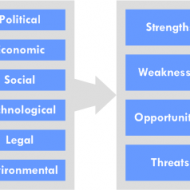
Business Viability Checklist for Entrepreneurs Hey Folks, here is a checklist for business viability or feasibility analysis, the fore-most step before starting a venture. Whether you are a dare devil driver yearning to embrace entrepreneurship as a result of your eternal frustration of saying” Yes-Boss” 24/7, or a first generation entrepreneur , this checklist will be of immense help in that it will reduce the elements of uncertainty and risk. Unlock massive growth using the business development channel. Learn pitching, BD strategy, cold emailing, & deal closing. Bestselling **** Many businesses look at profit within quotes as ultimate viability. Even if the business is not currently profitable or undergoing a growth surge, or just going through a bad patch – there is an anticipation of being profitable at some future date. This hope of future profit warrants continued investment. We can also consider the social and environmental aspects of an organization adding value, if it satisfies any social costs. You need to know what is viability? Viability is defined as the ability to survive or persist. In a business sense, that ability to survive is ultimately linked to financial performance and position. A business is viable where either: it is returning a profit that is sufficient to provide a return to the business owner while also meeting its commitments to business creditors it has sufficient cash resources to sustain itself through a period when it is not returning a profit. ASK YOURSELF THE FOLLOWING QUESTIONS BEFORE STARTING-UP THE OPEARTIONS: Why are some companies PROFITABLE and some not? Why do some companies CONTINUE TO EXIST and some not? What does success and survival mean? How ESSENTIAL is profit? How can a company survive when it is not making a profit? How can a company NOSE-DIVE when it is making a large profit? How VITAL is growth? Can a company become NON-VIABLE simply because it fails to maintain its year-on-year growth? How imperative is CORPORATE IMAGE? Are these factors relevant to business viability? The following post from franchisesunder10k.net provides great insight on easy online businesses to start in 2018. https://franchisesunder10k.net/these-are-the-easy-online-business-opportunities-you-ve-been-looking-for Fundamentals of a Feasibility Plan • Provide key information needed by investors and bankers • Reasons for its chance of success/failure • Supporting Documents • Explanation of the principal concept underlying your venture and what sets it apart from other businesses. Infographic Courtesy : Entrepreneur.com SOME OF THE REASONS WHY NEW VENTURES FAIL • Lack of Objective Evaluation • No Real Insight into the Market • Inadequate Understanding of Technical Requirements • Poor Finance Understanding • Lack of Unique Selling Proposition • Ignorance of Legal Issues Let us now look at some of the important dimensions of business viability: Market viability Technical viability Business Model viability Management model viability Economic and Financial Model viability Market Viability: Utilize Porter’s 5 Competitive Forces Model to understand market viability and industry position. Technical Viability: You do not have to incorporate specific financial information in the technical portion of your feasibility study, but all data in this component must support your financial figures represented elsewhere. Basic things that most businesses need to include in their technical feasibility study include: Materials Labor Transportation or Shipping Physical Location Technology Business Model Viability: P.E.S.T. Analysis A PEST analysis is a business measurement tool. PEST is an acronym for Political, Economic, Social and Technological factors, which are used to assess the market for a business or organizational unit. Management Model Viability: Decision making process Training and Cross-training Management Capability to effectively lead the organization in a sustainable growth mode Management Systems and processes, and General Leadership Capabilities are scrutinized. Economic and Financial Mode Viability: Capital Structure Cash Management Profitability and Liquidity are dealt with when...
Posted by Managementguru in Business Management, Decision Making, Human Resource, Motivation, Strategy
on Aug 20th, 2014 | 0 comments
Why Strategic Plans Fail What are Strategic Action Plans? Action plans refer to definite actions that are related to either short- or longer-term strategic goals. Action plans should include details of resource commitments, allocation and time horizons for accomplishment. Action plan development represents the key stage in planning that facilitates effective communication of plans throughout the organization followed by resource planning and deployment. Action plans are also referred to as projects, strategies, tactics, or initiatives. Plans in paper may look more creative and feasible in nature; in reality it is a big quest unanswered. Are executives showing the same kind of enthusiasm in giving shape to the plans they charted out in paper? Most plans fail or do not give the expected optimum results and the reasons attributed may be listed out as follows: 1. Authority is delegated but Responsibility is forgotten: Senior management executives are the STRATEGIC DECISION-BRAHMAS obviously but do they demonstrate what needs to be done? Demonstration is one of the powerful forms of communication and if the strategies are only to be communicated down the line and not to be followed by the senior officials how do you expect your team to perform efficiently? 2. Confusion between strategy and Ideas: An idea is a conceptual construct about a particular thing. It is more abstract in nature. But when it comes to strategy, you need to have a solid FUTURISTIC action plan that is bound to give you the desired results in the long term. The elements essential for a good action plan are: Availability of Resources (Men, Material and Money)Efficient Resource Allocation to the various Strategic Business UnitsProper DeploymentRegular Follow-up until accomplishment of goalsMinor Modification of plans in accordance with the macro environment (legal, economic, financial etc.,) 3. Dis-Orientation of Senior Leaders: If a senior leader reaches that higher position through internal promotion, he loses touch with day-to-day activities though he has a strong contextual understanding of the business. If a senior management leader happens to reach the top through external recruitment, it takes time for him to understand the business and the nature and needs of the organization. Only few leaders are capable of devising action plans that exactly nails the problem-situation (as we all know when an organization is looking for a turn around, the first blow is to the CEO of the organization). 4. Laissez Faire attitude doesn’t work out for strategic action plans: A senior leader has to monitor an action plan from the start till the end until the expected result is achieved. No strategy succeeds without a visionary in the background. The passion that a leader exudes is overwhelmingly infectious and motivates the team to complete a project. Here the leader is the initiator who is involved throughout strategic planning process so that momentum is sustained during the critical transition from planning to action. Follow ManagementGuru Net’s board Strategic Management – The Inevitable on Pinterest. 5. There might be one good goal but definitely no one good strategy: Understand strategies are subjected to change in accordance with the internal and external environment. Say, you have invested quite a good amount of money in shares of a particular reputed company and you come to know that there is a senior level management leadership change and feelers are that prices are likely to crash. What will you do? Just being able to conceive bold new strategies is not enough. The management must also be able to translate its strategic vision into concrete steps that is “getting things...
Posted by Managementguru in Human Resource, Organisational behaviour, Training & Development
on Jul 28th, 2014 | 0 comments
Anger Management What is Anger? To put in a layman’s perspective, When something doesn’t happen the way we want it to When somebody tries to dominate us When we are forced to do something When we get disappointed if things are not favorable and many more situations that kindle within us a feeling – which is called frustration if the intensity is mild and rage if the intensity is huge. This type of anger pertains to “self”; anger also erupts if our loved ones, near and dear ones experience threat or when you want to oppose a social stigma or when you feel helpless in a situation.” On top of all this “A Hungry Man is always Angry“, Do you agree with me? I want to ask a simple question, “Are the poor to blame for being poor?“. Well, this is a social problem and every one of us must be angry if the people of our own country are below the poverty line and not being able to eat atleast twice a day. How do we define Anger Management? Coming to Anger Management, it is training for temper control and is the skill of remaining calm. It has been described as deploying anger successfully. Anger management is the process of learning to recognize signs that you’re becoming angry, and taking action to calm down and deal with the situation in a positive way. We have to understand the crucial fact that ” In no way does anger management mean holding the anger in or trying to keep from feeling anger. Anger is a normal human emotion, a healthy one when it is expressed appropriately“. What Makes People Angry? I want to list down some of the most common things that make people angry. The most common factors that make people angry are: Grief – losing a loved one. Sexual frustration Rudeness Tiredness Hunger Pain Withdrawal from drugs or some medications Some physical conditions, such as pre-menstrual syndrome Physical illness Mental illness Alcohol, some drugs, alcohol abuse, drug abuse Injustice Being teased or bullied Humiliation Embarrassment Deadlines Traffic jams Disappointment Sloppy service Failure Infidelity Burglary Financial problems Being told you have a serious illness Courtesy – http://www.medicalnewstoday.com/ You know, I get angry even if I hear somebody munching or chewing something and I can never stand that sound! I googled to know more about my shortcoming and was relieved to find that I have good company on this issue. Read this news: ‘The sound of my boyfriend chewing makes me want to strangle him’: Model, 20, has a phobia of NOISE which makes her fly into a rage when she hears someone eating.” (This medical condition is called “Misophonia” which literally means hatred of sound and seems to be a neurological disorder). Faith Watson, 20, has misophonia – the hatred of sound Certain noises – including chewing – make her irrationally angry At meals she has to have the TV on so she can’t hear people chewing She had to drop out of college after being tormented by classroom noises Now she has been officially diagnosed, she is rebuilding her life and trying to make a career as a model Courtesy – http://www.dailymail.co.uk/health/ I personally feel that people have become restless in general and want everything to happen in a jiffy. Rationale and Logic have taken a back seat and we all are evolving as one group with SUPER-EGO and IMPATIENCE. What is the reason behind this? Are we becoming insensitive to others’ feelings? Have we forgotten to enjoy moments of happiness how small it may be? In my opinion there are only two types of anger: Constuctive Anger – that which helps to...