Posted by Managementguru in Business Management, Human Resource, Leadership, Organisational behaviour, Principles of Management
on Mar 17th, 2014 | 0 comments
Leader vs. Manager – what is the connecting thread? Who is a Leader? A leader is always looked up to, by his followers as they are truly inspired by his personality, behavior and the power of his words and actions. The intellectual ability of a leader is definitely on the higher scale than a non-leader and also the perceptual ability and decision making skills are amazing. The main idea of pondering over leadership is that how the qualities of a leader make him more successful and how those unique qualities can be acquired by a manager of a firm to influence a group towards achievement of goals. What makes a leader unique? Every individual is bestowed with at least one special quality that makes him unique. A leader obviously is inherent with so many good traits and qualities that influence others and the best part of the story is that he understands his own potential and employs the right skills at the right time. It is basically a personal quality of character in a man that influences the behavior of others in a productive manner. Top 10 qualities of an effective leader; A man of charisma-the followers should be attracted by his magnetism and willingly contribute to the cause Should have a clear idea of future plans-Here he differs from the manager who is concerned more about the productivity Should be action-oriented, dare to achieve the impossible Should be tough at heart -stick to his principles and not a victim to circumstances Should be flexible, when it comes to the #welfare of his people Maintain integrity and humility Value-driven to gather trust Open and honest in his endeavors Creative-the ability to think out of the box Should possess sense of humor that makes him an affable person and even serious issues can be dealt with ease Is Manager a Leader too? Is it necessary that a manger has to be a good leader too? Of course yes. By virtue of being selected for the post of the manger, a person cannot manage the show. Unless he possesses the true qualities of a leader he cannot pull the strings tight and lead the organization in the right track. Without the right elements of leadership, he merely becomes a care-taker enjoying his pay and perks. He will not be liked by his subordinates if he doesn’t have that drive to make a mark of himself as an assertive person and in due course of time either he becomes the entertainer of the firm or he loses his integrity, both of which is not good for the organization’s efficiency and productivity. Roles of an efficient manager: A manager has the necessity to prove himself in terms of planning, formulating strategies, successful completion of targets, increased production, increased sales, acquisition of more orders, managing his team without much conflicts and above all make the team to abide by and obey his rules. A manager to be a successful leader need not be aggressive to prove his point but tough and determined to get things done. Big corporate firms frame ‘systems’ which are nothing but templates of action incorporating all the elements needed for execution in a tailor made fashion. A manager has to now focus on the strategic elements of management since the technicality is being taken care of by the systems. What is the right management approach? Managers expect subordinates to nod their heads in approval to whatever they say. This not the right approach; there should always be a reciprocal relationship between both the parties as in the case of a leader and his followers. A give and take policy makes you more...

Posted by Managementguru in Human Resource, Organisational behaviour, Principles of Management
on Mar 17th, 2014 | 0 comments
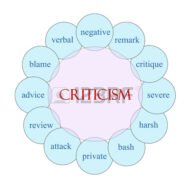
Criticism Makes You Stronger and Sharper “Flattery is telling the other person precisely what he thinks about himself.” –Dale Carnegie “Criticism may not be agreeable, but it is necessary.”-Winston Churchill Critics are always feared for their barbed tongue and piercing comments. If you look at popular figures and celebrities, they tend to give much importance to these comments as they are real tools for self improvement and personal enhancement. Criticism helps improve knowledge, helps all the parties involved and helps one to learn and react to the actions of others. It is also a no-cost source of research that promotes a team spirit as well as a certain broad-mindedness / open mindedness of the human resources of an organization. It is a non-monetary tool of motivation. It helps in achieving organizational goals and objectives, also helps in realizing hidden mistakes, and tackles various bottlenecks. No doubt, it is a mixed blessing! Despite its benefits, it renders the following costs, which are the dark side of the coin: 1. It paves the way to enmity and hostility amongst those who frame policies and those who implement them. 2. It may lead to industrial dispute. It creates an unpleasant, undisciplined atmosphere in an organization. 3. It may result in unhealthy conflicts in an organization, undermining its human resources base. 4. It could also kill the spirit of initiative. 5. A superior may feel hurt or insulted when his subordinates / peers pinpoint his short-comings. Criticism can be made more positive on the following premises: 1. Do not perceive it as something bad or a shortcoming. If you feel it is unworthy of you, turn a deaf ear to it. 2. Give some time for the dust to settle down when someone is rude in his criticism as, with time, its impact will be diluted. 3. If you are criticized unfairly defend yourself and stand by your conviction. 4. Perceive it as a source of potential help in making wise decisions. 5. Do not arm the critic by counter attacking. That blows into a vendetta at times. 6. Do not raise your voice above the voice of critic – let him go ahead and be mild and amicable with him. Criticism is like the proverbial double-edged sword, and so can easily be made more effective as a potential business management tool by selecting leading and conductive spots where critics can come together and draw their views verbally / non-verbally, publicly or anonymously. Perceive critics as a vital source to help solve and implement solutions for the problems raised. Explore the critic’s view fully and freely, providing all sorts of ways in which critics can express their deliberations without...
Posted by Managementguru in Business Management, Marketing, Principles of Management, Strategy
on Mar 16th, 2014 | 0 comments
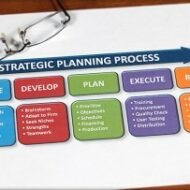
Strategies to Tide Over Competition Distinctive Competence: is nothing but a set of unique capabilities that certain firms possess allowing them to make inroads into preferred markets and to gain advantage over the competition. Human brain is the greatest think tank and it evolves new methodologies of business management from time to time in order to sustain as well as win the race. Planning is the key factor that decides the rise or downfall of a business empire. “Where we are?” and “Where we want to be in the next few years?” is how every business leader’s basic thought process must be, without which he cannot proceed further in the competitive corporate environment. If we call planning as the basement of a building, then it should be very precise, clear cut and robust so that the business empire built on this basement will never collapse and it will also serve as a role-model for everyone who aspires to set his foot in the corporate business world. At the corporate level, strategic planning helps to establish the Purpose Mission and Objective for the firm as a whole and “outlines the overall plan to attain them.” Strategy is nothing but a unique set of action plan that will distinguish you from your competitors and make you have an edge over them. Likewise strategic planning is nothing but thinking out of the box to” CREATE YOUR OWN NICHE MARKET” in the business environment. STRATEGIC COMPETENCE takes you to the top of the ladder; but to withhold your position you need to formulate innovative ideas to tide over the challenges in the market. Strategic planning facilitates this process by giving you time frame to complete your short term objectives and long term goals. Infographic Courtesy: The 4 key sources to seek insights for marketing planning Planning for SBU’s: Business level planning is done for the enterprise’s STRATEGIC BUSINESS UNITS or SBU’S. These are individual” cash cows” that makes your business noteworthy and also brings in constant revenue to run your other units successfully even in periods of recession or if a particular product is not that successful as you might have expected it to be. I shall compare a business plan to a travel plan. Both involve planning, resources, capital, marketing and so on. . . Both have starting points but a business plan and its objectives never end and you can never come back to the starting point in a business as that of a travel, because you only expand and grow to greater heights in a business provided your plan is pucca. And also the strategy seeks the integration and control of marketing, finance, production and human resources at the functional level. Strategic Plans at different functional levels: Strategic plans at different levels must be integrated to ensure that they work in tandem and reinforce each other, thereby contributing to the corporate level strategy adopted for the entire corporate group. I would call strategic planning as” INTELLIGENCE DESIGN CHOICE ACTIVITY “adopted by a corporate and it has become an inevitable feature in the directory of the business world....
Posted by Managementguru in Business Ethics, Business Management, Principles of Management, Strategy
on Mar 15th, 2014 | 0 comments
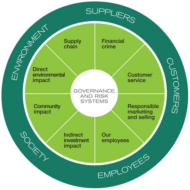
Social Value of Corporate Companies Economic Responsibilities: Ethical and discretionary responsibilities of a business firm are listed in the order of priority. First, a firm has to satisfy its economic responsibilities, followed by fulfilling legal responsibilities in order to survive in the market. Only then, it can think about or focus on purely voluntary actions pertaining to ethical consideration. In this competitive market situation, a business unit has to concentrate on profit making, the primary motive behind any business activity. However; it is easier said than done. You cannot hit the bull’s eye at the very first attempt. A firm has to become economically stable first; only then, it integrates social commitments in its agenda. Arguments for social responsibility: Public image: Socially responsible firms gain more customers and employees feel proud to work for such organizations. Handling the government regulations with ease: Government is a massive institution with long arms. It seeks to regulate business in public interest. Before government stretches its long arms, business persons should discharge their obligations to society. Business is resourceful: With a pool of resources, such as capital, labor and expertise, business is in a better position to tackle social problems and work for social goals. Let business try: It is that many other institutions have failed in handling social problems. So why should not a business enterprise handle social problems? Prevention is better than cure: Social problems have to be handled by the management at some point of time or the other. Problems with labor unions should be handled in a diplomatic way, so that they will not develop into serious social breakdown that consumes most of the management’s time. As a token of gratitude: Business units benefit from society. Based on the commonly accepted principle, that one owes debts of gratitude towards those who benefits us, the corporations have debts that it owes to society. Arguments against social responsibility: Profit maximization is the ultimate goal: Business units are accused of having profit maximization as their goal. Since business operates in a world of poverty and hunger, the economic efficiency of business is a matter of priority and should be the sole mission of business. Society has to pay the cost: The costs of social responsibility will be passed on to the society and the question is can the society bear these additional costs? Lack of social skills: Managers are here to solve economic problems and they do not possess knowledge or skills to provide the right solutions for social problems. Business has enough power: Business already is wielded with enough social power. The society should not take any steps, which will make it stronger. Social overhead costs: Costs on social responsibility is considered a social cost, which will not immediately benefit the business. Why spend money on an object, the benefits of which will be relished only in the future. Lack of broad support: The idea of business involvement in achieving social goals is not widely supported by many groups in society. Business and society are interlinked in many ways and the business has to handle the societal aspects with great care or else it may have to face the consequences arising out of such misappropriation or...
Posted by Managementguru in Business Management, Entrepreneurship, Human Resource, Leadership, Principles of Management
on Mar 13th, 2014 | 0 comments
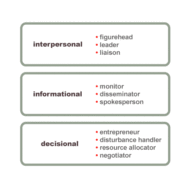
Research on Managerial Roles by Henry Mintzberg and Peter Drucker Henry Mintzberg, the canadian academic observed a few managers and analysed their behaviors and arrived at some conclusions which are listed in the table below. He also identified and attributed ten managerial roles of significance in correlation with the managerial functions. S.NoManagement Functions% of time spent1.Relating to external environment1.82.Planning and setting Objectives19.53.Decision-making6.04.Organising15.05.Leadership and inter-personal role28.46.Communication12.67.Control12.78.Staffing4.1 This table very clearly explains the role of a manager as a leader and the extent of influence he exerts on his sub-ordinates. Proper planning and goal-setting are the key contributors for the successful functioning of a firm. LEADER VS. MANAGER Coming to the managerial roles they can be classified as, 1. Interpersonal roles 2. Informational roles 3. Decisional roles Inter-Personal Roles: Figurehead role– The function is more of a ceremonial nature, like attending the family functions of employees, greeting visitors and a manager performs the symbolic duties of a head of the organization.Leader– He has to plan the HR requirements and motivates the staff to perform well. “Managers are people who do things right; leaders are people who do the right thing.” Remember a manager has to be a leader whereas it is not so in the case of a leader.Liaison– The manager acts as a link between the organization and the external environment to build image and rapport. Informational Roles: Monitor– The manager has to update himself with the current scenario in order to utilize the information for organizing and prompt decision-making.Disseminator– The manager has to communicate and distribute information to his subordinates to effectively accomplish the enterprise objectives.Spokesperson– Efficiently has to communicate the company’s policies to prospective clients and others. Decisional Roles: Entrepreneur– He has to be innovative by adapting to the changes in the environment. He has to be adventurous, persistent and strategic during tough times.Disturbance handler– He has to find appropriate solutions to problemsResource allocator– He has to apportion and allocate resources properly besides delegating authority to the work forceNegotiator– He has to negotiate resources outside and conflicts inside the organization. MANAGERIAL DIMENSIONS Managing: Science or Art? One perspective is Managing, like all other disciplines- whether medicine, music composing or even cricket is an art. It is “know-how.” Still managers can use the organized knowledge about management to perform better. So let us put it this way, Managing as practice is an art; the organized knowledge underlying the practice may be referred to as a science. Let them be complementary to each other and be present in peaceful co-existence. Drucker “ON MANAGERIAL FUNCTIONS ” – A manager has to look after The specific purpose and mission of a firmIncrease productivity by making the employees more productiveConsiderate about social impacts and social responsibilities In his view, the areas a manager has to focus and concentrate are 1. Market standing 2. Innovation 3. Productivity 4. Financial and Physical resources 5. Profitability 6. Manager performance and development 7. Worker performance and attitude 8. Public responsibility He says that business has only two functions- marketing and innovation. While others were concentrating on products and commodities, he concentrated on people and their performance. His “management by objectives- MBO ” became a very popular concept though it faced criticism. MBO according to Drucker is a philosophy that rests on a concept of human action, behaviour and motivation. It sets personal goals (both shortterm and longterm) to be achieved by each individual working for the organization and coverts them into challenges to be accomplished, thus motivating the individuals. The Effective Manager The effective manager is a situational manager who evaluates each approach in the light of circumstances and selects the one that most effectively and efficiently achieve individual...