Posted by Managementguru in Business Management, Human Resource, Organisational behaviour, Principles of Management
on Mar 13th, 2014 | 0 comments
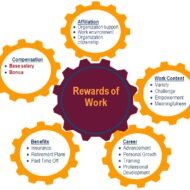
Operative Functions of HRM Staffing Staffing is one of the managerial functions. But this function is normally performed by the HR managers for all the departments of the firm. In most organizations, the HR department establishes personnel policies and coordinates the HR functions of all the departments. This function is also called the operative function or HRM function. It includes, amongst others, the processes of hiring, training, compensating, appraising and retaining employees, and attending to their labour relations, health and safety, and equality concerns. Procurement Procurement refers to a string of activities undertaken by the HR managers for filling the present and future vacancies of the organization. The activities include job analysis and designing, HR planning, recruitment and, finally, the selection of suitable employees. Here, job analysis refers to both the determination of specific tasks and responsibilities connected to a job and identifying the skills, knowledge and abilities required for the job holder. HR planning involves choosing and placing the right person at the right job and at the right time. Recruitment involves gathering a pool of applicants from which suitable employees may be selected. Lastly, selection involves screening, testing, interviewing and hiring the most suitable employees for the organization. SCOPE AND CHARACTERISTICS OF HRM Development Development here refers to both employees’ training and management development. HR managers are accountable for conducting and supervising training and development programmes for employees. The very purpose of a training and development programme is to increase the employees’ competencies in their job by improving their knowledge, skills and abilities. Training and development is widely accepted as a method for enhancing the employee skills, increasing the individual and organizational performance, improving the employee morale, and achieving the business growth and success. Compensation Compensation refers to the determination of the pay scale and other benefits for the employees. Establishing and maintaining the pay system of an organization is one of the principal jobs of the HR managers. They must devise ways to ensure fair and equitable pay rates. In addition, HR managers should regularly manage the performance evaluation system of the organization, and continuously design reward systems such as performance-linked incentive plans and bonus and flexible work schedules. Maintenance The maintenance function aims at retaining efficient and experienced employees in the organization. This calls for creativeHR practices. In this regard, HR managers are responsible for offering a wide range of HR programmes covering occupational safety, health promotion and physical fitness, canteen facilities, recreation activities, transportation programmes, employee suggestion schemes, career counselling and growth for creating a positive work environment. OBJECTIVES AND FUNCTIONS OF HRM Integration It consists mainly of industrial relations and aims at ensuring good relations between the management and the employees. HR managers have to implement industrial relations programmes that would ensure ethical and fair treatment in disciplinary action, grievance redressal, and career management processes. They should also counsel the employees and the management to prevent and, when necessary, resolve disputes over labour agreements or other labour relation issues. It is to be understood here that the functions of HRM can vary widely from one organization to another, depending upon its nature, size, and objectives. For instance, a smaller organization may follow a shorter HRM process with a greater emphasis on functions like procurement and compensation and little or no priority for activities like training and development and industrial relations maintenance. On the contrary, large organizations may pursue a longer and more comprehensive HRM process to meet the requirements of both the management and the workforce. WANNA TAKE A HR QUIZ N CHECK YOUR HR IQ? 1. The development and application of employees’ skills and energies to accomplish the goals and objectives of the...

Posted by Managementguru in Business Ethics, Business Management, Decision Making, Principles of Management, Strategy
on Mar 11th, 2014 | 0 comments
Spirituality and Management The purpose of correlating spirituality and management might present a weird picture to some. Research of the old Hindu scriptures, epics and Vedas disclose the secrets of management etiquettes coated with spiritual sugar which serves as a road map for us to cherish and follow. As an ardent follower of the BHAGAVAT GITA, THE UNIVERSAL BOOK OF SPIRITUAL SCIENCE, it was really amazing for me to know that the core principles of management have already been defined and dealt with that were formulated at a later date by MANAGEMENT GURUS like PETER DRUCKER, HENRY FAYOL, C. K. PRAHALAD and the like. I would like to present four qualities that struck me while I was comparing and contemplating. PERCEPTION AND UNDERSTANDING THE INNER SELF SELF MOTIVATION AND SELF TRANSCENDENCE DUTIES AND RESPONSIBILITIES LEADERSHIP The Leader and the Manager: The LEADER IS BEING FOLLOWED willingly, but a manager has to command individuals in order to adhere to his instructions. So, being a good leader starts from soul searching or understanding the nature of one’s inner self. SELF CONCEPTION gives a different dimension to approach problems. Spiritual experiences induce clarity in thinking that leads to ethical decision making. The spiritual experiences of Arjuna, one of the PANCHA PANDAVAS with LORD KRISHNA made him stronger (at will) and sharper (right perception). Decision Making: “I am the strength of those who are devoid of personal desire and attachment. O Arjuna, I am the legitimate desire in those, who are not opposed to righteousness, “says Lord Sri Krishna. At the war front, Arjuna the GREAT WARRIOR is not sure whether to fight against his own kith and kin. The inspiring words of Krishna motivated him to come out from the state of INERTIA and enter RIGHTEOUS ACTION. It is a testimony of what philosophers call the transcendence from alienation to self confidence to reach ethical decision making. One can never forego his duty or responsibility, be it his personal life or in the management arena. EFFECTIVENESS IS DOING THE RIGHT THINGS EFFICIENCY IS DOING THINGS RIGHT https://www.slideshare.net/parthacharya/management-lessons-from-mahabharata-9806655 Forming a VISION, planning the right Strategies, pooling the resources, hiring right people for the right job, setting goals and objectives, reviewing by MANAGEMENT BY OBJECTIVES, MANAGEMENT BY EXCEPTION, rewards and recognition, all have been dealt with a masterly excellence in MAHABARATHA which talks about the GURUKSHETRA WAR between the PANDAVAS and KAURAVAS or to simply put it, between THE GOOD AND THE EVIL. “The Supreme Lord is situated in everyone’s heart, O Arjuna, and is directing the wanderings of all living entities, who are seated as on a machine, made of the material energy.”Mind can make you LIBERATED OR BONDED that depends upon your WILL to master it or be a slave. Controlling your mind in turn controls your actions and thought process that leads to well augured efforts that proves fruitful to the human race. Leaders are born and not made goes the saying. But if you are able to be THE MASTER OF YOUR MIND, you are a leader made. Management Lessons from THE BHAGAVAT GITA Applicable to both western and Indian school of management, THE BHAGAVAT GITA deals with problems at the GRASS ROOT LEVEL relating to THE HUMAN PSYCHE. https://www.slideshare.net/singhm91/management-lessons-from-bhagvad-gita It enlightens us on all managerial techniques, goading us towards a serene atmosphere and state of affairs in place of the conflicts, stress, and lack of co-ordination, common in most of the enterprises world wide. “Do your duty perfectly, and the results will follow suit”, is the crux of GITA. How many of us can transform ourselves into such personalities? Can we ever overcome the desires...
Posted by Managementguru in Business Management, Entrepreneurship, How To, International Business, Marketing, Project Management, Sales, Startups
on Mar 11th, 2014 | 0 comments
Export can be in the form of merchandise (goods) or services (invisibles). When an entrepreneur wants to spread out his scope of business activity beyond the territory of his nation it is called export, whence he has to prepare himself to confront the challenges prevailing in the global market. How to go about Export? Business by itself calls for discipline whether you talk about your credit policy, quality of your product or services, on time delivery, payments, fund rotation, human resources management and the like. The taste of success in the domestic market gives you the necessary confidence to spread your wings far and wide. To be a part of the global market, you are expected to imbibe not only more discipline and order but you should be very thorough about the procedures and policies of the country, to which you are planning to export and the various legal formalities pertaining to your business activity. How to Export From India Pic Courtesy: Procedure to Start Export Business from India What will be your plan of action if your merchandise is disapproved of its quality after reaching the destination or the shipment gets destroyed due to some eventuality? To combat contingencies we have to have a representative working for us in the chosen place of activity who would report and handle the proceedings. Pre-Requisites for Exporting Goods: How many people do you think who have acquired the desire to export their products have a clear idea about the steps involved in starting an export business? First you have to secure the IEC CODE (import export code) from the DGFT (Director General of Foreign Trade) that comes under THE MINISTRY OF COMMERCE AND INDUSTRY. What is IEC Code? Import Export Code (also known as IEC) is a 10 digit identification number that is issued by the DGFT (Director General of Foreign Trade), Department of Commerce, Government of India. Info Courtesy: Shiprocket.in It is also known as Importer Exporter Code. It is mandatory for companies and businesses to obtain this code to start a business that deals with import and export in the Indian Territory. It is not possible to deal with export or import business without this code. While exporting you get the following edge over others: Exposure to forex marketExposure to diversified cultureExposure to varied laws and legal formalitiesExposure to business risks which you must take up as a challenge Having businesses in various countries is better than having all businesses in one country. It saves you during periods of economic recession. You experience market growth by entering into different and new markets; Asian and European markets are flooded with traders from all around the world since these regions enjoy a locational advantage in the world map and well connected through the sea and land. RBI Policies: Exporters must be aware of the fact that RBI policies are very severe when it comes to foreign exchange. So you should have proper informational inputs from the correct source and your capital has to be invested accordingly. Slide Courtesy: Import and Export Policies and Procedures Exploring unfamiliar and exotic markets is very difficult as they are always dynamic. You should see to it that you keep yourself posted with updates on INTERNATIONAL FINANCE, LENDING RATES etc. Also Read: 10 key steps to export success You can make a small business big and beautiful by adding some flavor to it like, Right time to launch your product in the global scenario, People’s preference being given priority by doing some demographic survey, Attractive campaigns and of course Your unendurable passion for business will do the rest to make your venture a successful one. Read...
Posted by Managementguru in Powerpoint Slides
on Mar 10th, 2014 | 0 comments
Capital Structure – Debt vs Equity Financial Markets – Instruments and Securities
Posted by Managementguru in Business Management, Human Resource, Labor Management, Principles of Management
on Mar 10th, 2014 | 0 comments
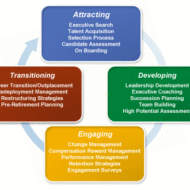
Dimensions of Human Resource Management I would like to brief you on some of the key aspects that mark the paradigm shift in the HR environment towards better management prospects. 1. The Human Resource function has shifted its focus to a much wider canvas that includes Empowerment of EmployeesRestructuring the Organisation and so on. 2. A range of HR sub-systems are involved in Planning The NumbersTypes And Skills Of HrEnsuring Their AvailabilityPlacing In The Right JobPromoting And Nurturing Their Mental HealthHelping Them Develop Special Talent And Skills 3. Human Resource is considered as an “investment” and no more an “expenditure”. Investment in TrainingRe-Training AndContinuous Learning On The Job develops the skills and competences of managers and employees and prove to be an useful investment. 4. The concepts of Learning Organisations AndTeam-Building serves a basis for “Competitive advantage” and “Motivating the employees.” 5. Values that are stressed upon are Co-OperationHarmonisationSynergyTrustBeing Pro-ActiveCollaboration 6. Strategy: VisionMissionObjectivesGoals– How these can be achieved? The techniques that are basically holistic in nature can solve the purpose. Such techniques involve SEWA– Self mastery, Empathy for workers, Worker-directedness and Achievement in performanceABO-Action by Objective Nine Dimensions of an Effective HR Department: What is the reputation of the HR department?What are the criteria (deliverables) that shape HR work?What is the mission or strategy of the capabilities – focused HR department?How is the HR department organised? How does HR facilitate the definition and creation of organisation capabilities?How do we make better HR investment and choices?How do we create HR practices?How does HR go about doing its work? What do HR professionals need to be, know, and do to be effective? Let us make a sincere comparison between the past and the present in terms of HR perspective These techniques produce performers who find their way through any set of given problems, manage themselves and lead the team to a stae of self- realisation. Old model vs New model 1. Job was the basic unit/ Team is the basic unit 2. Relations with environment there handled by the individuals/ Densely networked with environment 3. Information flow was vertical/ now it is vertical, horizontal and holistic 4. Many layers of management / Organisations have become flat 5. Emphasis on structures/ Emphasis on process and literally virtual organisations have evolved 6. Career path upward and linear/ career path lateral and flexible 7. Standardised evaluation and reward system/ Customised evaluation and reward system 8. Ethnocentric/ International 9. Single strong culture/ Multicultural and diversity of viewpoints and...