Posted by Managementguru in Business Management, Organisational behaviour, Principles of Management
on Mar 6th, 2014 | 0 comments
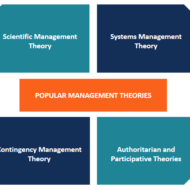
Theory of Management History and Evolution To understand the concept of management, a recap of its history and its slow but steady evolution is absolutely necessary. After the advent of machines, thanks to the industrial revolution of the eighteenth century, management has become an entity by itself. Pic Courtesy: Management Theories Since business activity is increasing by leaps and bounds globally, a more organized set up is called for, which has led to the development of different management concepts. Whether you consider management an art or a science, one definite thing is that, science and art complement each other and not mutually exclusive. Management gurus like Peter Drucker, Henry Fayol, Taylor and others have classified the essential features of management, for the benefit of the industry. Theory comes first followed by practice. Management knowledge certainly improves your style of working. How long do you think, luck, intuition or experience can be relied on, without a scientific knowledge of management. It is a thought to be pondered. Hypotheses Practical experimentation and analysis of theoretical hypotheses, yield better results and in course of time you tend to gain more scientific knowledge. Management is a process of planning, organizing, staffing, leading and controlling. Picture Courtesy: Technofunc.com The management process is applicable to all kinds of organizations and firms, be it a private firm, a government institution, a hospital, a school, a college, an university and other financial, profit making or non profit making NGO’s. This clearly indicates that management is a process that involves individuals who work in groups to accomplish their objectives in an effective and efficient manner. Levels of Management Does management pertain only to the top level management? A big no! It applies to managers at all levels. It is a chain reaction and a successful management totally depends on the synergistic activities of the people belonging to that organization. So, care must be taken by the managers to create and design an internal environment that is conducive for the smooth operations of the firm thus increasing the productivity. This does not mean that the external environment can be overlooked. A manager has to respond to the periodic changes, be it social, technological, economic or political in the external environment also. Management styles Management is a must for every organization and the style of management may vary according to the nature and size of business. Large organizations now-a-days prefer a “flat structure“, as it brings their employees closer and reduces the span of management, thus making communication faster. The more the number of levels, the more the conflict and improper communication. Although management pervades the entire organization, it is the duty of the top management cadre to initiate and maintain consistency in the process of management. All managers (by the term “manager “which is a much generalized term, we denote persons who hold authority to get things done; he may be a financial, administrative, human resource or a production executive) have a common aim, that is to create surplus. To increase productivity, create a suitable environment for the effective performance of their group and to solve crisis situations, they must be capable of seeing the “big picture”. Recent Developments A sea of changes has swept the theory of management area in recent times, owing to the development of different approaches. Management theory is criticized to have all the characteristics of a jungle as numerous management practitioners have recorded their findings in the management history. This led to severe confusion as to what management is, and how things should be organized; however, in modern corporate business world, the managerial activity is directed towards growth, thanks to the...

Posted by Managementguru in Business Management, Decision Making, Principles of Management
on Mar 6th, 2014 | 0 comments

A Process of Intelligence Effective Decision making is a process of Intelligence, Design and choice activities and “is a central part of the management process”. Decisions are hard to make but once decided there should be no second take. The following steps are involved in the process of Decision-making: 1. Recognizing the problem 2. Deciding priorities among problems 3. Diagnosing the problem 4. Developing alternative courses of action 5. Evaluating alternatives 6. Selecting the best alternative 7. Effective implementation and follow-up action. Recognizing the Problem– Herbert A Simon calls this step as an “intelligent activity“. It is important to find out whether there is any deviation from the past experience. For e.g. Sales might decrease, expense might decrease, sometimes there might be deviations from the plan, sales budget, and competitors may outperform by improved systems. Deciding priorities among the problems: A manager would face many problems at the same time. He should not be bogged down with small and unimportant problems. Some problems can be easily solved by the sub-ordinates. Some may not be important. A manager must see that – he selects carefully the most important problem. Peter Drucker says that “once the right problem is perceived then half of the problem is solved”. A manager must diagnose carefully by asking the following questions. a. What is the real problem? b. What are the causes and effects of the problem? c. Is this problem very important? d. Can they be solved by sub-ordinates? e. Which is the right and most important problem to be solved? Diagnosing the Problem: After choosing the right problem the manager must now start diagnosing the problem. There is no simple answer to the question of how to diagnose the problem, because every individual differs in his or her own way of diagnosing the problem depending on the different background orientations and training. A manager must systematically analyze the problem for identifying the alternative causes of action. Developing Alternative Courses of Action: This step is creative and innovative where a manager analyzes from all perspectives Sometimes a manager can also use a technique called “brainstorming” where a few individuals discuss at length the various possible available alternatives. First of all, a manager must be thoroughly familiar with the problem. This is called saturation. Later, he must think about the problem from several view-points which is called deliberation. Sometimes the manager may not get into the crux of the problem, i.e. there may not be any fruitful result of deliberation, and then the manager might temporarily switch off his conscious search and relax. This process of realization is called incubation. Then after sometime, a flash of light may occur, and the manager may get some insights and ideas. This stage is called illumination. In the last stage, which is called accommodation, the manager resynthesises his ideas into a usable proposal. Evaluating the Alternatives: The manager must now give proper weightage to the positive and negative aspects of the alternatives and evaluate by using some criteria like (a) time; (b) cost; (c) risk; (d) results expected; (e) deviations anticipated; (f) resources available for implementation. Selecting the Best Alternative: This is the most important step where the manager selects the best alternative that will yield maximum profits or results with minimum cost, input or resources. To put it in simple terms, the solution should be able to solve the problem in the best possible way. Effective Implementation and Follow-up Action: Any decision without proper implementation becomes futile and hence proper care must be taken by the manager to pool resources and start implementing the decision taken. In large organizations, follow-up procedures are available in the system...
Posted by Managementguru in Business Management, Project Management, Startups
on Mar 5th, 2014 | 0 comments

Establishment of a small business and successfully running it, is definitely by no means a small achievement. It is a commendable achievement as entrepreneurs are the backbones of a country’s economy and its growth. Proper planning and understanding the significance of critical factors and determinants affecting a small business paves way for the smooth functioning of your enterprise. What are the prerequisites for running a small business? Any plan or idea to be transformed into a product or a service needs to be categorically put into experimentation and subject to inquiries. Prepare a detailed project report With the help of an external expert consultant get it appraised Let the product be innovative which has hitherto not hit the market, for instance flying cars Plan your geographical area of operations Go for a detailed market survey through questionnaires and giving out free samples Try to gauge the pulse of your target customers Launch your product at the right time Plan your marketing strategy regarding price and promotions Fix up proper capitalization that would meet your financial requirements. Definitely you have to bring in initial working capital of your own and don’t rely solely on bankers for the entire funding. Asset management, fixed capital and working capital management must be absolutely preplanned. Manpower requirements -Right person for the right job and the appropriate number of persons needed to complete a job has to be planned. Their recruitment, selection, training and development forms part of the package. Location and Layout Most important criterion is the location and layout of your manufacturing facility. It should facilitate easy movement of materials to bring the product out to the market in the shortest possible time. Avoid bottlenecks or try to resolve them for smooth production. As we all know technology feeds on itself and more the delay, more competitors and better products throng the market. Keep in mind the end product should always reach the buyer or the consumer at the right time. Plan your reorder level, delivery schedule and lead times in accordance with the orders in hand. Production Inputs Smooth supply of production inputs, uninterrupted supply of power, copious water supply, the nature of the soil (if your product is agro based), proximity to the market and transportation facilities have to be given due importance. Your product has to be compliant in such a way that it should not pollute the environment. So, a proper waste disposal management system should be designed right at the start of your operations. Book-Keeping Proper bookkeeping and maintaining your accounts will please the tax authorities by which you create goodwill for your company and also keep your credit management under controllable limits. Any product centered around the consumer will be a hit and that is “marketing”. If you plan your success formula from your product that is “selling” that might not always be successful. Your distribution channels should be continuous with unbroken links and strong. The kind of self confidence that you exuberate makes you a reliable person and in the long run you become iconic. Technology Updates Businessmen have trained the customers to expect something new everyday, because such is the power of technology and the competitor force. So it is better to keep yourself updated with the latest technology available in the market. Take your product to your customers in a convincing manner by which it proves to be a win-win situation for both sides; profit making and customer satisfaction for the entrepreneur and buying products the money’s worth and the real benefits of the product for the...
Posted by Managementguru in Business Management, Leadership, Principles of Management
on Mar 5th, 2014 | 0 comments

Management styles vary by company, level of management, and even from person to person. Let us see the different management styles practised in different parts of the world for your better understanding. Elevate your brand’s presence by featuring your post on Managementguru! With over 13 years of trust and expertise, our business blog is the perfect platform for collaboration. Contact us Managerial practices in Asian countries The managerial practices in Asian countries like Japan, China and India are quite different from that of economically advanced countries in the west. Industrial nations are in a position to adopt managerial approaches that suits their mode of operations and nature of labor force. In Asian countries, a paternalistic or participative leadership style is followed while directive style of leadership pattern suits the west. Basically, this difference arises due to the cultural background of people influenced by their tradition. Japanese management East Asian countries like Japan have a set of cultural norms that cannot be overlooked or sacrificed for the sake of business. Their cultural instincts are very strong and they believe in life long employment. Japanese management practice lays emphasis on seniority and shows great concern for each and every employee. The objectives are set by the lower-level employees and it is passed on to the top-level management for approval. These proposals are scrutinized by the supervisors who tactfully suggest the necessary changes, instead of simply accepting or rejecting the proposed objectives. This creates a sense of belonging and the employees identify themselves with the goals of the company. Participative Style You cannot assure that a participative style of decision making always proves beneficial. Sometimes, managers have to show their individualism by taking tough decisions, when the situation warrants for such an action. Here the leader also becomes the firm decision maker. This is quite common in the west, where the leaders identify themselves with the profession rather than the company. Such solo decision making sometimes result in sub-optimal decisions. We are not going to compare and contrast between the various management approaches and which is better. The discussion aims at throwing light on different approaches and styles of management and how it affects the productivity of an organization. Collective Decision Making Japanese management relies on collective decision making (consensus), where the decision making might take time, but it is implemented quickly. The Japanese management is highlighted in this discussion to demonstrate the effectiveness of their approach which is followed by many western nations to ensure success. The novelty is in the fact that they treat people as human beings and not just another factor in production. The communication flows from bottom to top and back. Care is taken to define the problem with clarity before going for a decision. In the west, managers are criticized to come to conclusions even before defining the problem. Bureaucracy Bureaucracy still prevails in most of the Asian countries hindering the progress of business communities. What started as an amazing administrative legacy has now turned authoritarian. Even if the employee knows what the manager says is incorrect; he has to obey the instructions, just because it is issued by his superior. The people are expected to follow the instructions provided and not to question or suggest. Collective Responsibility Collective responsibility and accountability, an informal organizational structure, common organizational culture and competitive spirit makes participative management approach distinct and successful. When the leader acts as a facilitator and not a dictator, naturally the employees will try to give their best shot. Collective responsibility might sometimes lead to ambiguity of decision responsibility. But individual responsibility and accountability vouches for clear and specific decision responsibility. Quality control circle Quality control circle is another feature that distinguishes Japanese management from others. Workshops are organized in a periodic fashion to arrive at solutions for problem...
Posted by Managementguru in Business Management, Marketing, Principles of Management
on Mar 4th, 2014 | 0 comments
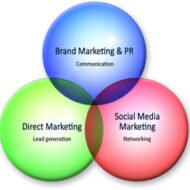
Integrated Marketing: Strategy aimed at combining different marketing methods such as mass marketing, one-to-one marketing, and direct marketing. Marketing in simpler terms means “to take your product to the customers in a convincing manner and coax them to buy it”. And not only that, you need to retain your old customers and lure new customers to your niche. How is that possible! Marketing is a concept that works magic when you project your product in such a way as to attract the customer and also your product should have an edge over that of your competitors’. Many new channels of marketing have flooded the market; the evergreen being advertisements in radio and televisions. The audio visual of your product that is being telecast in a span of thirty seconds to one minute should capture the attention of the viewers and you should see to it that the benefits of your product is communicated to the viewers in a precise manner. The questions that are inevitable to the sales force are, What is your product’s unique selling proposition? What is your distinctive competence? Are you motivating the target audience? Does your product have a brand image? So many things have to be taken into consideration and here comes the word integrated marketing. The exclusive sales force you own is your strength, without which you cannot succeed in the market. Whatever strategies you formulate, action plans you correlate, it is in the hands of your sales team that you are going to capture the market. The marketing plan and ideas have to be communicated to them from the point of conception and the innovative ideas generated from your team can be definitely put into use. Integrated marketing operates on two levels. First the various disciplines of the marketing department that includes, sales force advertising product management new product launch Marketing research, must work in tandem. Secondly, coordination with all the other departments in the firm. After all, business is done for profit. But even then there are some etiquettes to be followed when you are planning to introduce your product into the market. customer satisfaction quality quantity eco friendly Competitive price, are some of the basic principles that go without saying. Besides, the producer also should not deceive the customer or take advantage of the ignorance of the consumer while campaigning for his products. A product should reap you profit and at the same time the customer should get the value for the money paid. A satisfied customer can bring in hundred more customers; it is part of your marketing plan. If you lose one customer then you have lost thousand customers. You cannot bring back a dissatisfied customer into your groove. So the sociology and psychology which you have read only in literature will give you a helping hand in times of need, when you want to satisfy a customer. Integrated marketing combines all the marketing plans; it is a marketing mix that makes a customer happy with the product’s price, availability, promotion and the product as a whole. Hotels and restaurants Hospitals Malls and Departmental stores, are some of the ventures to be mentioned that stands as a testimony for integrated marketing, as they talk about “feasible packages for different classes of economy”. Ultimately marketing can be defined as a network that starts with the customer and ends with the customer in its supply chain...