Posted by Managementguru in Marketing, Principles of Management
on Mar 4th, 2014 | 0 comments
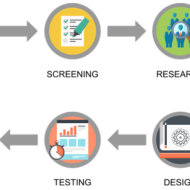
What Do You Mean by New Product Development? In business and engineering, new product development (NPD) is the complete process of bringing a new product to market. Innovate or Die: Product management should be viewed form a broader perspective by business firms, in that, it has to include new product development as part of the action plan, apart from appraising the existing product line, positioning them effectively and taking brand decisions wisely. “Innovate or die’, is the modern entrepreneurial slogan. Unless organizations innovate and introduce new products, they cannot survive in the competitive market. Strategies defining the organization’s future are built upon the portfolio of new products. Picture Cortesy: Coschedule Need for new product development: People always welcome change and new product development is an opportunity for the firms to meet the changes in consumer demands. They are a source of competitive advantage. Your new product may infuse a fresh lease of life to your sagging profits. New products may turn out to be the star performers of your firm and provide long term financial return on your investment. Some firms take the smart strategic choice of using the idle capacity of their plant for manufacture of a new product that may utilize the existing production and operation resources to an optimum level. They capitalize on research and development. Products that create a wave are a result of research on market trend and consumer preference. Firms can make it, if their research is customer-centric rather than product-centric. They provide opportunities for reinforcing or changing strategic direction. It is wiser to discontinue production of a product that does not find acceptance and divest the funds in a beneficial venture. They leverage marketing and brand equity. Big corporate firms while introducing new products make a big publicity, so that it can attract potential investors and consumers. They enhance the corporate image. You cannot expect a firm to make it big with a single product line or confined to one area of development. The growth of a company is evident only when it ventures into multifarious disciplines reflecting its capacity for expansion and diversification. Picture Courtesy: Staenz Also if a company grows, the growth of the stake holders is rest assured as the company would be in a position to offer decent dividends with bonus. Even if a growing company ploughs back its profits for expansion, it is again a good thing for the investors as further expansion obviously means growing profits. They affect human resources-a new product is perceived differently by different people. It is a need satisfying concept with benefit for buyers; a bundle of need satisfying features for marketers; a way to add value for intermediaries; an opportunity to design for R and D and a chance; to assemble and process for the production department. They meet environmental threats-Until recent times, products were not subjected to environmental evaluation, but the recent crises regarding global warming and pollution has been an eye opener for all nations which are enforcing much rules and regulations, demanding for production aimed at environmentally safe products. New product development is a multi-dimensional concept, inherent in most organizations. The process is initiated when the organizations are subject to market pressure and the firms are left with no choice other than to take up the challenge. A List of Productivity Terms Automation – The use of robots or other automatic equipment to do certain tasks Business Productivity – The amount of goods or services produced by a business from a set amount of resources Capital Goods – Manufactured or constructed items that are used...

Posted by Managementguru in Business Management, Marketing, Principles of Management
on Mar 3rd, 2014 | 0 comments

Customer centric: refers to the orientation of a company to the needs and behaviors of its customers. Product centric: refers to the orientation of a company towards manufacturing and improving the product line. All products that enter the market are not given the kind of welcome which only certain products are able to enjoy. Why is that only few products are top notch and others average performers? The answer is very simple, you need to be customer centric rather focusing on improving your product and its range. What is the fun in making products that go bland over a period of time? Creating an appealing product does not suffice the requirements of the consumers. Understanding the consumer, his needs and preferences makes you a good marketer. “What people want to buy and what you want people to buy are entirely two different entities.” Customer Preferences Marketing is a concept that talks about creating a favorable environment or identifying a niche where you can sell your products comfortably or where the products can sell themselves provided the focus is on the target customer. What companies do now in the name of marketing is nothing but product promotion that exhausts huge chunk of money from the management’s treasury. Business schools have a great role to play in idealizing these concepts for the better understanding of management graduates, make them deliver the right choice of action in real time environment. Marketing starts right from developing a prospective business idea into a concrete business plan followed by branding and promotions. But the product base has to be built upon customer wanton and preferences. Indigenous Products The soft drink “Bovonto” is very popular and a preferred drink in south of Tamilnadu, India and the manufacturers have their plants at various places in Tamilnadu. Although not a big name in the international market, it is a direct competitor for Coke and Pepsi in the southern regions of Tamilnadu. The grape vine is that the product is a perfect “market fit”. To our amusement and amazement, the product has communicated well with the marketplace through taste and quality. Here is the unerring message, ‘Let the product speak for itself’. Indigenous products always gain instant recognition as they connect well with the local people emotionally. If people of each and every country vows only to buy indigenous products, many MNC’s would be out of business and filing for bankruptcy. Such is the power of the market and people who are the owners of the market. What is that ‘X’ factor that makes your product different and unique Let’s look at it from another perspective. Incidentally you happen to develop a great product, and you want to market the product. This situation calls for patenting the product and again it can be made market centric by finding the right market segment for the product and promoting it in such a way that the product content appeals to the market. Tell the masses how your product can solve specific problems through its unique content. What is that ‘X’ factor that makes your product different and unique as well is what you have to communicate to the people whom you are targeting. Facebook has revolutionized the internet marketplace by offering simple and user-friendly interface and a sophisticated niche for each and every individual who wants to make his/ her presence felt. A good business plan is one which incorporates the best of ideas from all spheres of the company, as marketing is not a separate entity, and promotions call for huge investments. Many companies fail to understand the basis of market success which is solving the problem and not selling. Promotions alone...
Posted by Managementguru in Business Management, Principles of Management
on Mar 3rd, 2014 | 0 comments
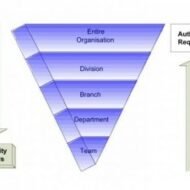
Centralization and De-Centralization Concepts CENTRALIZATION: The term “centralization” has several meanings: Centralization of Performance: Say, if the operations of a company is restricted to a single geographical location, it characterizes centralization of performance. Departmental Centralization: Specialized activities are carried out by a single department, say, maintenance of a whole plant, staff recruitment by HR department etc., Centralization as an aspect of management: This implies restricted delegation and exclusivity of decision-making by the top management. According to Allen, “Centralization is the systematic and consistent reservation of authority at central point in an organization.” According to Weihrich and Koontz, “Centralization (as an aspect of management) is the tendency to restrict delegation of decision-making. What are the special circumstances that force the managers to reserve authority and centralize decision making powers? 1. To facilitate personal leadership 2. To provide for integration 3. To handle emergencies 4. To utilize resources effectively and instantaneously. DECENTRALISATION: It is the tendency to disperse decision making authority in a structured and organized manner. It can be viewed as a philosophy rather than a principle where-in “discretion” plays a major role in deciding which decisions to push down into the organization structure and which to hold near the top. Capital expenditure, Investment analysis and major policy decisions have to be dealt with, by the top management. It is the systematic effort to delegate to the lowest levels of authority except that which can be exercised at central points. TYPES OF DECENTRALIZATION: Three approaches to the concept are: 1. PROFIT CENTRES 2. COST EXPENSE CENTRES 3. INVESTMENT CENTRES Profit Centre: Here the organization is split into divisions on a “product basis” and is given full authority to handle its own scheduled operations, right from placing orders to negotiating the sale of its finished products. Cost Expense Centre: Whenever it is easy to determine the cost of operations, cost centres are established. Cost centres run on “budgets” which acts as a control tool to run the units within the specified budgetary limits. Investment Centre: Useful in the case of big multi-product enterprises where product performance is measured by decentralizing the investment aspect. Each strategic business unit is responsible for the acquisition, use and disposition of fixed resources. Advantages of Decentralization: Managers and executives are relieved form excessive work pressure Even low level employees are involved in decision making thus bringing the decision making process closer to the scene of action. It facilitates product-diversification Creates an opportunity for learning Ensures effective control When a big organization is divided into relatively smaller units, it becomes flexible and also effects close control. Disadvantages of Decentralization: · Conflict arises between people belonging to different levels of the organization · Rising cost · Lack of co-ordination between production and marketing departments · No defined leadership Contingency Factors in Decentralizing: 1. Organizational goals 2. Organizational size 3. Geographical dispersion 4. Technical complexity of tasks 5. Time frame of discussions and decisions 6. Subordinates’ take on issues 7. Planning and control procedures 8. Environmental factors 9. Knowledge and experience of managers Effective Decentralization can be accomplished by · Establishing appropriate centralization · Developing efficient managers · Proper provision for communication and co-ordination · Establishing adequate controls Top management must be willing to delegate authority towards decision making; Middle management must be willing to accept responsibility that is being delegated. Only then effective decentralization is...
Posted by Managementguru in Business Management, Human Resource, Principles of Management
on Mar 2nd, 2014 | 0 comments
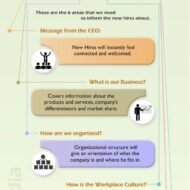
Objectives and Functions of HRM Human Resource Management is very challenging because of the dynamic nature of the people and it is not only managing men but involves administering a social system. According to Dale Yoder “Man power management is the function or activity in directing working men and women in maximizing their satisfaction in employment.” George R. Terry says, “Personnel management is concerned with the obtaining and maintaining of a satisfactory and satisfied work force.” OBJECTIVES OF HUMAN RESOURCE MANAGEMENT: 1. Social Objectives: a) Facing the challenge of unemployment and providing people with maximum employment opportunities is the first and foremost priority of countries like India where there is pressure of population growth. b) The employees must be able to derive maximum satisfaction from the work performed. c) The system should facilitate harmony and co-operative endeavor for one and all. 2. Personal Objectives: Job satisfaction and rewards in the form of pay, promotion and recognition is aimed at, on the part of employees. This can be achieved by providing adequate remuneration, opportunities for advancement, facilities for training and development, job security and proper work. 3. Enterprise Objectives: This can be achieved by selecting the right people for the right job, empowering them through training, development and participation. FUNCTIONS OF HUMAN RESOURCE MANAGEMENT: 1. Planning: Assessment of future man power requirement is done with the help of man power inventory chart followed by the recruitment and selection process. A clean job description is needed to lure people with the right skills for the right position. It is the responsibility of the manager of a firm to lay down specifications of the qualities and skills required by the workers and determining sources from where the workers are to be recruited. Selection is done by means of written test and personal interviews. 2. Organizing: This involves proper designing of organizational structure, the inter relationship between jobs, establishing smooth channels of communication, assignment of authority, responsibility and creating accountability, establishing line and staff relationship etc. 3. Directing: Issuing orders and instructions down the line and motivating the work force to carry out those instructions satisfactorily. Positive motivation in the form of financial and non-financial incentives, a good working environment is essential on the part of the management. 4. Controlling: The motive is to ensure that performance of each worker coincides with the plans or standards. Bench marking, Total quality management and Six sigma are some of the popular concepts of standardization. → Scope and Characteristics of...
Posted by Managementguru in Business Management, Organisational behaviour, Principles of Management
on Mar 2nd, 2014 | 0 comments

Your business structure will affect a lot of factors – You can start with an initial business structure and change it as your business thrives. But first and foremost you need a solid business plan that details your mission, vision and purpose. These 7 steps in planning will guide you through and give your project a headstart. The business plan cheatsheet is given in a pictorial form for your benefit. ☝️ A. Opportunity Analysis: SWOT analysis– the analysis of strength and weaknesses, opportunities and threats in the external environment is the first and foremost step in planning. The target market, competitor strength, internal weaknesses, customer’s preferences are some of the key areas to be focused. B. Setting objectives: Where we want to be, and what we want to accomplish and when are answered in this step. Each and every employee of the organization has to be apprised about the enterprise objectives in order to achieve the expected or desired result. Management by objectives is one of the proven methods where-in the objectives are set by the subordinates themselves under the guidance of their superior and periodical reviews are conducted to check whether the set objectives are accomplished within the stipulated time. C. Developing Premises: The critical factors that affect the planning process are analyzed thoroughly. Say, government policies, business cycle trends, economic indicators, inflation, tax rates etc are analyzed and the plans are developed based on these premises. D. Identifying Alternatives: It is better to have an alternate plan or plans which helps in deciding the alternate course of action. Alternatives identification is a technique used for identifying different methods or ways of accomplishing the work of the project. For example, brainstorming might be used to discover alternative ways of achieving one of the project objectives. E. Evaluating Alternatives and selecting the suitable plan: The limiting factors can be set as a criterion for evaluating the alternatives. The limiting factors may be cost, time, manpower and other resources. Operations research helps in the assessment of alternatives and selecting the best. Think about this, if plan A fetches you more profit but proves to be expensive and plan B fetches you consistent profit and less expensive, what will be your choice? Even banks look into the fund flows of different projects submitted by clients and select the ones that proves to fetch consistent returns on the long run. F. Formulating Supportive plans: Download this Business Planner Printable which comes in handy when you want to weigh your choices👇 Business-Journal-Planner-1Download Derived plans are those that stem from the main ones that support the basic plan. Recruiting and inducting may be the basic plan of a HR department but training and development is the supporting plan that gives shape to the basic plan. G. Developing Budgets: Budget is referred in financial terms and they are required to control plans. There is always a constraint for resources and hence it is the responsibility of a manager to decide on the investment in a particular plan that will tide away the risk of the...