Posted by Managementguru in Business Management, Project Management, Startups
on Mar 5th, 2014 | 0 comments

Establishment of a small business and successfully running it, is definitely by no means a small achievement. It is a commendable achievement as entrepreneurs are the backbones of a country’s economy and its growth. Proper planning and understanding the significance of critical factors and determinants affecting a small business paves way for the smooth functioning of your enterprise. What are the prerequisites for running a small business? Any plan or idea to be transformed into a product or a service needs to be categorically put into experimentation and subject to inquiries. Prepare a detailed project report With the help of an external expert consultant get it appraised Let the product be innovative which has hitherto not hit the market, for instance flying cars Plan your geographical area of operations Go for a detailed market survey through questionnaires and giving out free samples Try to gauge the pulse of your target customers Launch your product at the right time Plan your marketing strategy regarding price and promotions Fix up proper capitalization that would meet your financial requirements. Definitely you have to bring in initial working capital of your own and don’t rely solely on bankers for the entire funding. Asset management, fixed capital and working capital management must be absolutely preplanned. Manpower requirements -Right person for the right job and the appropriate number of persons needed to complete a job has to be planned. Their recruitment, selection, training and development forms part of the package. Location and Layout Most important criterion is the location and layout of your manufacturing facility. It should facilitate easy movement of materials to bring the product out to the market in the shortest possible time. Avoid bottlenecks or try to resolve them for smooth production. As we all know technology feeds on itself and more the delay, more competitors and better products throng the market. Keep in mind the end product should always reach the buyer or the consumer at the right time. Plan your reorder level, delivery schedule and lead times in accordance with the orders in hand. Production Inputs Smooth supply of production inputs, uninterrupted supply of power, copious water supply, the nature of the soil (if your product is agro based), proximity to the market and transportation facilities have to be given due importance. Your product has to be compliant in such a way that it should not pollute the environment. So, a proper waste disposal management system should be designed right at the start of your operations. Book-Keeping Proper bookkeeping and maintaining your accounts will please the tax authorities by which you create goodwill for your company and also keep your credit management under controllable limits. Any product centered around the consumer will be a hit and that is “marketing”. If you plan your success formula from your product that is “selling” that might not always be successful. Your distribution channels should be continuous with unbroken links and strong. The kind of self confidence that you exuberate makes you a reliable person and in the long run you become iconic. Technology Updates Businessmen have trained the customers to expect something new everyday, because such is the power of technology and the competitor force. So it is better to keep yourself updated with the latest technology available in the market. Take your product to your customers in a convincing manner by which it proves to be a win-win situation for both sides; profit making and customer satisfaction for the entrepreneur and buying products the money’s worth and the real benefits of the product for the...

Posted by Managementguru in Business Management, Leadership, Principles of Management
on Mar 5th, 2014 | 0 comments

Management styles vary by company, level of management, and even from person to person. Let us see the different management styles practised in different parts of the world for your better understanding. Elevate your brand’s presence by featuring your post on Managementguru! With over 13 years of trust and expertise, our business blog is the perfect platform for collaboration. Contact us Managerial practices in Asian countries The managerial practices in Asian countries like Japan, China and India are quite different from that of economically advanced countries in the west. Industrial nations are in a position to adopt managerial approaches that suits their mode of operations and nature of labor force. In Asian countries, a paternalistic or participative leadership style is followed while directive style of leadership pattern suits the west. Basically, this difference arises due to the cultural background of people influenced by their tradition. Japanese management East Asian countries like Japan have a set of cultural norms that cannot be overlooked or sacrificed for the sake of business. Their cultural instincts are very strong and they believe in life long employment. Japanese management practice lays emphasis on seniority and shows great concern for each and every employee. The objectives are set by the lower-level employees and it is passed on to the top-level management for approval. These proposals are scrutinized by the supervisors who tactfully suggest the necessary changes, instead of simply accepting or rejecting the proposed objectives. This creates a sense of belonging and the employees identify themselves with the goals of the company. Participative Style You cannot assure that a participative style of decision making always proves beneficial. Sometimes, managers have to show their individualism by taking tough decisions, when the situation warrants for such an action. Here the leader also becomes the firm decision maker. This is quite common in the west, where the leaders identify themselves with the profession rather than the company. Such solo decision making sometimes result in sub-optimal decisions. We are not going to compare and contrast between the various management approaches and which is better. The discussion aims at throwing light on different approaches and styles of management and how it affects the productivity of an organization. Collective Decision Making Japanese management relies on collective decision making (consensus), where the decision making might take time, but it is implemented quickly. The Japanese management is highlighted in this discussion to demonstrate the effectiveness of their approach which is followed by many western nations to ensure success. The novelty is in the fact that they treat people as human beings and not just another factor in production. The communication flows from bottom to top and back. Care is taken to define the problem with clarity before going for a decision. In the west, managers are criticized to come to conclusions even before defining the problem. Bureaucracy Bureaucracy still prevails in most of the Asian countries hindering the progress of business communities. What started as an amazing administrative legacy has now turned authoritarian. Even if the employee knows what the manager says is incorrect; he has to obey the instructions, just because it is issued by his superior. The people are expected to follow the instructions provided and not to question or suggest. Collective Responsibility Collective responsibility and accountability, an informal organizational structure, common organizational culture and competitive spirit makes participative management approach distinct and successful. When the leader acts as a facilitator and not a dictator, naturally the employees will try to give their best shot. Collective responsibility might sometimes lead to ambiguity of decision responsibility. But individual responsibility and accountability vouches for clear and specific decision responsibility. Quality control circle Quality control circle is another feature that distinguishes Japanese management from others. Workshops are organized in a periodic fashion to arrive at solutions for problem...
Posted by Managementguru in Business Management, Organisational behaviour, Principles of Management, Strategy
on Mar 5th, 2014 | 0 comments
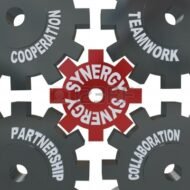
Synergy in Management Synergy: The interaction of two or more agents or forces so that their combined effect is greater than the sum of their individual effects. Synergy is the latest BUZZ WORD in the corporate business world. Synergy is the sum total of individual resources that which creates an enhanced effect greater than that of the sum total. Shall I simply say “1+1>2”! It is really amazing how much you can accomplish when it doesn’t matter who gets the credit. Teamwork divides the task and doubles the success. Unity is Strength: Synergy unites the people of an organization as a team and it serves like “BLINKERS FOR HORSES” to reach the goal of the firm without any conflicts amongst the team members. It is a managerial science and the role of top management in synergizing the employees plays a vital role in the success of the organization. As the old saying goes “Unity is Strength” and the new world aspires “Sky is the Limit”. By integrating the team members, having a smooth relationship with labor unions and management staff, a firm can achieve its overall objectives and mission in a very short span of time. Cordial Industrial Relation paves the way for the functioning of the firm without a hitch. Developing Systems for all core areas: The top management has to create “SYSTEMS” for all the core areas; Policies, procedures, rules and regulations, norms etc.,shall serve the common purpose of controlling and guiding all the employees of a firm creating a perfect ambience for efficient performance. The general managers should be the pillars of a firm who shoulder the responsibility of implementing these systems in an objective manner and not in a subjective manner. Scope: Synergy also has its scope outside the organization. The managers should be able to connect themselves with customers, banks, trade associations and also the government with ease. The weather of your firm depends on the psychology of your persona and the collective efforts of your team. If you want your firm to be SUCCESSFUL and UNIQUE, you have to POOL ALL YOUR RESOURCES, be it human, physical, financial or intangible. The competitiveness enjoyed by your firm to capture and win the market marks your strength; the limitations or restrictions that mar the growth of your firm can be overcome by the SYNERGISTIC BOOSTER that you administer into the minds of your employees. Integration is the key word that leads to DISTINCTIVE COMPETENCE, a strength that cannot be copied by other organizations which helps you to make your organization more productive and...
Posted by Managementguru in Business Management, Marketing, Principles of Management
on Mar 4th, 2014 | 0 comments
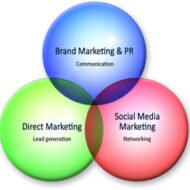
Integrated Marketing: Strategy aimed at combining different marketing methods such as mass marketing, one-to-one marketing, and direct marketing. Marketing in simpler terms means “to take your product to the customers in a convincing manner and coax them to buy it”. And not only that, you need to retain your old customers and lure new customers to your niche. How is that possible! Marketing is a concept that works magic when you project your product in such a way as to attract the customer and also your product should have an edge over that of your competitors’. Many new channels of marketing have flooded the market; the evergreen being advertisements in radio and televisions. The audio visual of your product that is being telecast in a span of thirty seconds to one minute should capture the attention of the viewers and you should see to it that the benefits of your product is communicated to the viewers in a precise manner. The questions that are inevitable to the sales force are, What is your product’s unique selling proposition? What is your distinctive competence? Are you motivating the target audience? Does your product have a brand image? So many things have to be taken into consideration and here comes the word integrated marketing. The exclusive sales force you own is your strength, without which you cannot succeed in the market. Whatever strategies you formulate, action plans you correlate, it is in the hands of your sales team that you are going to capture the market. The marketing plan and ideas have to be communicated to them from the point of conception and the innovative ideas generated from your team can be definitely put into use. Integrated marketing operates on two levels. First the various disciplines of the marketing department that includes, sales force advertising product management new product launch Marketing research, must work in tandem. Secondly, coordination with all the other departments in the firm. After all, business is done for profit. But even then there are some etiquettes to be followed when you are planning to introduce your product into the market. customer satisfaction quality quantity eco friendly Competitive price, are some of the basic principles that go without saying. Besides, the producer also should not deceive the customer or take advantage of the ignorance of the consumer while campaigning for his products. A product should reap you profit and at the same time the customer should get the value for the money paid. A satisfied customer can bring in hundred more customers; it is part of your marketing plan. If you lose one customer then you have lost thousand customers. You cannot bring back a dissatisfied customer into your groove. So the sociology and psychology which you have read only in literature will give you a helping hand in times of need, when you want to satisfy a customer. Integrated marketing combines all the marketing plans; it is a marketing mix that makes a customer happy with the product’s price, availability, promotion and the product as a whole. Hotels and restaurants Hospitals Malls and Departmental stores, are some of the ventures to be mentioned that stands as a testimony for integrated marketing, as they talk about “feasible packages for different classes of economy”. Ultimately marketing can be defined as a network that starts with the customer and ends with the customer in its supply chain...
Posted by Managementguru in Business Management, Marketing, Principles of Management
on Mar 4th, 2014 | 0 comments
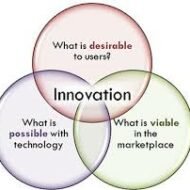
The Realm of Product Innovation A manufacturer or a service provider, who aspires to be successful in a business market, must indulge himself in research, pertaining to consumer preference as well as the various stages of a product life cycle. This will give him a better chance to make his future decisions concerning the product and also the wisdom to evolve strategies accordingly. Developing a product and introducing it into the market demands certain amount of forethought and prudence. The first step is to study the market, to understand consumer preference as well as to gauge whether your product will be appealing to the customers existing in that market. The prerequisite for this would be market segmentation, that is to statistically estimate the demographic quotient (people belonging to different age groups and ethnic societies) of the sample population and decide on the customers whom you want to target. A product’s success depends mainly on two things: 1) Innovation-lateral thinking, by which you let loose of all your unorthodox methods and stick onto some novel ideas of marketing. 2) Customer-oriented marketing rather than product oriented. This customer oriented concept is advocated by modern marketing consultants and it has proven to be a fantastic proposition. More than the actual product, people like to know more about the values that they obtain out of that product. The secret behind success will be to hit the right note, by propagating more about the value added services that go with the product. Expectations Created by the Product When a product is introduced in a market, say, automobiles for example, since every tom, dick and harry is fond of cars and bikes and they talk a lot about it. It is looked upon by prospective customers with great expectations, which might be due to the great hype created by the manufacturer through advertisements in electronic media, papers and magazines. The product as it hits the market will instantaneously make it big, if it has the right mix of intangible and augmented benefits that make customers happy and they feel that they have bought something worth the money paid for. A luxury car is well received by the market, irrespective of the price tag that is stuck to it, just because of the value added benefits such as, delicacy, great speed, high-performance, safety, insurance and warranty. Product Pre-Launch Analysis Before launching a product, industry analysis is a must, as various similar products might exist and it comes to the question of how different and appealing your product is, for market acceptance. Even minor things can make a big difference, say, for instance, if you are able to float the cheapest car, in terms of price but with great fuel efficiency, the results are obvious. The strategy would be to introduce innovations not only in your product but also in your thinking. Best products emerge as a result of tuning in your wavelength with that of the consumers’. Product Life Cycle A product gets introduced, grows, matures, stabilises and slowly withers off, just like a human being. No man is eternal and so is a product. You may argue that some products are in the limelight for more than their share of lifetime. If you keenly observe, that would have been the result of makeover changes to the product in lieu of the change in people’s liking and analysis of market trend. Some products have a second chance to prove their mettle. They go into hibernation for a while and then re-enter when market conditions seems to be favorable. The perspective from which you look at the life cycle of a product may cast a different idea...