Posted by Managementguru in Marketing, Principles of Management
on Mar 4th, 2014 | 0 comments
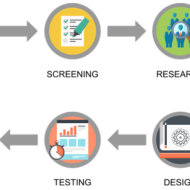
What Do You Mean by New Product Development? In business and engineering, new product development (NPD) is the complete process of bringing a new product to market. Innovate or Die: Product management should be viewed form a broader perspective by business firms, in that, it has to include new product development as part of the action plan, apart from appraising the existing product line, positioning them effectively and taking brand decisions wisely. “Innovate or die’, is the modern entrepreneurial slogan. Unless organizations innovate and introduce new products, they cannot survive in the competitive market. Strategies defining the organization’s future are built upon the portfolio of new products. Picture Cortesy: Coschedule Need for new product development: People always welcome change and new product development is an opportunity for the firms to meet the changes in consumer demands. They are a source of competitive advantage. Your new product may infuse a fresh lease of life to your sagging profits. New products may turn out to be the star performers of your firm and provide long term financial return on your investment. Some firms take the smart strategic choice of using the idle capacity of their plant for manufacture of a new product that may utilize the existing production and operation resources to an optimum level. They capitalize on research and development. Products that create a wave are a result of research on market trend and consumer preference. Firms can make it, if their research is customer-centric rather than product-centric. They provide opportunities for reinforcing or changing strategic direction. It is wiser to discontinue production of a product that does not find acceptance and divest the funds in a beneficial venture. They leverage marketing and brand equity. Big corporate firms while introducing new products make a big publicity, so that it can attract potential investors and consumers. They enhance the corporate image. You cannot expect a firm to make it big with a single product line or confined to one area of development. The growth of a company is evident only when it ventures into multifarious disciplines reflecting its capacity for expansion and diversification. Picture Courtesy: Staenz Also if a company grows, the growth of the stake holders is rest assured as the company would be in a position to offer decent dividends with bonus. Even if a growing company ploughs back its profits for expansion, it is again a good thing for the investors as further expansion obviously means growing profits. They affect human resources-a new product is perceived differently by different people. It is a need satisfying concept with benefit for buyers; a bundle of need satisfying features for marketers; a way to add value for intermediaries; an opportunity to design for R and D and a chance; to assemble and process for the production department. They meet environmental threats-Until recent times, products were not subjected to environmental evaluation, but the recent crises regarding global warming and pollution has been an eye opener for all nations which are enforcing much rules and regulations, demanding for production aimed at environmentally safe products. New product development is a multi-dimensional concept, inherent in most organizations. The process is initiated when the organizations are subject to market pressure and the firms are left with no choice other than to take up the challenge. A List of Productivity Terms Automation – The use of robots or other automatic equipment to do certain tasks Business Productivity – The amount of goods or services produced by a business from a set amount of resources Capital Goods – Manufactured or constructed items that are used...

Posted by Managementguru in Business Management, Organisational behaviour, Principles of Management
on Mar 3rd, 2014 | 0 comments
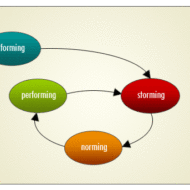
Group Dynamics Any effective group has three core activities: 1. Accomplishing its goals 2. Maintaining itself internally 3. Developing and changing in ways that improves its effectiveness. Let us now try to understand the various dimensions of an effective group that facilitate the above mentioned three core elements to function properly which provide a sense of direction to the productive group. a) Group goals: Must be clearly understood. Be relevant to the needs of the group members. Highlight the positive inter dependence of members. Evoke from every member a high level of commitment to their accomplishment. b) Communication: Must communicate their ideas and feelings accurately and clearly. Effective two way communication is mandatory for interaction c) Participation and Leadership: All should participate and all should be listened to. Share responsibilities that eases the burden. Increases the cohesiveness of the group. d) Appropriate decision making procedure: Balance between time and member resources. Flexible decision making to suit the needs of the situation. e) Power and Influence: · Should be equal · Based on expertise, ability and access to information and not on authority · Coalitions must be formed between group members on the basis of mutual influence and interdependence. f) Conflicts: · Are to be encouraged as they promote involvement in the group’s work, improve quality and creativity in decision making. · Minority opinions should be accepted and used g) Group Cohesion: · Needs to be high · Level of acceptance, support, and trust among the members decide how cohesive the group is h) Problem Solving: · Problems should be resolved with minimal energy and permanently · Existence of problems must be found out quickly and solutions should improve the effectiveness of group behavior i) Inter-personal effectiveness: · Needs to be high · It is a measure of how all the consequences of your behavior match your intention. ⇓ Picture Courtesy: 6 WAYS TO DEVELOP A WINNING TEAM CULTURE Group Cohesiveness: This is defined as the average resultant force acting on members to remain in a group. The characteristics or criteria that determine group cohesiveness are as follows: 1. Degree of dependency on the group: The greater the number of individual needs are satisfied, the greater the cohesiveness. 2. Size: If the size of the group interaction is low, it results in low cohesiveness. If the size of the group is small, the members tend to have free and more interaction, leading to high level of cohesiveness and vice versa. 3. Homogeneity: Where the interests and background of the group is similar, you find greater cohesiveness. 4. Outside pressure: Outside pressure minimizes internal conflicts leading to high cohesiveness. You find people responding with greater cohesiveness during times of natural disaster and calamities. 5. Competition: Competition between the members of the same group or intra group competition reduces cohesiveness but competition members of different groups or inter-group competition increases cohesiveness. Group Cohesiveness can be encouraged by the following ways: · Make the group smaller · Encourage agreement with group goals · Increase the time members spend together · Stimulate competition with other groups · Give rewards to groups rather than to a single member · Physically, isolate the group. ...
Posted by Managementguru in Business Management, Principles of Management
on Mar 3rd, 2014 | 0 comments
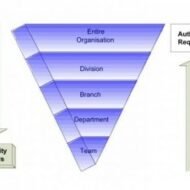
Centralization and De-Centralization Concepts CENTRALIZATION: The term “centralization” has several meanings: Centralization of Performance: Say, if the operations of a company is restricted to a single geographical location, it characterizes centralization of performance. Departmental Centralization: Specialized activities are carried out by a single department, say, maintenance of a whole plant, staff recruitment by HR department etc., Centralization as an aspect of management: This implies restricted delegation and exclusivity of decision-making by the top management. According to Allen, “Centralization is the systematic and consistent reservation of authority at central point in an organization.” According to Weihrich and Koontz, “Centralization (as an aspect of management) is the tendency to restrict delegation of decision-making. What are the special circumstances that force the managers to reserve authority and centralize decision making powers? 1. To facilitate personal leadership 2. To provide for integration 3. To handle emergencies 4. To utilize resources effectively and instantaneously. DECENTRALISATION: It is the tendency to disperse decision making authority in a structured and organized manner. It can be viewed as a philosophy rather than a principle where-in “discretion” plays a major role in deciding which decisions to push down into the organization structure and which to hold near the top. Capital expenditure, Investment analysis and major policy decisions have to be dealt with, by the top management. It is the systematic effort to delegate to the lowest levels of authority except that which can be exercised at central points. TYPES OF DECENTRALIZATION: Three approaches to the concept are: 1. PROFIT CENTRES 2. COST EXPENSE CENTRES 3. INVESTMENT CENTRES Profit Centre: Here the organization is split into divisions on a “product basis” and is given full authority to handle its own scheduled operations, right from placing orders to negotiating the sale of its finished products. Cost Expense Centre: Whenever it is easy to determine the cost of operations, cost centres are established. Cost centres run on “budgets” which acts as a control tool to run the units within the specified budgetary limits. Investment Centre: Useful in the case of big multi-product enterprises where product performance is measured by decentralizing the investment aspect. Each strategic business unit is responsible for the acquisition, use and disposition of fixed resources. Advantages of Decentralization: Managers and executives are relieved form excessive work pressure Even low level employees are involved in decision making thus bringing the decision making process closer to the scene of action. It facilitates product-diversification Creates an opportunity for learning Ensures effective control When a big organization is divided into relatively smaller units, it becomes flexible and also effects close control. Disadvantages of Decentralization: · Conflict arises between people belonging to different levels of the organization · Rising cost · Lack of co-ordination between production and marketing departments · No defined leadership Contingency Factors in Decentralizing: 1. Organizational goals 2. Organizational size 3. Geographical dispersion 4. Technical complexity of tasks 5. Time frame of discussions and decisions 6. Subordinates’ take on issues 7. Planning and control procedures 8. Environmental factors 9. Knowledge and experience of managers Effective Decentralization can be accomplished by · Establishing appropriate centralization · Developing efficient managers · Proper provision for communication and co-ordination · Establishing adequate controls Top management must be willing to delegate authority towards decision making; Middle management must be willing to accept responsibility that is being delegated. Only then effective decentralization is...
Posted by Managementguru in Business Management, Principles of Management, Training & Development
on Mar 2nd, 2014 | 0 comments

Manpower development today goes beyond simply filling positions – it’s about strategically planning, nurturing, and aligning human resources with the long‑term vision of the organization. It involves accurately determining both present and future workforce needs, while designing the right organizational structure to ensure the right mix of managers, specialists, and employees are in place to drive growth. Key Elements of Modern Manpower Planning 1. Present Workforce Analysis The first step in manpower planning is to assess the current workforce. HR teams collect data on employee demographics, qualifications, skills, training, and experience. Example: A tech company may analyze its developers’ coding skills, certifications, and project experience to identify gaps in AI or cloud expertise. Tools like HR analytics dashboards and talent management systems make this process faster and more accurate. 2. Manpower Inventory Chart A manpower inventory chart provides a clear picture of staffing levels and future talent pipelines. It helps HR leaders: Understand current staffing levels Identify employees ready for promotion Forecast internal talent supply Spot performance gaps for training Plan succession for retiring employees Resolve overdue promotions fairly Example: A retail chain may use this chart to plan for seasonal hiring, ensuring enough staff are available during holiday sales. 3. Job Evaluation and Job Analysis Job evaluation ranks roles within the organization, while job analysis defines the skills and responsibilities required. This ensures clarity and fairness in compensation and career progression. It highlights: Nature of work performed Methods and processes used Skills, education, and training required Interrelation of jobs across departments Work environment conditions Example: In a healthcare organization, job analysis ensures nurses, doctors, and administrative staff have clearly defined roles to avoid overlap and confusion. 4. Job Descriptions A modern job description is more than a list of duties—it’s a branding tool that attracts the right talent. It includes: Job title Core duties and responsibilities Authority and accountability Required qualifications and skills Example: A startup may highlight flexible work culture, innovation opportunities, and growth potential in its job descriptions to attract millennial and Gen Z talent. 5. Short‑Term and Long‑Term Goal Alignment Workforce planning must align with business goals. Short‑term goals may focus on immediate staffing needs for projects. Long‑term goals anticipate future skills required based on market trends and technology shifts. Example: An e‑commerce company may plan short‑term hiring for logistics staff during festive seasons, while long‑term planning focuses on AI engineers for predictive analytics. 6. Demand and Supply of Talent The demand for skilled talent is higher than ever. Organizations must balance internal talent supply with external recruitment. Inter‑departmental transfers may solve short‑term gaps. Long‑term solutions require strategic hiring, reskilling, and succession planning. Example: A manufacturing firm may reskill machine operators in automation technologies instead of hiring externally, ensuring loyalty and cost savings. Why Modern Manpower Planning Matters Ensures future‑ready workforce Builds employee engagement and retention Supports business scalability Aligns HR strategy with organizational...
Posted by Managementguru in Business Management, Organisational behaviour, Principles of Management
on Mar 2nd, 2014 | 0 comments
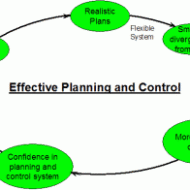
Principles of Planning and Forecasting The guidelines of principles of planning are as follows: 1. Principle of primacy of planning: As discussed earlier planning is the prime function of management and precedes all the other functions. 2. Principle of verifiable objectives: The objectives set must be clear, achievable and verifiable in order to attain a feasible management model. 3. Principle of planning premises: The contributing factors in the external environment are government policies, economic factors, market standing, and consumer preferences etc. that decide the success of planning. Planning is done based on these assumptions but nevertheless, all the factors external to the business have to be thoroughly analyzed to ensure concrete planning. 4. Principle of limiting factor: Cost is one of the major limiting factor; production cost has to be factorized to ensure economy of scale and potential resources needed for a business in the likes of men, material and other physical resources have to be taken into consideration. 5. The commitment principle: Planning and decisions whether short term or long term is valid only for a particular period. The long term plan is nothing but the future impact of today’s decisions. Decisions concerning new product development by a company aims at creating an impact for the next 15 years or so while decisions concerning sales target has to be accomplished on a periodic basis- monthly or quarterly. 6. Principle of flexibility: A plan should be flexible and give room for contingencies like losses incurred through unexpected events. 7. Principle of navigational change: Plans while suggested to have built-in flexibility are also subjected to periodical review in the light of environmental fluctuations. A business can not stick to a long term plan devised originally since it is equally important to check on events and expectations periodically. FORECASTING AND PLANNING: Forecasting is a management technique that relies on both past experiences and present assumptions to predict the future. Again this serves as an important premise for the planning process. The conditions of the external environment though out of one’s control, if properly estimated, can lead an organization to produce wonderful results. TYPES OF FORECSATS: Economic forecast: To gauge the general economic scenario and its effect on sales. Technological forecast: To predict what new technologies can be developed, when and how to bring feasibility to the operations involved. Competition forecast: To look into the competitor strength and tactics and know where one stands. Social forecast: To predict the attitude of people and social conditions. Supplier’s forecast: Reveals the response of suppliers. FORECASTING TECHNIQUES: 1. Quantitative time series analysis: Monthly sales data is plotted in a chart and the past data helps in consolidating the sales volume and fluctuations in sales. Sales trend is determined and the assumption is that, the future will reflect the past and present trend and hence can be projected. If there is a lull in sales, reasons for the decline can be known by taking feedback from various quarters like, suppliers, consumers and employees. 2. Derived forecast: The forecast done for a specific purpose may be reused for another purpose. For example a census data can help you to determine the demography of a particular geographical area that might help you to reach your target customers. 3. Casual methods: If the underlying cause for the variable can be determined, the forecast can be arrived mathematically and produce quite accurate results. Social media marketing is very popular now a days and instantly you know how many hits are received for a particular product and the ratio of conversion into sales. 4. Brain storming: People with knowledge and expertise assemble in order to discuss the pros and cons of a particular idea, be it the launch of a new product, product promotion or withdrawal of a product line. 5. Delphi method: In this method, each and very expert is contacted independently and opinions are drawn...