Posted by Managementguru in Business Management, Organisational behaviour, Principles of Management
on Mar 6th, 2014 | 0 comments
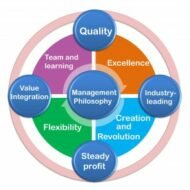
Corporate Philosophy of Management CORPORATE PHILOSOPHY OF MANAGEMENT calls for creating a framework of values, beliefs and ethical standards which are considered to be vital for an effective management. They must be embedded in formal and informal philosophical statements which are then communicated to the fraternity of that organization. From a broader perspective, the LEADER has to have a VISION as to where he is heading his company in the next three to four years. Corporate Objectives provide vision as well as direction and map for bold decisions to be taken regarding NEW MARKETS MARKET SHARE PRODUCTS SERVICES etc. , Now the organization is in a position to decide and prioritise the VALUES AND COMPETENCIES it expects from its managers. For example, if the situation favors the business expansion to new markets, say, European or Asian, then an organization has to develop competence in areas like LANGUAGE AND CULTURE, besides marketing and business skills. Different Philosophies of Management: Well, you might have been inspired with JAPANESE PHILOSOPHY OF MANAGEMENT, EASTERN OR WESTERN PHILOSOPHY OF MANAGEMENT t. But what is the fun? If you don’t have A SOUND MANAGEMENT PHILOSOPHY of your own, to simply put it, you don’t have a broad set of principles to back up your management development process which is a generic one. Ideally speaking, you should be able to develop a concrete SYSTEM that is made up of FOOL PROOF policies and procedures; try to develop a professional team of executives who can take up your vision to the next level; these measures will prove worthwhile in the long run. You are left without any choice but to develop “truly” INTERNATIONAL MANAGERS who could transcend nationally and the location of any specific job consideration. This is what Ideal management philosophy means to me, A holistic vision of the future A solid set of principles(values, beliefs) Sound policy definition Management development programmes Autonomy to my work force Always “yes “to new technology Development of women managers Flexible leadership Social responsibility Contribution to the growth of my Country’s economy Strategic Perspective: Major environmental shifts now demand a more strategic perspective from those who manage and lead in organizations; “GLOBALISING” in the quest for major market share brings in new opportunities for growth and prosperity. Organizations are now espousing values that regard people, not as costs to be minimized, but AS “ASSETS TO BE MAINTAINED AND DEVELOPED.” An open systems approach of management is likely to overcome many of the problems created by the piecemeal approach. Instead of looking at management development in isolation, see it as an integral part of a wider organizational system that takes care of the processes through which people working for the firm take care of themselves leading to self...

Posted by Managementguru in Business Management, Organisational behaviour, Principles of Management
on Mar 6th, 2014 | 0 comments
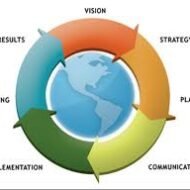
Critical Factors Influencing Corporate Management A corporate management is said to be capable only if it is able to integrate, coordinate and direct the functional capabilities towards overall objectives and common goals of a firm, that have a bearing on an organization’s capacity and ability to implement its strategies. Multitudinous factors affect the functioning of corporate general management system. It differs with each organization with differing objectives and mode of operations. Key Factors or Contributors: The firms must evolve an effective system for corporate planning. The objectives must be realistic and achievable and clear and complete communication of plans to various levels of organization helps in execution of action plans by the respective departments. A pucca management information system is necessary that integrates all the levels through a network of computers, facilitating information processing and task implementation. If the firm is oriented towards a god deal of risk-propensity, chances of rewards are also quite high. You cannot beat your competitors unless you possess a better shade of entrepreneurship in you than others. Competency development backed up by strategy formulations, in the wake of challenges and opportunities in the external environment is well appreciated. Why everybody always talk about strategy? It is one thing that warrants for a sure success, it implies that you are smart enough to think ahead of time, what others have failed to. Don’t you want to set a path forward for the future generations to come? Values that are unique to your organization add to the image of your company. Say, if you project “quality”, as your prime value system, definitely it is going to attract consumers who are very particular about quality unmindful of the price. Slowly the idea gathers momentum and your company’s image gets a boost. But don’t forget that you have to fulfill your commitments in terms of quality without any compromise. Reward systems must be worked out to gear up the morale of top managers who are the achievers of your management objectives. Their track records and degree of commitment should be analyzed to decide on pay and promotions. A favorable organizational climate is inevitable for the organization to progress in the desired direction without any internal politics and power struggles. The role of top management is very crucial in that, it has to identify people with vested interests and bring them back into the groove by making necessary changes in the organization structure or go for weeding out actions if things go out of control. Ultimately, the overall objectives of the organization is what that matters, and people must be trained to accept the organizational changes which form a part of the developmental procedures of management. Social responsibility is much talked about these days, and the corporate firms are in a position to discharge their duties pertaining to social welfare, as part of their corporate management programme.It has become a regular feature of the management process to part with a share of their profit towards a social cause. Corporate management is a comprehensive process that covers all aspects of the management with growth as its motto and social conscience as its...
Posted by Managementguru in Business Management, Decision Making, Principles of Management
on Mar 6th, 2014 | 0 comments
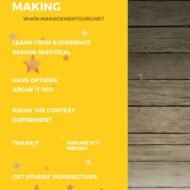
A Process of Intelligence Effective Decision making is a process of Intelligence, Design and choice activities and “is a central part of the management process”. Decisions are hard to make but once decided there should be no second take. The following steps are involved in the process of Decision-making: 1. Recognizing the problem 2. Deciding priorities among problems 3. Diagnosing the problem 4. Developing alternative courses of action 5. Evaluating alternatives 6. Selecting the best alternative 7. Effective implementation and follow-up action. Recognizing the Problem– Herbert A Simon calls this step as an “intelligent activity“. It is important to find out whether there is any deviation from the past experience. For e.g. Sales might decrease, expense might decrease, sometimes there might be deviations from the plan, sales budget, and competitors may outperform by improved systems. Deciding priorities among the problems: A manager would face many problems at the same time. He should not be bogged down with small and unimportant problems. Some problems can be easily solved by the sub-ordinates. Some may not be important. A manager must see that – he selects carefully the most important problem. Peter Drucker says that “once the right problem is perceived then half of the problem is solved”. A manager must diagnose carefully by asking the following questions. a. What is the real problem? b. What are the causes and effects of the problem? c. Is this problem very important? d. Can they be solved by sub-ordinates? e. Which is the right and most important problem to be solved? Diagnosing the Problem: After choosing the right problem the manager must now start diagnosing the problem. There is no simple answer to the question of how to diagnose the problem, because every individual differs in his or her own way of diagnosing the problem depending on the different background orientations and training. A manager must systematically analyze the problem for identifying the alternative causes of action. Developing Alternative Courses of Action: This step is creative and innovative where a manager analyzes from all perspectives Sometimes a manager can also use a technique called “brainstorming” where a few individuals discuss at length the various possible available alternatives. First of all, a manager must be thoroughly familiar with the problem. This is called saturation. Later, he must think about the problem from several view-points which is called deliberation. Sometimes the manager may not get into the crux of the problem, i.e. there may not be any fruitful result of deliberation, and then the manager might temporarily switch off his conscious search and relax. This process of realization is called incubation. Then after sometime, a flash of light may occur, and the manager may get some insights and ideas. This stage is called illumination. In the last stage, which is called accommodation, the manager resynthesises his ideas into a usable proposal. Evaluating the Alternatives: The manager must now give proper weightage to the positive and negative aspects of the alternatives and evaluate by using some criteria like (a) time; (b) cost; (c) risk; (d) results expected; (e) deviations anticipated; (f) resources available for implementation. Selecting the Best Alternative: This is the most important step where the manager selects the best alternative that will yield maximum profits or results with minimum cost, input or resources. To put it in simple terms, the solution should be able to solve the problem in the best possible way. Effective Implementation and Follow-up Action: Any decision without proper implementation becomes futile and hence proper care must be taken by the manager to pool resources and start implementing the decision taken. In large organizations, follow-up procedures are available in the system...
Posted by Managementguru in Business Management, Human Resource, Principles of Management
on Mar 2nd, 2014 | 0 comments
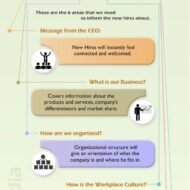
Objectives and Functions of HRM Human Resource Management is very challenging because of the dynamic nature of the people and it is not only managing men but involves administering a social system. According to Dale Yoder “Man power management is the function or activity in directing working men and women in maximizing their satisfaction in employment.” George R. Terry says, “Personnel management is concerned with the obtaining and maintaining of a satisfactory and satisfied work force.” OBJECTIVES OF HUMAN RESOURCE MANAGEMENT: 1. Social Objectives: a) Facing the challenge of unemployment and providing people with maximum employment opportunities is the first and foremost priority of countries like India where there is pressure of population growth. b) The employees must be able to derive maximum satisfaction from the work performed. c) The system should facilitate harmony and co-operative endeavor for one and all. 2. Personal Objectives: Job satisfaction and rewards in the form of pay, promotion and recognition is aimed at, on the part of employees. This can be achieved by providing adequate remuneration, opportunities for advancement, facilities for training and development, job security and proper work. 3. Enterprise Objectives: This can be achieved by selecting the right people for the right job, empowering them through training, development and participation. FUNCTIONS OF HUMAN RESOURCE MANAGEMENT: 1. Planning: Assessment of future man power requirement is done with the help of man power inventory chart followed by the recruitment and selection process. A clean job description is needed to lure people with the right skills for the right position. It is the responsibility of the manager of a firm to lay down specifications of the qualities and skills required by the workers and determining sources from where the workers are to be recruited. Selection is done by means of written test and personal interviews. 2. Organizing: This involves proper designing of organizational structure, the inter relationship between jobs, establishing smooth channels of communication, assignment of authority, responsibility and creating accountability, establishing line and staff relationship etc. 3. Directing: Issuing orders and instructions down the line and motivating the work force to carry out those instructions satisfactorily. Positive motivation in the form of financial and non-financial incentives, a good working environment is essential on the part of the management. 4. Controlling: The motive is to ensure that performance of each worker coincides with the plans or standards. Bench marking, Total quality management and Six sigma are some of the popular concepts of standardization. → Scope and Characteristics of...
Posted by Managementguru in Organisational behaviour, Principles of Management
on Mar 1st, 2014 | 0 comments
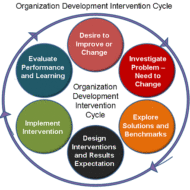
Organizational Development Training and development is an important aspect of human resource development. However the traditional methods and approach of T&D has its own limitations in that the focus is on individual development and behavior modification. This has seldom produced organizational development and hence in 1960’s an integrated approach called the ‘OD’ or organizational development was developed. Meaning and definition of organizational development (o.d.) “A process used to enhance both the effectiveness of an organization and the well being of its members through planned interventions.” OD is the systematic application of behavioral science knowledge for the purpose of improving productivity, efficiency, effectiveness and overall health of the total organization. The applied interventions attempt to modify the beliefs, assumptions, values, attitudes and standards of both the individuals and groups thereby transforming the organizational culture for the betterment of system as a whole. FEATURES OF ORGANIZATIONAL DEVELOPMENT: HUMANISM: The focus is on the employees, their attitude and inter-personal relationships. An organization is a network of people whose emotions, outlook and cohesiveness are more important than monetary and other physical aspects because it is they who take the organization to the next higher level. This is made possible by open communication, free and frank discussions of problems with employees by the managers, inter-personal trust and above all, sense of belongingness, comradeship and team spirit. PROBLEM-SOLVING NATURE: The purpose of an OD intervention is to solve a problem. The employees themselves are given the opportunity to identify the problem by Survey Feedback and find a suitable solution through analysis. This is a cyclic process and also called as “Action Research”. SYSTEMS APPROACH: OD is concerned with not the structure or persons per se, but with the interplay of structure and persons. LEARNING THROUGH PARTICIPATION: The participants of the learning process are none other than the employees. They unlearn old things and learn new things by identifying, analyzing and finding the right solution to the bottlenecks. TOP MANAGEMENT SUPPORT AND INVOLVEMENT: OD intervention is successful only when top management involvement is full-fledged and ensures participation from all levels of managers and all departments in such an exercise. MULTIPLE INTERVENTIONS: Intervention takes place at various levels, individual as well as group and the purpose is molding desirable work culture and leadership styles suitable for the organization. ROLE OF CONSULTANT: Employing an external consultant will be more appropriate as he is less susceptible to influences and more objective. He acts as the change agent facilitating co-ordination and stimulation. CONTINGENCY PLANS: Alternate plans are also devised if in case the original plan fails; the idea is one that of trial and error, hence the need for contingency plans and approach to OD problem. RENSIS LIKERT’S OD FRAMEWORK: Rensis Likert’s 4 system OD framework aims at moving towards truly participative system. Care and caution must be adhered to steer the system gradually from where the organization now works. He also introduced diagnostic analysis to find what causes the current problem. His three part diagnostic analysis includes: A. OUTPUT CAUSES: Low productivity, absenteeism, declining profit B. INTERVENING CAUSES: Organization structure, control, policy and leadership C. ROOT CAUSES: Attitude, motivation level, empowerment and organization culture Tips for Organization Development OD CULTURE: “The OD paradigm values human and organizational growth, collaborative and participative processes and a spirit of enquiry.” Brown and Covey have made some attempts to identify OD values from the following: Norms and Values: Respect for people: People are the most important of all resources. So giving due respect and importance to people induces the creativity and innovation in them. Trust and Support: Trust, openness and supportive climate improve organization culture and empowerment. Power Equalization: This emphasizes hierarchical authority, control and centralization. Confrontation: Do not...