Posted by Managementguru in Entrepreneurship, Motivation, Quotes and Quotes Only, Startups
on Jan 27th, 2015 | 0 comments

#Startup Quotes for Starters is an interesting compilation of the innumerable quotes strewn over the internet especially for the starters. It is always better to follow the foot steps of successful people because they would be the “Enlightened Masters” of the challenges and hurdles on the road to success. #Startups has become a “Buzz Word” in the business environment and the very word “startup” can get your tweets more favorited. The very purpose of a startup is to bring an innovative idea into reality- be it a tech or a service based startup. I hope to inspire the fresh set of startup #entrepreneurs with the following quotes right from Thomas Alva Edison to #Larry Page. Get Inspired and Keep Going… 1. “Twenty years from now you will be more disappointed by the things that you didn’t do than by the ones you did do. So throw off the bowlines. Sail away from the safe harbor. Catch the trade winds in your sails. Explore. Dream. Discover.” – #Mark Twain 2. “When you find an idea that you just can’t stop thinking about, that’s probably a good one to pursue.” – Josh James, Omniture CEO and co-founder 3. “If you just work on stuff that you like and you’re passionate about, you don’t have to have a master plan with how things will play out.” –Mark Zuckerberg, Facebook founder 4. “There’s lots of bad reasons to start a company. But there’s only one good, legitimate reason, and I think you know what it is: it’s to change the world.” –Phil Libin, Evernote CEO 5. “User experience is everything. It always has been, but it’s undervalued and underinvested in. If you don’t know user-centered design, study it. Hire people who know it. Obsess over it. Live and breathe it. Get your whole company on board.”–Evan Williams, Co-Founder, Twitter 6. “A pessimist sees the difficulty in every opportunity; an optimist sees the opportunity in every difficulty.” –Winston Churchill, British Prime Minister 7. “What do you need to start a business? Three simple things: know your product better than anyone, know your customer, and have a burning desire to succeed.” –Dave Thomas, Founder, Wendy’s 8. “Don’t take too much advice. Most people who have a lot of advice to give — with a few exceptions — generalize whatever they did. Don’t over-analyze everything. I myself have been guilty of over-thinking problems. Just build things and find out if they work.” – Ben Silbermann, Pinterest founder 9. “We are really competing against ourselves, we have no control over how other people perform.” – Pete Cashmore, Mashable founder and CEO 10. “I knew that if I failed I wouldn’t regret that, but I knew the one thing I might regret is not trying.” –Jeff Bezos, Amazon Founder and CEO 11. “Your work is going to fill a large part of your life, and the only way to be truly satisfied is to do what you believe is great work. And the only way to do great work is to love what you do.” –Steve Jobs, Co-Founder, Chairman and CEO, Apple 12. “No matter how brilliant your mind or #strategy, if you’re playing a solo game, you’ll always lose out to a team.” –Reid Hoffman, LinkedIn co-founder 13. “If you take a good idea and great execution, you will get much farther than taking a great idea with poor execution.” – Rohini Chakravarthy, Inksedge 14. “Invest in startups. Your college network can be very effective in finding them.” – Ankit Gupta, Pulse 15. “As a startup CEO, I slept like a baby. I woke up every 2 hours and cried.” – Ben Horowitz,Co founder, Opsware 16. “Best startups generally come...

Posted by Managementguru in Business Management, CSR, Entrepreneurship, Human Resource, Leadership, Strategy
on Dec 4th, 2014 | 0 comments
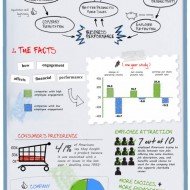
What it takes to be a Leader What is #Corporate Social Responsibility? High performance is generally measured against key business imperatives including #competitive advantage, #sales, #talent management, #operational efficiency, #return on investment and profitability. It is no longer adequate for a corporation to revel in economic prosperity in isolation from those agents impacted by its actions. Today, a new element of leadership is making an intense difference in weighing business performance: Corporate Social Responsibility. The late 1990s and the early 2000s saw an uptake in businesses giving proceeds or providing volunteers to causes related to their brands. Some called it “corporate social responsibility”; others called it “corporate #philanthropy” or “#corporate citizenship.” Regardless of its title, it was a way for business to increase visibility while raising funds for good. The spotlight is on both increasing the firm’s bottom line and being a good corporate citizen. Keeping abreast of global trends and remaining committed to financial obligations to deliver both private and public benefits have compelled organizations to restructure their frameworks, rules, and business models. Where does the roots of CSR lie? Although the #roots of CSR lie in altruistic activities (such as donations, charity, relief work, etc.) of corporations, globally, the concept of CSR has evolved and now embraces all allied concepts such as triple bottom line, corporate citizenship, philanthropy, #strategic philanthropy, #shared value, #corporate sustainability and business responsibility. You might be wondering what is “Triple bottom line?” (abbreviated as TBL or 3BL) – The term coined by John Elkington in 1994, incorporates the notion of sustainability into business decisions. The TBL is an #accounting framework with three dimensions: social, environmental (or ecological) and financial. “A plethora of research points to a majority of stakeholders agreeing that CSR is a ‘must do’,” and 67% of consumers say they are more likely to buy products and services from a company if they know it supported good causes. Smart Corporations: As a key component in business #strategy and execution, CSR is playing a crucial role in helping organizations to be seen as leaders. Smart corporations are allocating increasing internal resources to CSR investments that include clear objectives and furnish measurable social outcomes. India is a country of multitude contradictions. On the one hand, it has grown to be one of the major economies in the world, and an increasingly important player in the emerging global order, on the other hand, it is still home to the largest number of people living in absolute poverty (even if the proportion of poor people has decreased) and the largest number of malnourished children. This is the sad state of uneven distribution of the benefits of growth which many believe, is the root cause of social unrest. Companies too have been the target of those disconcerted by this lop-sided development and as a result, their contributions to society are under severe scrutiny. Many companies have been astute to sense this development, and have responded proactively while others have done so only when advocated. What it takes to be a Leader-2...
Posted by Managementguru in Business Management, Entrepreneurship, How To, Human Resource, Startups, Strategy
on Nov 7th, 2014 | 0 comments
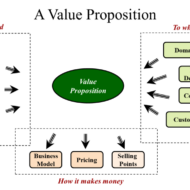
Startup Success – A Clear and Good Value Proposition “You don’t get a second chance to make a first impression” “The strategy is to first know what you don’t know, the tactic is to grind, and the value is to remember: there are plenty of places to innovate.” -David Friedberg, Founder @ Weatherbill A great value proposition is indispensable for any business hoping to clearly communicate to customers why they are different, better, and worth purchasing from. Why Your Value Proposition Matters? “A problem well stated is a problem half solved.”-Charles Kettering The problem is, many companies just can’t seem to nail down exactly what a value proposition is and what it should say. A value proposition is a clear statement of the tangible results a customer gets from using your products or services. Its outcome is focused and stresses the business value of your offering. Let the statement you make come from your heart, let it represent the very idea behind your business, let it highlight the benefits you plan to give your customers, let it awaken the entrepreneurial spirit and make you want to do something more for the end users, let it be straight but sharp. What makes a good value proposition? Clarity! It’s easy to understand. It communicates the concrete results a customer will get from purchasing and using your products and/or services. It says how it’s different or better than the competitor’s offer. It avoids hype (like ‘never seen before amazing miracle product’), superlatives (‘best’) and business jargon (‘value-added interactions’). It can be read and understood in about 5 seconds. I basically like what Pinterest has to offer- their unique and simple pin boards to organize our thoughts around a subject. I feel happy when I visit Pinterest and exploring various pins gives me immense satisfaction. The way they have developed their business around the mindset of people is something brilliant. It’s attractive to women. To designers. To photographers and artists. To mom’s who cook, decorate or plan events. That’s kinda niche-y. Some Interesting Value Proposition Quotes: A unique value proposition is a single, clear compelling message that states why you are different and worth buying – Steve Blank Price is what you pay, Value is what you get – Warren Buffet If people like you they will listen to you, but if they trust you, they’ll do business with you – Unknown Live authentically. Why would you continue to compromise something that’s beautiful to create something that is fake- Steve Maraboli You do not really understand something unless you can explain it to your grandmother – Albert Einstein <a HREF=”http://ws-in.amazon-adsystem.com/widgets/q?rt=tf_cw&ServiceVersion=20070822&MarketPlace=IN&ID=V20070822%2FIN%2Fmanagementgur-21%2F8010%2F62da8e52-21d7-4d09-9aff-da04d242f556&Operation=NoScript”>Amazon.in...
Posted by Managementguru in Business Management, Decision Making, Entrepreneurship, Human Resource, Motivation, Quotes and Quotes Only
on Sep 25th, 2014 | 0 comments

Best Leadership Quotes “Only one man in a thousand is a leader of men — the other 999 follow women. Groucho Marx The Leader In You – #Dale Carnegie “Leadership is the capacity to translate vision into reality. – Warren Bennis Developing the Leader Within You – “You don’t lead by pointing and telling people some place to go. You lead by going to that place and making a case. – Ken Kesey Awaken the Leader in You – Mitesh Khatri “No man will make a great leader who wants to do it all himself, or to get all the credit for doing it.– Andrew Carnegie How To Win Friends Influence People – “Outstanding leaders go out of their way to boost the self-esteem of their personnel. If people believe in themselves, it’s amazing what they can accomplish. – Sam Walton The Leader in You – Peter Miller “To lead people, walk behind them.” – Lao Tzu “The best leader is the one who has sense enough to pick good men to do what he wants done, and the self-restraint to keep from meddling with them while they do it – Theodore Roosevelt “The challenge of leadership is to be strong, but not rude; be kind, but not weak; be bold, but not bully; be thoughtful, but not lazy; be humble, but not timid; be proud, but not arrogant; have humor, but without folly– Jim Rohn “Leadership is a potent combination of #strategy and character. But if you must be without one, be without the strategy – Norman Schwarzkopf “Successful leaders see the opportunities in every difficulty rather than the difficulty in every opportunity – Reed Markham “The problem with being a leader is that you’re never sure if you’re being followed or chased – Claire A. Murray “Do not follow where the path may lead. Go instead where there is no path and leave a trail – Harold R. McAlindon “Learn to see things backwards, inside out, and upside down – John Heider, Tao of Leadership “The real leader has no need to lead- he is content to point the way. #Henry Miller “A leader is a dealer in hope – Napoleon Bonaparte From Manager to Leader “If your actions inspire others to dream more, learn more, do more and become more, you are a leader – John Quincy Adams “The art of leadership is saying no, not yes. It is very easy to say yes – #Tony Blair “Never tell people how to do things. Tell them what to do and they will surprise you with their ingenuity – George Patton “Leadership does not always wear the harness of compromise – Woodrow Wilson “Take time to deliberate; but when the time for action arrives, stop thinking and go in – Andrew Jackson “To be a great leader and so always master of the situation, one must of necessity have been a great thinker in action. An eagle was never yet hatched from a goose’s egg – James Thomas “A good general not only sees the way to victory; he also knows when victory is impossible – Polybius “Leadership is being the first egg in the omelet – Jarod Kintz “Leadership consists of nothing but taking responsibility for everything that goes wrong and giving your subordinates credit for everything that goes well – Dwight D. Eisenhower “##management is doing things right; leadership is doing the right things – Peter F. Drucker...
Posted by Managementguru in Business Management, Decision Making, Human Resource, Motivation, Strategy
on Aug 20th, 2014 | 0 comments
Why Strategic Plans Fail What are Strategic Action Plans? Action plans refer to definite actions that are related to either short- or longer-term strategic goals. Action plans should include details of resource commitments, allocation and time horizons for accomplishment. Action plan development represents the key stage in planning that facilitates effective communication of plans throughout the organization followed by resource planning and deployment. Action plans are also referred to as projects, strategies, tactics, or initiatives. Plans in paper may look more creative and feasible in nature; in reality it is a big quest unanswered. Are executives showing the same kind of enthusiasm in giving shape to the plans they charted out in paper? Most plans fail or do not give the expected optimum results and the reasons attributed may be listed out as follows: 1. Authority is delegated but Responsibility is forgotten: Senior management executives are the STRATEGIC DECISION-BRAHMAS obviously but do they demonstrate what needs to be done? Demonstration is one of the powerful forms of communication and if the strategies are only to be communicated down the line and not to be followed by the senior officials how do you expect your team to perform efficiently? 2. Confusion between strategy and Ideas: An idea is a conceptual construct about a particular thing. It is more abstract in nature. But when it comes to strategy, you need to have a solid FUTURISTIC action plan that is bound to give you the desired results in the long term. The elements essential for a good action plan are: Availability of Resources (Men, Material and Money)Efficient Resource Allocation to the various Strategic Business UnitsProper DeploymentRegular Follow-up until accomplishment of goalsMinor Modification of plans in accordance with the macro environment (legal, economic, financial etc.,) 3. Dis-Orientation of Senior Leaders: If a senior leader reaches that higher position through internal promotion, he loses touch with day-to-day activities though he has a strong contextual understanding of the business. If a senior management leader happens to reach the top through external recruitment, it takes time for him to understand the business and the nature and needs of the organization. Only few leaders are capable of devising action plans that exactly nails the problem-situation (as we all know when an organization is looking for a turn around, the first blow is to the CEO of the organization). 4. Laissez Faire attitude doesn’t work out for strategic action plans: A senior leader has to monitor an action plan from the start till the end until the expected result is achieved. No strategy succeeds without a visionary in the background. The passion that a leader exudes is overwhelmingly infectious and motivates the team to complete a project. Here the leader is the initiator who is involved throughout strategic planning process so that momentum is sustained during the critical transition from planning to action. Follow ManagementGuru Net’s board Strategic Management – The Inevitable on Pinterest. 5. There might be one good goal but definitely no one good strategy: Understand strategies are subjected to change in accordance with the internal and external environment. Say, you have invested quite a good amount of money in shares of a particular reputed company and you come to know that there is a senior level management leadership change and feelers are that prices are likely to crash. What will you do? Just being able to conceive bold new strategies is not enough. The management must also be able to translate its strategic vision into concrete steps that is “getting things...