Posted by Managementguru in Business Management, Human Resource, Labor Management, Principles of Management
on Mar 10th, 2014 | 0 comments
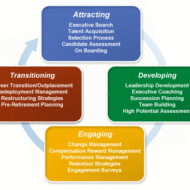
Dimensions of Human Resource Management I would like to brief you on some of the key aspects that mark the paradigm shift in the HR environment towards better management prospects. 1. The Human Resource function has shifted its focus to a much wider canvas that includes Empowerment of EmployeesRestructuring the Organisation and so on. 2. A range of HR sub-systems are involved in Planning The NumbersTypes And Skills Of HrEnsuring Their AvailabilityPlacing In The Right JobPromoting And Nurturing Their Mental HealthHelping Them Develop Special Talent And Skills 3. Human Resource is considered as an “investment” and no more an “expenditure”. Investment in TrainingRe-Training AndContinuous Learning On The Job develops the skills and competences of managers and employees and prove to be an useful investment. 4. The concepts of Learning Organisations AndTeam-Building serves a basis for “Competitive advantage” and “Motivating the employees.” 5. Values that are stressed upon are Co-OperationHarmonisationSynergyTrustBeing Pro-ActiveCollaboration 6. Strategy: VisionMissionObjectivesGoals– How these can be achieved? The techniques that are basically holistic in nature can solve the purpose. Such techniques involve SEWA– Self mastery, Empathy for workers, Worker-directedness and Achievement in performanceABO-Action by Objective Nine Dimensions of an Effective HR Department: What is the reputation of the HR department?What are the criteria (deliverables) that shape HR work?What is the mission or strategy of the capabilities – focused HR department?How is the HR department organised? How does HR facilitate the definition and creation of organisation capabilities?How do we make better HR investment and choices?How do we create HR practices?How does HR go about doing its work? What do HR professionals need to be, know, and do to be effective? Let us make a sincere comparison between the past and the present in terms of HR perspective These techniques produce performers who find their way through any set of given problems, manage themselves and lead the team to a stae of self- realisation. Old model vs New model 1. Job was the basic unit/ Team is the basic unit 2. Relations with environment there handled by the individuals/ Densely networked with environment 3. Information flow was vertical/ now it is vertical, horizontal and holistic 4. Many layers of management / Organisations have become flat 5. Emphasis on structures/ Emphasis on process and literally virtual organisations have evolved 6. Career path upward and linear/ career path lateral and flexible 7. Standardised evaluation and reward system/ Customised evaluation and reward system 8. Ethnocentric/ International 9. Single strong culture/ Multicultural and diversity of viewpoints and...

Posted by Managementguru in Business Management, Entrepreneurship, Human Resource, Leadership, Organisational behaviour, Principles of Management
on Mar 9th, 2014 | 0 comments
Profile of a successful leader Adaptive Capabilities: Leaders need to radically change their mindset so as to stand the test of time; but the core leadership attributes like vision or creativity, intelligence, commitment, and a healthy dose of luck still continue to define the pre-requisites of success. Integrity of Character is most important when talking about successful leadership. The philosophical undercurrent is that “Be Good, Do Good” and you will be good. The motive must be devoid of mistakes though there is room for mistakes in judgment. Leaders must have a clear vision and be able to communicate this vision to others so that it becomes a shared vision and everybody willingly contributes in fulfilling the vision. Six ‘C’s or six criteria that determine a leader’s credibility Conviction Character Care Courage Composure Competence Cross-Functional Expertise – Acquisition of knowledge should make a leader humble and flexible and gaining knowledge must be seen as a life long experience rather than collection of voluminous data or skills. A leader will try to apply his broad functional knowledge and expertise in the right places and the results will be definitely magnificent. A leader must look into the possible options rather than to plan, the possible rather than the perfect, involvement instead of obedience. Change is the only entity that remains unchanged and it is inevitable for the leaders to consider change as the core element of growth. With accelerated pace of change in the economic, political and socio-cultural environment, leaders not only need to acquire new knowledge and skills but they also need to unlearn many of the things that have out-grown their purposes. Leaders should follow the CODE OF PRIDE to motivate the workforce. P– PROVIDE FOR A POSITIVE WORKING ENVIRONMENT R– RECOGNISE EVERYONE’S EFFORTS I– INVOLVE EVERYONE D– DEVELOP SKILLS AND POTENTIAL E– EVALUATE AND MEASURE CONTINUOUSLY In large corporate organizations, the leader must be willing to share power and control so that leadership is encouraged at various levels. Successful leaders are those who are self-motivated by setting their own standards and compete with themselves. Innovation is the need of the hour What do you mean by innovation? Creating something new or modifying the old one. Here the term innovation implies the change in the “THOUGHT PROCESS” of leaders who are able to turn a crisis into an opportunity. Also called as “THINKING OUT OF THE BOX” where a leader finds new application for old ideas which cannot be discarded or dis-regarded. “You must learn from your past mistakes but not Lea(r)n on your past successes”. High achievers take moderate risks calculating the circumstances and they rely on their own abilities unlike low achievers who invariably like to minimize risks or take wild and irrational risks. Running a corporate business has become more like an experiment since we cannot control or predict the future. It is highly unstable and unpredictable. So leaders have to cope up with this non-linear force acting in the external environment building up pressure. Leaving things as they are can be just as predictable as changing everything, you lose or win both ways. Now let us look at some of the definitions of Leadership 1. “Leadership is generally defined as influencing people so that they will strive willingly towards the achievement of group goals.”- Koontz and O’Donnell 2. “Leadership is the lifting of man’s visions to higher heights, the raising of man’s performance to higher standards, the building of man’s personality beyond its normal limitations.”- Peter F.Drucker 3. “Leadership is the ability to secure desirable actions from a group of followers voluntarily without the use of correction.”- Alford and Beatty 4. “Leadership refers to the quality of the behavior of individuals where by they guide people on their activities in organized efforts.”- Chester I.Bernard Behavioral Commitments of a Leader: Challenging the process Challenging the status quo and act as radical change agents Inspiring others by being pioneers, instigators, navigators and learners Showing risk-taking ability,...
Posted by Managementguru in Business Management, Organisational behaviour, Principles of Management
on Mar 6th, 2014 | 0 comments
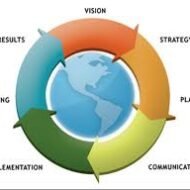
Critical Factors Influencing Corporate Management A corporate management is said to be capable only if it is able to integrate, coordinate and direct the functional capabilities towards overall objectives and common goals of a firm, that have a bearing on an organization’s capacity and ability to implement its strategies. Multitudinous factors affect the functioning of corporate general management system. It differs with each organization with differing objectives and mode of operations. Key Factors or Contributors: The firms must evolve an effective system for corporate planning. The objectives must be realistic and achievable and clear and complete communication of plans to various levels of organization helps in execution of action plans by the respective departments. A pucca management information system is necessary that integrates all the levels through a network of computers, facilitating information processing and task implementation. If the firm is oriented towards a god deal of risk-propensity, chances of rewards are also quite high. You cannot beat your competitors unless you possess a better shade of entrepreneurship in you than others. Competency development backed up by strategy formulations, in the wake of challenges and opportunities in the external environment is well appreciated. Why everybody always talk about strategy? It is one thing that warrants for a sure success, it implies that you are smart enough to think ahead of time, what others have failed to. Don’t you want to set a path forward for the future generations to come? Values that are unique to your organization add to the image of your company. Say, if you project “quality”, as your prime value system, definitely it is going to attract consumers who are very particular about quality unmindful of the price. Slowly the idea gathers momentum and your company’s image gets a boost. But don’t forget that you have to fulfill your commitments in terms of quality without any compromise. Reward systems must be worked out to gear up the morale of top managers who are the achievers of your management objectives. Their track records and degree of commitment should be analyzed to decide on pay and promotions. A favorable organizational climate is inevitable for the organization to progress in the desired direction without any internal politics and power struggles. The role of top management is very crucial in that, it has to identify people with vested interests and bring them back into the groove by making necessary changes in the organization structure or go for weeding out actions if things go out of control. Ultimately, the overall objectives of the organization is what that matters, and people must be trained to accept the organizational changes which form a part of the developmental procedures of management. Social responsibility is much talked about these days, and the corporate firms are in a position to discharge their duties pertaining to social welfare, as part of their corporate management programme.It has become a regular feature of the management process to part with a share of their profit towards a social cause. Corporate management is a comprehensive process that covers all aspects of the management with growth as its motto and social conscience as its...
Posted by Managementguru in Entrepreneurship, Human Resource
on Feb 25th, 2014 | 0 comments

Who is an entrepreneur? An entrepreneur is one with long term vision, creativity, uniqueness and the most conspicuous feature is undoubtedly his risk taking ability. He embarks on uncertain investments and also possesses an unusually minimal level of uncertainty aversion. He always comes out with brilliant business ideas since he is open to new information available in the rapidly changing business environment; this also facilitates self-directed and independent decisions aiding in quick growth maximization of the business enterprise. Attention Bloggers! Sponsor a post on Managementguru to boost your visibility, drive traffic, and build authority with our engaged business community! #SponsoredPosts #BloggingCommunity Contact Us Concept of Entrepreneurship Entrepreneurship is all about action that involves opportunity exploitation and venture creation. The concept of entrepreneurship is becoming increasingly popular in developing countries as it tends to promote economic growth of a nation. “No entrepreneur, no development,” is the kind of significance attached with entrepreneurialism. Who is an Entrepreneur Though entrepreneurship is an individual’s free choice activity, it emerges and functions in a social and cultural setting. An entrepreneur must be prudent in choosing a business activity that will be supported and valued by the society and that which improves his economic standards. Consumers are always on the look-out for a product or a service that is different but unique. This proves to be an advantage for an entrepreneur to exploit the unexplored niches of the market segment. An entrepreneur has to observe and act upon opportunities that are unusual but promising. He has to study the pros and cons of a project in terms of capital investment, plant layout, production facility, labor availability, market proximity, demography, people’s preference and economic viability. The distinct features of an entrepreneur for a better understanding: Persistence and perseverance Resourcefulness to take the business activity to the next level Eternal quest for knowledge Quality conscious Systematic planning Self-confidence Daring Crisis management with ease Persuasion –capability to convince the customers and others Strategy king Excellent communication skills Proficiency in a variety of subjects and disciplines To them , work is passion Nonchalance and the like. It is the combination of body of knowledge, set of skills and cluster of appropriate motives that makes an entrepreneur a star performer. He is the pivot about which all other factors of production, productive resources and techniques revolve. Innovativeness, risk taking ability and proactiveness are the three dimensions fundamental to the concept of entrepreneurship. Entrepreneurship is a way of thinking, reasoning and acting that is opportunity obsessed (Timmons). Lakshmi Mittals and Warren Buffets belong to this category where in they have created value through recognition of business...
Posted by Managementguru in Business Management, Strategy
on Feb 17th, 2014 | 0 comments
What is Strategic Management There are three core elements to be discussed when it comes to strategic management. Analysis Decision Action Strategic management is nothing but taking the organization or project or process to the next higher level by implementing strategic actions. When we say strategic action or plan of action, it concerns both the internal and external environment thoroughly analyzed, to decide upon the future course of action. Strategic management is oriented towards future development with the present environment and past experiences serving as the premises. Definition of important terms: Strategic Management: Strategic management consists of the analysis, decisions, and actions an organization undertakes, in order to create and sustain competitive advantages. Competitive Advantage: A firm having an edge over its competitors. For example, Narasus Coffee has established its foot hold very strongly in South India, because of its unique flavor. The advantage can be in the form of uniqueness, service, customer satisfaction or availability. Distinctive Competence: Strategy is all about being different from everyone else. Sustainable competitive advantage is possible only through performing different activities from rivals or performing similar activities in different ways. Think about this, if you do not keep your eyes and ears open as to how your competitors are planning to capture the market, where will you be in the next two or three years? Suppose you are running a restaurant that offers multicuisine menus, what will be your plan of action to make it distinctive from your competitors and where would you want the facility to be located? And how will you popularize your service? Crux of Strategic Management: So, what do we mean by strategic analysis? Analysis or interpretation of strategic goals of the organization and also of the internal and external environment of an organization. Vision Mission Goals Objectives All these are some of the means by which an organization devises its short term and long term plans and actions. Say, you are running a blog, your blog will be yet another blog among the millions of other blogs to start with. Two things to be considered if you want to survive and sustain. 1. Your blog should be unique in order to attract audience- Returning visitors are the key to success. 2. Search Engine Optimization is equally important to satisfy the search engines who are the carriers. In modern corporate firms, there is a separate wing established for strategic planning. Next is strategic decisions: Ask yourself the following questions! 1.What industries should we compete in? 2.How should we compete in those industries? 3.Domestic or international arena? Broadly speaking, in an automobile industry a car manufacturer would have to compete both with competitors in his own niche and other niches, say two wheeler manufacturers. He must analyze why a person would want to buy a four wheeler instead of a bike, whether he owns a product that would satisfy the buyer in terms of service and features, what part of the demography he should target and what would be the value added services he might offer to the buyers, e.g., insurance and loan. Strategic decisions are taken by the owners or senior executives of the top level management. Next, what do we mean by strategic action? 1. Allocation of resources- financial, human and other physical resources 2. Structuring the organization to bring the intended strategies to reality Focusing on two basic questions, 1· How should we compete in order to create competitive advantages in the marketplace? For example, managers need to determine if the firm should position itself as the low-cost producer, or develop products and services that are unique which will enable the firm to charge...