Posted by Managementguru in Business Management, Human Resource, Labor Management, Organisational behaviour, Principles of Management, Training & Development
on Mar 20th, 2014 | 0 comments
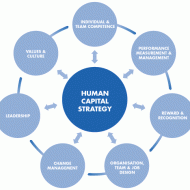
Human Capital is the skill sets, knowledge and experience of human resource put to effective use to increase productivity. The term capital indicates the resource value of humans in which organizations invest their time, energy and money. The much pondered subject in recent times in big corporate organizations is about managing human capital.

Posted by Managementguru in Entrepreneurship, Human Resource, Leadership, Organisational behaviour, Principles of Management
on Mar 20th, 2014 | 0 comments
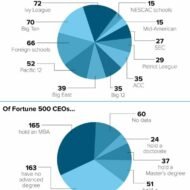
CEO – Chief Executive Officer Chief Executive Officer : The highest ranking executive in a company who is responsible for a company’s operations , usually the President or the Chairman of the Board. Chief Executive – Architect of an Organization: An architect brings out the aesthetics of a building by infusing soul into spaces through his thought process. Likewise a chief executive (CE) is the most important architect of an organization who is responsible for designing and building all aspects of strategic management right from formulation to evaluation of strategies through thought management. He has multifarious facets to exhibit and designations to be withheld, such as the managing director, executive director, president or general manager in business enterprises. As the chief strategist, he plays a pivotal role in strategic decision-making too. Due to the significance attached to the post, researchers and numerous authors have attempted to redefine their roles, functions and responsibilities from time to time. This is quite understandable since the CE of an association plays the most vital role in determining whether an organization has chosen the right path towards success. Chief Administrator: He might also be called as the organizational leader or builder; chief administrator, implementer or coordinator and communicator of organizational objectives; he should don various roles in the likes of motivator, personal leader or mentor, depending on the function he is anticipated to perform by the management. Every chief executive does not and need not personify all the above cited qualities: but a good chief with high business acumen and an eye for detail can definitely fill the bill over a period of time. Major roles and responsibilities of a chief executive: Enunciation of Corporate Philosophy -with the help of his team members the chief executive must try to set the company’s goals and objectives and supporting strategic moves must be planned from the bottom level to the top. Clues from the external environment must be taken into consideration before making the necessary moves. Growth-all the CE’s are expected to be growth stimulators. This can be accomplished by setting targets which have to be dealt with within the stipulated time period. Employees can be involved in this process to set short term objectives followed by periodical reviews with management executives to evaluate the success rate of the projects undertaken. The expertise and interest of the CE helps to infuse motivation and enthusiasm amongst the work force which results in quick completion of targets. A chief executive is responsible for both external and internal functional responsibilities. His role cannot be confined to a particular sphere of action as he is expected to be a generalist in order to manage effectively and be self sufficient once he reaches the top. Self-management and management of time are very important. Outgoing and should possess charisma Other parameters like age, intelligence, education, functional background and experience are also scrutinized when a company likes to choose its chief strategist. A CE performs the strategic tasks- actions which are essential to provide a direction to the organization in order to achieve its purpose. He is the key person in setting the mission of the organization, deciding the objectives and goals, formulating and implementing the strategies and in setting a concrete ethical prototype to enhance the quality of the system as a...
Posted by Managementguru in Decision Making, Entrepreneurship, Human Resource, Organisational behaviour, Principles of Management, Training & Development
on Mar 20th, 2014 | 0 comments

Self Motivation-Key to Managerial Success What is Self Motivation : Ability to do what needs to be done without external influence. How does your company become successful? Just because you have cutting edge technology! Surplus capital! Excellent Infrastructure! Reliable Workforce! Definitely not. A COMPETENT VALUE-DRIVEN CORPORATE MANAGER would make all the difference. Even his very presence would make the atmosphere ELECTRIC. Only some are gifted or bestowed with top managerial qualities. How! Is it an innate quality or imbibed! It is a topic worth the discussion, because it proves to be the liveliest element in the management process. Well, when top management decides to recruit a good manger, what are the qualities they would be in favor of? Think about it, we even expect a house maid to be sincere, on time and loyal to us. When it comes to corporate dealings, the first and foremost quality desired will be “BEARING HUGE RESPONSIBILITY“. Accountability, transparency and control towards the day to day affairs of the company follow suit. Read this resourceful article from Inlpcenter – Change Your Thinking: The Alternate Futures Self-Motivation Exercise , a unique self motivating strategy to make believe in yourself and become better problem solvers. These managers who are also leaders serve as a ROLE MODEL for all the other employees SET STANDARDS FOR PERFORMANCE Motivate their employees Set a Brand Image for the company Be a GOOD LIAISON Problem solver Counselor and make the company special. Strategic Direction: When we talk about value, we talk about the influence that the value has on the STRATEGIC DIRECTION OF THE FIRM, which involves shaping up the character and image of the firm. A good manager EVOLVES OVER A PERIOD OF TIME. While considering the HEAVY TURN OVER TREND that has set in lately in the corporate environment, it becomes important for the top management to pick their HR lot carefully. How do you empower your trusted persons is a question that every Boss has to ask himself to retain the best talent. Good Managers stick to the firm and they contribute to the GROWTH OF THE FIRM. Training plays, of course a major part in the DEVELOPMENT OF MANAGERS but I feel that ONLY THE PERSON WHO MAKES THE BEST USE OF HIS SUBCONSCIOUS INNER DRIVE, REACHES THE TOP. Loyalty is an outdated term in this modern world and the minimum you could expect is SINCERITY. Self motivated managers easily regulate the environment and makes the climate cordial. He has to don many roles, A BRIDGE BETWEEN TOP MANAGEMENT AND EMPLOYEES MANAGE THE INTEREST(OF BOTH THE FINANCIAL INSTITUTIONS AND EMPLOYEES) FORMULATING MARKET STRATEGIES SHOULD BE A TECH-SAVVY A MAN OF EMPATHY A MAN OF BRILLIANT INTUITIONS(ESPECIALLY WHEN IT CONCERNS STOCK MARKET) EVER LEARNING VERSATILE and much more. Practice makes a man perfect is the saying. It suits the corporate business world too, provided the man is intelligent, capable and smart in taking decisions. Always a thinking person, an efficient manager would be on the look out for opportunities and resources that could benefit the firm. Every one of you who aspires to catch up with top positions in the business world must do a “THOROUGH SELF ANALYSIS” as to how agreeable you are in the likert scale of the...
Posted by Managementguru in Business Management, Human Resource, Organisational behaviour, Principles of Management
on Mar 20th, 2014 | 0 comments
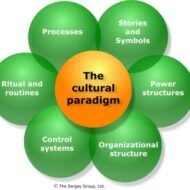
The Ideology of Corporate Culture What is Corporate Culture: the collective beliefs, value systems, and processes that provide a company with its own unique flavor and attitude. Management Attitude: Globalization has necessitated organizations existing in the corporate business world to respond in a unique way in an attempt to enjoy a competitive edge in the market. Corporate culture is a value that keeps an organization intact and helps in building team spirit amongst the members. It is not possible to specifically describe or delineate the concept of culture, yet, people are aware of its fine and striking presence. Let us say that each corporate firm has a dissimilar but unique culture which embraces the values, norms, beliefs and assumptions of the members of the organization and their behavior. It is also greatly induced by the leadership style and management attitude. Role of Culture: Why do organizations need culture as a milieu? Has culture any role in improving the output? Management uses culture as a means to reach out to the employees in an informal manner, to signify what is expected of them plus what is to be expected from the management. Culture cuts through all the levels of an organization and unites the members or employees, to work towards enterprise objectives in a remarkable manner. It is a sort of identity label on the organization and its interest to promote or espouse the value systems through out the organization. Corporate culture encompasses the following qualities enlisted: Quality driven Presence of an informal atmosphere Open communication Customer centric business model Proper and likable dress code Trust and confidence amid employees Value based management CEOs’ as strategic drivers in setting a candid corporate culture CEO’s naturalness and spontaneity with the employees Gratifying employee welfare and security measures Value systems indicated by the vision and mission statements Codified employee behavior Well devised operating strategies Greater autonomy tomanagers at different levels Rewards and recognitions and so on… https://blog.enplug.com/corporate-culture Corporate culture is considered to be a dogma, which many organizations utilize as a means to develop and amalgamate prospective employee groups. An employee learns all about the firm, its activities, the role he is supposed to play, information regarding his superiors, training, career advancements or promotions, pay, employee leave procedures and the long range goals of the organization during the time of induction. The firms should capitalize on this incubation period to spruce up the minds of the employees to act in accordance with the desired values expected by the management. Value Systems: It is inevitable for each and every organization to develop a value system over a period of time based on the founder’s outlook towards business and people working for him. This creates a strong or a weak culture which has an effect on the output or performance of the employees. This also serves as a clear indication whether the organization is proceeding in the right direction. We should never forget that a sound culture eventually aims at achieving the end goals of an organization. The cultural framework of an organization facilitates this process to materialize in a smooth manner. Though intangible in nature, it wields its negative power, when not nurtured appropriately. Flourishing organizations always have pride in their robust cultural back ground, which is a mark of distinction. It definitely shapes up an organization to deliver performance that matches and often surpasses the industry standards. The head of an organization has an important role as a leader as well as a change agent in taking his organization to the next level. The mutual faith and trust between the superior and his subordinates is the anchor point of an organization. Culture – An Intervention Technique: The culture of an...
Posted by Managementguru in Business Management, Human Resource, Organisational behaviour, Principles of Management
on Mar 20th, 2014 | 0 comments
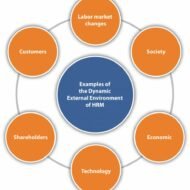
Changing Trends and Challenges in HRM The very conception of Human resource management has changed tremendously in the recent past as it has taken a new form and shape that embraces each and every activity of the organization, as every action requires human intervention. Human resource has become the most important of all the resources from the point, where it was merely one of the many resources. What has caused this great transformation? What has made firms recognise that manpower is the most important of all resources to the extent of including human resource in their accounting as assets! Evolution of HRM: A thorough analysis of the evolution of human resource management clearly indicates the exceptional quality of manpower, especially managers to tackle the very many challenges that come on their way. A manager who was merely a reporter to the top level management has now become indispensable. The laborers whether skilled or unskilled cannot be treated the way they were treated earlier, as the introduction of many labor laws support their cause. The legal framework guides the organization in terms of pay scale, bonus and increments and supports the workers in their welfare, security and safety. Globalization, Privatization and Liberalization: With the initiation of globalization, privatization and liberalization the firms are exposed to more competition and the managers have to put their think tanks to the best use in order to sustain and succeed in the market. People from various background work together in a multinational firm; their language, dress code, food habits, style of working and adaptability are quite different from one another. A human resource manager must go for a “culture” that is unique to the organization. He has to be proactive in order to safeguard the employees from a “culture shock”, by training them sufficiently before induction. Human behavior: Management of human resources by itself is complex and it needs people with special skills. The unpredictable nature of human behavior makes the job more difficult. In the task of managing the emotions and behavior of his employees, a manager must not lose his composure at any point of time for which he has to be a balanced personality. How many of us are gifted with a balanced state of mind and especially in a crisis situation many of us scream our lungs out and blame others for our own faults. Employee Motivation: Motivating the employees to do the job and steer them in the right direction is a Himalayan task for most of the managers. For this they have to adopt a participative style of leadership that will make the employee come closer to them in terms of trust and openness and also it enhances the productivity by improving the efficiency. A relaxed mind is more efficient than one with tight cords. It thinks and acts freely and gives its best. Now a days employees are more educated and informative, so you cannot take them for granted. They are aware of their rights and privileges regarding their jobs and work environment and managers need to handle them very cautiously and intelligently when it comes to satisfying their needs, sentiments and attitude. Handling a large number of employees, allotment of employees to shifts, managing the turnover and keeping the morale high are some of the challenges that the management has to face up to. Achieving the Desired Results: The biggest challenge of any modern manager would be to show results by managing his team. Achieving targets in the specified time is a herculean task; also making people working for the firm realize and understand that unless and until their products and services are of international standards and customer satisfying,...