Posted by Managementguru in Business Management, Motivation, Organisational behaviour, Principles of Management
on Mar 9th, 2014 | 0 comments

How well employees know about your Organization? Now, this is a million dollar question and a prominent issue that has to be taken care of when it comes to motivating your employees. Transparency is a booster pack that works out wonders in the area of motivation. 25 Great Motivational Quotes to Kickstart Your Life How can a management be transparent in key areas like finance and business deals, my question is WHY NOT? The success of operations of a firm relies solely upon the performance of individuals who work towards the accomplishment of goals. They are the key persons who should be kept abreast about the activities of the firm. What makes some organizations stand out? When the Boss wants each and every employee to be truthful and loyal to him, the same expectancy would be there on the part of the workforce –Why don’t the bosses understand this? Integrated Organizational Development I would cite TVS Group as a classic example that commands respect from the employees and many a times I’ve heard people say that they are proud to work for TVS. What makes the employees so motivated to work for certain firms overlooking the pay scale and perks? One should deeply delve into the psychological theories that support motivation, perception and attitude. Etiquette of the company: This is one thing that a firm has to clearly communicate to its work force. The ideology and principle behind the running of the business should be genuine and authentic. The pathway to achieve those missions should be realistic and achievable-to put it clearly a firm should have its business roots stemming out from clear cut intent and purpose. When JRD Tata wanted to start a steel plant in India, not many believed it to be a possible venture. The business legend had clear cut intent of installing a steel plant to utilize the resources available in India and to pass on the proceeds for the economic benefit of the country. Nobody suspected his intent; such was his determination and resolve. This infographic beautifully portraits the scenario of how the future employees would be: Communication of Goals: The management will have clear plans of production target which has to be communicated properly to the lowest level with the same amount of clarity. This has to be done via channels or different levels of management and executives have to play their roles properly. Nobody needs to show their prowess or power; only thing needed is proper delegation of authority and responsibility. This gives clear direction to the work force and when their immediate boss sits with them for periodic discussions to decide on the short term as well as long term objectives, they feel part of the show which immensely motivates them. Ethical Standards of the company: This again adds image to the company and “As is the Leader so is the Employee.” The management should not involve itself in any kind of lobbying – When there is political corruption, malpractices become the order of the day. What Kind of a Leader Are You? A country like India needs more educated leaders who can bring awareness on the importance of economic independence and even distribution of wealth to the masses. If people clearly know what is right and what is wrong, the unwanted elements cannot take them for a ride. Given the population, India though marching towards becoming a developed nation, the growth is hindered by poor policy decisions and sky rocketing inflation. Clarity in Structure: Ego clashes start when the organizations have more number of levels and generate chaos in communication. Misunderstanding creeps in because there...

Posted by Managementguru in Business Management, Motivation, Organisational behaviour, Principles of Management
on Mar 9th, 2014 | 0 comments
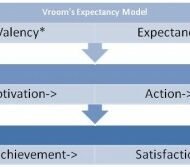
Herzberg and Victor’s Motivation Models Herzberg’s Hygiene Factor Theory Psychologist Fredrick Herzberg asked a basic question to 200 accountants and engineers in firms in and around Pittsburg-“What do people want from their jobs’? He used the critical incident method of obtaining data for analysis. “Think of a time when you felt exceptionally good or exceptionally bad about your job, either your present job or any other job you have had”. The responses obtained were fairly consistent in that, good feelings were associated with job content and bad feelings with job context. The ones on the right side of the table are intrinsic factors leading to job satisfaction and acted as motivators and ones on the left side lead to job dis-satisfaction and were termed as hygiene factors. Hygiene Factors: One has to understand that hygiene factors need not always cause dis-satisfaction; when the managers handle the situation in an amicable manner in terms of company policy, supervision, working conditions, salary and administration, things will be in the right direction but, even if they are adequate, people are never satisfied. These are called Hygiene factors and managers must try to eliminate factors that create discontent among the workers. If we want to motivate people, the real motivators are achievement, recognition, responsibility and growth. We must change the job design in such a way that the work arising out of the job should be challenging, exciting and should offer them a sense of achievement, recognition and growth. HYGIENE FACTORS MOTIVATORS Company policy Achievement Relationship with superiors Recognition Working conditions Work itself Salary Responsibility Relationship with peers Advancement Personal life Growth Relationship with subordinates Status Security CRITICISM: The factors which one particular group of individuals finds to be dis-satisfying may not be applicable for everybody. Factors which are beyond the scope of employees such as policy formulations cannot be considered as hygiene factors. VICTOR H. VROOM’S EXPECTANCY MODEL Valency*Expectancy=Motivation By increasing the positive value of the outcomes through such means as better communication about the outcomes, values and actually increasing them, i.e., the rewards and also by increasing the expectancy of the person by making him believe that the work will really lead him to the desired outcome, organizations can make a strong connection between the work and the...
Posted by Managementguru in Business Management, Entrepreneurship, Human Resource, Leadership, Organisational behaviour, Principles of Management
on Mar 9th, 2014 | 0 comments
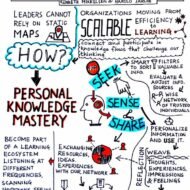
Profile of a successful leader Adaptive Capabilities: Leaders need to radically change their mindset so as to stand the test of time; but the core leadership attributes like vision or creativity, intelligence, commitment, and a healthy dose of luck still continue to define the pre-requisites of success. Integrity of Character is most important when talking about successful leadership. The philosophical undercurrent is that “Be Good, Do Good” and you will be good. The motive must be devoid of mistakes though there is room for mistakes in judgment. Leaders must have a clear vision and be able to communicate this vision to others so that it becomes a shared vision and everybody willingly contributes in fulfilling the vision. Six ‘C’s or six criteria that determine a leader’s credibility Conviction Character Care Courage Composure Competence Cross-Functional Expertise – Acquisition of knowledge should make a leader humble and flexible and gaining knowledge must be seen as a life long experience rather than collection of voluminous data or skills. A leader will try to apply his broad functional knowledge and expertise in the right places and the results will be definitely magnificent. A leader must look into the possible options rather than to plan, the possible rather than the perfect, involvement instead of obedience. Change is the only entity that remains unchanged and it is inevitable for the leaders to consider change as the core element of growth. With accelerated pace of change in the economic, political and socio-cultural environment, leaders not only need to acquire new knowledge and skills but they also need to unlearn many of the things that have out-grown their purposes. Leaders should follow the CODE OF PRIDE to motivate the workforce. P– PROVIDE FOR A POSITIVE WORKING ENVIRONMENT R– RECOGNISE EVERYONE’S EFFORTS I– INVOLVE EVERYONE D– DEVELOP SKILLS AND POTENTIAL E– EVALUATE AND MEASURE CONTINUOUSLY In large corporate organizations, the leader must be willing to share power and control so that leadership is encouraged at various levels. Successful leaders are those who are self-motivated by setting their own standards and compete with themselves. Innovation is the need of the hour What do you mean by innovation? Creating something new or modifying the old one. Here the term innovation implies the change in the “THOUGHT PROCESS” of leaders who are able to turn a crisis into an opportunity. Also called as “THINKING OUT OF THE BOX” where a leader finds new application for old ideas which cannot be discarded or dis-regarded. “You must learn from your past mistakes but not Lea(r)n on your past successes”. High achievers take moderate risks calculating the circumstances and they rely on their own abilities unlike low achievers who invariably like to minimize risks or take wild and irrational risks. Running a corporate business has become more like an experiment since we cannot control or predict the future. It is highly unstable and unpredictable. So leaders have to cope up with this non-linear force acting in the external environment building up pressure. Leaving things as they are can be just as predictable as changing everything, you lose or win both ways. Now let us look at some of the definitions of Leadership 1. “Leadership is generally defined as influencing people so that they will strive willingly towards the achievement of group goals.”- Koontz and O’Donnell 2. “Leadership is the lifting of man’s visions to higher heights, the raising of man’s performance to higher standards, the building of man’s personality beyond its normal limitations.”- Peter F.Drucker 3. “Leadership is the ability to secure desirable actions from a group of followers voluntarily without the use of correction.”- Alford and Beatty 4. “Leadership refers to the quality of the behavior of individuals where by they guide people on their activities in organized efforts.”- Chester I.Bernard Behavioral Commitments of a Leader: Challenging the process Challenging the status quo and act as radical change agents Inspiring others by being pioneers, instigators, navigators and learners Showing risk-taking ability,...
Posted by Managementguru in Human Resource, Labor Management, Training & Development
on Mar 9th, 2014 | 0 comments
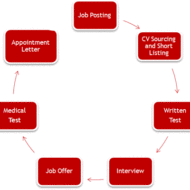
HR Selection Process and Techniques Following the process of recruitment is selection, where the management has to select the right employees at the right time. The intention is to choose appropriate candidates for the unfilled spots and to avoid commitments to those whom the management thinks will not work well. The best qualified individuals from the pool find their place whose qualifications match the job specifications. What is the Selection Process in Human Resource Management? Selection process depends upon the · Size of the company · Nature of the business · Kind and Number of persons to be employed · Government regulations to be followed etc. The process includes 1. Collection of data about the candidate’s qualification 2. Experience 3. Physical and mental ability 4. Nature and Behavior 5. Aptitude and the like Steps in Scientific Selection Process: A. Job Analysis: This is the basic step for finding the right candidate and each organization should lay down job analysis, job description and job specification with clarity in order to lure the right candidates for selection. B. Recruitment: Process of searching for prospective employees and stimulating them to apply for jobs in the organization. C. Application Form: This is also known as the application blank. This facilitates collecting detailed information from the prospective employees regarding their age, gender, family details, qualification, skills, experience, achievements etc. This is widely used to screen employees at the preliminary level. D. Written Examinations: are conducted to gauge the · Mathematical ability · Aptitude · Reasoning · Knowledge in various disciplines · General Knowledge and · English language abilities of the candidates. E. Preliminary Interview: This is suitable to eliminate the undesirable and unsuitable candidates and also to gather personal information from the candidates on a one to one basis. F. Group Discussion: Group discussions help the management to pick out bright candidates from among the group members and also the ability of each individual to adjust to the group. Each group is expected to analyze, interpret and find alternate solutions and select the best solution for a particular case study or subject matter. G. Tests: To further assess the skills of the employees the management conducts different kinds of tests. H. Final Interview: This is the most essential step in the process of selection. The interviewer matches the information obtained about the candidate through the application with that of his own observation and questioning. · Informal · Formal · Planned · Patterned · Non-Directive · Depth · Stress · Group and · Panel interviews are some of the types of interviews conducted in accordance with the job requirement. Also See: Interview Preparation Tips I. Medical Examination: Certain jobs require certain physical qualities like clear vision, perfect hearing, unusual stamina, tolerance of hard working conditions, clear tone etc. J. Reference Checks: The personnel department will engage in checking reference if the candidate passes all the tests and found suitable for the job. What kind of Companies the Employees are Attracted to – Here is an interesting infographic on “How to Attract the Perfect Employee”...
Posted by Managementguru in Human Resource, Interview Questions, Principles of Management, Training & Development
on Mar 8th, 2014 | 0 comments
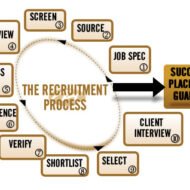
Recruitment Process Recruitment refers to that process carried on by the company to attract suitable candidates possessing the appropriate characteristics to help the organization reach its objectives. According to Byars and Rue, “recruitment involves a pool of people from which qualified candidates for job vacancies can be chosen.” The basic purpose is to develop a group of potentially qualified people. Recruitment Policy: The policies of recruitment are derived from the personnel policies of the organization where the company has to give due importance to government reservations, quotas, policies regarding sons of the soil, personnel policies of other organizations regarding merit, internal sources, social responsibility in absorbing minority sections, women etc. Sources of Recruitment: INTERNAL SOURCES: This include 1. Present permanent employees 2. Present temporary/ casual employees 3. Retrenched or retired employees 4. Dependents of deceased, disabled, retired and present employees. Why internal source is considered to be a better choice? To motivate the present employees To improve the morale aspect “Known devils are better than unknown angels”-The credibility of the present employees are well known and they can be judged easily Loyalty and sense of belongingness is there on the part of current employees The employees become highly committed when they are given a chance as they tend to shoulder more responsibility Employees’ psychological needs, economic needs for promotion and higher income can be satisfied Cost of selection can be minimized Similarly cost of training, induction, orientation, period of adaptability to the organization gets reduced Trade unions are happy Social responsibility towards the employees are discharged Good understanding and co-operation extended by co-workers Stability of employment is assured EXTERNAL SOURCES: 1. Educational and training institutes 2. Private employment agencies/exchanges 3. Public employment exchanges 4. Professional associations 5. Data banks 6. Casual applicants 7. Similar organizations 8. Trade Unions 9. Social media networking sites like Facebook and Linked in offer a huge platform for both recruiters and job seekers to find the best possible match. Why external source is considered to be a better choice? · The suitable candidates with skill set, knowledge and talent are generally available · Latest knowledge, skill, innovations or creative talent can be infused into the organization · Candidates can be selected without any pre- conceived notions or reservations · The cost shelled out for these external sources are minimum since they are placed in minimum pay scale · Expertise, excellence and experience in other organizations can be easily brought into the organization · Human resources mix can be balanced with different background, experience, skill etc. · Existing personnel will also broaden their personality · Quality of human resource will improve in the long run by development of unique culture RECRUITMENT TECHNIQUES: The management has to contact the prospective employees through various means and stimulate them for applying to the post prescribed. A. Promotions: This is a good technique to stimulate internal employees as they will be willing to shoulder more responsibilities if they are assured of promotions B. Transfer: If employees are transferred to the places of their choice, it will stimulate them C. Recommendations of the present employees: Management can contact, persuade the outsiders to apply for job in the organization through the recommendations to the candidates by the present employees, trade unions etc. D. Scouting: This is another way of recruiting where the representatives of a particular organization are sent to various sources of recruitment to motivate the prospective candidates to apply for the jobs. The representatives provide the necessary information about the company and clarify doubts of the candidates. E. Advertising: Though the popular and widely accepted way of recruitment, still it proves to be one-way communication. Newspapers, Magazines of all types, television and internet are the possible sources of advertising channels and internet marketing leads the rest. The technique of advertising should...