Posted by Managementguru in Cyber Security, E Commerce, Financial Management, How To, Online Shopping, Technology
on Mar 12th, 2023 | 0 comments
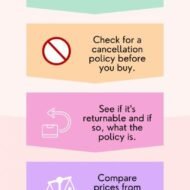
Research the Company Before Purchasing One of the most important things to remember when shopping online is to do your homework. It is critical to ensure that the company is trustworthy and reliable. Take your time reading other customers’ reviews and researching the company’s history. This can assist you in determining whether or not a company is a good fit for you. By conducting your research, you can ensure that your purchase is secure and that you will receive the product you desire. Take Advantage of Sale Days Online shopping can help you always get the best deal. Take advantage of sale days such as Black Friday and Cyber Monday, as well as special promotions. Companies are offering discounts and deals on their products that you will not find at any other time. Sign up for newsletters and use tools like price-tracking websites to stay on top of the best sales. In addition, some stores will match prices if they find the same items cheaper elsewhere. So, spend a few minutes researching the items you want and seeing if you can get a better deal online. It may be tempting to do a quick digital shopping trip on Amazon while sipping a latte at your favourite coffee shop, but if you use public Wi-Fi, you risk compromising your data and financial information. If you’re using an unsecured Wi-Fi connection, you may be sending sensitive data without realising it. Patient hackers who have connected to the same Wi-Fi network are looking for opportunities to steal data from public users. If you’re on the go and can’t get home before you buy, she recommends using your mobile data plan and avoiding public Wi-Fi entirely. If you must do some online shopping while out and about, consider investing in a virtual private network (VPN), which is typically more secure than public Wi-Fi. However, we strongly advise you to wait until you get home before making a purchase. Create an Online Shopping Budget Online shopping can be a great way to save money and find great deals, but remember to set and stick to a budget. Always ask yourself if you really need it before making a purchase, and then consider how much you can afford to spend. This will assist you in avoiding impulse purchases, which can quickly add up. Check for Discount Codes and Coupons Many online stores provide discounts and special offers on their products, but you may have to look for them. Take a few minutes before making a purchase to look for discount codes online. You can look for these codes on the store’s website or through coupon websites. This way, you can save money and get the best deal possible on your purchase. Take Advantage of Free Shipping Offers One of the many advantages of shopping online is that many stores offer free shipping if certain conditions are met. For example, you may be eligible for free shipping if you spend a certain amount of money, purchase a certain number of products, or simply sign up for their newsletter. Taking advantage of these deals can help you save a lot of money, so check the store’s website before making a purchase to see if you can get free shipping. Shop on trusted websites It’s unavoidable—there will come a time when you’ll be shopping online for something and come across a site that looks…off. If you’ve ever come across a website that makes you nervous, trust your instincts. Many websites have been created with the sole purpose of defrauding online consumers and taking advantage of our desire to get a good deal. Consumers should ensure that the web...

Posted by Managementguru in Construction, How To
on Mar 9th, 2023 | 0 comments
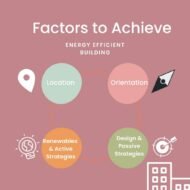
The idea towards net zero building has become increasingly popular in recent years as we strive to lower the carbon footprint of our built environment. A net zero building is characterised by its ability to enerate the same amount of energy it consumes over a year, resulting in a net zero energy consumption. To achieve this, the building’s design and construction are optimised, renewable energy sources like solar panels and wind turbines are integrated, and energy-efficient technologies and materials are utilised. Continue to read and learn more about the net zero building concept, its benefits and strategies, why it is essential to move towards net zero, and how it contributes to a sustainable future. What is Net Zero Building Concept? Net zero building is a design and construction concept focused on balancing the energy a building consumes and the amount of renewable energy it generates. The goal towards net zero building is to produce as much renewable energy on-site as it consumes annually, resulting in zero net energy consumption from the grid. Net zero buildings are designed to be highly energy-efficient, using advanced technologies such as high-performance insulation, energy-efficient windows, efficient lighting and appliances, and renewable energy systems such as solar panels and geothermal heating and cooling systems. The buildings are also constructed to maximise natural light and ventilation, decreasing the need for artificial lighting and HVAC systems. The concept towards net zero building includes all buildings, from homes and offices to schools and hospitals. The idea is gaining popularity as more people become aware of the need to reduce greenhouse gas emissions and combat climate change. Net zero buildings are essential to transition to a more sustainable and carbon-neutral economy. Strategies and Benefits of Net Zero Building Some strategies for achieving net zero building include: 1. Passive Design: Implementing passive design strategies such as optimising the building’s orientation, maximising natural light and ventilation, and using high-performance insulation and windows can effectively decrease a building’s energy demand. 2. Energy-Efficient Systems: Net zero buildings use highly efficient heating, cooling, and lighting systems to minimise energy consumption. 3. Renewable Energy: Net zero buildings generate energy on-site using renewable energy sources like solar panels, wind turbines, or geothermal systems. 4. Energy Storage: Energy storage systems, like batteries or thermal storage, can help towards net zero buildings store an excess amount of energy generated during peak times for use during periods of low energy production. Net zero buildings generate as much energy as they consume, resulting in zero net energy consumption. The benefits of net zero buildings include: 1. Reduced Energy Costs: Net zero buildings rely on sustainable energy sources like wind turbines or solar panels, which can significantly reduce energy costs. 2. Lower Carbon Footprint: Net zero buildings produce fewer greenhouse gas emissions, which can help combat climate change. 3. Increased Resilience: Net zero buildings are designed to be more resilient to power outages and other disruptions in the energy supply chain. 4. Improved Indoor Air Quality: Net zero buildings often incorporate features like natural ventilation and air purification systems, which can improve indoor air quality. Net Zero Building Contributing Towards a Sustainable Future Net zero buildings are a crucial component of a sustainable future. These buildings are designed to minimise environmental impact and reduce energy consumption using energy-efficient design, high-performance building materials, and renewable energy sources. By producing as much energy as they consume over a year, the step towards net zero buildings helps to reduce reliance on fossil fuels and decrease greenhouse gas emissions. They also improve indoor air quality and environmentally friendly use materials, reducing the need to replace and dispose of building materials. Net zero buildings are an innovative...
Posted by Managementguru in Business Management, Human Resource, Productivity
on Feb 23rd, 2023 | 0 comments
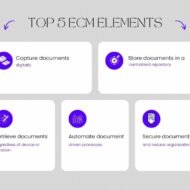
Enterprise content management (ECM) is the process of organizing, managing, and storing an organization’s documents, data, and information in a centralized repository. With the increasing amount of information being generated every day, ECM has become essential for organizations to improve efficiency and productivity. An enterprise content management system (ECM) is a process of organizing, storing, and managing information in a centralized repository. This repository can be accessed by employees from any location, regardless of their job function or skill set. The increase in the amount of information being generated every day has made ECM essential for organizations to improve efficiency and productivity. This article will explore five examples of ECM applications used in various industries. Financial Services Industry – Document Management The financial services industry generates and stores a vast amount of documents, including contracts, account statements, and customer information. Managing these documents manually can be a time-consuming and costly process. ECM applications like document management software streamline this process by digitizing paper documents, enabling easy access, and providing advanced search capabilities. Additionally, automated workflows can help to route documents for approval, reducing the time taken to process them. Enterprise content management system in the financial services industry enables companies to maintain compliance with regulations while improving customer service and reducing operational costs. The software also helps organizations maintain accurate records and adhere to regulatory requirements. These software solutions enable organizations to automate processes such as document capture, indexing, storage, retrieval, and disposal. Furthermore, its advanced security features help protect sensitive financial information from unauthorized access, ensuring compliance with regulations. Healthcare Industry – Electronic Health Records (EHR) Healthcare providers generate an immense amount of patient data that needs to be securely stored and managed. EHR software is an ECM solution that provides a digital repository for healthcare providers to store medical records, lab results, and other patient data. EHR systems streamline the healthcare industry by reducing paperwork, improving patient care, and enhancing patient safety. EHR solutions ensure patient privacy and facilitate the exchange of patient information between providers to enhance care coordination. EHR systems also help to reduce medical errors by providing real-time access to patient data and enabling clinicians to make informed decisions. Manufacturing Industry – Product Data Management (PDM) The manufacturing industry generates a lot of data that needs to be efficiently managed to increase productivity and reduce errors. PDM software is an ECM solution designed to centralize product data, including design files, engineering changes, and bills of materials. With PDM, manufacturing companies can streamline their product development process and enable easy collaboration between teams. PDM applications also provide secure access control, revision control, and version control to ensure data integrity. Additionally, PDM solutions can integrate with other manufacturing systems, such as enterprise resource planning (ERP) software, to provide a more comprehensive solution. Human Resources – Employee Record Management Managing a sizable amount of employee data, such as job applications, resumes, employee evaluations, and more falls within the purview of human resource departments. ECM solutions like employee record management software provide a centralized digital repository to store employee data, making it easy to access, track and manage. HR personnel can quickly access employee data, create reports, and manage employee records securely. This software also facilitates compliance with employment laws and regulations, streamlining HR operations. Employee record management solutions also provide advanced analytics and reporting capabilities that help HR departments to identify trends and make informed decisions. Legal Industry – Case Management Legal firms deal with large amounts of paperwork and data related to their cases. Case management software is an ECM solution that helps legal firms to organize, manage, and store case-related information, including client information, case...
Posted by Managementguru in Business Management, Marketing, Social Media
on Feb 14th, 2023 | 0 comments
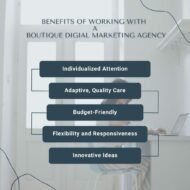
Boutique marketing companies offer a range of advantages over larger, more generalized ones as they take on fewer clients and offer personalized attention. Moreover, they are made up of experts with over a decade or more of industry experience, relying on a wealth of knowledge and skills to make your marketing dreams come true. Consider a reputable company like Adroit as a prime example of these agencies. They partner with respected companies for their marketing needs, offer fully customized services, and employ diverse strategies to meet their advertising goals. For instance, they can create unmatched content and use SEO tactics that enable their clients to enjoy greater rankings over countless others on the web. The following points explore these benefits in greater detail. Personalized attention The most significant benefit of working with a boutique agency is the level of personal attention you receive. These typically have a smaller team, which allows them to focus more closely on each client. This close relationship can result in more effective marketing strategies, as the agency can better understand your business, goals, and target audience and create marketing campaigns likewise. Customized strategies and lower costs Smaller agencies have the flexibility to create customized strategies that meet the specific needs of their clients. Large agencies may have a “one size fits all” approach, which can limit the effectiveness of their campaigns. In contrast, boutique agencies can create bespoke plans tailored to your business, bringing better results and higher ROI. Some strategies they employ include lead generation, link building, content creation, PPC, email marketing, and much more. Working with such digital advertising agencies can also save you money, as they typically have lower overhead costs than larger agencies, which allows them to offer their services at a lower price. This can be especially helpful for small businesses, enabling them to get the same high-quality marketing services as larger companies without breaking the bank. Better communication Working with boutique advertising companies can lead to better communication, as smaller teams often have more open lines of communication, which can lead to a better understanding of your needs and goals. They are more attentive to your needs and will create plans to ensure the money you spend on advertising is rooted in your revenue. In other words, they will ensure that your investment is not wasted and you get considerable returns within a reasonable period. Invariably, their marketing strategies are more effective, leading to a more productive working relationship between them and their clients. Expertise and flexibility Boutique agencies like Adroit are composed of experts in their respective fields, and this specialized knowledge can translate into more effective marketing strategies. For example, an agency focused on e-commerce may have a deep understanding of the e-commerce landscape and the best practices for driving sales in this space. This expertise can result in more effective marketing campaigns and higher returns. They are also generally more flexible than larger agencies, allowing them to respond quickly to changes in the market and shifts in your business goals. Consequently, they have a more dynamic marketing approach that is better equipped to handle changes in an unstable market and align them to your business. So, if you want to take your digital marketing efforts to the next level, consider working with a boutique...
Posted by Managementguru in Strategy
on Feb 14th, 2023 | 0 comments
This is a comprehensive curated list of Strategic Management Glossary for the enefit of management students, professionals and business bloggers. A Action PlanThe action plan lists the specific actions that must be taken, by whom and by when in order to achieve an overall goal or implement a strategy. Some people include the costs of each action in the action plans, resulting in budget information being included in the action plans, as well. Action plans together are sometimes referred to as the Implementation Plan. AcquisitionWhen one company, the acquirer, purchases and absorbs the operations of another, the acquired. Alignment model of strategic planningFocuses especially on aligning internal operations to most effectively and efficiently work toward the mission of the organization. Activity Ratios Inventory turnover and average collection period measure how effectively a firm is using its resources. Advantage A way to evaluate strategies; to determine if a particular strategy creates or extends a firm’s competitive superiority in a selected area of activity. Aggressive Quadrant In a SPACE matrix analysis, when the firm’s directional vector points in the upper-right quadrant, the firm should pursue aggressive strategies. Annual Objectives Short-term milestones that organizations must achieve Autonomy Whether an individual or team of individuals within an organization has the freedom to develop an entrepreneurial idea and then see it through to completion. B Balanced ScorecardA framework for categorising your strategy into four interdependent balanced areas- financial, customer, internal business process, and employee learning & growth. Baseline Base level of previous or current performance that can be used to set improvement goals and provide a basis for assessing future progress. Bench marking A process of compiling and comparing data on business performance of your organization with that of competitors or industry averages to understand where you sit in comparison, identify best practices, and measure progress. Budget A description of the monetary amount that will be allocated to a given project or action. Business Plan A formal guide outlining your business goals and plans to achieve the goals. It may also include background information on the organisation attempting to achieve these goals. Board of Directors A Board is the group of people who are legally charged to oversee the operations of a corporation, whether for-profit or nonprofit. Board Insiders Members of the board of directors that are generally employed inside of the organization. Board Outsiders Members of the board of directors that are generally employed outside of the organization. Buy-in Obtaining agreement from key stakeholders that the proposed plan is acceptable. Business Model Canvas The Business Model Canvas is a strategic management and lean startup template for developing new or documenting existing business models. It is a visual chart with elements describing a firm’s or product’s value proposition, infrastructure, customers, and finances. Backward Vertical Integration Moving back along the value chain and entering a supplier’s business. Behavioral Control Focuses on controlling the actions of individuals through rules and procedures. Best-Cost A strategy where the firm attempts to offer a hybrid of both lower cost and differentiated products or services, combining the two basic strategies. Blue Ocean Strategy Creating a new, untapped market rather than competing with rivals in an existing market. Broad Cost Leadership A strategy that offers the lowest price in the market for that product or service. Broad Differentiation A strategy that offers something unique that differentiates their product or service from others. C Capacity Building Capacity building is the process of creating, improving and retaining core skills, knowledge and capabilities of an organization’s people and processes. Capital Capital refers to the assets that are owned by an entity and are available for use. Capital is usually described in terms of money,...