Posted by Managementguru in Accounting, Business Management, Technology
on Jun 15th, 2022 | 0 comments
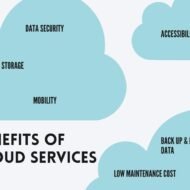
Cloud services are booming, and what used to be a simple service offering storage space has now grown into an impressive expanse of packages to help businesses with their needs. Businesses are now more into cloud services than ever, but why is that? This piece is going to take a look at some of the reasons that cloud services are chosen over traditional services and how it could benefit your business too. Read on to find out more! Cloud Offers Significant Big Data Insights Big data is a collective of all different types of data gathered from a business, and it is more important than it has ever been. Not only do businesses have more means to gather this data now, but it is also crucial in driving decisions both big and small. Collected data can help companies ‘predict’ their future needs and finances, help prevent downfalls, and help them put an informed plan in place. Cloud Services Are Scalable and Flexible for All Scalability and flexibility are essential in this economy. It is no longer viable to lock in contracts unless businesses absolutely have to due to the slippery nature of the market. It also makes life much easier when you are able to scale up or down when needed and creates a lot less fuss over change.Cloud services offer this seamlessly. Because there is no “physical” aspect to a cloud service, you are able to manage requirements as and when they come in or disappear. This helps you keep hold of your capital and allows you to only spend what you need. Another great reason why businesses are opting for cloud services is that they are not routed in any particular location. If a company needs to move, this will not affect the cloud services they use at all. Realistically, all you need is an internet connection to keep you in touch with any cloud service globally. You might also be surprised to learn the different services available to you, like cloud security services, and that even more traditional-based industries can make the transition. For example, a traditional accounting firm can become a cloud accounting firm. Businesses must see the importance of competing in the digital space, and becoming a cloud-based business is one vital step to achieving that. If you need more advice, seek the advice of experts in your chosen industry. Cloud Services Are Cost-Effective You only have to pay for what you use with cloud services which is one of the main reasons why this option is so attractive to businesses. Not to forget the startup costs of physical equipment and elements of traditional services are completely wiped out, along with any repairs to damage that could happen to these physical features as well. It is also worth pointing out that you will never be stuck with redundant hardware or software, as cloud services update and upgrade as they improve and change. Conclusion Cloud-based services are the future of business due to the many benefits they offer, such as scalability, flexibility, security, and simplicity. Not only can they be more cost-effective than traditional services, but they can also offer real-time data to help businesses make the right decisions for them. Try a cloud solution today, and see how it changes your...

Posted by Managementguru in How To, Project Management, Supply Chain Management
on Jun 8th, 2022 | 0 comments

Managing a construction business is no easy task. The sector is capital intensive and demands consistent financing to maintain a steady supply of construction materials and keep operations going. A huge part of becoming a successful construction business owner depends on efficient management. If you’re looking to break into the industry or you’re a current manager after some guidance, these below tips will help you effectively manage a construction business. Use the Right Tools and Products Construction tools and products evolve with the industry. As a construction business owner, you need to be equipped with current tools and resources fueling the industry, leveraging them for effective outputs. Investing in construction tools can be a dicey situation and purchasing isn’t always the best way to invest in tools. You can purchase drills, hammers, trowels, and other essential tools for your site workers. However, heavy-duty equipment like excavators and backhoe loaders can be rented rather than bought. Buying ties you to storage and maintenance costs which might be financially draining. Both options, however, have their pros and cons. Therefore, assessing them before making your investment decision can never go amiss. For construction supplies, it’s important to deal with the right retail partners. They can afford you comfortable payment and usage terms for all materials, including those needed for modular building products. Make Safety a Priority The construction industry is a hotspot for work-related accidents. The U.S. Occupational Safety and Health Administration says that fall hazards are the leading cause of accident injuries on construction sites nationwide. The U.S. Bureau of Labor Statistics also revealed that over 150,000 fall accidents occur yearly. As a business, these accidents can dampen employees’ morale and cost your business a lot of medical, severance, and relief expenses. In critical conditions, an accident on your site can cost you your operating license and affect your operational relationships with partners and financiers. Therefore, it’s crucial to prioritize safety on your construction site. Ensure all workers have their safety apparel on before visiting the worksite. Maintain ladders and operational tools to avoid failure while on the job. Developing a periodic program to sensitize employees on the best safety practices can also help a great deal. Leverage Data and Technology The construction industry is no exception to the continuous transformation of how we work through technology. Modern construction tools have become smarter, demanding site workers to be more tech-savvy. Many construction businesses have also grown more resilient by using data to mitigate risks and manage predictability. They deploy big data systems like Artificial Intelligence (AI) and Machine learning (ML) to harness effective insights even before the project stages. These systems help model structures and determine structural defects at the project blueprinting stage. Tech systems also help contractors reduce uncertainties like the impact of changing weather conditions on construction progress. Avoid Wasteful Preparations Research shows that 98 percent of megaprojects suffer cost overruns, and about 77 percent do not meet their construction deadlines. Wasteful operations are a travesty of efficiency. So, construction managers need strict levels of accountability to manage waste, from materials to financing. Increase Your Cash Flow Construction employees typically receive payments on a bi-weekly basis, so you’ll need more money to manage running costs and fuel the progress of your construction business. Spreading out your costs, early invoice communication, and avoiding underbilling are a few best practices to help you increase your cash flow. All in all, the construction industry is booming and new companies have a significant potential to attain profitability – the industry has a current valuation beyond a trillion dollars. Getting a piece of this cake requires a lot of discipline and consistent efforts, and...
Posted by Managementguru in Business Management, Financial Management, How To, How to make money online, Personal Finance, Real Estate Investment
on May 29th, 2022 | 0 comments

Commodity trading is a term used frequently in the investment world. Aside from equities, markets also trade a variety of commodities, which can help you diversify your portfolio and increase profits. Commodities, due to their fluctuating prices over time, can produce good long-term returns if invested wisely. What are Commodities? Commodities are the primary raw materials used to make everyday goods. Commodities, which include products like oil, sugar, metals, and so on, are the foundation of a global economy. There are four basic categories of commodities traded in India (see table below). Commodity Category Energy – Oil and Natural Gas Base Metals – Copper Aluminium, Zinc, Lead Bullion – Gold and Silver Agriculture – Cotton, Black Pepper, Rubber, Cardamom and Oil. Gold, corn, crude oil, coffee, wheat, and other commodities are among the most widely traded worldwide. The change of one commodity’s price has an impact all across the world. When crude oil prices rise, for example, the effect is felt all around the world. How To Start Trading in Commodities? To begin with commodity trading, the first step is to know about the types of commodities that exist (mentioned above). Then you need to: Open a Demat Account with a Reputed Stockbroker You’ll need a demat account to trade commodities, just like you’ll need one to trade stocks. While there are numerous brokerage houses where you may register an account, it is critical to choose a reputable organisation that can provide you with important trade suggestions. To navigate the commodity market maze, you’ll need the right information and advice. It’s also critical to choose a brokerage with competitive prices. Selecting a broker with a high brokerage fee can reduce your profits. Examine the services provided by the broker through its platform. A full-service broker is best for you because they have a team of professionals who provide in-depth research and recommendations on a regular basis. Deposit an Initial Amount You must make an initial deposit after you have opened an account. The deposit amount varies depending on the commodity you are trading and ranges from 5% to 10% of the contract value. This information can be found on the brokerage firm’s official website. You must keep a sufficient cushion to cover any potential losses. Commodity trading plans that help you better understand markets and your risk appetite are also vital. In terms of risk preferences and cash flow, each trader is unique. You make a decision based on your financial situation. Different Ways to Trade in Commodities Direct Investment It is the most prevalent method of commodity investment. You can, for example, acquire gold and silver coins and jewellery immediately. Direct investing in these things, on the other hand, has a significant transaction cost. There are also concerns about storage and purity. Purchase Stocks This is another method of commodity trading. You can acquire stocks in an energy company, for example, if you want to trade energy. The price of energy will be clearly indicated by the stock price. If you invest in commodities through direct stocks, you can make money even if the commodity isn’t performing well. For example, if you buy shares in a well-established energy company, even if energy prices fall, you can still profit due to the company’s strong fundamentals. Commodity ETFs and Mutual Funds Commodity-based ETFs and mutual funds are many. If you wish to invest in gold or silver, for example, you can buy gold or silver ETFs. Because ETFs are maintained electronically in your demat account, there are no purity or storage difficulties. Bottom Line Commodity trading can be profitable provided you understand the fundamentals and appropriately determine your risk tolerance....
Posted by Managementguru in How To, How to Blog, Social Media, Technology, Uncategorized, Video Marketing, Website Design
on May 29th, 2022 | 0 comments

Gone are the days when managing your blog or website required you to sit in front of a computer. This is the mobile web’s era. The ease with which you may manage your blog on the road eliminates the need for a desktop computer. Mobile devices now perform on pace with traditional computing devices thanks to cutting-edge technology, software, and mobile apps. In this article, we’ll show you the top free blogging apps for iPhone, iPad & Android that you should download in 2022 if you want to maintain your blog on the move! Quick Note: The majority of the blogging applications included on this page are completely free to use. Some of them are premium apps with a freemium model (it means, you need to upgrade if you want better features or limits). 1. WordPress The WordPress app is one of the must-have blogging apps for iPhone and iPad because it is one of the most popular blogging platforms. Did you know that the WordPress platform powers approximately 35% of all websites on the internet? Yes, WordPress is the most popular CMS (Content Management System) in the world, with millions of users. If you too use the WordPress platform for your blog, the official WordPress app for iPhone and iPad is a must-have! 2021 Apple iPad Pro (32.77cm) 2022 Apple iPad Air (27.69cm) 2021 Apple 10.2-inch (25.91cm) However, the software runs significantly more smoothly on the iPhone than it does on the iPad. The following is a comprehensive list of everything you can accomplish using the official WordPress app: Write a new post, and save drafts which sync with the web version of WordPress blog.Add images and videos.Publish/Update blog posts and pages.Manage blog users, comments and plugins.Change themes.It supports the Gutenberg block editor. Quick note: You can publish content and engage with your audience from your smartphone if you’re using a self-hosted WordPress.org platform with a Jetpack-powered site. Here’s the link to WordPress app for iOSHere’s the link to WordPress app for Android app 2. Google Analytics You can’t evaluate a blog’s performance without knowing its traffic and user experience. What if you could get this info on your iPhone or iPad? It gets even better! The official Google Analytics iOS app is a godsend. On both devices, it runs quite smoothly. The following are some key metrics that may be tracked with this app: Real time visitorsTop landing pages by visitsOverview of traffic by channels – Organic, Paid, Direct, Social, Email and Referral.Overview of visitors by geographic location, new vs. returning, mobile device and web browser.Measurement of GoalsAverage page load time (in seconds) Google Analytics is a popular online analytics tool that Google provides. It monitors and reports your website traffic, providing you with information such as your best performing pages, total users, sessions, bounce rate, and more. Where can I download the Blogger app? Here’s the link to iOS app for Google AnalyticsHere’s the link to Google Analytics Android app 3. Evernote Evernote is the most popular note-taking app, with millions of users across the world using it to generate notes that can be text, drawings, images, or saved web pages. It has a free version with limited features, but you may upgrade to their premium editions for additional features such as increased storage capacity, offline access, and customer support. Why should you use Evernote as a blogger? You may save nearly anything in Evernote, including to-do lists, pictures, and images, as well as web pages and audio files. The most important reason to utilise Evernote as a blogger is that it can be used as a digital notebook to write and capture ideas whenever you want. Where can you download the Evernote...
Posted by Managementguru in How To, Sales, Strategy
on May 24th, 2022 | 0 comments

Why Is Pricing Strategy Important? Pricing is of ultimate importance because every buying decision is based on pricing. We need to put a proper pricing label on our products in such a way it is convincing and appealing as well. The key is to strike a balance that will generate revenue without putting off potential customers. Setting prices too high can make a product prohibitively expensive for your target audience while setting prices too low can threaten your bottom line. Fortunately, there are a number of different pricing strategies that can help you determine the right price for your products. Having a robust pricing strategy gives you a competitive advantage by allowing you to meet consumer demand in a competitive market. Info: Masterclass Here are 7 steps to price your product. 1. Identify your ideal buyers What is an ideal customer? – Your ideal customer is someone who gets their exact needs met by what your’e offering. For detailed info visit AudienceOps 2. Perform competitor and market research Competitive market research centres on finding and measuring key market metrics that help identify differences between your products and services and those of your competitors. For detailed info visit HubSpot 3. Determine your costs A fundamental principle of pricing is that you need to cover your costs and then factor in a profit. That means you have to know how much your product costs. You as well need to understand how much you need to mark up the product and how many you need to sell to turn a profit. For detaile info visit Inc 4. Compute your average customer’s Lifetime Value (LTV) What is Customer Lifetime Value (LTV)? – The customer lifetime value (LTV), also known as lifetime value, is the total revenue. In accounting, the terms sales and a company expects to earn over the lifetime of their relationship with a single customer. For detailed info visit CFI 5. Select the right pricing strategy If a business cannot identify or arrive at the right price point for their products based on value, it is definitely going to be an uphill battle against their competitors. For detailed info visit Forbes 6. Use the best-fitting pricing model for you A pricing strategy is the way you set the price.A pricing model is a kind of price format – it’s part of the way you package and present your goods and services to the customer. For detailed info visit Qualtrics 7. Implement, experiment, and learn In today’s marketplace, businesses can no longer afford to play it safe. It’s time for pricing to get experimental. For detailed info visit IntelligenceNode Outcome When You Want to Increase the Price of Your product Losing out on new clients if you change your rates in relation to your competition.Loyal clients that have been with you for several years might feel, they deserve to stay at the lower price point.Fear of increasing the price might put you to remain in the status quo and not do anything about it. In her Tips for Pricing your Handmade Goods blog on Craftsy, artesian entrepreneur Ashley Martineau suggests this formula: Cost of supplies + $10 per hour time spent = Price ACost of supplies x 3 = Price BPrice A + Price B divided by 2 (to get the average between these two prices) = Price C For example, you have determined the cost to purchase supplies to make one unit of your product is $4.28 and it takes you a half-hour to complete it, then your formula would look like this: $4.28 + $5 = $9.28 (Price A)$4.28 x 3 = $12.84 (Price B)$9.28 + 12.84 = $22.64$22.64 / 2 = $11. 32 You also need to calculate the tax...