Currently Browsing: Project Management
Posted by Managementguru in Decision Making, Human Resource, Principles of Management, Project Management, Training & Development
on Mar 19th, 2014 | 0 comments

Crafting a solid career plan is the cornerstone of professional success and personal fulfillment. Whether you’re just starting out or aiming to advance your career, a well-thought-out plan provides clarity, direction, and motivation. In this guide, we’ll explore practical steps to help you devise a career plan that aligns with your passions and goals. Have you ever thought about how to gain insight into yourself? Well, it is high time, if you really want to make it to the top of your career path and it is supposed to be the best personal strategy. Setting up of long-range plans helps you to formulate your career strategies accordingly. To reach the destination, you need to have clear travel plans. Likewise, devising your career plans is inevitable to reach the ultimatum in your work environment. Following is a Five step chart to help you create a solid career plan Self-Evaluation What do you enjoy? What are your priorities? Strengths and weaknesses? Name the things you want from a job? Skills Analysis What are your qualifications and experience? What are your key strengths and skills? What are your biggest achievements to date? What are your areas of development/ which area of interest excites you the most? Set your direction The broad industries that really appeal to you. The types of roles that would suit you best. How these options match your personal preferences? Key skills you’ll need to develop. Commit to a time frame Make milestones for the next six, twelve, eighteen months. How will you achieve your training and education goals? How will you gain additional skills and experience needed? How will you expand your network, and by when? Review your career plan Now you know your goals and how to achieve them, monitor your progress at least every six months to stay on track. The Following Tenets Will Infuse Some Confidence to Those Who Want to Achieve Set your goals high Never settle for less Never under estimate yourself You are born to achieve something You are different from others You possess that “in thing” that is going to take you places Career advancement is something that is not the sole proprietorship of the managerial cadre. It applies to anyone who has the “will” to learn and move forward. One’s attitude towards time, achievement, change, material things, work etc., determines the extent to which he is prepared to pursue his career with a long-range plan. Decision Making Another important aspect of career planning is the tough preposition of decision making. If a qualified and experienced manager is adept in all areas of management, naturally he gets confused as to “which way to go”, when presented with a chance to take up another job, in pursuit of better career prospects such as pay or promotions. People sometimes tend to resist career planning for the fear of making decisions and sometimes due to the fear of failure of achieving goals in the new set up, which might be a big blow to their ego. This dilemma of choosing a goal is commonly noticed in students who want to pursue higher education. Since it involves not only decision making but also determines their capability to be successful in the chosen field of activity. If an individual wants to become a doctor, he or she has to give up to pursue other opportunities, say, to become a lawyer or an engineer. Commitment Furthermore, career advancement means more involvement and commitment, which makes you a quick learner. And in the process to achieve your goals, you become well versed in the area of specialization, however complex the subject or situation may be. Psychology has its role to play in career planning...

Posted by Managementguru in Business Management, Principles of Management, Project Management, Strategy
on Mar 16th, 2014 | 0 comments

Strategy Implementation Organizational objectives must be accomplished by strategic planning and thinking that makes your organization unique and also helps to have a competitive edge. What are the elements that are part of this planning strategy? Proper allocation of resources An appropriate organization structure Efficient human resource personnel An effective management information system A feasible budgeting system A good reward system Periodic strategy review system There are many more aspects that can be attributed to broadly define strategic planning and execution. The success or failure of this exercise is in the hands of managers, who should be adequately prepared for the planning process. The objectives of the organization must be well defined and clear so that the people in the organization can evolve the necessary plans to accomplish those objectives. The action plans are then formulated based on these initially formed plans. So, the planning premises form the base on which the organization is built. Strategic business units must be identified and nurtured to add value to the organization. Why strategic planning becomes a failure in some of the organizations? Lack of proper training in strategic planning, and the key persons are the managers at all levels. Vague goals and objectives don’t make them meaningful and strategic excellence cannot be achieved. Long term goals not subjected to periodic review. If there is fluctuation in the political, economic or social environment, that is detrimental to the industry in which the firm operates, the goals can be reviewed and a revised strategic plan can be devised for the long term health of that organization. Poor budget planning. To enjoy a sustainable competitive advantage in the market, you need to have a good financial backup to give shape to your plans. The strategic plans must be supported by specific action plans. It is a pity that in many organizations, there is neither co-ordination nor co-operation between the peers to make the strategic plans successful. Integrating these various functional groups becomes a tough task for the management. Simple but effective measures: Above all odds, a company can make things work, if the management is wise enough to follow these First and foremost thing to be done is to communicate the strategic plans to all the managers who are key decision makers. The management must make sure that everybody involved in the strategic implementation understand those strategies. Well devised action plans that contribute to the accomplishment of the firm’s objectives must be laid down. A well defined span of management that makes communication flow easy and simple. Revising the strategies in lieu of the contingencies. A conducive organizational climate that is devoid of conflicts and pressure Involvement of top management to ensure success. Thinking Out of the Box: You need “thinking managers“, to make your organization grow. The modern business management lays great emphasis on “getting people together” to accomplish the goals and objectives. How do you get people to work together? They should have a common business ideology that binds them to work for the upliftment of the organization. Although top level management cadre is responsible for formulating strategic plans, organizations must understand that the idea also reaches the lower level management in the right sense. That facilitates smooth execution delivering the expected result. Benefit from this Free Udemy Course on Marketing Strategies https://www.udemy.com/one-minute-marketing-lessons-30-quick-marketing-strategies/...
Posted by Managementguru in Business Ethics, Business Management, Principles of Management, Project Management, Strategy
on Mar 15th, 2014 | 0 comments
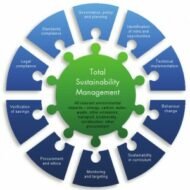
Environmental Sustainability-A Global Strategy Conservation of Environmental Resources: Corporate companies that are involved in the manufacture of electrical and electronic goods are becoming more and more concerned about the conservation of environmental resources, looking for convenient and eco friendly alternate biodegradable energy resources, thus leading to reduced energy consumption, beneficial to both the firm and society in general. “Go Green”, is the mantra that not only adds to the firm’s image but also appeals to the customers and suppliers who are associated with these firms. Disposal of E-Waste: Disposal of e-waste is one thing and recycling is another, both of which have to be handled with care. Developing countries have not evolved a proper processing system to discard or recycle the electronic waste such as scraps, obsolete devices, broken instruments etc., which can cause serious pollution problems and health hazards. The governments of all developed and developing countries enforce pollution control measures to monitor and control the quality of air, water and land. Any chemical exposure during recycling of waste can cause irreparable consequences, like the one in a nuclear reactor leak, where the harmful effects of radioactive substance stay for a long time, affecting the masses over the generations to come. The World- One Big Global Village: The revolution in the IT (information and technology) industry has made the world very small, converting it into a global village. Obviously the percentage of consumers using personal computer systems and networking systems is quite high. What happens to the electronic waste? How do people dispose it of? Do they really have the awareness or at least concern about the negative consequences and dangers of the improper disposal methods? Developed countries at least make it a point to impose fine on vendors and consumers who do not follow the federal laws on how to dispose e-waste. A general awareness is seen among the people of these nations. But, what is the condition in developing nations, where there are no strict rules laid down, that neither control the disposal of electronic goods nor ensures the health and safety standards of labor involved in such processes. Recycling Plants: Governments can encourage manufacturers who incorporate waste recycling plants as part of their production that helps in usable component recovery and facilitates cost-effective processing of electronic waste in volumes. The crux of the whole idea of recycling is to avoid the green gas emissions as a result of manufacturing products from scratch. Recycling of electronic products by dismantling them and recovering the usable components makes a great difference in conserving the energy resources, less contribution to pollution and increased efficiency utilization. Green Computing: Green computing is aimed by many of the electronic vendors where caution is exercised even right from designing the product through its production, usage, disposal and recycling, that no negative impact is created on the environment. In the modern computer era, where each and every organization employ numerous computer systems, network and communication systems, printers, storage devices for its communication and business transactions, environmental safety has to be included in the policy framework.RTGS (Real Time Gross Settlement) and Net Banking are e-tools that cannot be done with and businesses stumble if there is a hitch in these money transfer mechanisms. When we are able to appreciate the power of technology, we should also try to counterbalance its darker side through environmentally sustainable operations. Countries with high population density are supposed to exert unprecedented pressure on the environmental resources such as land, soil, air, water and forests. The government has to frame strong policies in order to arrest the degradation process. IT industry helps a nation to grow economically and at the same time should also aim at building an environmentally sustainable...
Posted by Managementguru in Economics, Financial Management, International Business, Marketing, Project Management
on Mar 11th, 2014 | 0 comments
What is Trade? Trade is the exchange of commodity and services. International trade represents business transactions taking place at the global level, and it is fundamentally different from domestic trade. Trade at international level demands huge investments, network of franchisees and proficient people to run the show. Many corporate giants are trying to capture Asian markets, especially Indian market, which has become the industrial hub for such economic activities. Economic liberalization has been the focus of many developing countries for the past two decades and this has allowed multinational companies with huge investment potential to enrich the weaker economies. What is International Trade? International trade tries to generate more foreign exchange, which is always good for the economy. Say, if a country has rich resources of petroleum, naturally it will try to sell the surplus to countries not endowed with such natural resources. That is why Middle East nations are prosperous and economically independent. The diversity in productive possibilities in different countries is due to the presence of limited natural resources. When a country gets a head start in a particular product, it can become the high volume, low cost producer. The economies of scale give it a significant advantage over other countries, which find it cheaper to buy from the leading producers than to manufacture the product themselves. Barriers for Effective Trade Every nation must try to specialize in the production and export of those commodities, which are available in plenty and must import such products in the production of which they have a resource deficiency. It should be remembered that there are severe man made barriers in international trade such as, export duties, quotas, exchange restrictions etc.,that hinder the free movement of products. International Trade and Finance Nevertheless, it is not also possible for a country to produce domestically every kind of product. In spite of all these restraining factors, global trade is thriving, thanks to the advanced technological aspects introduced in communication and faster means of transportation. Distance is no more a constraint and the world has become one small global village. Foreign Exchange Issues All domestic transactions, say in a country like India take place in rupees, which is the legal tender in the country. However, in its trade with other countries like USA, Germany, Japan, France and Britain, the payments have to be made in terms of dollars, marks, yens, francs and pound sterling respectively. The mechanism through which payments are effected between two countries having different currency systems is called foreign exchange. It may be also defined as the exchange of money or credit in one country for money or credit in another. Foreign exchange rates can affect relative prices and net exports. A rise in the a nation’s foreign exchange will depress that nation’s net exports and output, while a fall in the foreign exchange rate will increase net exports and output. Because of the significant impact of exchange rates on national economies, countries have entered into agreements on international monetary...
Posted by Managementguru in Business Management, Entrepreneurship, How To, International Business, Marketing, Project Management, Sales, Startups
on Mar 11th, 2014 | 0 comments
Export can be in the form of merchandise (goods) or services (invisibles). When an entrepreneur wants to spread out his scope of business activity beyond the territory of his nation it is called export, whence he has to prepare himself to confront the challenges prevailing in the global market. How to go about Export? Business by itself calls for discipline whether you talk about your credit policy, quality of your product or services, on time delivery, payments, fund rotation, human resources management and the like. The taste of success in the domestic market gives you the necessary confidence to spread your wings far and wide. To be a part of the global market, you are expected to imbibe not only more discipline and order but you should be very thorough about the procedures and policies of the country, to which you are planning to export and the various legal formalities pertaining to your business activity. How to Export From India Pic Courtesy: Procedure to Start Export Business from India What will be your plan of action if your merchandise is disapproved of its quality after reaching the destination or the shipment gets destroyed due to some eventuality? To combat contingencies we have to have a representative working for us in the chosen place of activity who would report and handle the proceedings. Pre-Requisites for Exporting Goods: How many people do you think who have acquired the desire to export their products have a clear idea about the steps involved in starting an export business? First you have to secure the IEC CODE (import export code) from the DGFT (Director General of Foreign Trade) that comes under THE MINISTRY OF COMMERCE AND INDUSTRY. What is IEC Code? Import Export Code (also known as IEC) is a 10 digit identification number that is issued by the DGFT (Director General of Foreign Trade), Department of Commerce, Government of India. Info Courtesy: Shiprocket.in It is also known as Importer Exporter Code. It is mandatory for companies and businesses to obtain this code to start a business that deals with import and export in the Indian Territory. It is not possible to deal with export or import business without this code. While exporting you get the following edge over others: Exposure to forex marketExposure to diversified cultureExposure to varied laws and legal formalitiesExposure to business risks which you must take up as a challenge Having businesses in various countries is better than having all businesses in one country. It saves you during periods of economic recession. You experience market growth by entering into different and new markets; Asian and European markets are flooded with traders from all around the world since these regions enjoy a locational advantage in the world map and well connected through the sea and land. RBI Policies: Exporters must be aware of the fact that RBI policies are very severe when it comes to foreign exchange. So you should have proper informational inputs from the correct source and your capital has to be invested accordingly. Slide Courtesy: Import and Export Policies and Procedures Exploring unfamiliar and exotic markets is very difficult as they are always dynamic. You should see to it that you keep yourself posted with updates on INTERNATIONAL FINANCE, LENDING RATES etc. Also Read: 10 key steps to export success You can make a small business big and beautiful by adding some flavor to it like, Right time to launch your product in the global scenario, People’s preference being given priority by doing some demographic survey, Attractive campaigns and of course Your unendurable passion for business will do the rest to make your venture a successful one. Read...