Posted by Managementguru in Marketing, Social Media
on Mar 18th, 2016 | 0 comments

Integrating Social Media in Your Organization’s Communications This post is contributed by LtCaezar one of Kenya’s top Online Presence and Social Media Strategy Consultancies. The benefits of integrating social media in our organization’s communication as a strategy for better lead generation and conversion has been precisely dealt with. You can reach LtCeazar through Twitter @LtCaezar or Facebook @ LtCaezar Intro Social media in your organization’s communications is a tricky affair sometimes. Integration presents a difficult hurdle that must be dealt with tactfully. This is because communication in an organizational setup is usually regulated by policies and defined structures to follow. Social media on the other hand is a little spontaneous and may not allow time for deliberations before replies can be issued. This post explores various ways that an organization can go about integrating social media in their communications. Integration Organizations have come to love social media. A good social media team is able to easily handle customer queries and run publicity campaigns. Advanced uses for social media in an organization may include lead generation. At other times, social media may be called upon to do brand image repair. When an organization is seeking to integrate social media in its broad communications plan, there are several methods they can use. In most organizations, social media will already be under the oversight of the marketing department or the PR department. In such a scenario, the easiest way is to develop a social media protocol that will be followed by all those who manage the social media accounts of the organization. Such protocols will provide guidance on handling of queries and how much information can be passed to the public via social media. An escalation process should also be defined. It should tell the social media account managers how, and where to refer issues that they cannot handle. PR reinforcement and early warning Reinforcement and an early warning system can be added by granting an experienced and trusted PR manager access to the social media accounts. The PR manager will immediately be notified as the first step of escalation. He or she will look at the issue and determine if it was handled professionally. The manager can also make decisions on whether to raise the matter with higher-up decision makers. In some cases, the PR manager can easily resolve the matter. Sometimes, an occasional peek by the PR manager into the goings on of the social media department can avert a disaster in its early stages. Some organizations find it better to work with social media agencies for their PR. The in-house social media team only handles matters relating to marketing and customer service. That is a tricky path that must be treaded carefully. Agencies may not have a single person dedicated to your social media account. If they have one, you do not know how many other accounts they are handling and splitting attention with. There is also the risk of replication of strategies and tactics. The Need for Constant Updates One last thing you should know about social media integration in an organization’s communications is the need for adequate information. The problem with social media which makes organizations afraid of venturing that way is that; a question can come in through social media and be directed at any level of management. For this reason, the social media team needs to be constantly updated of the developments and operations of the organization. This is information ranging from the latest campaign, to the reason why the organization scrapped an old product. When social media integration in your organization’s communication department is handled in such a systematic and professional manner, you can be sure to become...

Posted by Managementguru in Social Media
on Mar 16th, 2016 | 0 comments
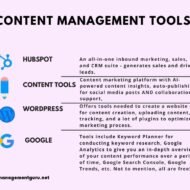
Why is Content Marketing Important for Your Business? Content marketing helps to improve conversions because it allows you to connect with and educate your leads and customers. That is why we thought of intoducing you to 123 Content Marketing Tools from 40 Industry Professionals that will guide you through restrategizing your content creation and promotional activities. Content marketing is a strategic marketing approach focused on creating and distributing valuable, relevant, and consistent content to attract and retain a clearly defined audience — and, ultimately, to drive profitable customer action. This discussion has 4 units A Slideshare presentation from razorsocial.com giving you an unending list of content marketing tools used by top industry experts.Why Content Marketing is essential?A great infographic on “Must-Have Content Marketing Tools” designed by Page Traffic.A quiz on content marketing. 1. Slideshare Presentation Intrigued to know what content marketing tools are being used by successful social media strategists and industry professionals? Here is a great presentation from RazorSocial.com that cuts right through all kinds of tools ever present online and the ones that are most desired and result-driven. 2. Why Content Marketing is essential? Content driven marketing has been proven to be the most successful type of taking your product or service to your target customer. “With the right words you can build your business empire.“ This is how I view content marketing and these days, people want to learn before they buy, be educated instead of pitched. Content marketing has to done in a very natural way, it should put your brand in customer’s trust list. “Content builds relationships. Relationships are built on trust. Trust drives revenue.“ If you were to buy a product what are the criteria you will judge the product against? Put yourself in customers’ shoe and build your product. “The paradox is the more info you give away, the more people will buy what you have to give.” 3. Must-Have Content Marketing Tools 123 Content Marketing Tools from 40 Industry Professionals 4. Content Marketing Quiz A. Why do you create content for your company? To attract as much attention to our company as possibleI honestly don’t knowTo drive traffic to landing pages where we can capture prospects and start to build a relationship with potential customersWe’re just doing it because everyone else is B. Who is responsible for content creation in your company? The marketing department squeezes it in among other projectsThe whole team works on content and it’s supported by the MDNo one really has responsibility but sometimes the intern posts stuff on Twitter and FacebookWe don’t have time for content C. How would you describe your approach to content? We don’t have a strategyWe do content on a project basis but not to a specific scheduleWe do what we can but it’s a bit ad hocWe have a detailed content strategy and plan aligned to company goals D. Which statement best reflects how you feel about your website? What? I haven’t got a websiteOur website is the hub of our business, regularly updated to a schedule and monitoredOur website is a ‘work in progress’, there’s things we’d like to changeWebsite? Haven’t looked at that in months E. Who is your website and content created for? We wrote it to make sure we’d get sign-off from the MD/CEO/BoardOur customers are at the heart of all our content creationWe try our best to make it user friendly and relevant for our customers but sometimes we struggle with thatWe just want to let the customer know how great we are Courtesy: Socialmedia.ie Answers for the Quiz: A. To drive traffic to landing pages where we can capture prospects and start to build a relationship with potential customers. B. The whole team works...
Posted by Managementguru in How To, How to Blog, Social Media
on Mar 10th, 2016 | 0 comments
A Beginner’s Guide to Start and Run a Profitable Blog I need to tell you that this is an out-an-out curated post but with all the juicy points for the benefit of bloggers. Too much information is always overwhelming, so let me get ya the creme de toppe’. What Does it Take to be a Great Blogger and Money Maker as Well? Well, there are many strategic viewpoints and suggestions from pioneer blogging experts which makes your work simple. You have to be sure about your plans for the blog – niche, target audience, business model, social media promotions, social media scheduling, content marketing and many more… YouTube Automation – Earn Passive Income on YouTube Without Showing Your FaceUdemy Affiliate Partner Don’t you worry… There is a set template for every kind of blog and all kinds of blogging activities. You have to just follow through but ofcourse infuse it with your own creativity. So, Shall we….. The number one factor is to set your specific goals. Create Strategic and Well-defined Blog Goals If you started your blog with a loosely defined plan, then what you have is an erratic content strategy at best. Without clarity in direction, mission and strategic goals, you’ll limp along. Want to create your blogging goals? Start with this goal setting worksheet. Essential Blog Questions to Answer 1. What is the very purpose you want to blog? The best tools, resources, and tips from a full-time blogger to help start a blog and make blogging a career. – Blesser House 2. What will a blog do for your business or what has it done so far? Look down the road – 3, 6, 9 months. Like any startup, new bloggers need to create a website, build a brand, find their tone, and attract followers, all on a shoestring budget. Trust us, that’s even harder than it sounds. –Stylecaster 3. Who will read your blog? Be specific about your reader and potential customer. SURE, blog traffic definitely helps to get more eyes and potential sales/clients BUT if you get these eyes onto your blog and aren’t using proper strategies to turn them into loyal readers who want to purchase what you are selling, then it defeats the purpose! – Boss Girl Bloggers 4. How will you stay consistent? Who will help you achieve your blogging goals? It’s not good practice to change permalinks after the post or page has already been published. Once your page or post is live, people might share it, link to it, email it or even write it down. – Mashable 5. How does a blog support your current marketing efforts? You can have the best website, content or product in the world, but if no one knows it exists, you won’t get very far. To be successful, you have to connect with people — your target audience a.k.a. ideal customer – Websitehowto 6. What’s your writing style? Are you serious, straightforward, funny, data driven, silly, witty? While there’s no right or wrong way to blog, great content is the key to blogging success. But share-worthy content isn’t always easy to come up with or create, is it? Today I’m coming to the rescue with 50 blog post ideas that you can use to provide your readers with quality content and keep them coming back for more. – Elleandcompanydesign 7. What will your marketing funnel look like? e.g. How will your blog create business opportunities and drive sales? In this post I’ll be sharing the five strategies that we’ve used to turn my once hobby blog into a six-figure income-producing business. – Justgirlandherblog So, these are the baby steps you have to take and be cautious about. Take one...
Posted by Managementguru in Social Media
on Feb 21st, 2016 | 0 comments

Knowing the correct picture sizes is important when posting on Social Media. Use This Handy Chart to Size Your Social Media Images Perfectly For 2025. It’s no secret that images are an important part of your social media content. They attract attention and stand out – posts with visuals deliver 180 percent greater engagement. The tricky part is that each social network has its own dimension requirements to make your visuals look their best. That’s why we’ve made it easy for you with the 2025 social media image size guide. Bookmark this guide so you can quickly access the right size for the right network. Instagram Photo and Reel Dimensions Standard Image Sizes for Instagram Instagram is all about visuals, and 2025 has refined its requirements. Recommended dimensions are: Feed Posts (Square): 1080 x 1080 px Feed Posts (Portrait): 1080 x 1350 px Feed Posts (Landscape): 1080 x 566 px Reels: 1080 x 1920 px Stories: 1080 x 1920 px Facebook Post Image Size Guide Profile and Cover Photos Facebook still commands attention in India, especially for brands. Recommended sizes for 2025: Profile Picture: 170 x 170 px (desktop), 128 x 128 px (mobile) Cover Photo: 820 x 312 px (desktop), 640 x 360 px (mobile) Post and Ad Images Shared Image: 1200 x 630 px Event Cover: 1920 x 1080 px Ad Creative: 1080 x 1080 px (square), 1200 x 628 px (landscape) Twitter (X) Header and Profile Picture Size Profile Picture Recommended: 400 x 400 px Appears as a circle—center crucial elements. Header Image Recommended: 1500 x 500 px Avoid text or logos near edges to prevent accidental cropping. Tweets with Images Single image: 1200 x 675 px Multiple images: Twitter adjusts, but the first image should be 1200 x 675 px. LinkedIn Banner and Post Image Size Personal Profiles Profile Picture: 400 x 400 px Background Banner: 1584 x 396 px Company Pages Logo Image: 300 x 300 px Cover Image: 1128 x 191 px Post Image: 1200 x 627 px YouTube Image Sizes Channel Art Recommended: 2560 x 1440 px Safe area: 1546 x 423 px Max file size: 6MB Video Thumbnails Recommended: 1280 x 720 px Aspect ratio: 16:9 Pinterest and TikTok Image Sizes Pinterest Pin Image: 1000 x 1500 px Board Cover: 222 x 150 px TikTok Profile Picture: 200 x 200 px Video Resolution: 1080 x 1920 px Cover Image for Video: 1080 x 1080 px ...
Posted by Managementguru in Decision Making, How To, Human Resource, Social Media
on Jan 19th, 2016 | 0 comments

This is all about the art of changing hearts, minds and actions of people whom you move with, interact with every day and possibly want them to like you to get things done. What influences people to say yes? These are scientifically validated principles of persuasion that provide for small, practical and often costless changes that can lead to big differences in your ability to influence and persuade others in an entirely ethical way. What are you waiting for?