Posted by Managementguru in Accounting, Financial Accounting, Financial Management, Principles of Management
on Mar 27th, 2014 | 0 comments
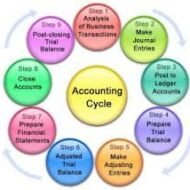
An Analysis to Understand the Art of Accounting Objectives of an Accountant: The pure objective of an accountant would be to record all business transactions that are monetary in nature, in order to ascertain if the company has earned profit or suffered loss during a financial year. The financial position of the company as on a particular date can thus be understood from the accounting journals and ledgers. We are talking about the conventional purpose of accounting. But with the lapse of time, more and more is being expected from accounting, in that, it has to meet the demands and requirements of tax authorities for the purpose of income tax and sales tax returns, government regulations, investors, owners and the management. Thus it can be aptly defined as the art of recording, classifying and summarizing events in a significant manner, that involve money transactions and/ or events that are of financial character, for interpretation. Systematic records for future reference: Book keeping is an accounting practice that tells us how to keep a record of financial transactions. A firm deals with its customers and suppliers, where numerous business transactions take place every day. It is not possible for us to remember every transaction, which we might need it for our reference at a future date. Especially, if it happens to be a credit sale, definitely the necessity of systematic book keeping arises. The owner would like to know, what amount is due from whom, from time to time. To know the financial position of the firm: Every merchant is in business to earn profits. So systematic recording of factual and financial information will facilitate the owner to understand where he stands financially at the end of a financial year, what is his net profit and to pull the ropes tight if credit margin is wide. Further more, he can also understand the nature of his business growth by comparing the accounting records of two consecutive years. Taxation purposes: Some people evade tax, but no one can avoid tax. The main source of revenue generation for government is tax payments from business merchants and corporate companies. You need to pay a percentage as tax, in accordance with profit arising from sales. The accounting records that you maintain contain facts that are taken into account by the taxation authorities as a basis for assessment. https://amzn.to/2sl5aL7 Good evidence in the court of law: To prove your genuinity, in case of some disputes between yourself and the customer or supplier, your records and vouchers, if authentic and valid, are going to speak for you in the court of law as solid evidence. Accounting also answers some of these questions: How well the different departments of business have performed all along? What is the most profitable product line? What are the products whose production has to be increase and what is to be stopped in order to avoid losses? Is the cost of production reasonable or excessive? Is there a need to revise policy decisions to improve the profitability? What will be the future plans of business in the wake of existing results presented to the management? Overall, is the firm proceeding towards the right direction in terms of productivity, profitability and growth? Accounting is not only about recording and classifying, the interesting features being analysis and interpretation, which are the key factors for the development of the organization as a whole. Note: The Comptroller and Auditor General of India (CAG),is the head of the Supreme Audit Institution of India (SAI) CAG is the sole auditor of the accounts of the Central (Union) Government and the State Governments. CAG is also responsible for the audit...

Posted by Managementguru in Business Management, Decision Making, Entrepreneurship, Human Resource, Organisational behaviour, Principles of Management
on Mar 20th, 2014 | 0 comments
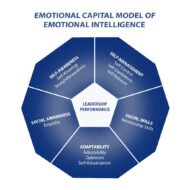
Emotional Intelligence for Effective Inter Personal Relationships What is Emotional Intelligence : an ability or capacity to perceive, assess, and manage the emotions of one’s self, and of others. Role of Emotions: Emotions play a critical role in organizations where there is a need for people to work in groups or teams. A leader who is strong in mind and thoughtful can perceive, observe and direct the emotions of the team members through proper channels. Such a leader is said to be “emotionally intelligent”. No! It is not about intelligence quotient but emotional intelligence. Empathy is the ultimate quality expected in leaders and managers rather than being rated high in the IQ scale.The capacity to perceive, scrutinize and manage one’s own emotions and that of others is one major factor of advantage in the concept of emotional intelligence. An emotionally intelligent person can institutionalize and manage change as well as make powerful decisions. Grooming of Human Mind and Skills: Human resource management throws up a real challenge to corporate organizations, where human minds and skills have to be groomed for the purpose of transcending their performance to remarkable levels in order to satisfy the production requirements. This is possible only when an organization has a leader who can draft and amalgamate the process of relationship management and skill development without a glitch for the benefit of the organization . Transformational leadership with constructive attitude and open approach is well appreciated and accepted by the worker force. What are the distinct features of emotional intelligence? High perception Being insightful Sensitive to the needs and requirements of the employees Self-control Self-awareness Open communication Empathy Change management skills Effective decision making Ever sanguine Instrumental in developing interpersonal skills Breaks the conventional rules Aggressive and daring in his approach Socially popular and easily gain acceptance Motivation driver The rational quotient behind emotional intelligence helps people to think and act smart even during nerve-racking situations.Emotional intelligence helps people to think and act in a logical manner in stressful situations that can divert their energy into positive thinking. A leader with high emotional intelligence can work efficiently with his team members. The spirit of exuberance from the leader acts as a positive signal and takes the pressure off the employees’ mind. It is this ability to identify and understand the emotions of people working under him makes him a comrade rather than a commando. Why EI is Necessary? Emotional intelligence is necessary for top level executives at management level to stand out and succeed. An ordinary employee who does mundane job everyday is expected to be technically sound and well-trained. The same criterion can never be applied to a manager or a chief executive who is bound to manage both formal and informal teams working under the same roof. Only persons who are emotionally sound can uphold the proceedings with dynamism and verve. By motivating human personnel you can get things done in a smooth manner: Give them a fresh start to prove themselves in case if they fail at the first attempt Anger management of self/others Channelize the emotions of self/others and create positive vibes Perceive the problems from various angles to get a complete picture Understanding the root of the problem Treating work as fun Thinking out of the box – parallel thinking and creative thinking must be encouraged amongst the employee group. People with high emotional intelligence are the ones needed in business community as big corporate organizations always find it difficult to manage human resource. The management has to devise a system that takes into account the intricacies of human mind and assigning right people to handle the perplexities....
Posted by Managementguru in Business Ethics, Business Management, Human Resource, Principles of Management
on Mar 15th, 2014 | 0 comments
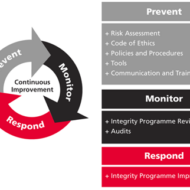
What is Social Audit? A formal review of a company’s endeavors in social responsibility. A social audit is a method of assessing, comprehending, reporting on, and eventually improving an organization’s social and ethical performance. A social audit assists in closing gaps between vision/goal and reality, as well as between efficiency and effectiveness. Social Obligations of Business Organizations: Every business organization has certain social obligations to be duly discharged to employees, government, owners, buyers, public, environment etc. It is a good thing that businesspersons of today have understood their obligations and have been discharging them ably. Social audit scans the scope of the social responsibilities of a business enterprise and evaluates an organization’s social performance. Introduction to 3D Modeling Measure of Social Performance There are no specific measures established to rate the social performance standards of a business enterprise. Nevertheless, business enterprises do not seem to understand the relevance of social audit because much importance is attached with the economic aspects of a business. The features of social audit are listed down for better understanding of the process: The focus is on the social aspect of a business organization rather than its economic aspect. The activities of a firm that has an impact on the society, such as, environmental quality, consumerism, opportunities for women and other disadvantaged people in the society are taken into consideration for analytical purpose. How to measure social performance of companies? Social audit is confined to the process rather than concentrating on the results of social action. It is quite difficult to measure social performance in quantitative terms. How do you quantify social philosophy of management and human values? Qualitative measurement is also relative, as, what appears right to one person may not be so for another. So a combination of quantitative and qualitative data must be used for the purpose of this audit. If an internal auditor does the assessment, there is this problem of loyalty, which will outweigh all the other shortcomings present in the business. If an external consultant is made to assess the situation, he can analyze the situation with no bias but he will not be familiar with the business activity of that particular firm. Therefore, a combination of both can work out well to carry out the assessment as they can complement each other. A New but Necessary Concept Social audit is a new concept, so there are not much standard procedures available to follow. Most companies are at the beginning of the learning curve with this process. When companies do begin audit procedures, they tend to find that the process is more complex than originally contemplated. However, every aspect of business and its management has to be explored and analyzed for the benefit of future generations, so as to take proactive measures to tackle problem situations. Business firms obtain their resources from the society and are dependent on the society to sell their produce too. Hence, it becomes their moral responsibility of caring for the society, within their scope and potential....
Posted by Managementguru in Business Management, Principles of Management, Training & Development
on Mar 2nd, 2014 | 0 comments

Manpower development today goes beyond simply filling positions – it’s about strategically planning, nurturing, and aligning human resources with the long‑term vision of the organization. It involves accurately determining both present and future workforce needs, while designing the right organizational structure to ensure the right mix of managers, specialists, and employees are in place to drive growth. Key Elements of Modern Manpower Planning 1. Present Workforce Analysis The first step in manpower planning is to assess the current workforce. HR teams collect data on employee demographics, qualifications, skills, training, and experience. Example: A tech company may analyze its developers’ coding skills, certifications, and project experience to identify gaps in AI or cloud expertise. Tools like HR analytics dashboards and talent management systems make this process faster and more accurate. 2. Manpower Inventory Chart A manpower inventory chart provides a clear picture of staffing levels and future talent pipelines. It helps HR leaders: Understand current staffing levels Identify employees ready for promotion Forecast internal talent supply Spot performance gaps for training Plan succession for retiring employees Resolve overdue promotions fairly Example: A retail chain may use this chart to plan for seasonal hiring, ensuring enough staff are available during holiday sales. 3. Job Evaluation and Job Analysis Job evaluation ranks roles within the organization, while job analysis defines the skills and responsibilities required. This ensures clarity and fairness in compensation and career progression. It highlights: Nature of work performed Methods and processes used Skills, education, and training required Interrelation of jobs across departments Work environment conditions Example: In a healthcare organization, job analysis ensures nurses, doctors, and administrative staff have clearly defined roles to avoid overlap and confusion. 4. Job Descriptions A modern job description is more than a list of duties—it’s a branding tool that attracts the right talent. It includes: Job title Core duties and responsibilities Authority and accountability Required qualifications and skills Example: A startup may highlight flexible work culture, innovation opportunities, and growth potential in its job descriptions to attract millennial and Gen Z talent. 5. Short‑Term and Long‑Term Goal Alignment Workforce planning must align with business goals. Short‑term goals may focus on immediate staffing needs for projects. Long‑term goals anticipate future skills required based on market trends and technology shifts. Example: An e‑commerce company may plan short‑term hiring for logistics staff during festive seasons, while long‑term planning focuses on AI engineers for predictive analytics. 6. Demand and Supply of Talent The demand for skilled talent is higher than ever. Organizations must balance internal talent supply with external recruitment. Inter‑departmental transfers may solve short‑term gaps. Long‑term solutions require strategic hiring, reskilling, and succession planning. Example: A manufacturing firm may reskill machine operators in automation technologies instead of hiring externally, ensuring loyalty and cost savings. Why Modern Manpower Planning Matters Ensures future‑ready workforce Builds employee engagement and retention Supports business scalability Aligns HR strategy with organizational...