Posted by Managementguru in Business Management, Human Resource, Labor Management, Principles of Management
on Mar 10th, 2014 | 0 comments
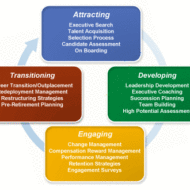
Dimensions of Human Resource Management I would like to brief you on some of the key aspects that mark the paradigm shift in the HR environment towards better management prospects. 1. The Human Resource function has shifted its focus to a much wider canvas that includes Empowerment of EmployeesRestructuring the Organisation and so on. 2. A range of HR sub-systems are involved in Planning The NumbersTypes And Skills Of HrEnsuring Their AvailabilityPlacing In The Right JobPromoting And Nurturing Their Mental HealthHelping Them Develop Special Talent And Skills 3. Human Resource is considered as an “investment” and no more an “expenditure”. Investment in TrainingRe-Training AndContinuous Learning On The Job develops the skills and competences of managers and employees and prove to be an useful investment. 4. The concepts of Learning Organisations AndTeam-Building serves a basis for “Competitive advantage” and “Motivating the employees.” 5. Values that are stressed upon are Co-OperationHarmonisationSynergyTrustBeing Pro-ActiveCollaboration 6. Strategy: VisionMissionObjectivesGoals– How these can be achieved? The techniques that are basically holistic in nature can solve the purpose. Such techniques involve SEWA– Self mastery, Empathy for workers, Worker-directedness and Achievement in performanceABO-Action by Objective Nine Dimensions of an Effective HR Department: What is the reputation of the HR department?What are the criteria (deliverables) that shape HR work?What is the mission or strategy of the capabilities – focused HR department?How is the HR department organised? How does HR facilitate the definition and creation of organisation capabilities?How do we make better HR investment and choices?How do we create HR practices?How does HR go about doing its work? What do HR professionals need to be, know, and do to be effective? Let us make a sincere comparison between the past and the present in terms of HR perspective These techniques produce performers who find their way through any set of given problems, manage themselves and lead the team to a stae of self- realisation. Old model vs New model 1. Job was the basic unit/ Team is the basic unit 2. Relations with environment there handled by the individuals/ Densely networked with environment 3. Information flow was vertical/ now it is vertical, horizontal and holistic 4. Many layers of management / Organisations have become flat 5. Emphasis on structures/ Emphasis on process and literally virtual organisations have evolved 6. Career path upward and linear/ career path lateral and flexible 7. Standardised evaluation and reward system/ Customised evaluation and reward system 8. Ethnocentric/ International 9. Single strong culture/ Multicultural and diversity of viewpoints and...

Posted by Managementguru in Business Management, Human Resource, Organisational behaviour, Principles of Management
on Mar 10th, 2014 | 0 comments
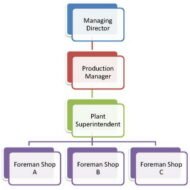
Line and Staff Authority LINE AUTHORITY: It is that authority which a superior exercises over his subordinates to accomplish primary objectives of the organization. The superior issues orders and instructions to his sub ordinates to complete the tasks. This authority is delegated to those positions or elements of the organization which have direct responsibility for accomplishing the primary enterprise objectives. The flow of authority is always in the downward direction from the superior to the subordinate and such relationship is called LINE RELATIONSHIP that exists in all departments of an organization. ROLES OF THE LINE RELATIONSHIP: 1. As a Chain of Command: Line officials are in the chain of command from the highest position to the lowest position in the organization. Each successive manager exercises command over his subordinates. 2. As a career of accountability: Each executive in the line is accountable for the proper performance of the tasks assigned to him and every subordinate is answerable to his superior. 3. As a Channel of communication: Since the line relationship involves issue of instructions from the authorities and reporting from subordinates, it facilitates and serves as an effective channel of communication. Line relationship helps the organization to work properly by Providing the decisions required for functioning Furnishing reference points for the approval of proposals Serving as a means of control by setting the limits of authority Establishing authentic communication channels to make leadership process effective STAFF AUTHORITY: Literally staff implies a stick carried in the hand for support. In the context of management, it implies to those elements that help the line authorities to function effectively in accomplishing the primary objectives of the enterprise. Staff provides advice assistance and information to line managers and they are distinguished into three categories namely, personal, specialized and general staff. They reduce the burden of line authorities and they too have the right to command and extract work from their subordinates. According to Henri Fayol “staff is an adjunct, reinforcement and a sort of extension of line manager’s personality.” LINE AND STAFF CONFLICTS: As always, functional and decisional conflicts arise between line and staff members. The causes may be attributed to the following reasons. 1. Line managers grudge against the staff personnel: a) The staff authorities try to encroach upon the line managers and tell them how to do their work b) Lack of well balanced advice from the staff managers c) Staff managers are not directly accountable and sport a jealous attitude towards line authorities d) Staff managers fail to see the big picture objectively and their interests are confined to specified situations e) Staff often tend to impose their superiority on line managers 2. Staff personnel complaints against the line managers a) Line managers don’t want to listen to the suggestions of the staff and make it a point to resist new ideas. b) Lack of authority on the part of staff managers to implement their innovative ideas and hence the dependence on line authorities. c) Line managers do not utilize the services of staff personnel properly and effectively. 3. The workers’ attitude a) The authority relationships between line and staff specialists are not clearly defined most of the time b) The basic difference in attitude and perception of the line and staff managers create difficulties for the work force in carrying out orders and...
Posted by Managementguru in Business Management, Human Resource, Motivation, Organisational behaviour, Principles of Management
on Mar 10th, 2014 | 0 comments

Employee Morale – Role and Effect What is Morale? Morale is a word that conveys different meaning to different people. It might imply the following meanings: 1. Mental Attitude or Mind set from a psychologist’s perspective 2. A feeling of togetherness from an individual’s point of view 3. Group consent in terms of a business environment etc. Morale can be defined as ” an attitude of mind which conditions how well or how badly duties are performed”- W.H.Walley It can also be defined as ” the collective attitudes of workers towards one another, the employer, the management, or their work”-J.C.Denyen Morale is ” the capacity of group of people to pull together persistently and consistently in pursuit of a common purpose”-Dr.Deighton Morale is thus the undercurrent in an organisation that determines the performance levels of the employees as it dictates employees’ enthusiasm, voluntary conformance with regulations and orders and willingness to co-operate with fellow workers to accomplish the enterprise objectives. Poor morale is evident from in-subordination, discouragement and dislike of job, company and associates. Nature of Morale What it is? : Emotional by nature , a state of well- being and an attitude of mind. What it does? : Directly related to quality of work, enthusiasm, motivation, productivity, discipline, co-operation and initiative. Where it resides? : In the minds, attitudes and emotions of employees as individuals and as groups. Whom it affects? : Employees and executives during their interaction and ultimately the customers and the community. What it affects?: Willingness to work and placing the enterprise objective behind self interest. To summarise, the ill effects of Bad Morale would be Reduced productivityIncreased absenteeismAntagonism towards managementToo much of complaints and grievancesIncreased employee turn-overFriction between employeesAlcoholismAccidentsIncreased lethargy In contrary High Morale leads to Willing co-operation towards enterprise objectivesLoyalty to the managementGood behaviour in conformance with the rules and regulationsStrong and coherent groups leading to organisational staminaPrioritising jobs and placing self interest behind organisational objectivesIncreased sense of participationPride in organisation Picture Courtesy: extramadness.com Ways to Improve Employee Morale From the workers’ point of view: Fair compensation and bonusSatisfactory working conditions conforming to safety and securityTreated with dignityEfficient and amiable leadershipScope for expressing their views for improvementAcceptable working hoursEnsuring economic security From the management’s view point Co-operation from the employeesStability of tenureIncreased productivityLow cost per unitLoyalty of the workers Is it possible to measure Employee Morale? Level of productivity: When the morale is low due to different reasons, higher is the chance of absenteeism, accidents and grievances since the employees try to overlook their responsibilities towards the organisation. Therefore it is the responsibility of the management to settle and score issues relating to employees or unions then and there to avoid those issues blowing out of proportion. Morale Surveys These are generally conducted by individual organisations to find out if the employees are satisfied with their job and task and how they feel about it. This is considered to be a fairly important measure to gauge the kind of relationship the employees have with the management. Surveys also indicate whether the channel of communication is open between the superiors and sub-ordinates and serves as an emotional release for the workers to express their real feelings. Types of Morale Surveys: Objective Surveys: Objective type of questions are given to the employees for answering but the flaw is that, the management representative writes the answers and this does not give a chance for the workers to express their feelings. Descriptive Surveys: Here the employees write their answers to queries asked which are more descriptive in nature and reflects the actual feelings of each individual. Projective Surveys: Sometimes psychological tests are conducted to bring out the hidden feelings from tight lipped employees or who fear the management. The management must be aware of the following morale...
Posted by Managementguru in Business Management, Motivation, Organisational behaviour, Principles of Management
on Mar 10th, 2014 | 0 comments
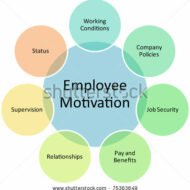
Motivation is one area where periodical updates are necessary for an organisation to gauge the morale and mood of their employees. Companies sometimes act very smart in that they break their hands by patting their own back. If you wish to propel your organisation forward, you need to satisfy your work force first. The million dollar question is a big “HOW?” Well, a problem properly diagnosed is half done. And this motivation thingy is not a problem at all. Keen observation and understanding is what is needed on a manager’s part to steer things in the right direction, that is good for the company. Man, even your kid will turn his back if you want to take control by unleashing your power. The right thing to do is to find out exactly how motivated they are. There are several things that come into the purview of motivation.Let us do this in a questionnaire format so that things might fall in place. Question No 1: What is that, that motivates an employee, to be more precise your employee? (This turns out to be the hot dissertation topic for many young MBA’s) Is it any one of the following? Financial rewards Clear Goals Connecting with others Rank Appreciation and Recognition Throat neck competition Job security Fear Results Excitement Variation or Diversity Principle of Motivation: Well, the principle of motivation is pretty much the same for all individuals. I 100 % go with Maslow’s hierarchial needs theory which travels right from physical needs at the base of the pyramid upto self realisation at the top. If this is the case,how come there is a disparity when everybody is subjected to the same kind of influence at the work place? For some it stops somewhere in the middle who are very much satisfied with the pay check figure and the perks that go with it. For some there is an inner drive that makes them unstoppable until they reach the pinnacle. This is the very thing that differentiates a manager from a subordinate. This is the very thing that distinguishes a CEO from a manager. This is the same thing that generates top business guns and management gurus who fall a genre apart form the rest of the crowd. Well, there are other factors such as the family background and the environmental influence that shaped up your personality all through. Motivation Surveys: Motivation surveys are not only important in getting to know your employees but also it showers a immaculate image on the company. It feels good for your workforce when they are involved and consulted with, on issues related to themselves. A recent Harvard review has stated that most of the managers feel that they really get motivated when there is : “Recognition for Good Work.” But folks, you will be surprised to know that the same review reveals another side of the coin, the top motivation for workers is when they make “Progress.” Again, call it the inner drive, impulse, motive, ambition, fire in belly, vigor, vitality…Getting to know your work force makes you “BOND WITH THEM” and it aids you in plugging the holes at the right place and at the right time. See, there is no bench mark for motivation, you respect your work force, treat them with dignity, communicate well and give them what they want and that’s it, you are defintely a winner. If you are a person capable of motivating your work force, you automatically become a source of inspiration. My humble suggestions to managers goes thus: 1. Make your employees understand what motivates them.( Kindly find what flares your temper before venturing into this exercise.!) 2....
Posted by Managementguru in Business Management, Motivation, Organisational behaviour, Principles of Management
on Mar 9th, 2014 | 0 comments
How well employees know about your Organization? Now, this is a million dollar question and a prominent issue that has to be taken care of when it comes to motivating your employees. Transparency is a booster pack that works out wonders in the area of motivation. 25 Great Motivational Quotes to Kickstart Your Life How can a management be transparent in key areas like finance and business deals, my question is WHY NOT? The success of operations of a firm relies solely upon the performance of individuals who work towards the accomplishment of goals. They are the key persons who should be kept abreast about the activities of the firm. What makes some organizations stand out? When the Boss wants each and every employee to be truthful and loyal to him, the same expectancy would be there on the part of the workforce –Why don’t the bosses understand this? Integrated Organizational Development I would cite TVS Group as a classic example that commands respect from the employees and many a times I’ve heard people say that they are proud to work for TVS. What makes the employees so motivated to work for certain firms overlooking the pay scale and perks? One should deeply delve into the psychological theories that support motivation, perception and attitude. Etiquette of the company: This is one thing that a firm has to clearly communicate to its work force. The ideology and principle behind the running of the business should be genuine and authentic. The pathway to achieve those missions should be realistic and achievable-to put it clearly a firm should have its business roots stemming out from clear cut intent and purpose. When JRD Tata wanted to start a steel plant in India, not many believed it to be a possible venture. The business legend had clear cut intent of installing a steel plant to utilize the resources available in India and to pass on the proceeds for the economic benefit of the country. Nobody suspected his intent; such was his determination and resolve. This infographic beautifully portraits the scenario of how the future employees would be: Communication of Goals: The management will have clear plans of production target which has to be communicated properly to the lowest level with the same amount of clarity. This has to be done via channels or different levels of management and executives have to play their roles properly. Nobody needs to show their prowess or power; only thing needed is proper delegation of authority and responsibility. This gives clear direction to the work force and when their immediate boss sits with them for periodic discussions to decide on the short term as well as long term objectives, they feel part of the show which immensely motivates them. Ethical Standards of the company: This again adds image to the company and “As is the Leader so is the Employee.” The management should not involve itself in any kind of lobbying – When there is political corruption, malpractices become the order of the day. What Kind of a Leader Are You? A country like India needs more educated leaders who can bring awareness on the importance of economic independence and even distribution of wealth to the masses. If people clearly know what is right and what is wrong, the unwanted elements cannot take them for a ride. Given the population, India though marching towards becoming a developed nation, the growth is hindered by poor policy decisions and sky rocketing inflation. Clarity in Structure: Ego clashes start when the organizations have more number of levels and generate chaos in communication. Misunderstanding creeps in because there...