Posted by Managementguru in Business Management, Entrepreneurship, Human Resource, Organisational behaviour, Principles of Management, Startups
on Mar 22nd, 2014 | 0 comments
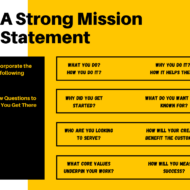
Why mission statements are important? Before going into that, let me first briefly tell you what a mission statement is. Contact Us for Promotions & Partnerships Firms in corporate business arena perform different business activities to earn profit as well as to retain their market share and stand. How does the general public know what they are up to? Is it really necessary for the firms to expose the nature of their activities to outsiders! Well, by explicitly defining the mission of your company, you stand a chance to gain identity, character and image and there is nothing to lose. A mission statement defines the basic reason for the existence of the organization and it clearly reflects your corporate philosophy. The management’s actions also might reflect their mission, in which case the mission statement is not explicitly defined and sometimes it could be deduced from the press statements released by the CEO. Whether defined or not defined, each and every organization has a definite mission that is clearly communicated to all the employees for action. When defined, it also serves as a means to highlight the firm’s social responsibility. Following are the Distinct Characteristics that a Mission Statement Should Possess It should be precise: The mission should neither be narrow as to restrict the activities of an organization nor too broad to make the situation pointless. It should be crystal clear: It should be clear enough to lead to action and not high-sounding and adhere to cheap publicity. It should be feasible: The actions mentioned must be well within the reach of the company and should not be impossible. It should be realistic and achievable. As, credibility is involved, firms must exercise caution when they release their mission statements. Feasibility mainly depends on the resources available that facilitate the firm to work towards the mission. It should be motivating: Motivating both for the employees and the society. Employees must identify themselves with the organization and feel proud that it is worth working for the firm and customers should take pride in associating themselves with that firm. It should be distinctive: It should project your distinctive competence to sustain competitive advantage. Say, if you own a garment shop, you should talk about the range of clothes that you can offer for different sections of the society and you can name yours a “Family Shoppe”, so that people will understand the nature of your business. It should indicate major components of strategy: If the aim of your company is stability, growth, diversification or concentration, all those can be included in your mission statement. It should also indicate how objectives are to be accomplished: The time period, production target, product specialization, product or process differentiation, everything can find their place in mission statements for the benefit of the society and self. Strategic management involves intelligent and timely decision making and mission statements are nothing but components of strategic planning that help the managers to lead the firm with some distinct “ideology” in the form of mission statements. Some Interesting Mission Statements Google’s mission is to organize the world’s information and make it universally accessible and useful. Nike-“Crush Reebok.” Wal-Mart-“To give ordinary folk the chance to buy the same thing as rich people.” Walt Disney-“To make people...

Posted by Managementguru in Human Resource, Principles of Management, Project Management, Training & Development
on Mar 22nd, 2014 | 0 comments
Assessment centers Some companies run a series of prolonged selection procedures (assessment centers) each lasting one or two days, and sometimes longer. Usually these are after the first round of interviews and before making the final selection, but they can be used as an initial selection process. They are usually held either on company premises or in a nearby hotel, and are measured by many employers to be the fairest and most accurate method of selecting staff. This is because they give a number of different selectors a chance to see you over a longer period of time than is possible with a single interview, and the chance to see what you can do, rather than what you say you can do, in a variety of situations. Assessment Centers typically include a number of elements. Social/informal events, where you get a chance to meet variety of people, including other candidates, the selectors, recent graduates and senior management. This is an excellent opportunity for you to find out more about the organization and to ask questions in a more informal or social setting. Information sessions, which provide more details about the organization and the roles available. Listen carefully, as it is likely to be more up-to date than your previous research. If you are unclear about anything, ask. It is often good to have a question prepared for these sessions, but make sure it is a sensible question and not one that has already been covered. Asking inappropriate questions just to get noticed does not impress the selectors. Tests and exercises designed to exhibit your potential. Selectors at assessment centers measure you against a set of competencies, and each exercise is carefully designed to assess one or more of these areas. Do not worry if you think that you have performed badly at any stage; it is more than likely that you will have the chance to compensate later on. It is also worth remembering that you are being assessed against these competencies and not against the other candidates, so rather than trying to compete against them, make sure that you demonstrate the qualities the organization is looking for. Remember that assessment centers are extremely expensive to run and that you have already come a long way to be invited – you may have as much as a one in six chance of being selected. Vestibule Training Vestibule training creates a miniature of the department for which the training program is carried on. It utilizes machinery similar to that in operation on the production floor. Qualified instructors, usually highly skilled operators or supervisors, are provided to conduct the program in this special section. Here the new employees are given a course of training in the particular machines they will be required to use and on the exact work they will do when they become a part of the regular production force. {In the early 1800s, factory schools were created, due to the industrial revolution, in which workers were trained in classrooms within the factory walls. The apprentice system was inadequate due to the number of learners that had to be trained as the machines of the Industrial Revolution increased the ability of the factory to produce goods. The factory owners needed trained workers quickly because there was a large demand for the produced goods. Towards the end of the 1800s, a method that combined the benefits of the classroom with the benefits of on-the-job training, called vestibule training, became a popular form of training. The classroom was located as close as conditions allowed to the department for which the workers were being trained. It was furnished with the same machines...
Posted by Managementguru in Human Resource, Principles of Management, Project Management, Training & Development
on Mar 22nd, 2014 | 0 comments
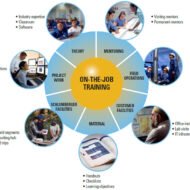
On The Job Training Methods For Effective Employee Development The method by which training is delivered often varies based on the needs of the company, the trainee, and on the task being performed. The method should suit the audience, the content, the business environment, and the learning objective. Ideally, the method chosen will motivate employees to learn, help employees prepare themselves for learning, enable the trainees to apply and practice what they’ve been taught, help trainees retain and transfer what they have learned, and integrate performance with other skills and knowledge. The basic objective of training is learning which brings about a radical change in the perspective of an individual preparing him for the task. On the Job Training: This is the most common method of training. The trainee is placed on the job and the manager or mentor demonstrates the trainee how to do the job. To be successful, the training should be done according to a structured programme that uses task lists, job breakdowns, and performance standards as a lesson plan. Common on the Job training methods include:- Demonstration: Demonstration is very effective for basic skills training. The trainer shows trainees how to do something. The trainer may provide an opportunity for trainees to perform the task being demonstrated. Panel: A panel provides several points of view on a topic to look for alternatives to a situation. Panel members may have differing views but they must also have objective concerns for the purpose of the training. This is an excellent method for using outside experts. Projects: Projects require the trainees to do something on the job, which improves the business as well as helps them learn about the topic of training. It might involve participation on a team, the creation of a database, or the forming of a new process. Employees can voluntarily under-take some small projects that would better the performance of a system. This would help the employee to become noticed and others ease of doing a particular thing and a source of inspiration. Say, Simplifying a database application by introducing a new software. Mentoring: A mentor can tutor others in their learning. Mentors help employees solve problems both through training them in skills and through modeling effective attitudes and behaviors. This system is sometimes known as a buddy system. Visit our GUMROAD Ebook Store for all your MBA guide...
Posted by Managementguru in Entrepreneurship, Human Resource, Leadership, Organisational behaviour, Principles of Management
on Mar 20th, 2014 | 0 comments
CEO – Chief Executive Officer Chief Executive Officer : The highest ranking executive in a company who is responsible for a company’s operations , usually the President or the Chairman of the Board. Chief Executive – Architect of an Organization: An architect brings out the aesthetics of a building by infusing soul into spaces through his thought process. Likewise a chief executive (CE) is the most important architect of an organization who is responsible for designing and building all aspects of strategic management right from formulation to evaluation of strategies through thought management. He has multifarious facets to exhibit and designations to be withheld, such as the managing director, executive director, president or general manager in business enterprises. As the chief strategist, he plays a pivotal role in strategic decision-making too. Due to the significance attached to the post, researchers and numerous authors have attempted to redefine their roles, functions and responsibilities from time to time. This is quite understandable since the CE of an association plays the most vital role in determining whether an organization has chosen the right path towards success. Chief Administrator: He might also be called as the organizational leader or builder; chief administrator, implementer or coordinator and communicator of organizational objectives; he should don various roles in the likes of motivator, personal leader or mentor, depending on the function he is anticipated to perform by the management. Every chief executive does not and need not personify all the above cited qualities: but a good chief with high business acumen and an eye for detail can definitely fill the bill over a period of time. Major roles and responsibilities of a chief executive: Enunciation of Corporate Philosophy -with the help of his team members the chief executive must try to set the company’s goals and objectives and supporting strategic moves must be planned from the bottom level to the top. Clues from the external environment must be taken into consideration before making the necessary moves. Growth-all the CE’s are expected to be growth stimulators. This can be accomplished by setting targets which have to be dealt with within the stipulated time period. Employees can be involved in this process to set short term objectives followed by periodical reviews with management executives to evaluate the success rate of the projects undertaken. The expertise and interest of the CE helps to infuse motivation and enthusiasm amongst the work force which results in quick completion of targets. A chief executive is responsible for both external and internal functional responsibilities. His role cannot be confined to a particular sphere of action as he is expected to be a generalist in order to manage effectively and be self sufficient once he reaches the top. Self-management and management of time are very important. Outgoing and should possess charisma Other parameters like age, intelligence, education, functional background and experience are also scrutinized when a company likes to choose its chief strategist. A CE performs the strategic tasks- actions which are essential to provide a direction to the organization in order to achieve its purpose. He is the key person in setting the mission of the organization, deciding the objectives and goals, formulating and implementing the strategies and in setting a concrete ethical prototype to enhance the quality of the system as a...
Posted by Managementguru in Decision Making, Entrepreneurship, Human Resource, Organisational behaviour, Principles of Management, Training & Development
on Mar 20th, 2014 | 0 comments

Self Motivation-Key to Managerial Success What is Self Motivation : Ability to do what needs to be done without external influence. How does your company become successful? Just because you have cutting edge technology! Surplus capital! Excellent Infrastructure! Reliable Workforce! Definitely not. A COMPETENT VALUE-DRIVEN CORPORATE MANAGER would make all the difference. Even his very presence would make the atmosphere ELECTRIC. Only some are gifted or bestowed with top managerial qualities. How! Is it an innate quality or imbibed! It is a topic worth the discussion, because it proves to be the liveliest element in the management process. Well, when top management decides to recruit a good manger, what are the qualities they would be in favor of? Think about it, we even expect a house maid to be sincere, on time and loyal to us. When it comes to corporate dealings, the first and foremost quality desired will be “BEARING HUGE RESPONSIBILITY“. Accountability, transparency and control towards the day to day affairs of the company follow suit. Read this resourceful article from Inlpcenter – Change Your Thinking: The Alternate Futures Self-Motivation Exercise , a unique self motivating strategy to make believe in yourself and become better problem solvers. These managers who are also leaders serve as a ROLE MODEL for all the other employees SET STANDARDS FOR PERFORMANCE Motivate their employees Set a Brand Image for the company Be a GOOD LIAISON Problem solver Counselor and make the company special. Strategic Direction: When we talk about value, we talk about the influence that the value has on the STRATEGIC DIRECTION OF THE FIRM, which involves shaping up the character and image of the firm. A good manager EVOLVES OVER A PERIOD OF TIME. While considering the HEAVY TURN OVER TREND that has set in lately in the corporate environment, it becomes important for the top management to pick their HR lot carefully. How do you empower your trusted persons is a question that every Boss has to ask himself to retain the best talent. Good Managers stick to the firm and they contribute to the GROWTH OF THE FIRM. Training plays, of course a major part in the DEVELOPMENT OF MANAGERS but I feel that ONLY THE PERSON WHO MAKES THE BEST USE OF HIS SUBCONSCIOUS INNER DRIVE, REACHES THE TOP. Loyalty is an outdated term in this modern world and the minimum you could expect is SINCERITY. Self motivated managers easily regulate the environment and makes the climate cordial. He has to don many roles, A BRIDGE BETWEEN TOP MANAGEMENT AND EMPLOYEES MANAGE THE INTEREST(OF BOTH THE FINANCIAL INSTITUTIONS AND EMPLOYEES) FORMULATING MARKET STRATEGIES SHOULD BE A TECH-SAVVY A MAN OF EMPATHY A MAN OF BRILLIANT INTUITIONS(ESPECIALLY WHEN IT CONCERNS STOCK MARKET) EVER LEARNING VERSATILE and much more. Practice makes a man perfect is the saying. It suits the corporate business world too, provided the man is intelligent, capable and smart in taking decisions. Always a thinking person, an efficient manager would be on the look out for opportunities and resources that could benefit the firm. Every one of you who aspires to catch up with top positions in the business world must do a “THOROUGH SELF ANALYSIS” as to how agreeable you are in the likert scale of the...