Posted by Managementguru in Business Management, Human Resource, Principles of Management
on Mar 2nd, 2014 | 0 comments
Objectives and Functions of HRM Human Resource Management is very challenging because of the dynamic nature of the people and it is not only managing men but involves administering a social system. According to Dale Yoder “Man power management is the function or activity in directing working men and women in maximizing their satisfaction in employment.” George R. Terry says, “Personnel management is concerned with the obtaining and maintaining of a satisfactory and satisfied work force.” OBJECTIVES OF HUMAN RESOURCE MANAGEMENT: 1. Social Objectives: a) Facing the challenge of unemployment and providing people with maximum employment opportunities is the first and foremost priority of countries like India where there is pressure of population growth. b) The employees must be able to derive maximum satisfaction from the work performed. c) The system should facilitate harmony and co-operative endeavor for one and all. 2. Personal Objectives: Job satisfaction and rewards in the form of pay, promotion and recognition is aimed at, on the part of employees. This can be achieved by providing adequate remuneration, opportunities for advancement, facilities for training and development, job security and proper work. 3. Enterprise Objectives: This can be achieved by selecting the right people for the right job, empowering them through training, development and participation. FUNCTIONS OF HUMAN RESOURCE MANAGEMENT: 1. Planning: Assessment of future man power requirement is done with the help of man power inventory chart followed by the recruitment and selection process. A clean job description is needed to lure people with the right skills for the right position. It is the responsibility of the manager of a firm to lay down specifications of the qualities and skills required by the workers and determining sources from where the workers are to be recruited. Selection is done by means of written test and personal interviews. 2. Organizing: This involves proper designing of organizational structure, the inter relationship between jobs, establishing smooth channels of communication, assignment of authority, responsibility and creating accountability, establishing line and staff relationship etc. 3. Directing: Issuing orders and instructions down the line and motivating the work force to carry out those instructions satisfactorily. Positive motivation in the form of financial and non-financial incentives, a good working environment is essential on the part of the management. 4. Controlling: The motive is to ensure that performance of each worker coincides with the plans or standards. Bench marking, Total quality management and Six sigma are some of the popular concepts of standardization. → Scope and Characteristics of...

Posted by Managementguru in Business Management, Organisational behaviour, Strategy
on Mar 2nd, 2014 | 0 comments
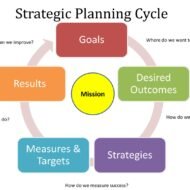
“Planning is bringing the future into the present so that you can do something about it now.” – Alan Lakein. Planning is absolutely essential and every minute you spend in planning saves 10 minutes in execution and gives 100 percent return on energy. We compare the advantages of planning against the consequences for your better understanding. Let’s See the Advantages of Planning First Facilitates opportunity analysis and presents an awareness of the external environmentMinimizes cost as it takes into account all the contributing and limiting factorsIncreases efficiencyRefines culture of an organizationProvides a good directionAlso establishes several measures of controlElicits commitment Disadvantages of Planning Time consumingInvolves excessive paper workSome times over emphasizes only the objectivesPlanning may become lop sided as it entirely depends on the mind set and attitude of people concerned with planningPlanning premises may not be fully reliable Steps to Make Planning Effective Every organization should have a separate planning department. A corporate planning department will take care of all the functions of an organization under one heading.Planning must be all pervasive and even the work force at the bottom level should understand the importance of planning and the planning perspective of the management.The goals must be verifiable and clearGive managers adequate tools and the freedom to trial and errorThe long term and short term goals should be combined together to form a inter locked system and must be viewed as one big single network.Goal setting must be practiced – participation by the employees must be made compulsoryA small idea could turn out into a big plan- don’t ignore suggestions from your subordinates and term them “silly.” What is Strategic Planning Strategic planning has a long term perspective and takes into account the extended time horizon.There may not be any immediate impact arising out of strategic planning, but the results can be experienced in the long run.It gives effort on vital areas. When the size of organizations is huge, they are broken down into STRATEGIC BUSINESS UNITS, treating them as individual businesses for ease of operation and decision making.It is a tailor made approach to match the functioning of an organization to the external environment for meeting the changes in the future. So, i is crystal clear that the advantages of planning outweigh the disadvantages and good plans never...
Posted by Managementguru in Organisational behaviour, Principles of Management
on Mar 1st, 2014 | 0 comments
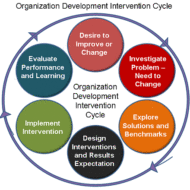
Organizational Development Training and development is an important aspect of human resource development. However the traditional methods and approach of T&D has its own limitations in that the focus is on individual development and behavior modification. This has seldom produced organizational development and hence in 1960’s an integrated approach called the ‘OD’ or organizational development was developed. Meaning and definition of organizational development (o.d.) “A process used to enhance both the effectiveness of an organization and the well being of its members through planned interventions.” OD is the systematic application of behavioral science knowledge for the purpose of improving productivity, efficiency, effectiveness and overall health of the total organization. The applied interventions attempt to modify the beliefs, assumptions, values, attitudes and standards of both the individuals and groups thereby transforming the organizational culture for the betterment of system as a whole. FEATURES OF ORGANIZATIONAL DEVELOPMENT: HUMANISM: The focus is on the employees, their attitude and inter-personal relationships. An organization is a network of people whose emotions, outlook and cohesiveness are more important than monetary and other physical aspects because it is they who take the organization to the next higher level. This is made possible by open communication, free and frank discussions of problems with employees by the managers, inter-personal trust and above all, sense of belongingness, comradeship and team spirit. PROBLEM-SOLVING NATURE: The purpose of an OD intervention is to solve a problem. The employees themselves are given the opportunity to identify the problem by Survey Feedback and find a suitable solution through analysis. This is a cyclic process and also called as “Action Research”. SYSTEMS APPROACH: OD is concerned with not the structure or persons per se, but with the interplay of structure and persons. LEARNING THROUGH PARTICIPATION: The participants of the learning process are none other than the employees. They unlearn old things and learn new things by identifying, analyzing and finding the right solution to the bottlenecks. TOP MANAGEMENT SUPPORT AND INVOLVEMENT: OD intervention is successful only when top management involvement is full-fledged and ensures participation from all levels of managers and all departments in such an exercise. MULTIPLE INTERVENTIONS: Intervention takes place at various levels, individual as well as group and the purpose is molding desirable work culture and leadership styles suitable for the organization. ROLE OF CONSULTANT: Employing an external consultant will be more appropriate as he is less susceptible to influences and more objective. He acts as the change agent facilitating co-ordination and stimulation. CONTINGENCY PLANS: Alternate plans are also devised if in case the original plan fails; the idea is one that of trial and error, hence the need for contingency plans and approach to OD problem. RENSIS LIKERT’S OD FRAMEWORK: Rensis Likert’s 4 system OD framework aims at moving towards truly participative system. Care and caution must be adhered to steer the system gradually from where the organization now works. He also introduced diagnostic analysis to find what causes the current problem. His three part diagnostic analysis includes: A. OUTPUT CAUSES: Low productivity, absenteeism, declining profit B. INTERVENING CAUSES: Organization structure, control, policy and leadership C. ROOT CAUSES: Attitude, motivation level, empowerment and organization culture Tips for Organization Development OD CULTURE: “The OD paradigm values human and organizational growth, collaborative and participative processes and a spirit of enquiry.” Brown and Covey have made some attempts to identify OD values from the following: Norms and Values: Respect for people: People are the most important of all resources. So giving due respect and importance to people induces the creativity and innovation in them. Trust and Support: Trust, openness and supportive climate improve organization culture and empowerment. Power Equalization: This emphasizes hierarchical authority, control and centralization. Confrontation: Do not...
Posted by Managementguru in Human Resource, Organisational behaviour, Principles of Management, Training & Development
on Feb 22nd, 2014 | 0 comments
Objectives of Training The objectives of training is different according to the employees belonging to different levels of organization. The objectives depend on the nature of the organization where training has to be provided, the skills desired and the current skill levels. 1. To increase the knowledge of employees or workers in doing specific jobs. 2. To scientifically and systematically impart new skills to the human resources so that they learn quickly. 3. To bring about change in the attitudes of the workers towards fellow workers, supervisor and the organization. 4. To improve the overall performance of the organization. 5. To make the employees handle materials, machines and equipment efficiently and thus to avoid wastage of time and resources. 6. To reduce the number of accidents by providing safety training to employees. 7. To prepare employees for higher jobs by developing advanced skills in them. 8. The basic objective of training however is to establish a match between man and his job. 9. The training is designed to improve knowledge, skills and attitude and thus equip the individual to be more effective in his present job or prepare him for future assignments. From the point of view of an organization individual growth is a means to organized effectiveness. The objectives of training can be summarized as follows: – 1. Induction : – Training constitutes a significant entry into the company’s way of life. Organizations have to provide induction training to all employees entering the organization to let them know, 1. What is company’s culture? 2. How does structure function? 3. What are policies & rules of organization? 4. What are designs of freedom or limits of behavior? 2.Updating :-A significant objectives of training is to prevent the Obsolescence of the employees by updating their skills & knowledge. 3.Preparing for future Assignments. 4.Improvement in Performance: Training will be an important aid to managers for developing themselves as well as their subordinates. It is not a substitute for development on the job, which comes from doing, experiencing, observing, giving and receiving feedback and coaching. Training can bring about an improvement in a person’s: Knowledge Skills Attitude, there by raising his potential to perform better on the job. 5. Growth Training is also focused towards developing people for higher levels of responsibility thereby reducing the need for recruiting people from outside. This would have the effect of improving the morale of the existing employees. 6.Organizational Effectiveness Training provides a means for bringing about organizational development. It can be used for strengthening values, building teams, improving inter-group relations and quality of work life. The ultimate objective of training in the long run is to improve the company’s performance through people performing...
Posted by Managementguru in Human Resource, Organisational behaviour, Principles of Management, Training & Development
on Feb 20th, 2014 | 0 comments
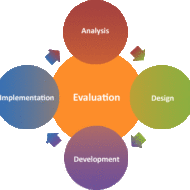
Role of Training Some Definitions of Training: According to Flippo, “Training is the act of increasing the knowledge and skills of an employee for doing a particular job”. Training can also be defined as as “any planned or structured activity or approach designed to help an individual or a group of people to learn as to do things differently or to do different things leading to more effective performance and results”. Role of Training: Training is the best way to reach the enterprise goals in minimum time period with maximum efficiency. 1. Training unlike experience can reduce the time required to reach maximum efficiency. 2. Cost of training in much less than the cost of adding experience . 3. The results of experience sometimes can be accidental. 4. The expected results are very much assured in a well conceived and well conducted training program. 5. Its purpose is to achieve a change in the behaviour of those trained and to enable them to do their jobs better. 6. Training makes newly appointed employees fully productive in lesser time. Identifying Training Needs: There are three elements of training – purpose, place and time. Training without a purpose is useless because nothing would be achieved out of it. The purpose must be identified carefully and now there are a large number of techniques available for establishing training needs. Having identified the purpose of a training programme, its place must be determined i.e. whether it has to be on the job or off the job. Place would decide the choice of training method and also affect its effectiveness. The next element is the time. Training must be provided at the right time. A late training would provide obsolete knowledge, which would be useless for the employees. 1. Organizational Analysis: – Comprehensive analysis of organizational structure, objectives, culture, processes of decision – making, future objectives and so on. Analysis begins with an understating of short term & long-term goals of the organization. Is there adequate manpower to fulfill organizational objectives? Whether the work-force possess required skill & knowledge? Are the employees willing to learn? 2. Task analysis: Thorough analysis of various components of jobs and how they are performed has to be done. Task analysis would indicate whether tasks have changed over period of time & whether employees have adequate skill in performs their tasks. 3. Man Analysis: The focus is on individual, his skill, abilities, knowledge & attitude. Key Indicators are Meeting Deadlines Quality of performance Work behavior...