Posted by Managementguru in Business Management, Human Resource, Organisational behaviour, Principles of Management
on Mar 20th, 2014 | 0 comments
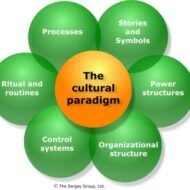
The Ideology of Corporate Culture What is Corporate Culture: the collective beliefs, value systems, and processes that provide a company with its own unique flavor and attitude. Management Attitude: Globalization has necessitated organizations existing in the corporate business world to respond in a unique way in an attempt to enjoy a competitive edge in the market. Corporate culture is a value that keeps an organization intact and helps in building team spirit amongst the members. It is not possible to specifically describe or delineate the concept of culture, yet, people are aware of its fine and striking presence. Let us say that each corporate firm has a dissimilar but unique culture which embraces the values, norms, beliefs and assumptions of the members of the organization and their behavior. It is also greatly induced by the leadership style and management attitude. Role of Culture: Why do organizations need culture as a milieu? Has culture any role in improving the output? Management uses culture as a means to reach out to the employees in an informal manner, to signify what is expected of them plus what is to be expected from the management. Culture cuts through all the levels of an organization and unites the members or employees, to work towards enterprise objectives in a remarkable manner. It is a sort of identity label on the organization and its interest to promote or espouse the value systems through out the organization. Corporate culture encompasses the following qualities enlisted: Quality driven Presence of an informal atmosphere Open communication Customer centric business model Proper and likable dress code Trust and confidence amid employees Value based management CEOs’ as strategic drivers in setting a candid corporate culture CEO’s naturalness and spontaneity with the employees Gratifying employee welfare and security measures Value systems indicated by the vision and mission statements Codified employee behavior Well devised operating strategies Greater autonomy tomanagers at different levels Rewards and recognitions and so on… https://blog.enplug.com/corporate-culture Corporate culture is considered to be a dogma, which many organizations utilize as a means to develop and amalgamate prospective employee groups. An employee learns all about the firm, its activities, the role he is supposed to play, information regarding his superiors, training, career advancements or promotions, pay, employee leave procedures and the long range goals of the organization during the time of induction. The firms should capitalize on this incubation period to spruce up the minds of the employees to act in accordance with the desired values expected by the management. Value Systems: It is inevitable for each and every organization to develop a value system over a period of time based on the founder’s outlook towards business and people working for him. This creates a strong or a weak culture which has an effect on the output or performance of the employees. This also serves as a clear indication whether the organization is proceeding in the right direction. We should never forget that a sound culture eventually aims at achieving the end goals of an organization. The cultural framework of an organization facilitates this process to materialize in a smooth manner. Though intangible in nature, it wields its negative power, when not nurtured appropriately. Flourishing organizations always have pride in their robust cultural back ground, which is a mark of distinction. It definitely shapes up an organization to deliver performance that matches and often surpasses the industry standards. The head of an organization has an important role as a leader as well as a change agent in taking his organization to the next level. The mutual faith and trust between the superior and his subordinates is the anchor point of an organization. Culture – An Intervention Technique: The culture of an...

Posted by Managementguru in Business Management, Human Resource, Organisational behaviour, Principles of Management, Training & Development
on Mar 20th, 2014 | 0 comments
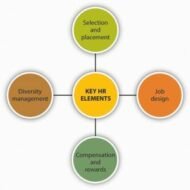
Managing Critical Factors of HR The prerequisite for an organization to excel in all aspects of its business activities is absolute strategic management of its HR functions.Human resource management is an extensive term that covers various aspects of personnel function. This discussion is focused on three main aspects that constitute human resource management. Personnel administration Human resource development Industrial relations Personnel administration: It can be also called as the HR module where policies and programmes are laid down by the HR department for the benefit of the human resource personnel. Employment and compensation are chiefly dealt with in personnel administration. While business firms in the corporate environment are in constant demand of man power, finding the right person for the right job is always a testing task for them. Right from job analysis to HR planning, recruitment, selection, placement, induction and orientation, HR department is held accountable to define and develop these operative functions. Mere acquisition and incorporation of human resource is not adequate, the organizations have to engage themselves in empowering their employees through competent training, motivation and refining their social relations. Job Assessment: Job assessment has to be done for fixing compensation that includes wages and salary administration, incentives, bonus, fringe benefits and social security measures. The shifting business environment and consumer requirements compel the organizations to restructure and re-engineer their organizational functions. These moves can be viewed as strategic responses reflecting from all domains of an organization, namely product, marketing, manufacturing etc., where people are the centre of focus. Human resource development: This is easier said than done. Firms are trying to evolve and employ various methodologies of training to enhance the performance levels to the desired standards. Performance cannot be achieved by coercion or bureaucracy, as the work force is protected by numerous enactment of labor laws enforced by various governments. Training and development is a separate entity by itself and is a continuous process that aims at the development of the organization as a whole and also facilitates employee career planning and development. Industrial relations: The following factors have to be scrutinized by the management to maintain good personal relations with the employees. Motivation Morale Job satisfaction Communication Grievance handling Discipline procedure Quality of work life Employee participation All said and done, the organizational health can be measured by checking the effectiveness of HR management through aspects like HR audit and research that aid the firms to analyze and understand the extent to which they are efficient in utilizing human resource for the benefit of their organization. The experience of a human resource manager comes in handy at situations like these, where he has to don different roles to suit the occasion. Personnel role-advisor for top management, policy maker, counselor to employees, spokesman of the company, change analyst, liaison Welfare role-researcher, catering man, motivator Clerical role-time keeping, wages and salary administration, record maintenance, human engineering Fire fighting legal role-negotiator, trouble shooter, peace maker, problem solver, grievance handling. The management employs scientific, analytical, psychological and social techniques to build the business around human resource, who are the real value additions to the...
Posted by Managementguru in Decision Making, Human Resource, Motivation, Organisational behaviour, Principles of Management
on Mar 19th, 2014 | 0 comments
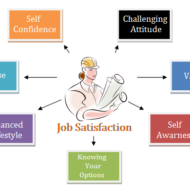
Are You Happy with Your Job What is your attitude towards Job? How many of us go to work with cheery attitude and positive framework of mind. Most of us treat work as a duty or accountability. Either way it does not solve the purpose. If you treat job as a duty, there can never be any enjoyment attached to it. In case of accountability, you work to reach some targets without any passion for the job or you spend most of your time dreading the thought of reporting to your superior. Without involvement and love, any job is not complete and people experience only “Job Satis-friction“and not satisfaction. Have you thought about it? Scenario in Developing Countries: In most of the developing countries the proportion of dissatisfied group dominates the satisfied set of employees. This is because preference and priority is to earn the daily bread rather than achieving anything big. Well, this attitude shall be attributed to the low income group where without work their lives cannot go on. But the bottom line remains the same, the work should be satisfying. So, what are the terms? Also See: Performance Appraisal High Income Group: In high income group and higher level jobs where the work is very challenging, we see that the employees are very much satisfied with their work. They need constant battles to win over and are provided with such an environment that puts their think tanks into full use. But is it enough to keep them satisfied; no, the reward system has to be equally compensatory. Rewards in terms of pay, perks, recognition, appreciation, social status, awards and what not. So, how do we correlate satisfaction factor with productivity? The organization has to maximize the positive relationship between performance and reward systems. Also See: How to Handle Attrition 30 Simple Ways to Make Your Employees Happier Repetitive and Monotonous Jobs: Repetitive and monotonous jobs make a person dull headed and a stereotype; his enthusiasm is absorbed to the extent that he fails to understand and rejuvenate his skills. The job content should provide at least some sort of cheer and interest to the performing individual. Say for instance, you manufacture plain paper cups, if you decide to incorporate some floral designs on the covers; you very well witness a fresh whiff of enthusiasm amongst your work force. Such is the power of variety and change that brings cheer into human lives and attitude. If you are a terrific boss everybody will like you but if you are a source of terror, chances are there that there is a high turnover ratio in your company. People after all expect certain level of consideration and warmth from their bosses. Organizations must make the individuals perceive their roles properly to affirm satisfaction and to avoid conflicts. Career Advancement: Courtesy – Roscostretch Career advancement is what most of the people aspire and when they don’t find any scope for advancement their interest in the job gradually decreases. Merit versus experience factor also has its say over deciding the next probable candidate for promotion. The top level management, especially the human resource department must ensure the employees with a supportive environment that paves the road for collaborative effort and in turn internal satisfaction. Job Satisfaction: Job satisfaction has to be considered from a broader perspective that encompasses all the independent and dependent variables that affect the nature of a particular job. This is very vital to an organization as job dissatisfaction leads to absenteeism, high turn over or attrition and decline in productivity. A dissatisfied employee is always a pain who can create problems by voicing his protest, gathering the union, neglecting his work or quitting. To avoid friction in the minds of...
Posted by Managementguru in Decision Making, Human Resource, Organisational behaviour, Principles of Management, Training & Development
on Mar 19th, 2014 | 0 comments

Grading employees’ performance helps identify strengths and areas for improvement, fostering growth and productivity. It ensures fair evaluations and supports career development within the organization. Organizational Development Organizational Development denotes an overall and comprehensive development of an organization supported by the entire team of employees working for that organization. A useful technique in the management process that serves as a measure of performance and productivity is “performance evaluation” or performance appraisal. Performance refers to the degree of accomplishment of the task that makes up an individual’s job. Performance appraisal serves the following purpose To assess the present levels of employee performance. To understand the future needs in training and development based on the strengths and weaknesses of the employees. To provide feedback on their performance. Serves as a basis for reward allocation, such as, increase in pay scale, promotions and many other decisions like, confirmations, transfer, demotion etc., Establishes performance standards and offers scope for improvement. Acts as a motivational tool for workers to perform better. Checks and facilitates employees who exhibit poor performance. Also assesses behavioral pattern of the employees. People who work for big corporate companies identify themselves with the objectives of the company and expect feedback, either in the form of a compliment or criticism. Compliments act as morale boosters to perform better and criticism though initially might puncture the ego, induces the potential to perform, to prove oneself. Managers should never be reluctant on their part to appraise subordinates on the job expectations and demands. In an activity as important as managing, there must be no pitfalls to measure performance as accurately as possible. The Appraisal Process The next important aspect in the appraisal process would be deciding the content to be appraised. Individual task outcomes where performance is evaluated on the outcomes delivered by the individuals, evaluation of personal characteristics and traits or behavior are done to rate the employees as to where they stand in terms of performance. Appraisal Techniques The widely used managerial technique in the appraisal process is evaluating performance against verifiable objectives, which truly makes sense, because the employees would be blind folded if they don’t have the right direction to proceed. Evaluation can be done in a comprehensive, periodic or continuous fashion. It all depends on the nature of work done, company practice and other situational factors. Say, for instance, performance review can be done after the completion of a major project, that makes sense, doesn’t it? Periodical reviews Formal reviews can be supplemented and supported with frequent and short informal reviews, for the superior- subordinate relationship to prosper and to keep communication channels open. All said and done, performance review based on verifiable objectives, although gives better vision and clarity, doesn’t allow the manager or subordinate to grow individually. It does not help in personality development; the emphasis ever being focused on accomplishing the operating objectives. The 360 Degree Appraisal The latest approach of performance evaluation is the 360 degree appraisal that well suits the managerial cadre. It provides for performance feedback from the full circle of daily contact, that a manager might have, ranging from customers, peers, subordinates, boss etc. , This also fits into organizations that have introduced teams, employee participation and total quality management...
Posted by Managementguru in Human Resource, Organisational behaviour, Principles of Management
on Mar 19th, 2014 | 0 comments
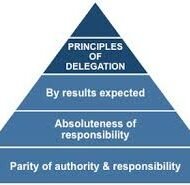
You Can Delegate Authority, but Not Responsibility Responsibility of a Manager: A corporate manager is accorded with the huge responsibility of leading his subordinates in the right direction, by giving proper insights on the tasks to be accomplished. The success rate depends on how well he delegates his authority down the line to get things done. The art of delegation results not only in down sizing his work pressure but also in the empowerment of subordinates, that elevates them to a higher plane of understanding and achievement. An Excerpt from The Art of Delegation: Developing This Essential Managerial Skill Delegation helps you handover the authority of certain tasks to capable team members so that you free up your time to work on more pressing issues. But you still remain responsible to get those completed in proper way. Hence it is essential to have a status check or communication with the team member on regular basis. Accountability of Subordinates: The subordinates, when entrusted with the responsibilities of performing a task by themselves and the necessary authority to make decisions within the area of their assigned duties, are obliged to perform. The necessary assistance and training for the new assignment has to be planned for, by the manager to make them perform as per the expected standards. The thing is right people should be chosen for the entrusted job. They should possess the zeal and enthusiasm to deliver the desired output. Some people perform beyond expectations and they should be rewarded with additional responsibilities. Whatever the case may be, it is a wise thing to delegate simple assignments at the initial stage, and proceed with more challenging jobs depending upon the caliber of the incumbent. THE ENTREPRENEUR’S GUIDE TO DELEGATION Clear and Clever Delegation: Clear and clever delegation facilitates to build a formal organization structure, where the subordinates are trained well and they look up to the manager for direction and guidance. Although the authority is delegated, the manager is held accountable and answerable to the management for the performance output or the end result. Some managers hesitate to delegate, just for the reason that their weaknesses might get exposed. Some don’t have confidence in their subordinates. Some even fear that they might lose their power if the subordinate is very shrewd and exceeds the expectations. Managers fail because of poor delegation; the reasons being personal attitude of managers in delegating authority. Let us understand some of the basic principles to be adhered to while delegating: The authority delegated to subordinates should be adequate enough to ensure their ability to accomplish the expected results. Authority can be delegated but responsibility can never be delegated. Responsibility of subordinates is “performance” and that of managers is “responsibility for the action of their subordinates”. One cannot be held responsible for a task if he has only limited authority. There need to be a balance between authority and responsibility. The presence of a single superior will invoke greater feeling of personal responsibility among the subordinates. Lack of receptiveness on the superior’s part will incur greater loss in terms of performance and efficiency. Instead, a manager should develop a trustful attitude towards his subordinates and should have the patience to explain the policies, objectives and guidelines and give sufficient authority to perform a duty. HOW WELL EMPLOYEES KNOW ABOUT YOUR ORGANIZATION? Although initially the efforts taken to train a subordinate is time consuming, the more empowered he becomes, less is your time taken to accomplish the enterprise objectives. The superior must be able to create a climate of mutual trust and goodwill, to make delegations effective in the light of expected...