Posted by Managementguru in Business Management, Decision Making, Principles of Management, Strategy
on Mar 24th, 2014 | 0 comments
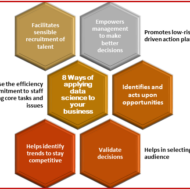
Growth Strategies In Business What are Growth Strategies? The means by which an organization plans to achieve its objective to grow in volume and turnover. The dynamic business environment calls for periodical changes in the business definitions, in terms of customer groups, customer functions and alternative technologies to broaden their scope for expansion. Growth can never be achieved by a business enterprise, if there is no proper planning for diversification of its business activities across a broad spectrum. Expansion strategies are followed when an organization aims at high growth, by improving its overall performance. A Small Note on Data Science and Analytics Data analytics help companies improve operational efficiency, drive new revenue and gain competitive advantages. To leverage this technology, companies need to understand the core of their data and determine the outputs that they are looking for. In fact, data-driven companies that utilize Business Analytics achieve a competitive advantage. The companies can improve their strategies by keeping in mind the customer focus. Big data analytics efficiently helps operations to become more effective. Expansion Strategy: Expansion strategies have a profound impact on the internal configuration as well as internal functioning of an organization. The business firms bear the risk of moving in an entirely new direction, where there is an equal chance for failure as that of success. If only a manufacturer plans to diversify or expand in a field that complements his present business activity, does it make any sense. What is the fun in venturing into a business activity about which you have no knowledge or scope? Expansion through concentration: This involves investment of resources in a product line for an identified market with the help of proven technology. A firm may attempt to intensify its focus on existing markets through market penetration strategies. Or new users may be targeted for existing products or alternatively it may introduce new products in existing markets by concentrating on product development. Concentration policy relies on the principle of “A known devil is far better than an unknown angel.” It is a very difficult task for firms to capture new markets or to gain acceptance for new products in existing markets. Expansion through integration: A company attempts to widen the scope of its business activities in such a manner that it results in serving the same set of customers. The alternative technology dimension of the business definition undergoes a radical change. Firms try to move up or down in the value chain to meet the demands of the customers by integrating adjacent activities. Expansion through co-operation: It may include mergers, takeovers, joint ventures and strategic alliances. Two firms try to combine their resources, capabilities and core competencies to pursue mutual interests to develop, manufacture or distribute goods and services. Expansion through internationalization: International strategies are formulated in the wake of globalization where most of the developing countries have liberalized their economic policies facilitating foreign direct investments, generating foreign exchange. Many multinational and transnational companies are setting up their operations in developing countries to factorise the economies of scale and to enjoy the advantages of cheap labor and availability of resources. Stability Strategy: Many firms go for stability strategies that are devoid of any risks. They are quite contented with the modest profit gained from the present business activity and try to maintain the same level of performance, until and unless there is a pressure from the market in the form of competition. Only few firms have that adventurous attitude to take risks in order to have a sustainable competitive...

Posted by Managementguru in Business Management, Decision Making, Organisational behaviour, Principles of Management, Strategy
on Mar 24th, 2014 | 0 comments
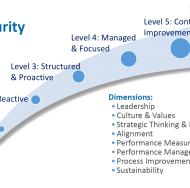
STRATEGIC PLANNING Strategic planning is the primary step in the process of strategic management [Strategic management is a comprehensive topic that covers almost all the functional aspects of the organization] which can be outlined from at least two perspectives: First, strategy is the “broad programme for defining and achieving the objectives of an organization and implementing its mission”. Secondly, “It is the pattern of the organization’s response to the external environment over a period of time”. A strategy that takes a broad and typically long range focus is called strategic planning. MBA Application Strategies for Top Business Schools Strategic planning is the process that classifies the long range goals of the organization and opts for the precise means (strategies and polices) for achieving these goals, allocates resources, and develops long range plans to reach the destination. Watch this Video to Understand the Overview of Strategic Planning Process Time-Horizon: Strategic planning takes into account the extended time horizon. There may not be any immediate impact out of strategic planning, but the consequences in the long-run prove to be gradual and significant as well. It provides with the necessary action plans to make a difference in vital areas concerning development. You can always associate innovativeness with strategy since it explores new paradigms and tries to enhance the impact. When the size of organizations expands, they are broken down into strategic business units (SBU’S) for the purpose of functional excellence. These units are expected to operate as if they were relatively independent businesses. WHY STRATEGIC LEADERSHIP IS IMPORTANT A Tailor Made Approach: A tailor made approach is essential when it comes to strategy development the systematic analysis of the factors associated with customers and competitors (the external environment) helps the organization to meet the challenges of modern society. More and more organizations are focusing on formal approaches and concepts for planning their long range process. Specifically these challenges are a result of increasing rate of change, the complexity of manager’s jobs, the increasing importance of fitting the organization into external environment, and the increasing lag between the preparation of plans and their implementation in future. Resource Allocation: Strategic planning is an organization’s process of defining its strategy or course, and making decisions on resource allocations to pursue this strategy. Managers must be adequately geared up for strategic planning. The goals of the organization must be made plain and not unclear. Each business unit should be categorized based on its performance level to decide on the resource share to be allocated. You need to infuse cash flow into ineffectual units and divest funds from dying units into other profitable ones. The ultimate aim is to build up star performers that will be the perennial source of income or revenue generation. There should be a strong linkage between planning and control. The assessment of strategic plans of the business units must be made periodically and effectively. TOP FIVE REASONS WHY STRATEGIC PLANS FAIL SWOT Analysis: SWOT analysis is a strategic planning technique used to evaluate the Strengths, Weaknesses/Limitations, Opportunities, and Threats. Planning is the primary step for control as it provides several standards and benchmarks of control. Planning extracts commitment. Some times planning highlights the objectives only and the planning premises may not be fully reliable. Threats are to be considered as challenges and must be converted into opportunities. Two heads are better than one is the philosophy of brain storming where a group of people with knowledge and expertise assemble to lay out clear plans that will steer the organization smoothly even in times of rough...
Posted by Managementguru in Business Management, Decision Making, Marketing, Organisational behaviour, Principles of Management, Strategy
on Mar 23rd, 2014 | 0 comments

Smart Objectives for Success An objective describes something which has to be accomplished and defines what organizations, functions, departments, teams and individuals are expected to achieve. Objectives may be operational or developmental. When the contribution is oriented towards the accomplishment of corporate objectives, in the light of the organization’s mission, core values and strategic plans, it is termed as operational; personal or learning objectives that involve the improvement of knowledge, skills and performance of individuals is termed as developmental. Objectives must be SMART: S-scientific M-motivating A-achievable R-realistic T-time bound Objectives that are mostly confined to the near future may be termed-short term objectives, which are accomplished in the stipulated time duration. Say, for example, 1000 units of pet bottles have to be produced in a week’s time. If the firm is focused on the overall production plan for the forthcoming year, then it is termed as long term objective. In a production environment, a firm has to initially go for an aggregate plan, where the production capacity of the plant is determined to make the project feasible. The firm has to make doubly sure, whether it is resourceful in terms of physical, financial and human aspects. The work centers are allotted with jobs in a mock trial to check man versus machine co-ordination and compatibility. Pic Courtesy: Digital Information World Proper Planning: Objectives are achieved only when there is proper planning. The top management must take the pains to clearly explain the objectives to all the employees across different levels of organization to facilitate smooth functioning. When the employees understand what is expected of them, the performance gets oriented towards accomplishing the objectives; the employees get proper direction and focus. Delivering Happiness: A Path to Profits, Passion, and Purpose Think of this, what will happen to the sales volume, if the marketing manager does not properly educate his team about the targets to be achieved for that quarter? Definitely there will be a dip in the sales owing to the lethargic and irresponsible attitude of the manager. Ultimately, the organization stands to suffer a loss in terms of time and cost of recruiting a new person to head the marketing department. Right Person for the Right Job: Organizations have to be meticulous while choosing people for the post of managers. The chosen persons must be able to identify themselves with the organization and its objectives, so that they could be a source of inspiration for people down the line. Right people for the right job, at the right place and right time is the success mantra. Objectives have to be periodically revised in the light of changing economic, political and technological developments. How to Stop Worrying and Start Living If not the objectives might become obsolete and in due course you will get stranded amidst the roaring competition. The process of business management aims at managing people and other resources to make a modest profit. How to achieve success in an open market? By clearly setting objectives that serve as tools of motivation and persuasion, a firm can evolve and contribute strategic inputs that make the objectives realistic and...
Posted by Managementguru in Business Ethics, Business Management, Organisational behaviour, Principles of Management, Strategy
on Mar 23rd, 2014 | 0 comments
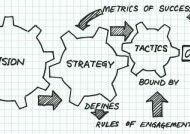
Tactics or Strategy – Ethical Considerations Give a man a fish everyday, his appetite is sated. Teach him how to fish; you have fulfilled his appetite for an entire life time. This is strategy. To make it work, to make the impossible, possible. There is no drawn out template for success or for that matter strategy. But both of them go together when the right strategy is used at the right time and you can bang on your target. Neither the same strategy fits the bill for everybody. Your smart approach to that particular situation backed up by your knowledge and experience does the magic. It cannot be taught, it comes from within when the situation warrants for action. It is more like “Survival of the fittest”, if you want to retain your niche in this business world you act fast and think wise. Tactics: How many of you are bold enough to think differently to make a difference, to make others feel your presence. Never implement tactics which is short lived and don’t make your presence felt either by imitation or by unethical competitor criticism. That will paint a greasy picture on your firm. That is of course strategy but cheap strategy. But always be on the run to know your competitors’ weaknesses and shortcomings which will make you improve your product or service. That is acceptable business practice where competitor spying gives us an edge in terms of identifying unexploited niches of the market. Resort to Constructive Strategies: Strategies must always be constructive and it assures success in the long run. Tactics or gimmicks will prove to be fruitful only for a short while and that is not your aim also. Will you be satisfied if you are able to sell your product or service as hot cakes only for a season! Is that going to cover your profit margin for the entire accounting year? True, strategies are always associated with making profits, boosting up the sales, for retaining the market share and maximizing the share value. But it should also make your business perennial and viable. Strategic Framework: Many of us forget that strategies are applicable in every activity of a firm that forms a compact framework which gives your business a solid foundation upon which you can build your empire of success without looking back. Right from framing your vision, mission, policies, procedures and programmes including recruitment, selection, training, evaluation and empowering your employees, strategies play their role in giving clarity and direction to the firm. Long-Term Planning: Although strategies are meant for long term planning, a periodic review and appraisal of the company’s strategies to all the employees concerned is a must to keep them informed. Strategies are secrets but not to the employees of your organization. Strategies are born out of compulsion, a compulsion to survive in the market and have an edge over others. So they must be meticulously planned after brain storming sessions and expert consultations. Sometimes even a small idea suggested by one of your employees might become the basis for a turnkey operation. So keep your eyes and ears open and also be open minded to accept ideas even from the lowest level as they are your pillars of strength and they know the pulse of the market and people better. Strategic Action Plans: Success is not a cake walk, it has to be achieved with great hardships and the taste of success will be sweeter. Strategies are formulated in every step of your business plan, remember it is an ongoing process; you have to revitalize your strategies every now and then to be in the scene, to make...
Posted by Managementguru in Business Management, Decision Making, Marketing, Organisational behaviour, Principles of Management, Project Management, Strategy
on Mar 22nd, 2014 | 0 comments
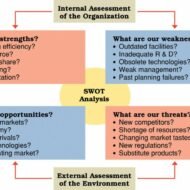
What is Swot Analysis and how to do a Swot Analysis Perfectly? Strategy formulation is an integral part of management decision making as strategies come to our risk whilst there are fluctuations in the external environment. A management expert will tell you rightly that strategies are not templates constructed for a specific purpose as they are formulated based on broad policies of a particular organization and have to be in tandem with the enterprise objectives. Nevertheless a CEO will find himself in situations where he might be forced to make instantaneous strategic decisions irrespective of the nature of the problem, only considering the magnitude of the situation. SWOT AND SYNERGY EQUATIONS Significance of SWOT Analysis: The analysis subjectively evaluates the impact of internal and external factors for a business objective. Internal processes and resources are considered strengths and weaknesses (S and W, respectively). External factors affecting the business and industry are considered opportunities and threats (O and T, respectively). An evaluation of these factors develops a strategic perspective that includes the competitive landscape and current market conditions. Need for Alternate Strategic Decisions: Lately we are witnessing a number of multinational giants going in for Joint Ventures and Collaboration. What is the root cause for such alternate strategic decisions? What happened to the value of the “Brand Image” of the organization or the “Profit Margins” which kept the company going? Well, this is where we have to look into the structure of their operations and most importantly the modality formulated to reach their ultimate objectives. Definitely, there would have been a big dent somewhere in the top management notch, failing to see through the obvious. Market Research is Inevitable for Decision Making: Situations change and we even experience this in our day to day lives, where decision making becomes very difficult at times; further we push the situation to extreme limits and make it worse. Planning is the very basis of our life that facilitates smooth functioning and change for the better. In big corporates, decision making is by and large the responsibility of the top management and they pass on the instructions down the line. It is but natural that the chairman and board of directors should make all the important decisions as they are the potential capital investors. Market research is another area that deserves mention at this juncture without which business persons cannot think of kicking off trade as it will be a sheer waste of money and time. Understanding the pulse of the market and your target customers always help in shaping up the right strategies concerning New product launch Consumer Preference Price determination Product modification etc., Test marketing is one of the strategies followed by many multi national companies while they launch their new products or wish to introduce variations in their product range. THE IMPORTANCE OF DECISION-MAKING Strategies are based on organizational policies and policies have to confer to the objectives and goals of the organization. The top management team should be a set of professional experts who should be able to gauge the existing as well as future trends of the market based on political, legal, environmental and economic changes and sketch their action plans accordingly. Decentralising decision making and delegating the authority as and when needed are also fine strategies to gain co-operation from your employees and to bring co-ordination in the entire business...