Posted by Managementguru in Organisational behaviour, Principles of Management
on Mar 1st, 2014 | 0 comments
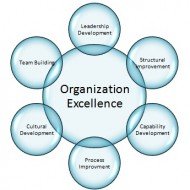
Organisational development is not an overnight transformation; it is indeed a gradual process that has to be implemented systematically and in tandem with the external environment. Listed here are some of the relevant organizational development techiniques or interventions that help employees to become more productive. A. Sensitivity Training The notion is to change the attitude and behaviour of individuals involved in the group rather than the technical skill or knowledge. The term sensitivity refers to the psychological aspect of human mind that has to be shaped to act in accordance with the expectations of the group. One’s own weakness is exposed and members understand how others react towards them. Stress is on Group Dynamics and tackling inter-relationship problems. The idea is to improve the behaviour of people in order to maintain smooth inter-personal relationship without anybody’s power or influence. Members are encouraged to have an open, heart to heart talk to develop mature relationship. Employee Engagement & Retention The Process: Sensitivity group is a small discussion group without any leader. The trainer raises a question and allows the members to proceed with the discussion, the focus being feelings and mutual respect. There is no set task or agenda and members try to analyse the immediate problem by having open discussion instead of applying logic and rationale. Free and frank discussions lead the members through periods of shock, anger, frustration, hostility, all for the better understanding of one another. Improve People Management and Build Employee Engagement Feedback includes videotape of the proceedings and guidance from the trainers. Members unlearn old things through shock and change the present behaviour to improve their behaviour pattern. Individual emotions and inter-relationship pattern are primarily focused upon in sensitivity training. Sensitivity training borders on psychotherapy where the emotions as well as body language are taken into consideration. The expressions may be any one of the following: 1. Gestures 2. Screaming 3. Physical contact B. Survey Feedback Here the discrepancies among a group are weeded out using questionnaires, which identify the difference in perceptions amongst the same working family, group or department. The data collected is tabulated and distributed for taking part in the deliberations. This forms the basis for further discussions. Discrepancies if any can be sorted out by open discussions with all concerned, defending and opposing till a consensus is arrived at. Here the focus is on ideas and not on persons who put up those ideas. C. Process Consultation A firm may either seek the support of 1. Expert from within the organisation: Though he might be knowing the crux of the problem, his emotional involvement might block him from seeing the problem in the right perspective. Moreover the outcome of the result might be a ‘biased one’ due to internal politics. 2. An outside expert: This person with his vast knowledge, experience and similar problem encounters may have the know-how of resolving the problem but may lack the necessary insight of that particular problem. The organisation must see to that process consultation is done through an external expert with the needed support provided by the authorities from within the organisation. D. Team Building Team building is attempted at the group or inter-group level. The objective is to improve co-ordination thereby improving the performance as a group. 1. Goal setting 2. Development of inter-personal relations 3. Role analysis to identify roles and responsibilities 4. Team process analysis are the key features of team building. E. Inter Group Development One of the major challenges for firms involved in development is tackling inter departmental conflicts. Such dysfunctional conflicts may exist between a. Line and staff b. Production and materials c. Finance and production What is Group Dynamics? As sensitivity...

Posted by Managementguru in Change management, Human Resource
on Feb 28th, 2014 | 0 comments
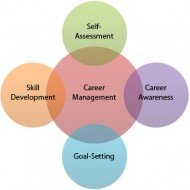
Career Management How to go about Career Management? Career Management is very essential which facilitates smooth transitions from one level to the next higher level in a profession. You cannot decide what to do unless you know what you are going to do or where you want to be tomorrow. Long term personal goals and professional goals are elemental in setting overall targets. According to Stephen P.Robbins, career is “a sequence of life positions occupied by a person during the course of a lifetime. Setting Goals for an Effective Career Your goals may be Long term Short term Personal or Professional Consider if you are goals are Realistic Whether you possess the skill set Achievable within the set time limit (duration) Based on these goals it is important to make long term and short term career plans. Also write down your Experience Skills and Qualification All these basic but vital things will give you a clear picture as to where you stand and what has to be done to improve your skills. Pic Courtesy: Cupcakes and Cashmere EYE Openers While Setting Personal Career Targets A. What do you want to accomplish from two or three years from now? B. What developments and knowledge can make this possible? C. How do you want to prepare yourself to achieve these targets or in what way you want to improve your skills? D. Is there a necessity for check points in the middle of the progress to make the necessary revisions? Tips to Manage Diversifying Careers Adaptability and flexibility are vital to reduce the stress of redundancy. Anticipate the changes and be prepared for anything at any time Look at the ‘Job Loss’ as an opportunity to pursue a new career that interests you. Career Planning A career will be satisfactory only when it interests the person and provides challenge and not by mere compensation or reward. Each organization should plan and help the individual, but every individual should take interest in his career. Career planning entails evaluating abilities and interests and considering alternative career development activities. The process results in Decisions to enter a certain occupation Join a particular organization Accept or decline new job opportunities{relocations, promotions or transfers} Leave an organization for another job or recruitment. Effects of Career Planning In corporate companies, a typical career planning program might include 1. Career counseling by members of the HR department 2. Workshops to help employees evaluate their skills, abilities, and interests to decide on their career development plans 3. Self directed programs to help the workforce guide their own careers through self-assessment and 4. Communication of job opportunities through job postings, videotapes and publications. One has to remember that career counseling may increase the pressure for managers and in turn the organization, as employees either become anxious about their present level of performance and chances for career advancement or they might use the opportunity to demand more from the firm in terms of pay, promotions etc., Key Career Issues of Employees Dual-career couples: When both husband and wife work, their earnings and stress are in surplus Stressors: Children under the age of six need parental care , but the amount of quality time of parents with that of the children is not at all balanced and this causes a heavy stress for both sides emotionally. Work schedule stressors: This increases as a person rises in an organization, job demands increase, with long hours of work and travel, but little time for family and vacation. Relocation: The increase in the number of dual career couple poses problems for many companies when they try to relocate...
Posted by Managementguru in Human Resource, Organisational behaviour, Principles of Management, Training & Development
on Feb 22nd, 2014 | 0 comments
Objectives of Training The objectives of training is different according to the employees belonging to different levels of organization. The objectives depend on the nature of the organization where training has to be provided, the skills desired and the current skill levels. 1. To increase the knowledge of employees or workers in doing specific jobs. 2. To scientifically and systematically impart new skills to the human resources so that they learn quickly. 3. To bring about change in the attitudes of the workers towards fellow workers, supervisor and the organization. 4. To improve the overall performance of the organization. 5. To make the employees handle materials, machines and equipment efficiently and thus to avoid wastage of time and resources. 6. To reduce the number of accidents by providing safety training to employees. 7. To prepare employees for higher jobs by developing advanced skills in them. 8. The basic objective of training however is to establish a match between man and his job. 9. The training is designed to improve knowledge, skills and attitude and thus equip the individual to be more effective in his present job or prepare him for future assignments. From the point of view of an organization individual growth is a means to organized effectiveness. The objectives of training can be summarized as follows: – 1. Induction : – Training constitutes a significant entry into the company’s way of life. Organizations have to provide induction training to all employees entering the organization to let them know, 1. What is company’s culture? 2. How does structure function? 3. What are policies & rules of organization? 4. What are designs of freedom or limits of behavior? 2.Updating :-A significant objectives of training is to prevent the Obsolescence of the employees by updating their skills & knowledge. 3.Preparing for future Assignments. 4.Improvement in Performance: Training will be an important aid to managers for developing themselves as well as their subordinates. It is not a substitute for development on the job, which comes from doing, experiencing, observing, giving and receiving feedback and coaching. Training can bring about an improvement in a person’s: Knowledge Skills Attitude, there by raising his potential to perform better on the job. 5. Growth Training is also focused towards developing people for higher levels of responsibility thereby reducing the need for recruiting people from outside. This would have the effect of improving the morale of the existing employees. 6.Organizational Effectiveness Training provides a means for bringing about organizational development. It can be used for strengthening values, building teams, improving inter-group relations and quality of work life. The ultimate objective of training in the long run is to improve the company’s performance through people performing...
Posted by Managementguru in Human Resource, Organisational behaviour, Principles of Management, Training & Development
on Feb 20th, 2014 | 0 comments
Role of Training Some Definitions of Training: According to Flippo, “Training is the act of increasing the knowledge and skills of an employee for doing a particular job”. Training can also be defined as as “any planned or structured activity or approach designed to help an individual or a group of people to learn as to do things differently or to do different things leading to more effective performance and results”. Role of Training: Training is the best way to reach the enterprise goals in minimum time period with maximum efficiency. 1. Training unlike experience can reduce the time required to reach maximum efficiency. 2. Cost of training in much less than the cost of adding experience . 3. The results of experience sometimes can be accidental. 4. The expected results are very much assured in a well conceived and well conducted training program. 5. Its purpose is to achieve a change in the behaviour of those trained and to enable them to do their jobs better. 6. Training makes newly appointed employees fully productive in lesser time. Identifying Training Needs: There are three elements of training – purpose, place and time. Training without a purpose is useless because nothing would be achieved out of it. The purpose must be identified carefully and now there are a large number of techniques available for establishing training needs. Having identified the purpose of a training programme, its place must be determined i.e. whether it has to be on the job or off the job. Place would decide the choice of training method and also affect its effectiveness. The next element is the time. Training must be provided at the right time. A late training would provide obsolete knowledge, which would be useless for the employees. 1. Organizational Analysis: – Comprehensive analysis of organizational structure, objectives, culture, processes of decision – making, future objectives and so on. Analysis begins with an understating of short term & long-term goals of the organization. Is there adequate manpower to fulfill organizational objectives? Whether the work-force possess required skill & knowledge? Are the employees willing to learn? 2. Task analysis: Thorough analysis of various components of jobs and how they are performed has to be done. Task analysis would indicate whether tasks have changed over period of time & whether employees have adequate skill in performs their tasks. 3. Man Analysis: The focus is on individual, his skill, abilities, knowledge & attitude. Key Indicators are Meeting Deadlines Quality of performance Work behavior...