Posted by Managementguru in Business Management, Decision Making, Marketing, Strategy
on Jul 7th, 2014 | 0 comments
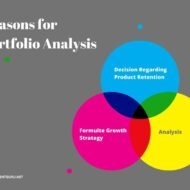
What is Portfolio Analysis ? Portfolio Planning is best advised for diversified companies than the more product coherent ones. Portfolio analysis plays a vital role in planning and implementation of various #strategic business units of the organization as a whole. Portfolio planning recognizes that diversified companies are a collection of businesses, each of which makes a distinct contribution to the overall corporate performance and which should be managed accordingly. Companies dealing with a wide #product range and divisions are expected to redefine their strategies for each of the SBU’s or Strategic Business Units. Then they classify these units on a portfolio grid according to the competitive position and attractiveness of a particular product market. What are strategic business units? A strategic business unit is a fully functional and discrete unit of the business that builds its own strategic vision and direction. Within large companies there are smaller specialized divisions that work towards specific projects and #objectives. The strategic business unit, often referred to as an SBU, remains an important element of the company and is accountable to their head office about their operational status. Typically they will operate as an independent organization with a specific focus on target markets and are large enough to maintain internal divisions such as finance, HR, and so forth. Being Strategic: Thinking and Acting with Impact Types of Portfolio Planning: Analytical Planning: Planning is only at the initial level where traditional administrative tools are used. Process Planning: Here planning is a central part of the ongoing #management process and strategic mission is explicit in activities. Advantages of Portfolio Planning: It promotes substantial improvement in the quality of strategies formulated both at the business and corporate levels.It provides a guideline for adopting their overall management process to the needs of each business.It provides selective #resource allocation to the various SBUs.It furnishes companies with a greatly improved capacity for strategic control when portfolio planning is applied intelligently and with attention to its limitations and problems. Since the road to portfolio planning is a long one, companies often face difficulties trying to implement it and cannot realize the full potential of the approach. In implementing portfolio planning, there is a tendency for the focus to be shifted towards #capital investment rather than resource allocation. #Resource Development is the key: Become a Product Manager | Learn the Skills & Get the Job Implementing Corporate Level and Business Level Strategies: Corporate level #strategy is concerned with the strategic decisions a business makes that affect the entire organization. Financial performance, mergers and acquisitions, #human resource management and the allocation of resources are considered part of corporate level strategy.Business level strategy focuses on how to compete in a particular product/market segment or industry. Competitive advantages and distinctive competencies thus become dominant strategic concerns at this level.At the functional level, the primary focus of strategy is efficiency. Boston Consulting Group Matrix: The business policy portfolio models are most popular and useful to understand the firm’s strategic concerns and choices. They define the firm’s scope or domain by highlighting the inter-relatedness of the diverse factors, such as: #Market Growth#Market ShareCash and Cash flow patternsCapital Intensity#Product Maturity BCG Matrix #Stars– Star category represents high growth and high market share– High investments are needed to maintain the share– High cash flow outward movement in this category to maintain status– Usually in the end of the ‘Growth’ #Product Life Cycle stage– Represents emerging and good business for the company, though they need alot of attention and priority #Cash Cows– Represents low growth, high market share– This is the best quadrant of the portfolio as the company basically enjoy the ‘milk’ of success– This is where the...

Posted by Managementguru in Human Resource, Quotes and Quotes Only, Training & Development
on Jul 6th, 2014 | 0 comments

Popular HR Quotes by Industry Experts and Management Scholars We have compiled 50 top notch hr quotes from doyens in the field of business and management that will sure fire inspire you with creative ideas. 1. “Great Vision Without Great People Is Irrelevant.” -Jim Collins, Good To Great 2. “Human Resources Isn’t A Thing We Do. It’s The Thing That Runs Our Business.” -Steve Wynn, Wynn Las Vegas 3. “You Need To Have A Collaborative Hiring Process.” -Steve Jobs, Apple 4. “You Can’t Teach Employees To Smile. They Have To Smile Before You Hire Them.” -Arte Nathan, Wynn Las Vegas 5. “Never Hire Someone Who Knows Less Than You Do About What He’s Hired To Do.” -Malcolm Forbes, Forbes Top 50 HR Quotes 6. “When Hiring Key Employees, There Are Only Two Qualities To Look For: Judgement And Taste. Almost Everything Else Can Be Bought By The Yard.” John W. Gardner 7. “Recently, I Was Asked If I Was Going To Fire An Employee Who Made A Mistake That Cost The Company $600,000. No, I Replied, I Just Spent $600,000 Training Him. Why Would I Want Somebody To Hire His Experience?” -Thomas John Watson Sr., Ibm 8. “It’s More Than Just Selling Pizzas. It’s Being A Good Fit For The Community. We Hire Based On The Betterment Of The Community As Much As Anything.” -Mark Starr, David’s Pizza. 9. “You Can Have The Best Strategy And The Best Building In The World, But If You Don’t Have The Hearts And Minds Of The People Who Work With You, None Of It Comes To Life.” -Renee West, Luxor And Excalibur Hotel 10. “I am convinced that nothing we do is more important than hiring and developing people. At the end of the day you bet on people, not on strategies.” -Lawrence Bossidy, Ge CURRENT TRENDS IN HRD 11. “Do Not Hire A Man Who Does Your Work For Money, But Him Who Does It For The Love Of It.” -Henry David Thoreau, Life Without Principle 12. “If You Think Hiring Professionals Is Expensive, Try Hiring Amateurs” -Anonymous 13. “The Key For Us, Number One, Has Always Been Hiring Very Smart People.” -Bill Gates, Microsoft 14. “Time Spent On Hiring Is Time Well Spent.” -Robert Half 15. “I Hire People Brighter Than Me And Then I Get Out Of Their Way” -Lee Iacocca, Ford 16. “You Cannot Push Anyone Up The Ladder Unless He Is Willing To Climb.” -Andrew Carnegie 17. “Management Is Nothing More Than Motivating Other People.” -Lee Iacocca, Ford 18. “There Are Few, If Any, Jobs In Which Ability Alone Is Sufficient. Needed, Also, Are Loyalty, Sincerity, Enthusiasm And Team Play.” -William B. Given, Jr. 19. “When People Go To Work, They Shouldn’t Have To Leave Their Hearts At Home.” -Betty Bender 20. “One Machine Can Do The Work Of Fifty Ordinary Men. No Machine Can Do The Work Of One Extraordinary Man.” -Elbert Hubbard 21. “To Find Joy In Work Is To Discover The Fountain Of Youth.” -Pearl S. Buck 22. “One Of The Symptoms Of An Approaching Nervous Breakdown Is The Belief That One’s Work Is Terribly Important.” -Bertrand Russell 23. “Opportunity Is Missed By Most People Because It Is Dressed In Overalls And Looks Like Work.” -Thomas A. Edison 24. “Far And Away The Best Prize That Life Offers Is The Chance To Work Hard At Work Worth Doing.” -Theodore Roosevelt 25. ”Being Busy Does Not Always Mean Real Work. The Object Of All Work Is Production Or Accomplishment And To Either Of These Ends There Must Be Forethought, System, Planning, Intelligence, And Honest Purpose, As Well As Perspiration. Seeming To Do Is Not Doing.” -Thomas A. Edison 26. “Going To Work For A Large Company Is Like...
Posted by Managementguru in Accounting, Business Management, Financial Accounting
on Jul 2nd, 2014 | 0 comments
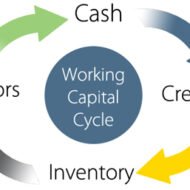
Understanding Working Capital: It is the life blood of business. Funds needed for the purchase of raw materials, payment of wages and other day-to-day expenses are known as working capital. It is part of the firm’s capital, which is being used for financing short-term operations. Hence, it may also be termed as Circulating Capital or Short-Term capital. “Working capital means current assets” –Mead, Malott and Field. “Any acquisition of funds which the current asset increases working capital, for, they are one and the same.” – J.S.mill Financial troubles and issues arise only when this entity called ‘working capital’ is not properly managed. Every successful company will hire a financial manager to deal with issues relating to finance while the CEO can look into matters relating to promotion of the product or service and the position of the company in the market. The ‘Sales Turnover or Sales Volume’ is the key issue you have to look into to gauge whether you have sufficient working capital to manage that big a volume for that particular period. You have to rotate your funds wisely keeping in mind the credit policies your company offers and the credits you may enjoy with your supplier, bank interest for the short-term loans etc. Concept of WC: Working capital implies excess of current assets over current liabilities. Funds invested in current assets is known as “Gross Working Capital.” The difference between current assets and current liabilities is known as “Net Working Capital.” What are the two types? Permanent or fixed: It is the minimum amount of current assets required for conducting the business operation. This capital will remain permanent in current assets and should be financed out of long-term funds. The amount varies from year to year, depending upon the growth of a company. Temporary or Variable: It is the amount of additional current assets required for a short period. It is needed to meet the seasonal demands at different times during a year. The capital can be temporary and should be financed out of short-term funds. The working capital starts decreasing when the peak season is over. Various Factors Influencing WC: Nature of business: Service oriented concerns like electricity; water supplies need limited working capital while a manufacturing concern requires sufficient working capital, since they have to maintain stock and debtors. Credit Policies: A company which allows credit to its customers shall need more amount while a company enjoying credit facilities from its suppliers will need lower amount of working capital. Manufacturing Process: Conversion of raw materials into finished goods is called manufacturing or production. Longer the process, higher the requirement of working capital. Rapidity of turnover: High rate of turnover requires low amount and lower and slow moving stocks need a larger amount of working capital. Say, jewelry shops have to maintain different types of designs calling for high working capital. Fast moving goods like grocery requires low working capital. Business cycle: Changes in economy has a say over the requirement of working capital. When a business is prosperous, it requires huge amount of capital; also during depression huge amount is needed for unsold stock and uncollected debts. Seasonal variation: Industries which are manufacturing and selling goods seasonally require large amount of working capital. Fluctuation of supply: Firms have to maintain large reserves of raw material in stores, to avoid uninterrupted production which needs large amount of working capital. Dividend policy: If a conservative dividend policy is followed by the management, the need for working capital can be met with the retained earnings, it consequently drains off large amounts from working capital pool. ...
Posted by Managementguru in Business Management, Change management, Human Resource
on Jun 25th, 2014 | 0 comments
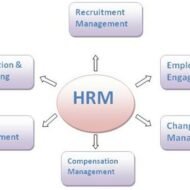
Smith et al. describe management as “Making Organizations perform”. Management is concerned with Individuals who are delegated authority to manage others – Let me call them ‘People with Power’. Activities for achieving goals – ‘Real Action Plans’. A body of knowledge represented by theories and frameworks about people and organizations – ‘Policy Framework’. What do managers do? As we all know they are involved in general management functions like Forecasting Planning Organizing Motivating Co-ordinating Controlling Are you aware of the ‘hidden’ dimensions of a manager’s job? Modern management theories, although highlighting the complexity of the role, have yet to provide sufficient empirical research and advice into key areas that enable both managers and organizations to increase their effectiveness. For example Dealing competently with organizational politics (“You can ignore it, but it won’t go away” – This is how surveyed employees said they viewed office politics) Successfully managing change (Adaptability is about the powerful difference between adapting to cope and adapting to win) Controlling ethical issues and demands (It takes 20 years to build a reputation and five minutes to ruin it. If you think about that, you’ll do things differently.) Developing the role of women managers (Women can be better managers than men because they tend to be more conservative and do their homework. Men tend to take more risk without the research) Ensuring personal ‘survival’ and career success in organizations (A successful man is who lays a firm foundation with the bricks others throw at him.) Safeguarding personal health in a stressful environment (Manage stress before it manages you). How to achieve a more comprehensive view of development? Frameworks for setting, linking, and balancing individual and organizational objectives. Systems for identifying and selecting managers Structures to support, motivate and reward Plans to enable career progression Mechanisms to measure and evaluate performance. HRM and Management Development Human resource management as the name suggests is about the effective management of people in organizations. HRM involves the integration of people with business goals and strategies HRM views people as assets to be developed and utilized in a productive way rather than costs to be minimized or eliminated. The philosophies, ideologies, values and beliefs of management that operate and dominate within the organization have an impact on people management. The practices, policies and management styles that managers employ in their managerial role also align people’s behavior towards organizational goals. Senior managers determine the extent to which people are integrated into the organization’s strategic plans. They set the agenda and create the culture climate of prevailing values, attitudes and behavior. Middle and junior managers translate and ‘operationalize’ broader human resource strategies and policies. They give HRM its meaning and reality. It is their perfect management style and actual behavior that decided how the human resources is deployed and managed and thus what people experience as human resource management. The way managers themselves are managed and developed is a significant influencing factor in the way people are subsequently...
Posted by Managementguru in Business Management, Human Resource, Labor Management, Motivation, Principles of Management
on Jun 10th, 2014 | 0 comments
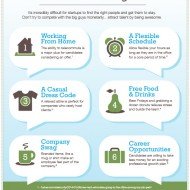
The employees have to be compensated for what they do for an organization – hold on folks, besides the salary prerequisites, there are many other things which help in retaining them in the company and sustain their motivation. Monetary benefits alone do not satisfy employees. You have to think about other ways to pay back your employees through non cash benefits to make them feel they belong. Motivation is a big factor for consideration when it comes to retaining your employees. Direct Compensation Employees expect fair wages commensurate with their skills, experience and job content. Wages should be ascertained keeping in mind the cost of living in the particular locality. These should be revised periodically to account for inflation so that the real wages do not go down over the time. Wages must have a system of yearly increments, which should be flexible enough to reward good performance. Legal Perspective In India, the Minimum Wages Act, 1948 provides for fixation and enforcement of minimum wages in respect of scheduled employments. A tripartite Committee Viz., “The Committee on Fair Wage” was set up in 1948 to provide guidelines for wage structures in the country. Article 39 states that the State shall, in particular, direct its policy towards securing (a) that the citizen, men and women equally shall have the right to an adequate livelihood and (b) that there is equal pay for equal work for both men and women. Fringe Benefits These are also termed as indirect compensation that an organization provides to its employees which may include – insurance against accident, travel concessions, medical facilities, subsidized meals, uniforms, housing etc. The Finance Act, 2005 has introduced a new chapter VII-H, ‘Income-tax on Fringe Benefits’. The Chapter now brings to tax the fringe benefits collectively enjoyed by the employees and which cannot be attributed to individual employees. The Fringe Benefit Tax is to be borne by the Employer. Different methods of employee compensation! Promotion Employees expect to improve their position in the hierarchy over the time. This improvement in position is called promotion. 1. It immensely helps an employee to feel important and useful to the firm. 2. It enhances his/her status within and outside the organization. 3. Through promotion, he/she looks forward to accomplishing more challenging tasks, including participation in the decision making process. Payday Meme! Out of 440 million workers in India, 93% of the workers are in the unorganized sector. The contributions made by the unorganized sector to the national income, is very substantial as compared to that of the organized sector. It adds more than 60% to the national income while the contribution of the organized sector is almost half of that depending on the industry. In India, only about 8% of workers actually get the benefits available under various labor Acts. The rest 92% work in the unorganized sector, and either are not eligible for coverage. Types of Compensation! Job Security One main reason why people are reluctant to join small enterprises even at higher salaries is their ‘apprehension’ about ‘job security’. An enterprise that is able to dispel such apprehension benefits substantially in the long run. Working Conditions One primary cause of dissatisfaction of workers is ‘the quality of their working life’ which includes Reasonable hours of workA work placeTea breaksProvisions for a room for recreation, lunch etc.Availability of safety equipment and first aid facilities, andWater cooler, lavatory etc. These things may not improve productivity, but will help in preventing job dissatisfaction among workers. The management must also ensure that cordiality and friendliness is maintained between the workers. An environment should be created in which the superiors and senior employees and workers develop mutual...