Posted by Managementguru in Quiz Corner
on Aug 2nd, 2015 | 0 comments
Acronyms are inevitable components of business life and if you are not familiar with some of the important terms, life can become difficult. Try to unveil these 30 Business Acronyms Related to HR, Finance and Accounting: BKPR CAO SHRM CIPD CTO HCM HPWS CIO CPA BGT COGS EPS LC P&L ROA ROE ROI CIMS DRIFT B2B B2C CTC USP PR INC. IPO GDP EBITD ESO GASS Find the answers below the pic: 1. Book-Keeper 2. Chief Accounting Officer 3. Strategic Human Resource Management 4. Chartered Institute of Personnel and Development 5. Chief Technology Officer 6. High Commitment Management 7. High Performance Work System 8. Chief Information Officer 9. Certified Public Accountant 10. Budget 11. Cost of Goods Sold 12. Earnings Per Share 13. Letter of Credit 14. Profit and Loss 15. Return on Assets 16. Return on Equity 17. Return on Investment 18. Certified Investment Management Specialist 19. Do it Right the First Time 20. Business to Business 21. Business to Consumer 22. Cost to Company 23. Unique Selling Point 24. Public Relations 25. Incorporated 26. Initial Public Offering 27. Gross Domestic Product 28. Earnings Before Interest, Tax and Depreciation 29. Employee Stock Option 30. Generally Accepted Accounting Standards...

Posted by Managementguru in Change management, Decision Making, Entrepreneurship, How To, Human Resource
on Jul 23rd, 2015 | 0 comments

I was going through this quote by Vince Lombardi the other day and couldn’t control my amusement and laughter for some time. “If you aren’t fired with enthusiasm, you will be fired with enthusiasm.” But the truth behind this statement looms large in front of all HR professionals when they start working for an organization in whatever capacity. Results, Targets, Closing the sale, Clinching the deal are the inevitable management mantras that drive the executives crazy. Isn’t it funny that it is very important to keep the morale high of the survivors during a layoff strategy! How on earth one can expect such a thing to happen when you know the sword is dangling above your head too! Please remember, “Resources are hired to give results, not reasons.” You need to be a star performer the first time and every time. Why Downsizing Happens? When the management of an organization finds out that their organization is not operating at peak efficiency, they naturally look for ways to make the organization more productive. This is seldom accomplished via organizational downsizing, which is a reduction in organizational size and operating costs implemented by management in order to improve organizational efficiency, productivity and/or the competitiveness of the organization. Courtesy: Cartoonstock.com Organizational downsizing affects the work processes of an organization since the end result of the downsizing is typically fewer people performing the same workload that existed before the downsizing took place. Download this Team Meeting Planner and Let us Know if You Found it Useful Team-Meeting-Agenda-PlannerDownload The act of downsizing results in two categories of people: victims, the people who involuntarily lose their jobs due to organizational downsizing, and survivors, the employees who remain after organizational downsizing takes place. When is Downsizing the Answer and How to Do it Right? “When downsizing is a knee-jerk reaction, it has long-term costs.” In order for an organizational downsizing to be most effective, management must connect openly and honestly with their employees concerning the reason for the downsizing and the downsizing plan. Managers also need to listen to employees and provide comfort when necessary in order to keep the morale high among the survivors of the downsizing. It is also important that management take steps to prepare the workforce in advance of the downsizing. Proper planning includes outplacement strategies, which is the process of supporting former employees in finding new employment and training and re-skilling the remaining workers into their new jobs. By treating the victims of downsizing fairly and compassionately, the survivors of the downsizing are more likely to remain loyal to their organization. Best Practices for Managing the Downsizing Process Be transparent about the current conditions that the organization faces and the potential impact on the workforce.Treat laid-off employees with respect and sensitivity.On the day of discharge, give employees options on how they want their exit handled.Ensure that procedures used to make decisions are seen as just and fair.Carefully examine the impact of employment downsizing on all HR systems.Give survivors a reason to stay and new hires a reason to join. Kim Cameron’s 3 Types of Downsizing Strategies 1. Workforce Reductions – short-term strategy to cut the number of employees through attrition, early retirement or voluntary severance packages, and layoffs or termination. 2. Work Redesign – medium-term strategy in which organizations focus on work processes and assess whether specific functions, products and/or services should be eliminated. 3. Systematic Change – long-term strategy that changes the organization’s culture and attitudes, and employees’ values, with the goals of reducing costs and enhancing quality. Why Do Organizations Downsize? Declining profitBusiness downturn or increased pressure from competitorsMerging with another organization, resulting in duplication of effortsIntroduction of new technologyThe need to reduce operating costsThe desire to...
Posted by Managementguru in Motivation, Quotes and Quotes Only, Strategy
on May 9th, 2015 | 0 comments

Top 50 Popular Quotes from Management Gurus Leadership and Management philosophies differ from a management guru to another management guru. Here are 50 useful quotes from top notch management doyens that will help you understand the various facets of management from their rich experience. You can treat these quotes as a starting point to build your dreams. Michael Porter Strategy Quotes from Michael Porter Strategy is about making choices, trade-offs; it’s about deliberately choosing to be different.”“The underlying principles of strategy are enduring, regardless of technology or the pace of change.”“The essence of strategy is that you must set limits on what you’re trying to accomplish.”“The essence of strategy is choosing what not to do.”“The chief strategist of an organization has to be the leader – the ceo.”“If all you’re trying to do is essentially the same thing as your rivals, then it’s unlikely that you’ll be very successful.”“Finally, strategy must have continuity. It can’t be constantly reinvented.”“Innovation is the central issue in economic prosperity.”“Sound strategy starts with having the right goal.”“So companies have to be very schizophrenic. On one hand, they have to maintain continuity of strategy. But they also have to be good at continuously improving.” Stephen Covey Leadership Quotes from Stephen Covey “Effective leadership is putting first things first. Effective management is discipline, carrying it out.”“There are three constants in life… Change, choice and principles.”Every human has four endowments- self awareness, conscience, independent will and creative imagination. These give us the ultimate human freedom… The power to choose, to respond, to change.”“The main thing is to keep the main thing the main thing.”“We are not animals. We are not a product of what has happened to us in our past. We have the power of choice.”“Management is efficiency in climbing the ladder of success; leadership determines whether the ladder is leaning against the right wall.”“The key is not to prioritize what’s on your schedule, but to schedule your priorities.”“Public behavior is merely private character writ large.”“When you really listen to another person from their point of view, and reflect back to them that understanding, it’s like giving them emotional oxygen.”“Trust is the glue of life. It’s the most essential ingredient in effective communication. It’s the foundational principle that holds all relationships.” Daniel Goleman Emotional Intelligence Quotes from Daniel Goleman “Emotional intelligence begins to develop in the earliest years. All the small exchanges children have with their parents, teachers, and with each other carry emotional messages.”“Well, any effort to maximize your potential and ability is a good thing.”“Teachers need to be comfortable talking about feelings.”“There is zero correlation between iq and emotional empathy… They’re controlled by different parts of the brain.”“People tend to become more emotionally intelligent as they age and mature.”“Mindful meditation has been discovered to foster the ability to inhibit those very quick emotional impulses.”“If your emotional abilities aren’t in hand, if you don’t have self-awareness, if you are not able to manage your distressing emotions, if you can’t have empathy and have effective relationships, then no matter how smart you are, you are not going to get very far.”“the emotional brain responds to an event more quickly than the thinking brain.”But once you are in that field, emotional intelligence emerges as a much stronger predictor of who will be most successful, because it is how we handle ourselves in our relationships that determines how well we do once we are in a given job.”“My hope was that organizations would start including this range of skills in their training programs – in other words, offer an adult education in social and emotional intelligence.” Ken Blanchard Productivity Quotes from Ken Blanchard “The productivity of a work group...
Posted by Managementguru in Business Management, Entrepreneurship, How To, Organisational behaviour
on May 2nd, 2015 | 0 comments
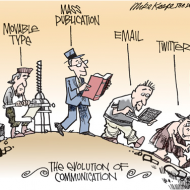
How to effect “Effective Business Communication?” Communication is an entity much talked and debated about in corporate management circles. The question is, have you really understood what the term ‘Communication’ means, how it has evolved over all these years and the impact it creates in an organization? Well, communication is nothing but the transfer or exchange of information from one end to another end, from one user to another user or from sender to receiver to put it straight. Is that it- No! If the process could be as simple as it sounds, there should be no conflicts, no difference of opinions and no mis-understandings in this world. Are we witnessing such a peaceful scenario; In particular, office atmosphere sometimes becomes unbearable thanks to ‘clash of the so called intellectual titans’ fighting over a simple issue which could be solved by discussing it over a cup of good coffee. Now, coming back to the point, the process of communication involves the following steps, Sender- Message- Receiver I’m not quite convinced with this explanation, are you? Let us rewrite it like this, Sender- Message- Medium- Receiver- Interpretation- Feedback This somewhat makes sense because only when the message intended is interpreted rightly so by the receiver or the target, the process of communication gets completed. In olden days when only sign language was the norm of the day, people still communicated precisely through pictograms, cave paintings, ideograms and sign language. This was a form of restricted communication as people had to go to that particular place to see the message. The process of evolution has led us to what we call verbal communication, the highest form of exchanging information. More sophistication has been innovated in the technological sphere and now I’m able to write to you and publish this article from an Apple IPad, of course with references made from the web in a jiffy. Types of communication Three types of communication are present VerbalNon-verbal andWritten. Interpersonal communication is contextual: In other words, communication does not happen in isolation. There is: Psychological, which is your persona and what you bring to the interaction. Your needs, desires, values, personality, etc., all form the psychological context. (“You” here refers to both participants in the interaction.)Relational context, which refers to your reactions to the other person–the “mix.”Situational context deals with the psycho-social “where” you are communicating. An interaction that takes place in a classroom is entirely different from one that takes place in a bar.Environmental context deals with the physical “where” you are communicating. Furniture, location, noise level, temperature, season, time of day, all are examples of factors in the environmental context.Cultural context includes all the learned behaviors and rules that affect the interaction. If you come from a culture (foreign or within your own country) where it is considered rude to make long, direct eye contact, you will out of politeness avoid eye contact. If the other person comes from a culture where long, direct eye contact signals trustworthiness, then we have in the cultural context a basis for misunderstanding. Three Approaches in Communication: Linear approach: Correct communication in this perspective causes the desired effect.Production of exchange and meanings: Communicating through signs and the process of extracting meanings from these messages is called “Signification”. The interpretation can lead to very different but equally valid outcomes.How communication is used to construct our social reality: We constantly share ideas with people around, thereby constructing, re-inforcing or de-constructing our identities. This perspective sees communication as the binding force of any culture, group or society. Source- coursera.com The Semantic Noise: Another important concept in communication is the semantic theory. It is nothing but the noise created in the...
Posted by Managementguru in Business Management, Financial Accounting
on Apr 25th, 2015 | 0 comments
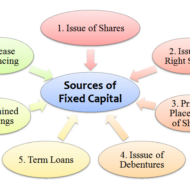
What is Long Term Financing? It is a form of financing that is provided for a period of more than a year to those business entities that face a shortage of capital. Before delving into the advantages of long term financing I would like to present you few fascinating facts on the economy that will blow your mind. Dell “has spent more money on share repurchases than it earned throughout its life as a public company,” writes Floyd Norris of The New York Times.According to Forbes, if a Google employee passes away, “their surviving spouse or domestic partner will receive a check for 50% of their salary every year for the next decade.”Start with a dollar. Double it every day. In 48 days you’ll own every financial asset that exists on the planet — about $200 trillion. Wow…According to Bloomberg, “Americans have missed out on almost $200 billion of stock gains as they drained money from the market in the past four years, haunted by the financial crisis.The “stock market” began in May 17th, 1792 when 24 stock brokers and merchants signed the Buttonwood Agreement.The Securities Exchange Act of 1934 creates the Securities and Exchange Commission, charged with the responsibility of preventing fraud and to require companies provide full disclosure to investors.Wall Street was laid out behind a 12-foot-high wood stockade across lower Manhattan in 1685. The stockade was built to protect the Dutch settlers from British and Native American attacks. Sources of Long Term Finance Long-term loans (External)Issue of shares or equitySale and leaseback (Internal)Retained profit Examples of long-term financing include – a 30 year mortgage or a 10-year Treasury note. Financial Markets and Securities Purpose of Long Term Finance To finance fixed assets.To finance the permanent part of working capital.Expansion of companies.Increasing facilities.Construction projects on a big scale.Provide capital for funding the operations. Factors determining Long-term Financial Requirements Nature of BusinessNature of Goods producedTechnology used Long term finance for businesses A Clear Perspective on Break Even Analysis Let us look at some of the Advantages of going for a Debt Financing Option Debt is the cheapest source of long-term financing. It is the least costly because interest on debt is tax-deductible, bondholders or creditors consider debt as a relatively less risky investment and require lower return.Debt financing provides sufficient flexibility in the financial/capital structure of the company. In case of over capitalization, the company can redeem the debt to balance its capitalization.Bondholders are creditors and have no interference in business operations because they are not entitled to vote.The company can enjoy tax saving on interest on debt. Disadvantages of Long Term Debt Financing Interest on debt is permanent burden to the company: Company has to pay the interest to bondholders or creditors at fixed rate whether it earns profit or not. It is legally liable to pay interest on debt.Debt usually has a fixed maturity date. Therefore, the financial officer must make provision for repayment of debt.Debt is the most risky source of long-term financing. Company must pay interest and principal at specified time. Non-payment of interest and principal on time take the company into bankruptcy.Debenture indentures may contain restrictive covenants which may limit the company’s operating flexibility in future.Only large scale, creditworthy firm, whose assets are good for collateral can raise capital from long-term debt. Financing through Debt Vs Equity There are a number of ways to finance a business using debt or equity. Though the first choice of many small-business owners would be equity, they may also prefer to utilize some type of debt to fund the business rather than take on additional investors. When done the right way, long-term debt financing provides a number of advantages to the business and its owner. Term Loans from Banks Most banks provide term loans,...